
In the vast and intricate landscape of mathematics, certain concepts serve as foundational pillars, underpinning complex theories and practical applications across numerous scientific and engineering disciplines. Among these, the “radius of convergence” stands out as a critical idea, particularly when dealing with power series. While it might sound like an abstract mathematical construct, its implications ripple through the technological world, influencing everything from the stability of algorithms to the accuracy of machine learning models and the design of digital signal processors.
At its heart, the radius of convergence defines a precise boundary: a region within which an infinite series behaves predictably and meaningfully. Beyond this boundary, the series loses its utility, diverging into an unruly, infinite expanse. For anyone working with numerical methods, computational analysis, or complex systems in technology, understanding this concept is not merely an academic exercise; it’s a prerequisite for building robust, reliable, and efficient software and hardware.
This article delves into the core of what the radius of convergence signifies, explores its profound importance in the digital realm, outlines the methods for its calculation, and illustrates its diverse applications in modern technology. By demystifying this mathematical cornerstone, we aim to highlight its indispensable role in the continuous advancement of computing and artificial intelligence.
Decoding the Core Concept: What is Radius of Convergence?
To truly grasp the radius of convergence, we must first understand the context in which it operates: power series. A power series is an infinite series representation of a function, much like a polynomial, but potentially with an infinite number of terms. It’s a powerful tool for approximating functions, solving differential equations, and representing complex functions in a more manageable form.
The Power of Power Series
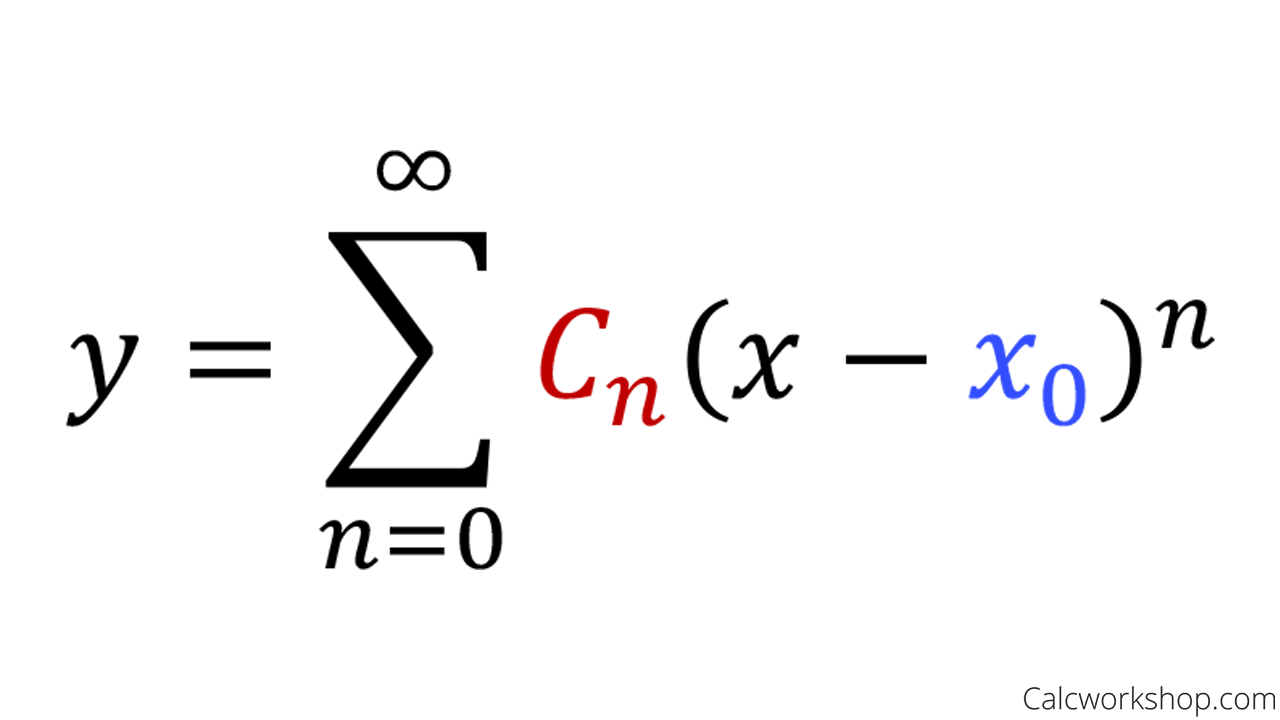
A power series typically takes the form:
$ sum{n=0}^{infty} cn (x-a)^n = c0 + c1(x-a) + c2(x-a)^2 + c3(x-a)^3 + dots $
where $c_n$ are coefficients, $x$ is the variable, and $a$ is the center of the series. For example, the Taylor series expansion of functions like $e^x$, $sin(x)$, or $cos(x)$ are classic examples of power series centered at $a=0$. These series can approximate the original function with arbitrary precision, provided that $x$ lies within a specific range.
The fundamental question then arises: for what values of $x$ does this infinite sum actually “add up” to a finite, meaningful number? This is where the concept of convergence comes into play. If the series converges, it provides a valid representation of the function. If it diverges, it simply explodes to infinity or oscillates without settling, rendering it useless.
Defining the Boundary of Certainty
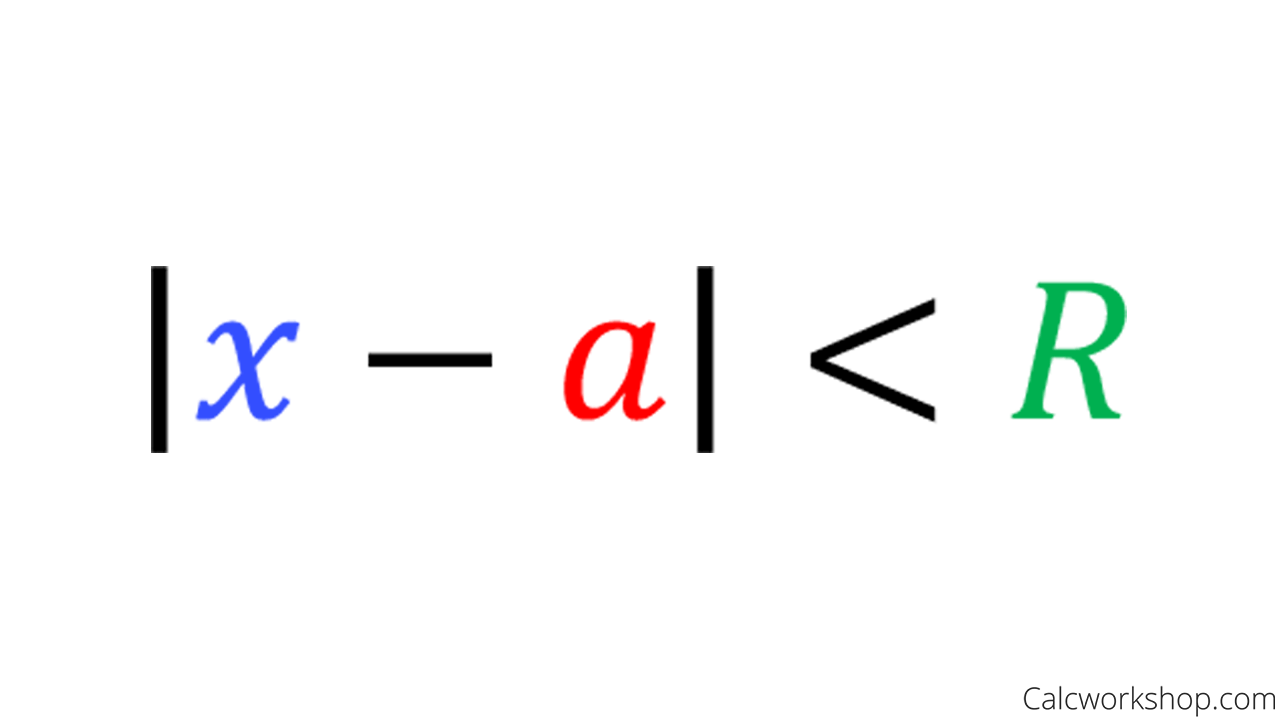
The radius of convergence, denoted by $R$, is a non-negative number (or infinity) that describes the range of $x$ values for which a power series converges. Specifically, a power series centered at $a$ converges absolutely for all $x$ such that $|x-a| < R$. This inequality defines an open interval $(a-R, a+R)$ on the real number line, or an open disk in the complex plane.
-
If $R=0$, the series converges only at its center point $x=a$.
-
If $R=infty$, the series converges for all values of $x$.
-
If $0 < R < infty$, the series converges for $x$ values strictly within the interval $(a-R, a+R)$. The behavior at the endpoints $x = a-R$ and $x = a+R$ must be checked separately, as the series might converge conditionally or diverge at these specific points.
This radius essentially tells us how “well-behaved” a function’s power series representation is, and over what domain we can trust its approximation.
Intuition Behind the Limit
Imagine trying to approximate a smooth curve using a series of increasingly smaller line segments. If you stay close to a known point, your approximation will be good. As you move further away, the segments might start deviating wildly, no longer following the original curve. The radius of convergence is akin to the maximum distance you can venture from your starting point before your approximation breaks down entirely.
The coefficients $c_n$ play a crucial role. If they decrease sufficiently fast as $n$ increases, they can “tame” the potentially explosive growth of the $(x-a)^n$ terms, ensuring convergence. The radius of convergence quantifies this balance between the growth of terms and the decay of coefficients.
Why Convergence Matters in the Digital Realm
In the fast-paced world of technology, where algorithms process vast datasets and complex models simulate reality, the principles of mathematical convergence are not abstract theory but practical necessities. The radius of convergence, though specific to power series, embodies a broader concern: ensuring that computations yield stable, accurate, and predictable results.
The Stability of Algorithms
Many computational algorithms, especially those involving iterative processes or approximations, can be viewed through the lens of convergence. For an algorithm to be useful, it must converge to a correct solution rather than diverging into an endless loop or producing an infinitely large error. Numerical methods for solving differential equations, root-finding algorithms, or even the gradient descent algorithms used in machine learning, all rely on the principle of iterative improvement that eventually settles on a stable solution. While not always directly tied to a power series’ radius of convergence, the underlying mathematical rigor required for stability often involves concepts of series convergence and error bounds. A deep understanding of these limits helps engineers design algorithms that reliably arrive at a solution within an acceptable range of iterations and error.
Accuracy in Numerical Methods
Computers inherently deal with approximations. From floating-point arithmetic to Taylor series expansions used in function evaluations, perfect precision is often unattainable. When a software program calculates a transcendental function like $sin(x)$ or $e^x$, it often uses a truncated power series. The accuracy of this approximation is directly dependent on two factors: how many terms are included and whether the input $x$ falls within the series’ radius of convergence. If $x$ is outside this radius, the series will diverge, and the approximation will be wildly inaccurate, rendering the computation useless. Therefore, ensuring inputs remain within the convergence boundary is critical for maintaining numerical accuracy in scientific computing, simulations, and data analysis tools.
Predictive Power in AI Models
Machine learning models, particularly those based on neural networks, often involve complex optimization processes. Algorithms like stochastic gradient descent iteratively adjust model parameters to minimize a loss function. The “convergence” of these optimization algorithms to a minimum of the loss function is paramount. While this isn’t a power series, the mathematical foundation often involves understanding how functions behave within certain “neighborhoods” and whether iterative updates will lead to a stable minimum. Concepts like learning rates in neural networks are analogous to determining step sizes that ensure the optimization process converges rather than oscillating or diverging. A solid grasp of mathematical convergence principles informs the design of robust optimizers and the selection of hyperparameters that enable AI models to learn effectively and make accurate predictions.
Calculating the Radius: Practical Approaches
While the theoretical definition of the radius of convergence is crucial, practical applications demand methods for its calculation. Fortunately, powerful tests derived from foundational calculus provide straightforward ways to determine $R$. The two most common and versatile methods are the Ratio Test and the Root Test.
The Ratio Test: A Common Tool
The Ratio Test is often the easiest and most frequently used method for finding the radius of convergence. For a power series $sum{n=0}^{infty} cn (x-a)^n$, let $L = lim{n to infty} left| frac{c{n+1}(x-a)^{n+1}}{c_n(x-a)^n} right|$.
Simplifying this expression, we get:
$ L = lim{n to infty} left| frac{c{n+1}}{cn} cdot (x-a) right| = |x-a| lim{n to infty} left| frac{c{n+1}}{cn} right| $
For the series to converge, the Ratio Test states that $L < 1$. So, we require:
$ |x-a| lim{n to infty} left| frac{c{n+1}}{c_n} right| < 1 $
If the limit $L’ = lim{n to infty} left| frac{c{n+1}}{c_n} right|$ exists and is finite and non-zero, then we can solve for $|x-a|$:
$ |x-a| < frac{1}{L’} $
Thus, the radius of convergence $R = frac{1}{L’} = lim{n to infty} left| frac{cn}{c_{n+1}} right|$.
If $L’ = 0$, then $R=infty$. If $L’ = infty$, then $R=0$.
This test is particularly effective when the coefficients $c_n$ involve factorials or powers of $n$, as these often simplify nicely in a ratio.
The Root Test: An Alternative Perspective
The Root Test offers an alternative approach, particularly useful when the coefficients $cn$ themselves are raised to the power of $n$. For the same power series, let $L = lim{n to infty} sqrt[n]{|c_n (x-a)^n|}$.
Simplifying this expression, we get:
$ L = lim{n to infty} |x-a| sqrt[n]{|cn|} = |x-a| lim{n to infty} sqrt[n]{|cn|} $
For the series to converge, the Root Test also requires $L < 1$. So:
$ |x-a| lim{n to infty} sqrt[n]{|cn|} < 1 $
If the limit $L” = lim{n to infty} sqrt[n]{|cn|}$ exists and is finite and non-zero, then:
$ |x-a| < frac{1}{L”} $
Thus, the radius of convergence $R = frac{1}{L”} = frac{1}{lim{n to infty} sqrt[n]{|cn|}}$.
Similar to the Ratio Test, if $L” = 0$, then $R=infty$. If $L” = infty$, then $R=0$.
The Root Test is often more powerful (i.e., it can determine convergence when the Ratio Test is inconclusive), but it can be more challenging to compute the $n$-th root limit.
Interpreting the Results for Practical Use
Once $R$ is calculated, the next step is to understand its implications. For a software developer creating a library for mathematical functions, $R$ dictates the valid input range for a power series approximation. Inputs outside this range will yield erroneous results, potentially leading to bugs, crashes, or security vulnerabilities if not properly handled (e.g., through input validation and error messages).
For a data scientist, $R$ might offer insights into the stability of a statistical model’s expansion or the range over which certain approximations hold true. In scientific simulations, knowing the convergence radius helps in choosing appropriate numerical schemes and ensuring that the simulation remains physically realistic. The endpoints of the interval of convergence (where $|x-a|=R$) often require special attention, as convergence there can be conditional, meaning it depends on the specific arrangement of terms, and thus might be less robust for practical applications.
Applications in Technology: From Signal Processing to Machine Learning
The radius of convergence, and the broader concept of series convergence, is not confined to abstract mathematics textbooks. Its principles are actively applied and relied upon across diverse technological domains, forming the bedrock of many computational tools and systems we use daily.
Digital Signal Processing (DSP) and Fourier Series
In Digital Signal Processing, signals are often analyzed and manipulated in terms of their frequency components. Fourier series and Fourier transforms are indispensable tools for this, representing periodic signals as sums of sines and cosines. While not strictly power series, the concept of convergence is paramount. For a Fourier series to accurately reconstruct a signal, it must converge. The rate of convergence and the conditions under which it converges (e.g., Dirichlet conditions) are critical for filtering, compression, and analysis algorithms. Engineers designing audio processing software, image compression algorithms (like JPEG), or communication systems constantly work with these convergence properties to ensure signal integrity and accurate reconstruction. Understanding the “region” of well-behaved frequency components is akin to understanding a radius of convergence in a different mathematical space.
Machine Learning Optimization Algorithms
While machine learning algorithms don’t typically use power series explicitly, the underlying mathematical principles of convergence are fundamental to their operation. Optimization algorithms, such as Gradient Descent, Adam, or RMSprop, are iterative methods designed to find the minimum of a loss function. The goal is for these algorithms to “converge” to a solution (a set of optimal model parameters). The “learning rate” in these algorithms is a critical hyperparameter that dictates the step size taken towards the minimum. Too large a learning rate can cause the optimization process to diverge, repeatedly overshooting the minimum, never settling, or even exploding. Too small a learning rate can lead to extremely slow convergence. The choice of an appropriate learning rate, therefore, is analogous to ensuring that an iterative process remains within its “radius of convergence” to a stable solution. Researchers are constantly developing new optimizers with better convergence properties, often leveraging advanced mathematical analysis to guarantee stable and efficient learning.
Numerical Simulations and Scientific Computing
Many scientific and engineering problems are too complex for analytical solutions and require numerical simulations. These simulations often involve solving differential equations, integrals, or complex systems using iterative numerical methods. For instance, simulating fluid dynamics, heat transfer, or quantum mechanics often relies on finite difference or finite element methods, which discretize continuous problems. The accuracy and stability of these methods critically depend on their convergence properties. The numerical schemes themselves can sometimes be expanded in series, and their region of validity (their “radius of convergence” in a more generalized sense) is a key concern for computational scientists. If a chosen numerical method converges too slowly or diverges under certain conditions (e.g., large time steps, certain boundary conditions), the simulation results will be unreliable or simply wrong.
Control Systems and Stability Analysis
In control engineering, the stability of a system is paramount. A control system is stable if, when perturbed, it returns to its equilibrium state. Mathematical tools like Z-transforms and Laplace transforms are used to analyze the stability of discrete and continuous-time systems, respectively. These transforms often involve series representations, and the “region of convergence” (ROC) for these transforms is a critical concept. The location of poles and zeros within or outside the ROC dictates the system’s stability. For example, for a discrete-time system, the Z-transform’s ROC must include the unit circle in the complex plane for the system to be stable. Control engineers designing autopilots, robotic arms, or industrial process controllers rely heavily on these principles to ensure that their systems operate safely, reliably, and predictably, avoiding oscillations or runaway behavior that signify divergence.
Navigating Divergence and Optimization Challenges
While understanding the radius of convergence empowers us to build robust technological solutions, it also highlights potential pitfalls. Divergence, where a series or an iterative process fails to settle, poses significant challenges in computation and system design. Recognizing these challenges and employing strategies to mitigate them is as important as knowing how to calculate $R$.
When Series Fail: The Risks of Divergence
Divergence in a mathematical series or an algorithm is not just a theoretical curiosity; it’s a real and present danger in technological applications. If a power series is used outside its radius of convergence, the resulting values are meaningless and can lead to:
-
Computational Errors: Software might return
NaN(Not a Number) orInf(Infinity) values, causing subsequent calculations to fail or propagate errors throughout a system. -
System Crashes: Undefined behavior from divergent calculations can lead to segmentation faults, buffer overflows, or other memory-related errors, causing applications to crash.
-
Incorrect Predictions: In machine learning, a divergent optimization process means the model never learns effectively, leading to poor performance and unreliable predictions.
-
Instability in Control Systems: Divergent feedback loops can cause physical systems (e.g., robots, aircraft) to become unstable, leading to erratic behavior or catastrophic failure.
These risks underscore why rigorous mathematical analysis, including determining radii of convergence, is not a luxury but a necessity in critical systems.
Strategies for Ensuring Convergence
Developers and researchers employ several strategies to ensure convergence and prevent divergence:
-
Input Validation: For functions implemented using power series, strict input validation ensures that arguments fall within the calculated radius of convergence.
-
Adaptive Algorithms: Many numerical methods use adaptive step sizes or parameters that dynamically adjust based on convergence criteria. If an iteration is diverging, the algorithm might reduce its step size or apply regularization techniques to steer it back towards convergence.
-
Regularization: In machine learning, regularization techniques (like L1/L2 regularization) are added to loss functions to prevent overfitting and improve the stability of the optimization process, effectively making the “surface” of the loss function smoother and easier to converge upon.
-
Error Bounds and Stopping Criteria: Instead of an infinite series, finite approximations are used. Algorithms are often designed with predefined error tolerances or maximum iterations. If convergence is not achieved within these limits, the algorithm terminates, reporting a failure rather than producing an unreliable result.
-
Transformations and Rescaling: Sometimes, functions can be transformed or input data rescaled such that the equivalent series or numerical method converges more readily or has a larger radius of convergence.

Debugging Convergence Issues in Software
Debugging convergence issues can be notoriously challenging. It often requires a deep understanding of the underlying mathematical principles and the specific algorithm’s implementation. Tools and techniques include:
-
Logging and Visualization: Tracking the values of key parameters (e.g., coefficients, errors, loss function values) over iterations and visualizing their trends can quickly reveal if an algorithm is diverging or converging slowly.
-
Unit and Integration Testing: Comprehensive testing with various inputs, especially boundary conditions and values near the edge of convergence, can expose instabilities early in the development cycle.
-
Mathematical Analysis: When facing persistent convergence problems, a return to the theoretical roots – re-evaluating the mathematical properties of the series or algorithm – is often necessary. This might involve re-calculating the radius of convergence, analyzing error terms, or studying the stability of the numerical scheme.
-
Consulting Domain Experts: Collaboration with mathematicians or computational scientists can provide crucial insights into complex convergence problems.
In conclusion, the radius of convergence, while a specific concept within the theory of power series, serves as a powerful metaphor and a practical guideline for ensuring reliability across the technological spectrum. From verifying the integrity of mathematical libraries to designing robust AI models and stable control systems, understanding the boundaries of convergence is indispensable. As technology continues to push the limits of what’s computationally possible, a firm grasp of these foundational mathematical principles will remain crucial for innovation and problem-solving in the digital age.
aViewFromTheCave is a participant in the Amazon Services LLC Associates Program, an affiliate advertising program designed to provide a means for sites to earn advertising fees by advertising and linking to Amazon.com. Amazon, the Amazon logo, AmazonSupply, and the AmazonSupply logo are trademarks of Amazon.com, Inc. or its affiliates. As an Amazon Associate we earn affiliate commissions from qualifying purchases.