
In the vast and intricate world of chemistry, understanding energy transformations is paramount. Every reaction, every phase change, and every interaction involves a delicate balance of energy, which often manifests as heat. At the heart of quantifying this crucial energy transfer lies the symbol ‘q’. While ‘q’ fundamentally represents heat in chemical contexts, its true significance transcends a simple definition, touching upon everything from the efficiency of industrial processes to the design of next-generation materials. In an increasingly technologically driven era, our ability to precisely measure, predict, and manipulate ‘q’ is not just a scientific curiosity but a cornerstone of innovation across numerous fields.

This article delves into the core concept of ‘q’ in chemistry, exploring its meaning, its implications, and, most importantly, how advanced technologies are revolutionizing our understanding and application of heat transfer. From sophisticated sensor arrays and computational models to AI-driven material design, technology acts as an indispensable partner in harnessing the power of ‘q’.
The Fundamental Role of ‘q’: Heat as Energy Transfer
At its most basic, ‘q’ in chemistry refers to the heat absorbed or released during a chemical or physical process. It is a form of energy that flows due to a temperature difference between a system and its surroundings. Understanding ‘q’ is critical because heat changes can dictate the spontaneity of a reaction, the stability of a compound, and the overall energy balance of a system.
Defining Heat: Exothermic vs. Endothermic Processes
The sign of ‘q’ is crucial in interpreting a chemical event:
-
Positive ‘q’ (q > 0): Indicates that the system has absorbed heat from its surroundings. This is an endothermic process. Examples include melting ice, boiling water, or dissolving certain salts (like ammonium nitrate) which feel cold to the touch. In these cases, energy is required to drive the process forward.
-
Negative ‘q’ (q < 0): Indicates that the system has released heat into its surroundings. This is an exothermic process. Examples include combustion reactions, neutralization reactions, or the condensation of steam, all of which release energy, often feeling warm or hot.
This distinction is not merely academic; it underpins the design of cooling systems, energy storage solutions, and even pharmaceutical formulations, where controlled heat release or absorption is vital.
Quantifying Heat: The Role of Specific Heat Capacity
To move beyond qualitative descriptions, ‘q’ needs to be quantified. The amount of heat transferred depends on several factors: the mass of the substance, the temperature change it undergoes, and its intrinsic ability to absorb or release heat. This intrinsic property is known as specific heat capacity (c), defined as the amount of heat required to raise the temperature of one unit mass of a substance by one degree Celsius (or Kelvin). The relationship is expressed by the fundamental equation:
q = mcΔT
Where:
-
qis the heat transferred (in Joules, J) -
mis the mass of the substance (in grams, g) -
cis the specific heat capacity (in J/g°C or J/gK) -
ΔTis the change in temperature (Tfinal – Tinitial, in °C or K)
Understanding and accurately determining specific heat capacity for various materials is a critical task, and this is where technology begins to play an indispensable role. Different substances have vastly different specific heat capacities—water, for instance, has a remarkably high specific heat capacity, making it an excellent coolant and a key component in thermal regulation systems.
Technological Advancements in Measuring and Monitoring ‘q’
The precise measurement of heat transfer, particularly in complex chemical systems, has always been a significant challenge. Traditional methods often suffered from inaccuracies due to heat loss to surroundings or limitations in temperature sensing. However, modern technology has ushered in an era of unprecedented precision and versatility in calorimetry and thermal analysis.
State-of-the-Art Calorimetry and Sensor Technology
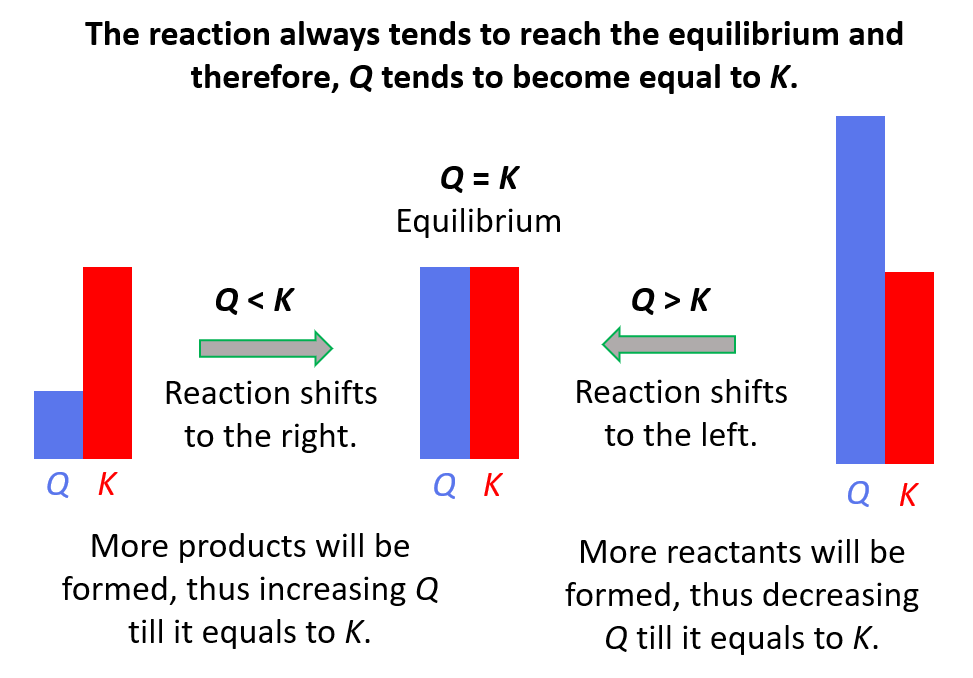
Calorimetry, the science of measuring heat flow, has been revolutionized by advanced sensor technology and digital data acquisition systems.
-
Differential Scanning Calorimetry (DSC): This technique, a staple in materials science and pharmaceutical research, precisely measures the heat flow associated with phase transitions and chemical reactions as a function of temperature or time. Modern DSC instruments employ highly sensitive heat flux sensors and sophisticated temperature control systems, allowing for minute heat changes in small samples to be detected with high accuracy. This is vital for characterizing polymers, studying drug stability, and understanding protein folding.
-
Isothermal Titration Calorimetry (ITC): ITC has become indispensable in biochemistry and biophysics for studying molecular interactions. It directly measures the heat released or absorbed when two molecules bind, providing thermodynamic parameters (enthalpy, entropy, Gibbs free energy) that characterize the interaction. Automated ITC systems with precise syringe pumps and highly sensitive thermopile detectors allow for high-throughput screening and detailed analysis of binding affinities, crucial for drug discovery and enzyme kinetics.
-
Bomb Calorimetry: For measuring the heat of combustion (a large exothermic ‘q’), modern bomb calorimeters are highly automated, featuring robust oxygen vessels, precise temperature probes (thermistor or platinum resistance thermometers), and integrated data logging software. These systems minimize heat loss, ensuring accurate determination of caloric values for fuels and foodstuffs.
-
Wireless Sensors and IoT Integration: The advent of wireless sensor networks and the Internet of Things (IoT) is transforming industrial and environmental monitoring. Miniaturized, low-power temperature sensors and heat flux sensors can be deployed in previously inaccessible locations, transmitting real-time data to central control systems. This enables continuous monitoring of exothermic reactions in chemical plants, thermal profiles in battery packs, or heat dissipation in electronic devices, leading to enhanced safety, efficiency, and predictive maintenance.
High-Throughput Screening and Automation
The demand for faster material discovery and process optimization has driven the development of automated systems for measuring ‘q’. Robotics and laboratory automation platforms are now integrated with calorimetric instruments, allowing for the rapid testing of hundreds or thousands of samples under varying conditions. This high-throughput approach is critical in areas like catalyst development, polymer synthesis, and formulation science, where identifying optimal thermal properties quickly can significantly accelerate research and development cycles.
Computational Chemistry and Predictive Modeling of ‘q’
Beyond experimental measurement, a profound shift in understanding ‘q’ has come from the realm of computational chemistry. Advanced algorithms and powerful computing resources allow scientists to simulate molecular interactions and predict thermodynamic properties, including heat changes, without needing to perform physical experiments.
Molecular Dynamics and Quantum Mechanics
-
Molecular Dynamics (MD) Simulations: MD simulations model the time-dependent behavior of molecular systems. By tracking the positions and velocities of individual atoms over time, governed by classical mechanics, MD can calculate internal energies, structural changes, and even phase transitions. From these simulations, enthalpy changes (which are closely related to ‘q’ under constant pressure) can be derived, offering insights into complex processes like protein denaturation or material responses to heating.
-
Quantum Mechanics (QM) Calculations: For a more fundamental understanding of electronic structure and bond energies, quantum mechanical methods (e.g., Density Functional Theory, DFT) are employed. These calculations can accurately predict the energy of molecules and transition states, allowing for the determination of reaction enthalpies and activation energies. QM calculations are invaluable for designing new catalysts, understanding reaction mechanisms, and predicting the thermal stability of novel compounds at an atomic level. The ability to calculate precise values for bond formation and breaking provides a theoretical basis for understanding the ‘q’ associated with specific chemical reactions.
AI and Machine Learning for Thermochemical Predictions
The massive datasets generated by experimental and computational chemistry are now being leveraged by Artificial Intelligence (AI) and Machine Learning (ML) algorithms.
-
Predictive Models for Enthalpies of Formation: ML models, trained on extensive databases of thermochemical data, can accurately predict standard enthalpies of formation for new or hypothetical molecules. This significantly accelerates drug discovery and materials design, as researchers can quickly screen potential candidates for desired thermal properties before costly synthesis.
-
Reaction Pathway Optimization: AI can analyze reaction energy landscapes derived from QM calculations, identifying optimal reaction pathways and predicting associated heat changes. This is critical for designing more efficient and safer chemical syntheses, minimizing unwanted side reactions that might generate excessive heat (runaway reactions).
-
Material Property Prediction: ML models are increasingly used to predict thermal properties like specific heat capacity, thermal conductivity, and melting points for novel materials. This “in silico” approach, guided by AI, allows for the rational design of materials with tailored thermal responses for applications ranging from high-temperature ceramics to advanced thermoelectric devices.
The Impact of ‘q’ in Industrial and Green Technologies
The accurate understanding and control of ‘q’ are not just academic pursuits; they are central to solving real-world challenges in industries and contributing to sustainable development. Technology acts as the bridge translating fundamental chemical principles into practical applications.
Energy Efficiency and Process Optimization
In chemical engineering, managing heat is synonymous with managing efficiency and safety.
-
Reactor Design and Control: Modern chemical reactors are equipped with sophisticated temperature control systems, heat exchangers, and precise feedback loops. By continuously monitoring ‘q’ (heat generated or consumed), operators can maintain optimal reaction temperatures, prevent thermal runaway, and maximize product yield while minimizing energy waste. Advanced process control algorithms, often AI-enhanced, predict and respond to temperature fluctuations with unprecedented speed and accuracy.
-
Waste Heat Recovery: Industrial processes often generate vast amounts of waste heat (‘q’ released to the environment). Technologies like heat pumps, organic Rankine cycles, and thermoelectric generators are engineered to capture this waste heat and convert it into useful energy (e.g., electricity or process heating), significantly improving overall energy efficiency and reducing the carbon footprint of industrial operations.
Sustainable Chemistry and Environmental Applications
The concept of ‘q’ also plays a pivotal role in environmental science and sustainable technology.
-
Catalyst Development for Green Reactions: Many green chemistry principles focus on minimizing energy consumption. By designing catalysts that enable reactions to proceed efficiently at lower temperatures (reducing the ‘q’ input), or by developing thermoneutral reactions, chemists can reduce reliance on fossil fuels and lower operational costs. Computational methods are crucial in identifying such catalysts.
-
Thermal Energy Storage: Technologies that store thermal energy are vital for renewable energy integration. Phase Change Materials (PCMs), for example, absorb and release large amounts of latent heat (‘q’) during their phase transitions (melting/freezing) at a constant temperature. Understanding the specific ‘q’ characteristics of these materials, often through advanced calorimetry and predictive modeling, is key to developing efficient thermal batteries for solar energy systems or building climate control.
-
Waste-to-Energy Technologies: Incineration and pyrolysis processes aim to extract energy from waste. Accurately determining the heat of combustion (‘q’) of various waste streams is crucial for optimizing these processes, ensuring efficient energy recovery, and managing emissions.
In conclusion, ‘q’ represents the fundamental currency of energy transfer in chemical systems—heat. While its definition is straightforward, its implications are profound and far-reaching. The synergy between chemistry and technology has transformed our ability to measure, predict, and control ‘q’ with incredible precision and insight. From advanced calorimeters and sophisticated computational simulations to AI-driven material discovery and optimized industrial processes, technology is not just aiding our understanding of ‘q’; it is actively enabling the innovations that will define the future of energy, materials, and sustainable development. As we continue to push the boundaries of scientific inquiry and technological capability, the power of ‘q’ will remain a guiding force in shaping a more efficient, sustainable, and technologically advanced world.
aViewFromTheCave is a participant in the Amazon Services LLC Associates Program, an affiliate advertising program designed to provide a means for sites to earn advertising fees by advertising and linking to Amazon.com. Amazon, the Amazon logo, AmazonSupply, and the AmazonSupply logo are trademarks of Amazon.com, Inc. or its affiliates. As an Amazon Associate we earn affiliate commissions from qualifying purchases.