
In the intricate tapestry of modern computing, memory plays an unequivocally critical role. From the lightning-fast processing of volatile RAM to the long-term archival of hard drives and SSDs, each memory type serves a distinct, indispensable function. Yet, there exists a particular type of memory that often operates behind the scenes, bridging the gap between fleeting data and enduring configurations: Non-Volatile Random-Access Memory, or NVRAM. While perhaps not as frequently discussed as its volatile cousin (DRAM) or its mass-storage brethren (NAND Flash), NVRAM is a cornerstone technology, essential for the reliable operation of everything from personal computers and servers to industrial control systems and networking hardware. Understanding NVRAM is key to appreciating how our digital systems maintain their settings, recover gracefully from power interruptions, and ensure critical data persistence without constant power. This article will delve into the fundamental concepts of NVRAM, explore its diverse architectures, highlight its crucial applications, weigh its advantages and limitations, and peer into its evolving future in an increasingly data-dependent world.
The Core Concept: Understanding NVRAM’s Unique Role
To grasp the essence of NVRAM, it’s vital to first understand the fundamental dichotomy in computer memory: volatility. Most people are familiar with RAM (Random-Access Memory), which is the primary working memory of a computer. However, RAM, specifically DRAM (Dynamic RAM), is volatile, meaning it requires continuous power to maintain the stored information. Cut the power, and the data vanishes. This characteristic is perfectly acceptable for temporary computations, but entirely impractical for storing system settings or critical configurations that must persist across power cycles.
Volatility vs. Non-Volatility: A Fundamental Distinction
The distinction between volatile and non-volatile memory lies at the heart of computing architecture. Volatile memory, exemplified by DRAM, offers incredibly high speeds, making it ideal for active processing where data is constantly being read, written, and modified. Its drawback is its impermanence. Non-volatile memory, on the other hand, retains its stored information even when power is removed. Think of the BIOS settings on your motherboard, the configuration of a network router, or the current time on your computer’s clock – these pieces of information must survive a shutdown. Traditional forms of non-volatile memory include ROM (Read-Only Memory), EEPROM (Electrically Erasable Programmable Read-Only Memory), and NAND Flash (used in SSDs and USB drives). While effective for mass storage or immutable firmware, these often come with trade-offs in write speed, endurance, or byte-addressability that limit their utility for certain tasks.
The “Random-Access” Part: Speed and Accessibility
The “RA” in NVRAM stands for Random-Access, a critical characteristic inherited from its volatile counterparts. Random-access means that any byte of data can be accessed directly, without having to read through preceding data. This contrasts with sequential access memory, like magnetic tapes, where data must be read in order. The random-access capability provides rapid data retrieval and modification, making it suitable for situations where specific data points, such as individual configuration parameters, need to be quickly updated or read. When combined with non-volatility, this creates a memory type that is both persistent and fast to access and modify, a powerful combination for specific system functions.
Bridging the Gap: Why Both RAM and NVRAM are Essential
NVRAM occupies a unique niche, serving as a bridge between the transient world of volatile RAM and the persistent, but often slower and less byte-addressable, realm of mass storage. It’s not meant to replace DRAM for active program execution, nor is it designed to store gigabytes of user files like an SSD. Instead, NVRAM typically stores smaller amounts of crucial, frequently accessed data that needs to survive power loss. This includes system boot parameters, hardware configurations, network settings, and various operational states. Without NVRAM, every time you powered on your device, it would effectively be starting from a “factory default” state, losing all customized settings and potentially requiring complex reconfigurations, making the user experience cumbersome and system operations unreliable.
How NVRAM Works: Architectures and Mechanisms
The term NVRAM isn’t monolithic; it encompasses several distinct technologies that achieve non-volatility while maintaining random-access capabilities. Each type employs different physical principles to store data, leading to varied performance characteristics, costs, and applications. The evolution of NVRAM has been a continuous quest for higher speed, greater endurance, lower power consumption, and increased density.
SRAM with Battery Backup (BBSRAM): The Classic Approach
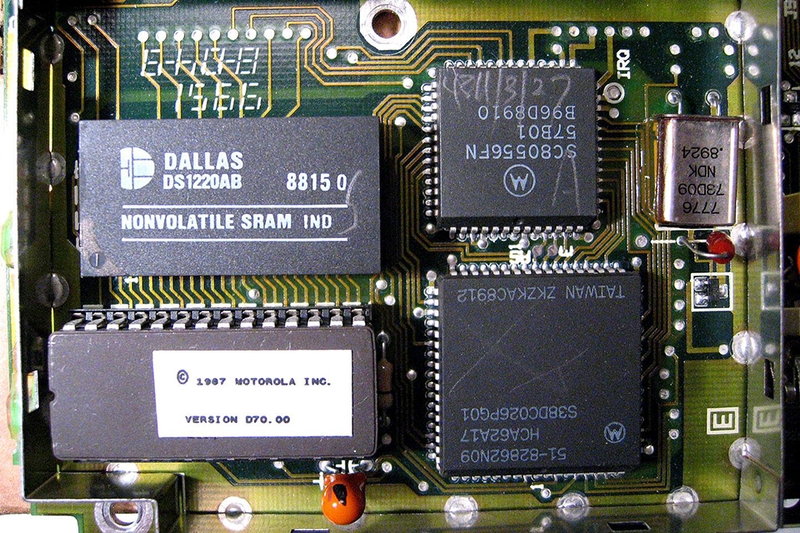
One of the earliest and most straightforward implementations of NVRAM is Battery-Backed Static Random-Access Memory (BBSRAM). SRAM is inherently volatile, much like DRAM, but it is faster and does not require constant refreshing. To make it non-volatile, a small battery (often a coin cell like a CR2032) is connected to the SRAM chip. When the main power to the system is removed, the battery provides the trickle current necessary to maintain the data within the SRAM. This is the mechanism commonly used for storing the BIOS/UEFI settings and the Real-Time Clock (RTC) on computer motherboards. While effective, the reliance on a battery introduces limitations: the battery has a finite lifespan, needs replacement, and the disposal of batteries raises environmental concerns. The power consumption for maintaining data, even if low, is also a factor.
FRAM (Ferroelectric RAM): A Novel Integration
Ferroelectric RAM (FRAM or FeRAM) represents a more sophisticated approach, integrating non-volatility directly into the memory cell structure without external power. FRAM utilizes a ferroelectric capacitor within each memory cell, instead of the dielectric capacitor found in DRAM. Ferroelectric materials have a unique property: their polarization can be reversed by an electric field and then remain in that state even after the field is removed. This stable, bi-stable polarization state is used to represent a binary ‘0’ or ‘1’. FRAM offers fast read/write speeds, high endurance (many more write cycles than Flash memory), and very low power consumption, as it only requires power during the actual read/write operation. Its primary limitations have historically been higher cost and lower density compared to DRAM or Flash, though advancements are continually addressing these.
MRAM (Magnetoresistive RAM): Harnessing Magnetic Properties
Magnetoresistive RAM (MRAM) leverages magnetic phenomena for data storage. Instead of storing charge or polarization, MRAM stores data using magnetic elements. The most common type, STT-MRAM (Spin-Transfer Torque MRAM), uses the orientation of magnetic fields to represent data. Each bit is stored in a magnetic tunnel junction (MTJ), which consists of two ferromagnetic layers separated by a thin insulating layer. One layer has a fixed magnetic polarity, while the other’s polarity can be changed using an electric current. The resistance across the MTJ changes depending on the relative orientation of the two magnetic layers (parallel or anti-parallel), allowing the data to be read. MRAM boasts extremely fast read/write speeds, practically infinite endurance, and non-volatility without the need for a battery. It’s often considered a strong candidate for a “universal memory” due to its impressive combination of attributes, but like FRAM, its path to widespread adoption has been challenged by manufacturing complexity and cost relative to established technologies.
Other Emerging NVRAM Technologies
The pursuit of the ideal non-volatile memory continues to drive innovation, leading to the development of other promising NVRAM technologies. Phase-change Memory (PCM), for instance, utilizes materials that can be reversibly switched between amorphous and crystalline states, each having different electrical resistances to represent data. Resistive Random-Access Memory (RRAM or ReRAM) is another contender, based on the change in resistance of a dielectric material when a voltage is applied. These emerging technologies aim to surpass the limitations of existing solutions, offering potentially even higher densities, lower power, and better endurance, paving the way for future advancements in persistent memory solutions.
Key Applications Across Modern Technology
NVRAM might be a behind-the-scenes player, but its impact is felt across nearly every segment of modern technology. Its ability to retain data quickly and reliably without continuous power makes it indispensable for maintaining system integrity and enabling rapid, consistent operations.
BIOS/UEFI Settings and System Configuration
Perhaps the most universally recognized application of NVRAM is in storing the BIOS (Basic Input/Output System) or its successor, UEFI (Unified Extensible Firmware Interface) settings on computer motherboards. These firmware settings control the fundamental operations of a computer, such as boot order, hardware configuration, system clock, and security settings. When you change a setting in your computer’s setup utility, it’s saved to a small NVRAM chip (historically BBSRAM, though sometimes integrated into Flash memory now) so that your preferences are remembered the next time you power on the machine. Without this, your computer would forget its boot drive, time, and custom configurations after every shutdown.
Industrial Control Systems and Embedded Devices
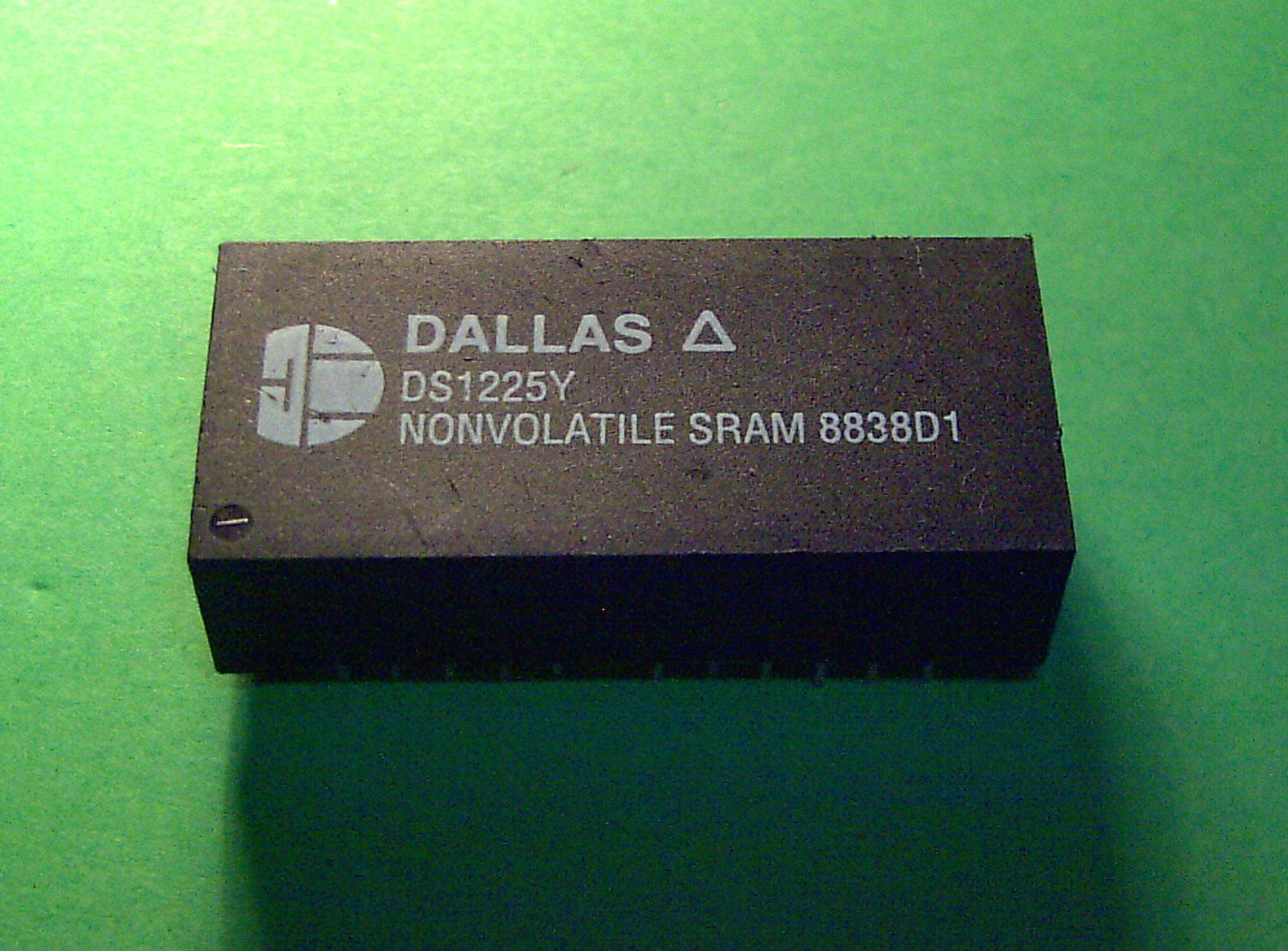
In industrial automation and embedded systems, reliability and data integrity are paramount. Machines on a factory floor, medical devices, or smart infrastructure components often need to maintain their operational state, calibration parameters, or logged data even through power fluctuations or outages. NVRAM provides this critical persistence. For example, a robotic arm might store its last position or operational parameters in NVRAM, allowing it to resume operations precisely where it left off after a power cycle, preventing costly downtime and ensuring safety. Similarly, in IoT (Internet of Things) devices, NVRAM can store network credentials, sensor calibration data, or short-term operational logs that need to survive a power reset until they can be uploaded to the cloud.
Data Storage and Logging in Specialized Environments
While not for mass storage, NVRAM is crucial for data logging in specialized applications where quick, persistent recording of critical events is necessary. Consider flight data recorders (“black boxes”) in aviation, which must capture crucial telemetry and operational data in real-time and retain it even in extreme conditions. Similarly, in scientific instruments, power meters, or specialized surveillance systems, NVRAM can store event logs, error codes, or critical readings that are essential for analysis or regulatory compliance, ensuring that no vital information is lost due to an unexpected power loss.
Networking Equipment and Persistent Configurations
Network routers, switches, and firewalls rely heavily on NVRAM to store their operating configurations. IP addresses, routing tables, security policies, and user access credentials are all examples of data that must persist across reboots. When a network administrator configures a device, those settings are written to NVRAM. If the device were to lose these settings every time it was powered down or restarted, the network would constantly require manual reconfiguration, leading to severe disruptions and maintenance overhead. NVRAM ensures that network infrastructure remains operational and consistent without continuous intervention.
Gaming and High-Performance Computing (Specific Use Cases)
While less prominent in consumer-level gaming consoles where game saves are typically handled by larger flash memory or hard drives, specific applications within gaming and high-performance computing can benefit from NVRAM. For instance, in arcade machines or specialized gaming hardware, NVRAM might store high scores, game settings, or even system-specific configurations that need instant recall. In HPC, certain NVRAM types, particularly those with high endurance and speed like MRAM or FRAM, are explored for persistent caching layers or for storing critical checkpoint data to allow faster recovery from system failures, minimizing the loss of computational progress.
Advantages and Limitations of NVRAM
Like any technology, NVRAM comes with a specific set of benefits and drawbacks that dictate its suitability for various applications. Understanding these trade-offs is crucial for system architects and designers.
Pros: Data Persistence, Speed, Low Power Consumption (in some types)
The primary advantage of all NVRAM types is, by definition, data persistence. This core feature ensures that critical information survives power loss, providing system stability and reliability. Many NVRAM technologies also offer fast read/write speeds, often comparable to or exceeding traditional volatile RAM for small-block access, making them ideal for frequently updated configuration data. Compared to Flash memory, many NVRAM types (like FRAM or MRAM) offer superior write endurance, capable of millions or even billions of write cycles, which is vital for applications requiring frequent updates to persistent data. Furthermore, some NVRAM technologies, particularly FRAM and MRAM, exhibit very low power consumption for data retention (zero power when idle) and during active operations, making them suitable for battery-powered or energy-efficient devices.
Cons: Cost, Density Limitations, Endurance Concerns (depending on type)
Despite its advantages, NVRAM is not without its limitations. Cost is often a significant factor; advanced NVRAM types like FRAM and MRAM are typically more expensive per bit than DRAM or NAND Flash memory. This higher cost often restricts their use to smaller capacities where persistence and speed are critical, rather than for mass storage. Density limitations are another challenge. While improving, NVRAM technologies generally offer lower storage densities compared to DRAM or Flash, meaning you can store fewer bits in the same physical space. For BBSRAM, the reliance on a battery introduces maintenance requirements (battery replacement) and a single point of failure. Although generally good, even some advanced NVRAM types can have specific endurance concerns or unique failure modes that need to be carefully considered for extremely high-cycle applications or harsh environments.
NVRAM vs. Other Non-Volatile Memory (NAND Flash, EEPROM)
It’s important to distinguish NVRAM from other non-volatile memory types. NAND Flash, while also non-volatile and widely used in SSDs, USB drives, and embedded systems, is typically page- or block-addressable, meaning data is read and written in larger chunks. It also has a more limited write endurance compared to many NVRAMs and slower random write speeds. EEPROM (Electrically Erasable Programmable Read-Only Memory) is byte-addressable and non-volatile but generally much slower for writes and also has endurance limitations, though typically better than early Flash. NVRAM, with its byte-addressability, speed, and often higher endurance, fills a distinct gap for persistent, frequently updated, small-to-medium data sets where instant recall and high reliability are paramount.
The Future of NVRAM: Driving Innovation in Persistent Memory
The landscape of memory technology is constantly evolving, driven by the insatiable demand for faster, denser, more energy-efficient, and persistently available data. NVRAM, in its various forms, is poised to play an increasingly significant role in this future, particularly as the lines between traditional memory and storage begin to blur.
Towards Universal Memory: The Holy Grail
One of the most ambitious goals in memory research is the development of “universal memory” – a single memory technology that combines the speed and endurance of DRAM, the non-volatility of Flash, and the byte-addressability of both, all at a competitive cost. Technologies like MRAM, FRAM, and PCM are strong contenders for this title. If successful, universal memory could revolutionize computing architectures, enabling instant-on capabilities for devices, eliminating the need for separate RAM and storage components for many applications, and fundamentally changing how operating systems and applications handle data persistence. Imagine a computer where all data, from running programs to saved files, remains instantly available and powered off.
Impact on Edge Computing and IoT
The proliferation of Edge Computing and the Internet of Things (IoT) presents a massive growth area for NVRAM. Edge devices often operate with limited power, infrequent network connectivity, and in challenging environments. NVRAM’s low power consumption (especially for retention), small footprint, and robust data persistence make it ideal for storing critical application code, sensor calibration data, network configurations, and event logs directly at the edge. It ensures that these devices can operate autonomously and reliably, even through intermittent power or connectivity, forming a resilient distributed computing fabric.
Role in Next-Generation Computing Architectures
Beyond consumer devices, NVRAM is expected to be a key enabler for next-generation computing architectures. In data centers, advanced NVRAM could serve as ultra-fast, persistent storage for critical metadata, transaction logs, or database write caches, significantly improving performance and data integrity. In AI and machine learning, where large models are constantly being trained and updated, NVRAM could provide faster checkpointing and recovery, accelerating development cycles. Research into CXL (Compute Express Link) and other memory pooling technologies also hints at a future where persistent memory, potentially built on NVRAM principles, can be dynamically allocated and shared across CPU, GPU, and specialized accelerators, optimizing resource utilization and performance.
Challenges and Research Directions
Despite the promising future, several challenges remain. Scaling NVRAM technologies to achieve densities comparable to DRAM and Flash, while maintaining cost-effectiveness, is a primary focus of research. Improving write endurance for some types and further reducing power consumption are ongoing goals. The integration of these novel materials and fabrication processes into existing semiconductor manufacturing lines also presents engineering hurdles. However, with sustained investment in materials science, device physics, and manufacturing innovation, the continued evolution of NVRAM is set to unlock new paradigms in computing, further blurring the lines between memory and storage and ultimately delivering more robust, efficient, and intelligent digital systems. The journey to a truly persistent and universally accessible memory fabric is well underway, and NVRAM remains a critical component of that technological frontier.
aViewFromTheCave is a participant in the Amazon Services LLC Associates Program, an affiliate advertising program designed to provide a means for sites to earn advertising fees by advertising and linking to Amazon.com. Amazon, the Amazon logo, AmazonSupply, and the AmazonSupply logo are trademarks of Amazon.com, Inc. or its affiliates. As an Amazon Associate we earn affiliate commissions from qualifying purchases.