
Lyme disease, a tick-borne illness caused by the bacterium Borrelia burgdorferi, poses a significant health threat to canines worldwide. Its insidious nature, often manifesting with subtle and non-specific symptoms, makes early detection and accurate diagnosis a considerable challenge for veterinarians and pet owners alike. While traditional veterinary examination and laboratory tests remain foundational, the rapid advancement of technology is profoundly reshaping our approach to understanding, identifying, and managing the symptomatic landscape of Lyme disease in dogs. From sophisticated wearable devices to cutting-edge artificial intelligence and innovative biotechnological tools, technology is not just augmenting our capabilities but offering entirely new paradigms for proactive pet health management, moving us closer to timely interventions and improved canine welfare. This exploration delves into how the tech revolution is illuminating the complexities of Lyme disease symptoms, offering insights that were once beyond our reach.
Leveraging Wearable Technology for Proactive Symptom Monitoring
The ability to continuously monitor a dog’s physiological data and behavioral patterns has transformed preventive care and early symptom detection. Wearable technology, once primarily a human fitness trend, has found a powerful application in veterinary medicine, providing pet owners and veterinarians with invaluable insights into a dog’s baseline health and deviations that could signal the onset of conditions like Lyme disease.
Smart Collars and Activity Trackers
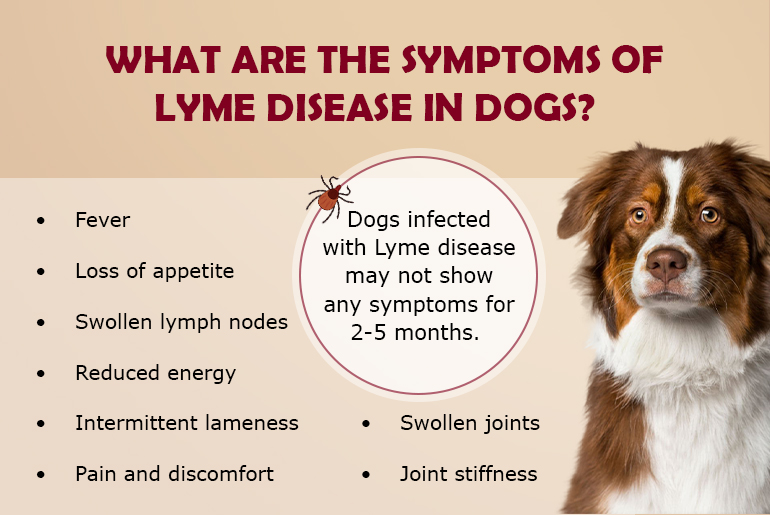
Modern smart collars and activity trackers for dogs are far more sophisticated than simple GPS locators. Equipped with an array of sensors, these devices can track vital metrics such as heart rate, respiratory rate, skin temperature, sleep quality, and activity levels (e.g., steps, playtime, rest periods). For Lyme disease, a subtle yet persistent lameness, lethargy, or a slight fever might be among the first indicators. A smart collar can detect changes in a dog’s gait or a decrease in activity that deviates from its established normal pattern, flagging potential musculoskeletal pain or general malaise. Similarly, a persistent elevation in resting heart rate or body temperature, even if slight, could be an early warning sign of an inflammatory response. These continuous data streams allow pet owners to observe trends and alert their veterinarian to concerning changes long before overt symptoms become obvious, shortening the diagnostic window and enabling prompt professional assessment.
Remote Monitoring and Data Analytics for Behavioral Changes
Beyond raw physiological data, some advanced systems integrate machine learning algorithms to analyze behavioral changes. A dog suffering from the early stages of Lyme disease might exhibit changes in appetite, increased irritability, or altered social interactions. While challenging for an owner to quantify consistently, AI-powered platforms can process patterns from integrated cameras or owner-reported logs to identify anomalies. For instance, a sudden decrease in playful interactions or an increase in restlessness during sleep, when correlated with other physiological markers, can paint a clearer picture of a dog’s health status. The aggregation and analysis of this remote monitoring data, often accessible through user-friendly mobile applications, empower both pet parents and veterinarians with a more holistic and data-driven view of canine well-being, facilitating a more proactive stance against diseases with vague presentations like Lyme and enabling earlier investigation into potential symptoms.
AI and Diagnostics: Enhancing Accuracy in Symptom Identification
Artificial intelligence is rapidly becoming an indispensable tool in veterinary diagnostics, moving beyond traditional methods to offer more precise, rapid, and often earlier identification of disease states. In the context of Lyme disease, where symptoms can mimic other conditions or be subtle, AI’s pattern recognition capabilities are particularly transformative in enhancing the accuracy of identification.
Predictive Analytics for Disease Risk and Early Warning
AI algorithms, trained on vast datasets encompassing geographical prevalence of ticks, environmental factors, breed predispositions, and historical patient data (including vaccination status and previous exposures), can now generate predictive analytics for Lyme disease risk. These systems can alert veterinarians and owners to elevated risks based on their dog’s location, travel history, and lifestyle, prompting more vigilant monitoring or prophylactic measures. Furthermore, when a dog presents with non-specific symptoms—such as intermittent lameness, fever, or lethargy—AI can analyze a combination of these clinical signs alongside historical patient data and current lab results to suggest Lyme disease as a primary differential diagnosis with a higher degree of probability than human assessment alone. This capability significantly reduces diagnostic delays and the potential for misdiagnosis by identifying subtle patterns indicative of the disease.
Advanced Imaging and Laboratory Automation
Technological advancements in imaging, such as high-resolution ultrasound and MRI, provide detailed views of affected joints or organs, helping to pinpoint inflammatory responses indicative of Lyme arthritis or potential cardiac involvement, which are known symptoms. AI assists in interpreting these complex images, highlighting subtle abnormalities that might be overlooked by the human eye. In the laboratory, automation and AI are streamlining the analysis of blood and urine samples. For Lyme disease, this includes automated processing of serological tests (e.g., C6 ELISA) for Borrelia burgdorferi antibodies. AI can analyze cellular morphology, detect subtle changes in blood parameters, and even assist in rapid molecular diagnostics (PCR) by optimizing target detection and reducing human error, thus accelerating the confirmation of infection and allowing for quicker initiation of treatment based on identified symptoms.
Digital Platforms and Telemedicine: Bridging the Vet-Pet Owner Gap
The digital revolution has also reshaped how pet owners interact with veterinary care providers, democratizing access to information and facilitating more immediate and convenient consultations. Telemedicine and integrated digital health platforms are particularly beneficial for diseases like Lyme, which often require careful observation over time and clear communication regarding evolving symptoms.
Virtual Consultations for Symptom Assessment and Guidance
Telemedicine platforms allow pet owners to connect with veterinarians remotely, often via video call, to discuss their dog’s symptoms. For a condition like Lyme disease, where symptoms like lameness might be intermittent or subtle, a virtual consultation can be incredibly useful. Owners can demonstrate their dog’s gait, show areas of discomfort, or describe behavioral changes in real-time from the comfort of their home, reducing the stress of a clinic visit for the pet. While not a substitute for a physical examination and diagnostic tests, these initial virtual assessments can help veterinarians triage cases, provide initial advice, and determine if an in-person visit is immediately necessary, thereby optimizing clinical resources and guiding owners more effectively through the diagnostic journey of Lyme by focusing on early symptomatic cues.
Centralized Health Records and Symptom Logging Applications
Modern veterinary practices increasingly utilize centralized digital health record systems. These platforms integrate a dog’s complete medical history, including vaccination records, previous test results, and treatment plans. For Lyme disease, having a comprehensive longitudinal record can be crucial for tracking disease progression, response to treatment, and recurrence of symptoms. Complementary mobile applications allow pet owners to actively participate by logging symptoms, medication adherence, and changes in their dog’s condition, providing a rich, real-time data stream directly into the veterinary record. This collaborative approach enhances diagnostic accuracy by providing a detailed narrative of symptom onset and evolution, ensuring no critical detail is lost between appointments. Such platforms foster better communication and shared decision-making, leading to more personalized and effective care strategies centered around the dog’s symptomatic presentation.
The Role of Biotech in Deeper Understanding and Future Prevention
Beyond immediate diagnostics and monitoring, biotechnology is at the forefront of unraveling the molecular complexities of Lyme disease, paving the way for advanced therapies, more precise diagnostics, and ultimately, enhanced preventative strategies. Understanding symptoms fundamentally requires understanding the disease’s underlying mechanisms, a domain where biotech excels.
Genomic Research and Personalized Medicine Approaches
Genomic research is providing unprecedented insights into both the Borrelia burgdorferi bacterium and the canine host’s response to infection. By analyzing the pathogen’s genome, scientists can identify specific virulence factors responsible for different symptom presentations and develop more targeted diagnostic probes. Concurrently, canine genomics helps identify genetic predispositions or resistances to Lyme disease, offering a path towards personalized medicine. This could mean tailoring vaccination strategies based on a dog’s genetic profile or predicting which dogs might develop more severe symptoms, moving beyond a one-size-fits-all approach. For example, understanding how certain genetic markers influence a dog’s immune response could inform future therapeutic interventions that alleviate specific symptoms more effectively.
Novel Diagnostic Tools and Rapid Testing Kits
Biotechnology is driving the development of next-generation diagnostic tools that are more sensitive, specific, and rapid. This includes advanced serological tests that can differentiate between natural exposure and vaccination, or identify active infection versus past exposure more accurately than current methods. Furthermore, point-of-care (POC) rapid testing kits, leveraging microfluidics and biosensors, are emerging, enabling veterinarians to perform highly accurate tests within minutes during a routine clinic visit. These kits can detect specific Borrelia antigens or antibodies, providing immediate results that can confirm Lyme disease symptoms, allowing for prompt treatment initiation. This immediate feedback loop significantly reduces anxiety for pet owners and prevents potential progression of the disease, epitomizing how biotech directly impacts the symptomatic management and identification of Lyme disease in dogs.

Conclusion
The challenge of “what is Lyme disease symptoms in dogs” is multifaceted, given the disease’s varied and often subtle presentation. However, the relentless march of technological innovation is transforming our capacity to meet this challenge head-on. From the continuous, data-rich insights offered by wearable devices and the predictive power of AI in diagnostics, to the enhanced accessibility of care through telemedicine and the profound discoveries enabled by biotechnology, technology is fundamentally redefining canine health management. These advancements provide veterinarians and pet owners with an unprecedented arsenal of tools to detect, understand, and manage Lyme disease symptoms more effectively, paving the way for earlier intervention, improved treatment outcomes, and ultimately, a better quality of life for our beloved canine companions in an increasingly interconnected and technologically advanced world.
aViewFromTheCave is a participant in the Amazon Services LLC Associates Program, an affiliate advertising program designed to provide a means for sites to earn advertising fees by advertising and linking to Amazon.com. Amazon, the Amazon logo, AmazonSupply, and the AmazonSupply logo are trademarks of Amazon.com, Inc. or its affiliates. As an Amazon Associate we earn affiliate commissions from qualifying purchases.