
In an increasingly data-driven world, the ability to collect, measure, and analyze physical phenomena is paramount. From the intricate processes within a semiconductor manufacturing plant to the subtle physiological signals of the human body, understanding and controlling our environment relies heavily on a critical technological process known as Data Acquisition (DAQ). Far more than just data collection, DAQ is the sophisticated bridge that connects the physical, analog world with the digital realm of computers, enabling precise measurement, monitoring, and control. It’s the invisible force behind much of our modern technological advancement, allowing industries to optimize operations, scientists to unravel mysteries, and engineers to design the next generation of innovations. Without robust data acquisition systems, the promise of smart factories, advanced healthcare, and intelligent infrastructure would remain largely aspirational. This comprehensive exploration delves into the foundational principles, core components, diverse applications, and future trajectory of data acquisition, illuminating its indispensable role in the technological landscape.
Defining Data Acquisition: Bridging the Physical and Digital
At its heart, data acquisition is the process of sampling real-world physical conditions and converting the resulting samples into numerical values that can be manipulated by a computer. These physical conditions can range from temperature, pressure, and force to light intensity, sound, voltage, and current. The goal is to capture precise information about these phenomena at specific moments or over periods, allowing for analysis, storage, and presentation.
The Core Concept Explained
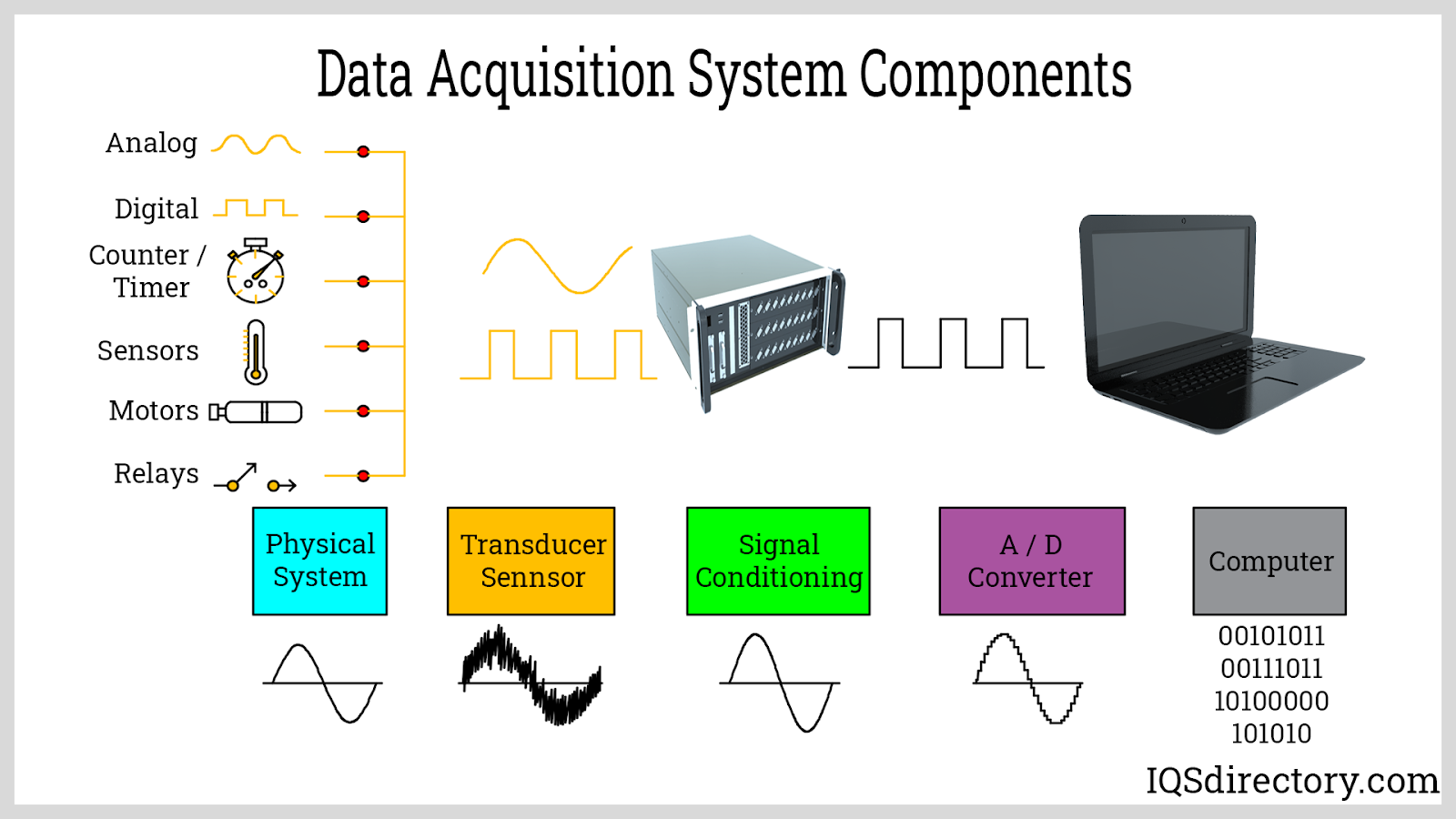
Imagine trying to understand how a car engine performs without any gauges or sensors. You wouldn’t know its temperature, RPM, or oil pressure. Data acquisition systems provide these “senses” for machines, environments, and even biological systems. The fundamental concept involves several steps:
-
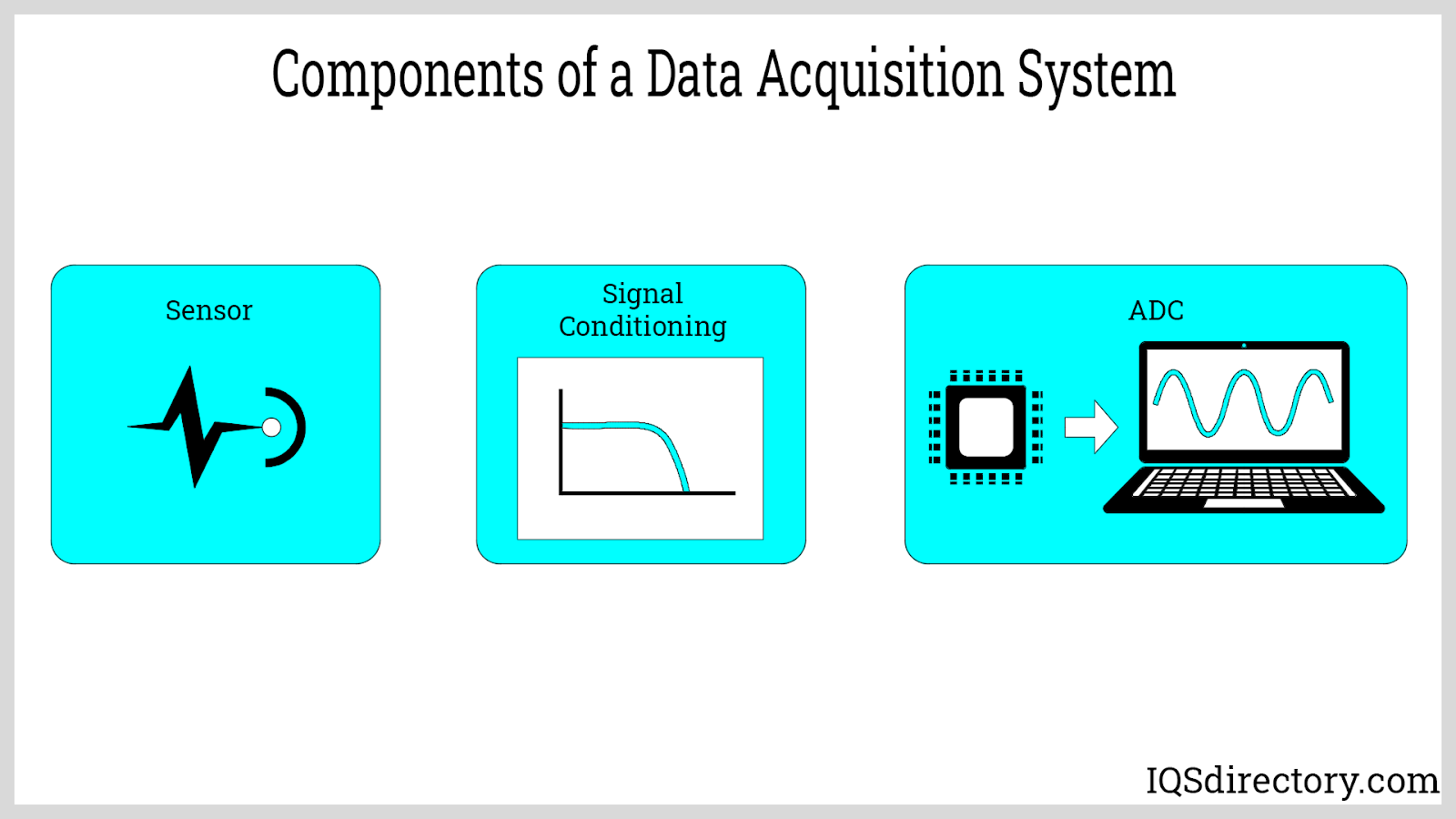
Sensing: A transducer or sensor converts a physical quantity into an electrical signal (e.g., a thermocouple converts temperature into a small voltage).
-
Conditioning: This electrical signal is often weak, noisy, or incompatible with digital systems. Signal conditioning amplifies, filters, and isolates the signal, making it suitable for conversion.
-
Conversion: An Analog-to-Digital Converter (ADC) takes the conditioned analog electrical signal and transforms it into a discrete digital value.
-
Processing and Analysis: The digital data is then fed into a computer system, where specialized software can store it, display it, analyze it for trends or anomalies, and even use it to control other systems.
This seamless flow from physical event to actionable digital insight is what defines data acquisition, forming the bedrock for informed decision-making and automated control across countless sectors.
Why DAQ is Indispensable in Modern Tech
The imperative for DAQ systems stems from the ever-growing need for precision, efficiency, and safety in an increasingly complex world. In manufacturing, DAQ ensures product quality by monitoring critical parameters during production, preventing costly defects. In scientific research, it allows for the collection of empirical evidence, crucial for validating theories and making new discoveries. For infrastructure, DAQ systems can monitor structural integrity, predicting potential failures before they become catastrophic.
Furthermore, the rise of the Internet of Things (IoT), artificial intelligence (AI), and machine learning (ML) has amplified DAQ’s importance. These advanced technologies rely on vast quantities of high-quality, real-time data to learn, make predictions, and automate processes. Without effective data acquisition, the potential of these transformative technologies would remain largely untapped. DAQ is not just about collecting data; it’s about providing the foundational input that fuels intelligence and drives progress in virtually every technological domain.
The Anatomy of a DAQ System
A typical data acquisition system is not a single device but rather an integrated collection of hardware and software components working in concert. Each element plays a crucial role in ensuring the accurate and reliable capture and processing of data. Understanding these components is key to appreciating the sophistication and versatility of DAQ.
Sensors and Signal Conditioning: Capturing and Preparing Data
The journey of data acquisition begins at the point of interaction with the physical world: the sensor. A sensor, also known as a transducer, is a device that detects and responds to some type of physical input from the environment. Common examples include thermocouples and RTDs for temperature, strain gauges for force, accelerometers for vibration, and photodiodes for light. The sensor’s primary function is to convert the physical phenomenon into a measurable electrical signal – typically voltage or current.
However, the raw electrical signal from a sensor is often not ready for immediate digital conversion. This is where signal conditioning comes into play. Signal conditioning circuits perform several vital functions:
-
Amplification: Many sensor signals are very weak (millivolts or microvolts) and need to be amplified to a level suitable for the ADC, maximizing measurement resolution and minimizing noise effects.
-
Filtering: Environmental electrical noise (e.g., from power lines, motors) can corrupt signals. Filters remove unwanted noise frequencies, ensuring a clean signal.
-
Isolation: This protects the DAQ system and the measured device from damaging high voltages or ground loops, enhancing safety and accuracy.
-
Linearization: Some sensors have non-linear outputs (e.g., thermocouples). Signal conditioning can linearize these outputs, simplifying data interpretation.
-
Excitation: Many passive sensors (like thermistors or strain gauges) require an external voltage or current (excitation) to operate. Signal conditioning provides this stable excitation.
Effective signal conditioning is critical for data integrity, as errors introduced at this stage can propagate throughout the entire acquisition process.
Analog-to-Digital Conversion: The Digital Gateway
Once the analog signal has been properly conditioned, it needs to be converted into a digital format that a computer can understand and process. This is the responsibility of the Analog-to-Digital Converter (ADC). The ADC samples the continuous analog signal at discrete intervals and quantizes each sample into a specific numerical value.
Key characteristics of an ADC include:
-
Resolution: This determines the precision of the measurement, often expressed in bits (e.g., 8-bit, 16-bit, 24-bit). A higher bit resolution means the ADC can distinguish smaller changes in the analog signal, providing more granular data. For example, a 16-bit ADC can represent 65,536 (2^16) distinct voltage levels.
-
Sampling Rate: This specifies how many samples per second the ADC can take (e.g., 100 kS/s – kilo samples per second). A higher sampling rate is necessary to accurately capture rapidly changing signals without losing critical information (dictated by the Nyquist-Shannon sampling theorem).
-
Channels: DAQ systems can have multiple ADCs or multiplexers that allow a single ADC to process multiple input channels sequentially, enabling simultaneous monitoring of various parameters.
The choice of ADC directly impacts the quality and reliability of the acquired data, making it a pivotal component in any DAQ system.
Data Processing and Storage: Software at the Helm
With digital data now available, the next crucial step involves data processing, analysis, and storage, primarily managed by specialized software running on a computer or embedded processor. The software component of a DAQ system is as vital as its hardware counterpart, providing the intelligence and user interface.

DAQ software typically performs several functions:
-
Configuration: Allows users to set up measurement parameters, specify sampling rates, select input channels, and calibrate sensors.
-
Data Acquisition Control: Manages the communication with the hardware, triggering data collection, and transferring data from the ADC to memory.
-
Real-time Display and Visualization: Presents acquired data to the user in various formats such as graphs, charts, digital meters, or alarm indicators, enabling immediate monitoring.
-
Data Analysis: Offers tools for post-processing the collected data, including statistical analysis, signal processing (e.g., FFT for frequency analysis), filtering, and curve fitting.
-
Data Logging and Storage: Stores the acquired data in various formats (e.g., text files, spreadsheets, databases) for later review, trending, and compliance.
-
Automation and Control: Many DAQ software packages can also integrate with control systems, allowing the acquired data to trigger actions, adjust parameters, or shut down processes based on predefined conditions. This capability transforms DAQ from a purely monitoring tool into an active participant in automated systems.
Common DAQ software platforms include LabVIEW, MATLAB, Python libraries, and vendor-specific applications, each offering different levels of flexibility and functionality for a wide range of applications.
Diverse Applications Driving Innovation
Data acquisition systems are remarkably versatile, finding homes in virtually every industry where precise measurement and analysis are critical. Their ability to translate complex physical phenomena into understandable digital data fuels innovation and ensures operational excellence across a myriad of domains.
Industrial and Manufacturing Excellence
In manufacturing, DAQ systems are indispensable for ensuring product quality, optimizing processes, and minimizing downtime. They are used for:
-
Process Monitoring and Control: Continuously monitoring temperatures, pressures, flow rates, and levels in chemical plants, refineries, and food processing facilities to maintain optimal operating conditions and prevent deviations.
-
Quality Assurance: Inspecting products during assembly lines for defects, dimensional accuracy, or material properties using sensors like vision systems, load cells, or ultrasonic transducers.
-
Predictive Maintenance: Monitoring vibrations, temperatures, and current draw in machinery to detect early signs of wear or impending failure, enabling proactive maintenance and reducing unexpected breakdowns.
-
Automated Testing: Performing repetitive tests on components or finished products to ensure they meet specifications, such as stress tests on materials or performance tests on electronic devices.
By providing real-time insights into manufacturing processes, DAQ empowers industries to achieve higher efficiency, reduce waste, and deliver superior products.
Advancing Research and Development
Scientific and engineering research heavily relies on DAQ systems for collecting experimental data, prototyping new designs, and validating theoretical models. From university labs to corporate R&D centers, DAQ is crucial for:
-
Experimental Physics and Chemistry: Recording data from particle accelerators, spectroscopy experiments, or chemical reactions to understand fundamental properties and interactions.
-
Materials Science: Characterizing the mechanical, electrical, and thermal properties of new materials under various conditions.
-
Product Prototyping and Testing: Engineers use DAQ to test the performance of new product designs, measure critical parameters, and optimize their functionality before mass production.
-
Aerospace and Automotive Testing: During vehicle development, DAQ systems are used to capture data from engine performance, structural stress, crash tests, and aerodynamic studies, ensuring safety and efficiency.
DAQ accelerates the pace of discovery and innovation by providing accurate and repeatable data collection capabilities for complex research endeavors.
Beyond the Lab: Environmental and Biomedical Insights
The utility of DAQ extends far beyond industrial and scientific laboratories, playing a critical role in understanding our environment and enhancing healthcare.
-
Environmental Monitoring: DAQ systems are deployed in weather stations to collect data on temperature, humidity, wind speed, and precipitation. They also monitor air and water quality, track pollution levels, and study climate change impacts, providing crucial data for environmental protection and policy-making.
-
Structural Health Monitoring: Monitoring bridges, buildings, and other large structures for strain, vibration, and displacement can detect fatigue or damage early, preventing catastrophic failures and extending the lifespan of critical infrastructure.
-
Healthcare and Biomedical Research: In hospitals, DAQ is integral to patient monitoring systems, collecting vital signs like ECG, blood pressure, oxygen saturation, and temperature. In research, it’s used for neurophysiology studies, drug discovery, and developing advanced medical devices. This enables better patient care, diagnostics, and groundbreaking medical advancements.
These applications underscore DAQ’s broad impact, contributing to public safety, environmental sustainability, and human well-being.
The Future Landscape of Data Acquisition
The field of data acquisition is dynamic, continually evolving with technological advancements. As the demand for more data, faster processing, and greater intelligence grows, DAQ systems are adapting, integrating new technologies to meet these challenges.
Emerging Technologies and Connectivity
The future of DAQ is intrinsically linked to advancements in sensor technology, wireless communication, and embedded systems.
-
Smarter Sensors: Next-generation sensors are becoming more intelligent, incorporating built-in processing capabilities, calibration data, and even network connectivity (smart sensors). This reduces the burden on external signal conditioning and processing units.
-
Wireless and Distributed DAQ: The move towards wireless DAQ systems offers unparalleled flexibility, especially for monitoring in hazardous, remote, or rotating environments where traditional wired connections are impractical. Distributed DAQ networks, where multiple acquisition nodes operate independently but communicate data to a central system, enhance scalability and resilience.
-
Miniaturization and Edge Computing: As DAQ hardware shrinks, it can be embedded into more devices and locations. Edge computing allows data to be processed closer to the source, reducing latency and bandwidth requirements, especially for real-time applications where immediate decision-making is critical.
These trends are making DAQ systems more accessible, robust, and capable of operating in increasingly challenging environments.
The Synergy with AI and Cloud Computing
Perhaps the most significant development in the future of DAQ is its deepening integration with artificial intelligence (AI) and cloud computing.
-
AI-Powered Analytics: By feeding large datasets from DAQ systems into machine learning algorithms, it’s possible to uncover subtle patterns, predict failures, optimize processes autonomously, and detect anomalies with far greater precision than traditional methods. AI can learn from historical data to refine control parameters or identify complex relationships between measured variables.
-
Cloud-Based DAQ: The cloud provides scalable storage, immense processing power, and global accessibility for DAQ data. Remote teams can access real-time data from anywhere, collaborate on analysis, and deploy updates to distributed systems seamlessly. Cloud platforms also enable advanced analytics services without requiring significant local infrastructure.
-
Predictive and Prescriptive DAQ: Moving beyond simply reporting what is happening, future DAQ systems, especially when augmented by AI, will increasingly predict what will happen and even prescribe the best course of action. This transforms DAQ from a diagnostic tool into a proactive, intelligent system for operational optimization and risk mitigation.
The convergence of DAQ with AI and cloud computing is paving the way for truly intelligent monitoring, analysis, and control systems, heralding a new era of data-driven insights and automation.
Conclusion
Data acquisition stands as an unsung hero in the technological landscape, silently powering the precision, efficiency, and intelligence that define our modern world. From the smallest sensor converting a physical tremor into an electrical pulse to the complex software that analyzes millions of data points, DAQ systems are the bedrock upon which scientific discovery, industrial innovation, and advanced automation are built. As we push the boundaries of what’s possible, demanding more intelligence, autonomy, and foresight from our machines and systems, the role of robust, sophisticated data acquisition will only grow. It is the vital link that transforms the raw reality of the physical world into actionable digital insights, truly making the invisible visible and the unknown knowable, thereby driving progress across every conceivable domain.
aViewFromTheCave is a participant in the Amazon Services LLC Associates Program, an affiliate advertising program designed to provide a means for sites to earn advertising fees by advertising and linking to Amazon.com. Amazon, the Amazon logo, AmazonSupply, and the AmazonSupply logo are trademarks of Amazon.com, Inc. or its affiliates. As an Amazon Associate we earn affiliate commissions from qualifying purchases.