
In an increasingly data-driven world, understanding the intrinsic properties of substances around us is paramount, especially when those substances are as vital as water. Water, often perceived as a simple compound, harbors a complex array of characteristics that dictate its utility and safety across countless applications. Among these, electrical conductivity stands out as a crucial metric, offering a window into the dissolved content and purity levels of an aqueous solution. Far from being a mere academic concept, water conductivity is a cornerstone in various technological fields, from environmental monitoring to advanced industrial processes and even the burgeoning sector of smart agriculture.
This exploration delves into the essence of water conductivity, dissecting the scientific principles that govern it, the cutting-edge technologies employed for its measurement, and its indispensable role in ensuring quality, efficiency, and safety across a spectrum of modern applications. For professionals and enthusiasts alike, grasping the nuances of water conductivity is not just about understanding a scientific phenomenon; it’s about appreciating a foundational aspect of water technology that underpins much of our built environment and ecological stewardship.
The Science Behind Electrical Conductivity in Aqueous Solutions
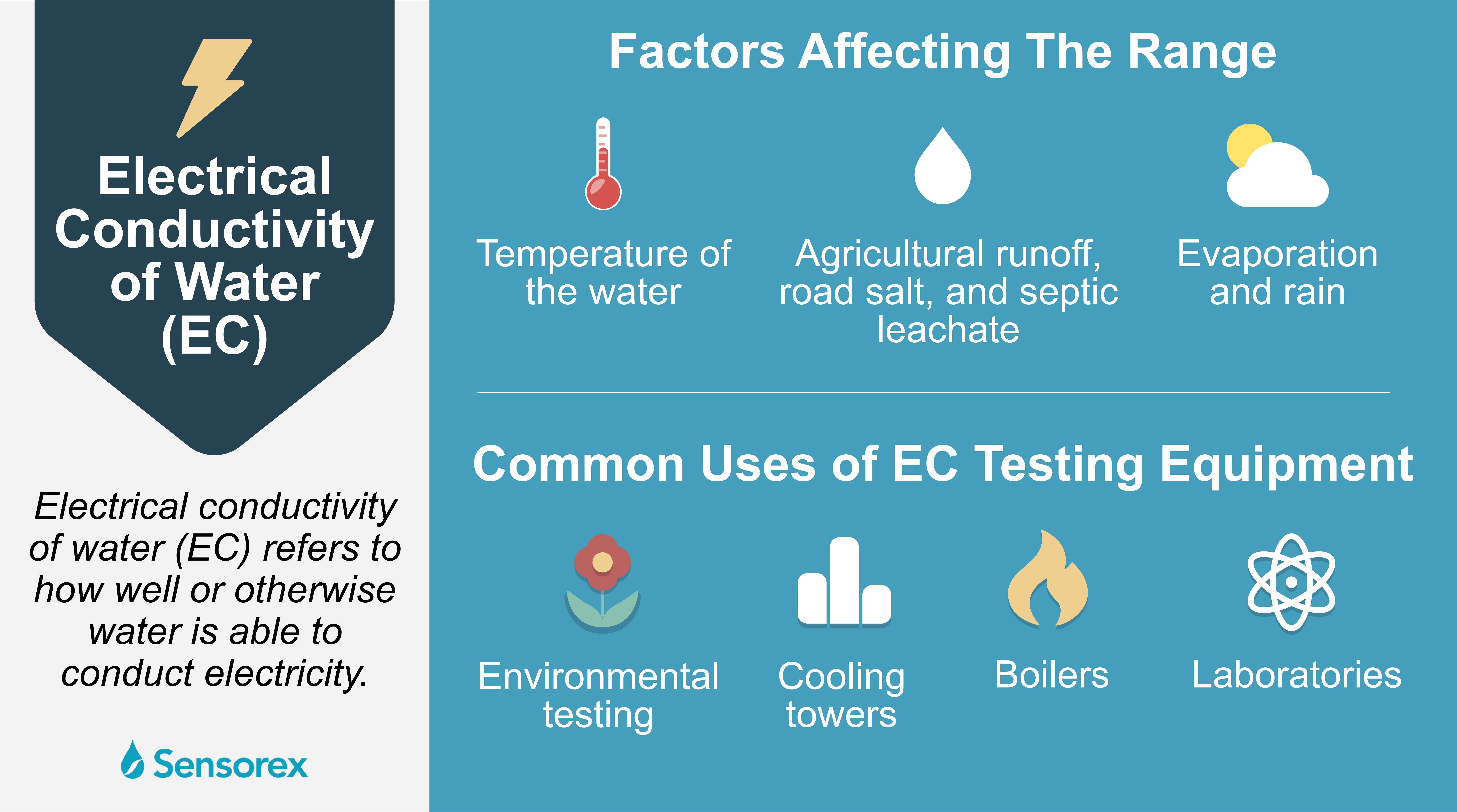
At its heart, water conductivity is a measure of a solution’s ability to pass an electrical current. Pure water (H₂O) is an excellent insulator, meaning it does not conduct electricity effectively. However, the water we encounter in nature or industrial settings is rarely pure; it invariably contains dissolved substances that transform its electrical properties. These dissolved substances, primarily salts, acids, and bases, dissociate into charged particles known as ions when introduced to water. It is the presence and mobility of these ions that enable water to conduct electricity.
Defining Conductivity: Ions as Charge Carriers
The mechanism of electrical conductivity in water is fundamentally electrochemical. When an electric potential (voltage) is applied across two electrodes submerged in water, any free ions present in the solution will migrate towards the oppositely charged electrode. Cations (positively charged ions) move towards the cathode, while anions (negatively charged ions) move towards the anode. This directed movement of charged particles constitutes an electric current. The more ions present, the greater the current that can flow for a given voltage, and thus, the higher the water’s conductivity. The type of ion also plays a role; smaller, more mobile ions or highly charged ions contribute more significantly to conductivity than larger, less mobile ones at the same concentration.
Units of Measurement and Typical Ranges
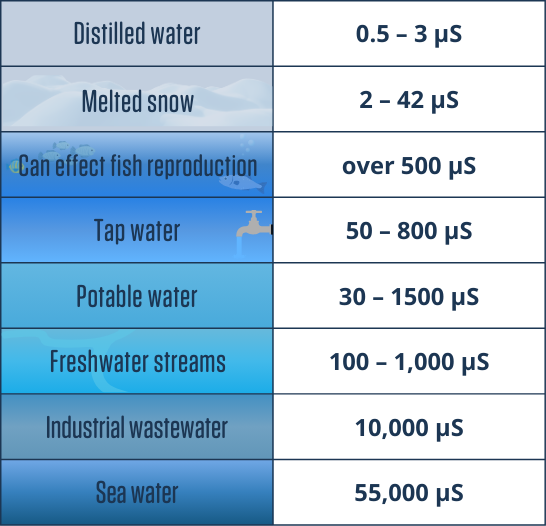
Electrical conductivity is typically measured in units of Siemens per centimeter (S/cm) or millisiemens per centimeter (mS/cm). For highly dilute solutions, microsiemens per centimeter (µS/cm) is commonly used. To provide context:
-
Ultrapure Water: Exhibits extremely low conductivity, often less than 0.05 µS/cm at 25°C. This is crucial for semiconductor manufacturing and pharmaceutical production.
-
Drinking Water: Varies significantly by source, but generally ranges from 50 to 1500 µS/cm. The EPA recommends levels below 500 µS/cm for aesthetic reasons (taste).
-
Brackish Water: Can range from 1,500 to 10,000 µS/cm.
-
Seawater: Typically around 50,000 µS/cm (or 50 mS/cm), owing to its high concentration of dissolved salts, predominantly sodium chloride.
Factors Influencing Water Conductivity
Several key factors can significantly impact the conductivity of a water sample, demanding careful consideration in measurement and application:
-
Temperature: This is arguably the most significant factor. As water temperature increases, the viscosity of water decreases, and ions become more mobile and energetic, leading to increased conductivity. For accurate comparisons, conductivity measurements are often temperature-compensated and reported at a reference temperature, usually 25°C. Modern conductivity meters include built-in temperature sensors for automatic compensation.
-
Total Dissolved Solids (TDS): Conductivity is directly proportional to the concentration of dissolved ionic solids. Higher TDS levels invariably result in higher conductivity. While not a direct measure of TDS, conductivity is often used as a convenient and quick surrogate, with conversion factors applied, though these factors can vary depending on the specific ionic composition.
-
Type of Ions: Different ions contribute differently to conductivity. For instance, a solution of sodium chloride (NaCl) might have a different conductivity than a solution of calcium chloride (CaCl₂) at the same molar concentration, due to differences in ionic charge and mobility. The presence of strong acids or bases will also dramatically increase conductivity due to their complete dissociation into highly mobile H⁺ and OH⁻ ions.
Technological Approaches to Measuring Water Conductivity
The precise measurement of water conductivity is a cornerstone of modern water technology. From simple handheld devices to sophisticated online monitoring systems, the technology has evolved to provide accurate, reliable, and real-time data across diverse environments.
Overview of Conductivity Meters and Sensors
The fundamental instrument for measuring water conductivity is the conductivity meter, which consists of a sensor (probe) connected to a meter that displays the reading. Sensors typically employ two or more electrodes, often made of inert materials like platinum, graphite, or stainless steel, to prevent corrosion and chemical reactions. The meter applies an alternating current (AC) voltage across these electrodes and measures the resulting current flow. Using AC prevents electrode polarization and minimizes chemical reactions at the electrode surface, which would otherwise lead to inaccurate readings.
How Electrodes Work: Principles of Operation
The most common type of conductivity sensor uses two electrodes. When submerged in water, an AC voltage is applied, and the meter measures the current that passes through the water between the electrodes. According to Ohm’s Law (V=IR), the resistance (R) of the solution can be calculated. Conductivity (G) is the reciprocal of resistance (G=1/R). The geometric constant of the cell (K), which depends on the electrode area and distance between them, is then used to convert the measured conductivity to specific conductivity, typically in S/cm. More advanced sensors, like 4-electrode or electrodeless (inductive) sensors, are used for highly conductive or fouling solutions, offering greater accuracy and reduced maintenance.
Advanced Digital Conductivity Monitoring Systems
Modern water technology heavily relies on advanced digital conductivity monitoring systems. These systems often feature:
-
Microprocessor-based meters: Offer enhanced accuracy, automatic temperature compensation (ATC), and the ability to store data and perform complex calculations.
-
Integrated sensors: Many systems combine conductivity sensors with temperature, pH, ORP, and dissolved oxygen sensors, providing a comprehensive profile of water quality.
-
Digital communication protocols: Enable seamless integration with PLCs, SCADA systems, and industrial control networks via protocols like Modbus, HART, or Profibus, crucial for automation and remote monitoring.
-
Cloud connectivity: Allows for real-time data access, trend analysis, and alarm notifications via web interfaces or mobile applications, a critical feature for distributed monitoring networks.
Calibration and Maintenance for Accurate Readings
The accuracy of conductivity measurements hinges significantly on proper calibration and regular maintenance of the sensors.
-
Calibration: Sensors must be periodically calibrated using certified conductivity standard solutions of known concentrations. This process adjusts the meter to account for any drift in sensor performance or variations in the cell constant.
-
Cleaning: Electrodes can become fouled over time by scale, biofilms, or other contaminants, which reduces their effective surface area and leads to erroneous readings. Regular cleaning with appropriate solutions is essential.
-
Storage: Proper storage of probes, often in a wet cap or appropriate solution, is necessary to maintain electrode integrity and extend their lifespan.
Critical Applications of Conductivity Measurement Across Industries
The precise measurement of water conductivity is not merely a laboratory curiosity; it is a vital parameter in a myriad of industrial, environmental, and commercial applications, driving efficiency, quality, and regulatory compliance.
Environmental Monitoring and Water Quality Assessment
Conductivity serves as an excellent indicator of water quality in natural environments and drinking water supplies.
-
Drinking Water: Monitoring conductivity helps assess the effectiveness of water treatment processes (e.g., reverse osmosis, deionization) and can flag potential contamination from agricultural runoff or industrial discharges, which often introduce dissolved ions.
-
Wastewater: Conductivity measurements are used to monitor the quality of wastewater effluents before discharge, ensuring compliance with environmental regulations and preventing pollution. High conductivity in wastewater indicates a significant dissolved solids load.
-
Natural Waters: In rivers, lakes, and oceans, conductivity helps characterize water bodies, track pollution plumes, and study the impact of human activities on aquatic ecosystems. Changes in conductivity can signal ecological disturbances.
Industrial Processes and Quality Control
In industrial settings, precise conductivity control is critical for operational efficiency and product quality.
-
Boiler and Cooling Tower Water: Managing conductivity prevents scale formation, corrosion, and biological growth, which can lead to costly equipment damage and reduced efficiency. Blowdown systems are often automated based on conductivity readings.
-
Pharmaceutical and Biomedical Industries: Ultrapure water is essential for drug manufacturing and medical device sterilization. Conductivity monitors ensure the rigorous purity standards are met, as even trace ionic impurities can compromise product integrity.
-
Semiconductor Manufacturing: The electronics industry demands water of extremely low conductivity (high resistivity) to prevent contamination during chip fabrication, where even minuscule impurities can cause defects.
-
Food and Beverage Production: Conductivity can be used to monitor the concentration of cleaning solutions, check the rinse water purity, and ensure product consistency in various food and beverage items.
Agriculture and Hydroponics: Nutrient Management
In modern agriculture, especially hydroponics and precision farming, conductivity is a key parameter for optimizing plant growth.
-
Nutrient Solutions: Hydroponic systems rely on carefully balanced nutrient solutions. Conductivity, often expressed as Electrical Conductivity (EC), directly indicates the total concentration of dissolved nutrient salts. Growers use EC meters to monitor and adjust nutrient levels, ensuring plants receive adequate nourishment without experiencing nutrient burn or deficiency.
-
Soil Salinity: In traditional agriculture, soil conductivity can indicate salinity levels, which, if too high, can impede water uptake by plants and reduce crop yields.
Research and Laboratory Analysis
Conductivity measurements are fundamental in scientific research and analytical laboratories for various purposes, including titrations, characterization of chemical solutions, and monitoring reaction progress.
Emerging Technologies and Future Trends in Water Conductivity Monitoring
The field of water technology is rapidly evolving, with conductivity monitoring at the forefront of innovation, driven by advancements in sensor technology, data analytics, and connectivity.
Smart Sensors and IoT Integration for Real-time Data
The future of conductivity monitoring is increasingly linked to the Internet of Things (IoT). Smart sensors, equipped with embedded microprocessors and wireless communication capabilities (e.g., LoRaWAN, cellular, Wi-Fi), can collect and transmit conductivity data in real-time to cloud platforms. This enables continuous, remote monitoring of water quality across vast networks, from municipal water grids to distributed agricultural fields, providing unprecedented visibility and control.
AI and Machine Learning for Predictive Analytics
Integrating conductivity data with artificial intelligence (AI) and machine learning (ML) algorithms is transforming reactive monitoring into predictive analytics. AI can analyze historical conductivity trends, correlate them with other environmental or operational parameters, and identify anomalies or predict potential issues before they escalate. For instance, ML models can forecast equipment fouling, optimize chemical dosing in water treatment plants, or predict the onset of pollution events based on subtle shifts in conductivity patterns.
Miniaturization and Portable Solutions
The demand for convenient, on-the-go analysis is driving the miniaturization of conductivity sensors and meters. Compact, rugged, and user-friendly handheld devices are becoming more sophisticated, offering laboratory-grade accuracy in field settings. This trend also extends to microfluidic devices and lab-on-a-chip technologies that can integrate conductivity sensing into complex, multi-parameter analysis platforms for rapid and distributed testing.
Cybersecurity Concerns in Connected Water Systems
As water monitoring systems become more interconnected and reliant on digital networks, cybersecurity emerges as a critical concern. Protecting conductivity data and control systems from unauthorized access, tampering, or cyberattacks is paramount to ensuring the integrity of water infrastructure. Future developments will increasingly focus on robust encryption, secure communication protocols, and resilient system architectures to safeguard these vital technological assets.
Best Practices for Harnessing Conductivity Data for Optimal Outcomes
Maximizing the utility of conductivity data extends beyond mere measurement; it involves thoughtful interpretation, integration with other parameters, and proactive management strategies.
Understanding Data Interpretation and Thresholds
Effective use of conductivity data requires a clear understanding of what the numbers mean in a specific context. Establishing appropriate baseline conductivity values and defining acceptable thresholds for various applications is crucial. Deviations from these benchmarks can signal a problem, such as contamination, equipment malfunction, or inefficient treatment processes. Training personnel on proper data interpretation ensures timely and informed decision-making.
Integrating Conductivity with Other Water Quality Parameters
Conductivity is most powerful when viewed not in isolation but as part of a comprehensive suite of water quality parameters. Integrating conductivity data with measurements like pH, temperature, turbidity, dissolved oxygen, and specific ion concentrations provides a holistic picture of water health. This multi-parameter approach allows for more accurate diagnostics and robust management strategies, uncovering relationships and causal factors that individual parameters might miss.
Proactive Problem Solving and System Optimization
The true value of continuous conductivity monitoring lies in its ability to facilitate proactive problem-solving and ongoing system optimization. By continuously tracking conductivity, operators can:
-
Detect Leaks: A sudden drop in conductivity in a closed-loop system might indicate a leak of pure water.
-
Monitor Chemical Dosing: Consistent conductivity levels can confirm correct chemical addition in treatment processes.
-
Optimize Blowdown: In boilers and cooling towers, conductivity data can automate blowdown cycles, saving water and chemicals.
-
Prevent Failures: Trends indicating rising conductivity in ultrapure water systems can alert to membrane failure or resin exhaustion before product quality is compromised.
By leveraging these insights, organizations can enhance operational efficiency, reduce costs, improve product quality, and ensure compliance with environmental and health standards.

Conclusion
Conductivity in water, once a simple scientific measurement, has evolved into a vital technological metric that underpins critical functions across countless industries. From ensuring the purity of drinking water and the efficiency of industrial processes to optimizing agricultural yields and driving scientific discovery, the ability to accurately measure and interpret water conductivity is indispensable. As technology continues to advance, integrating smart sensors, AI, and robust connectivity, the role of conductivity monitoring will only grow, becoming an even more integral part of our efforts to manage water resources intelligently and sustainably. Understanding “what is conductivity in water” is therefore not just an academic exercise, but a key insight into the future of water technology and its profound impact on our world.
aViewFromTheCave is a participant in the Amazon Services LLC Associates Program, an affiliate advertising program designed to provide a means for sites to earn advertising fees by advertising and linking to Amazon.com. Amazon, the Amazon logo, AmazonSupply, and the AmazonSupply logo are trademarks of Amazon.com, Inc. or its affiliates. As an Amazon Associate we earn affiliate commissions from qualifying purchases.