
In the vast and intricate world of mathematics, geometry stands as a pillar, providing the framework for understanding shapes, sizes, positions, and properties of space. Among its myriad concepts, “collinearity” might seem like a simple, almost intuitive idea: points lying on a single straight line. Yet, this fundamental concept underpins an astonishing array of technological applications, from the precision of CAD software to the sophistication of AI algorithms and the immersive experiences of virtual reality.
In an era increasingly shaped by digital innovation, a deep understanding of geometric principles like collinearity is no longer confined to the realms of theoretical mathematics. It’s a critical component for developers, engineers, data scientists, and designers striving to create more efficient, accurate, and intuitive technological solutions. This article delves into what collinearity means, why it’s more significant than it appears, and how it serves as an indispensable building block across various technological domains.
The Fundamental Concept of Collinearity: A Digital Perspective
Before exploring its tech applications, it’s essential to grasp the core definition of collinearity. Far from being a mere academic exercise, this basic understanding forms the bedrock upon which complex algorithms and digital systems are built.
Defining Collinearity: Points on a Single Line
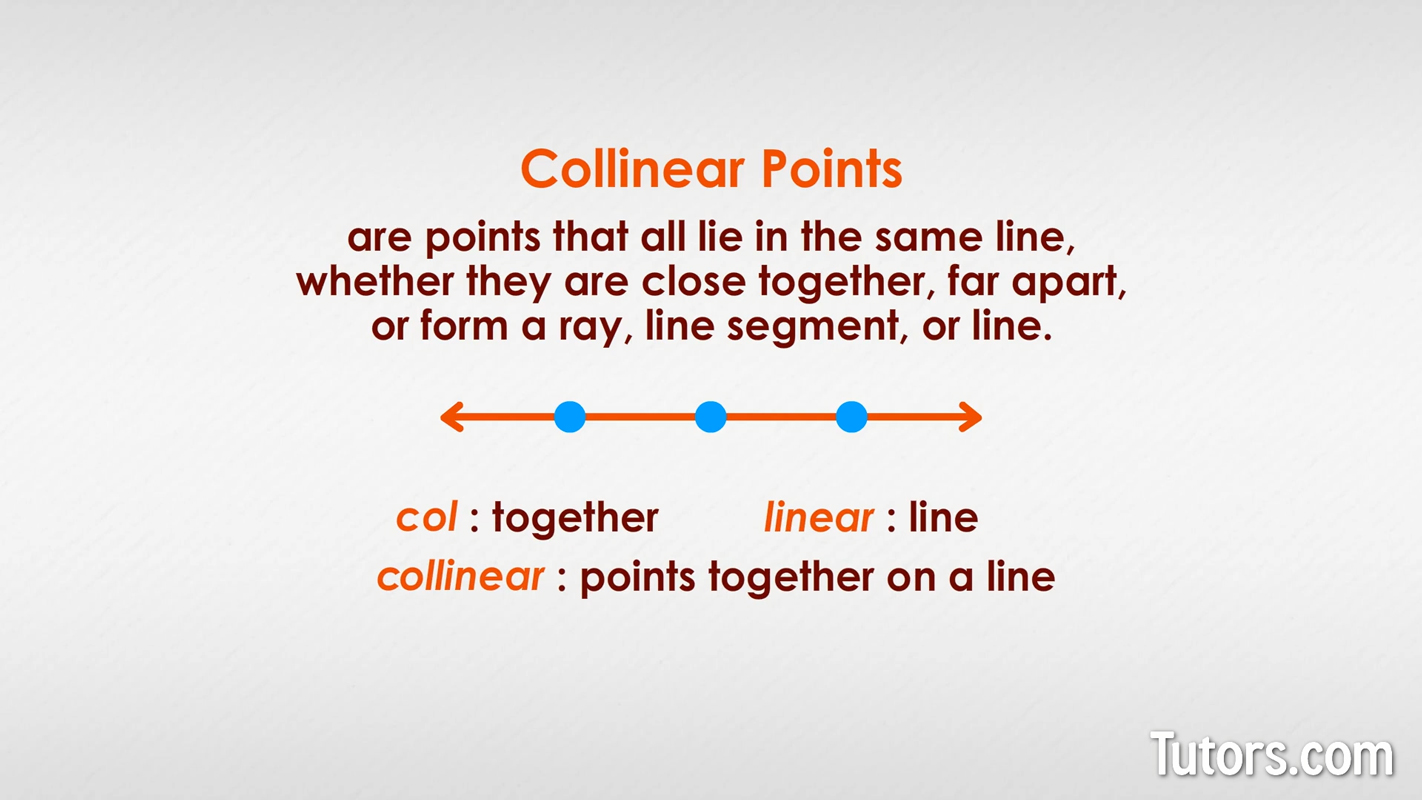
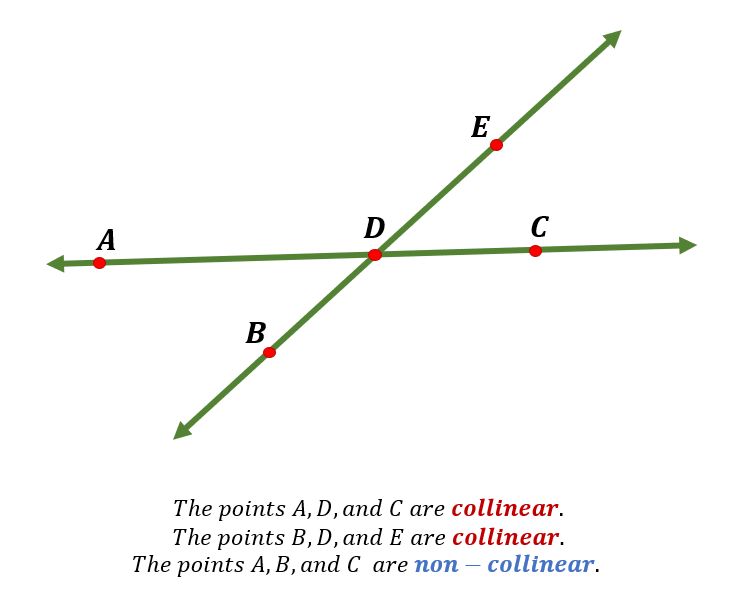
At its heart, collinearity describes a condition where two or more points lie on the same straight line. In two-dimensional space, if you can draw a single straight line that passes through all given points, then those points are collinear. For instance, if you have points A, B, and C, and they all sit perfectly aligned on one line, they are collinear. If point D is slightly off that line, then A, B, C, and D are not collinear, although A, B, and C still are.
While seemingly straightforward, this concept has profound implications for how computers interpret and manipulate spatial data. In a digital environment, points are often represented by coordinates (e.g., (x, y) in 2D or (x, y, z) in 3D). Determining collinearity programmatically involves checking if these coordinates satisfy the conditions for lying on a common line.
Mathematical Representation and Tests for Digital Precision
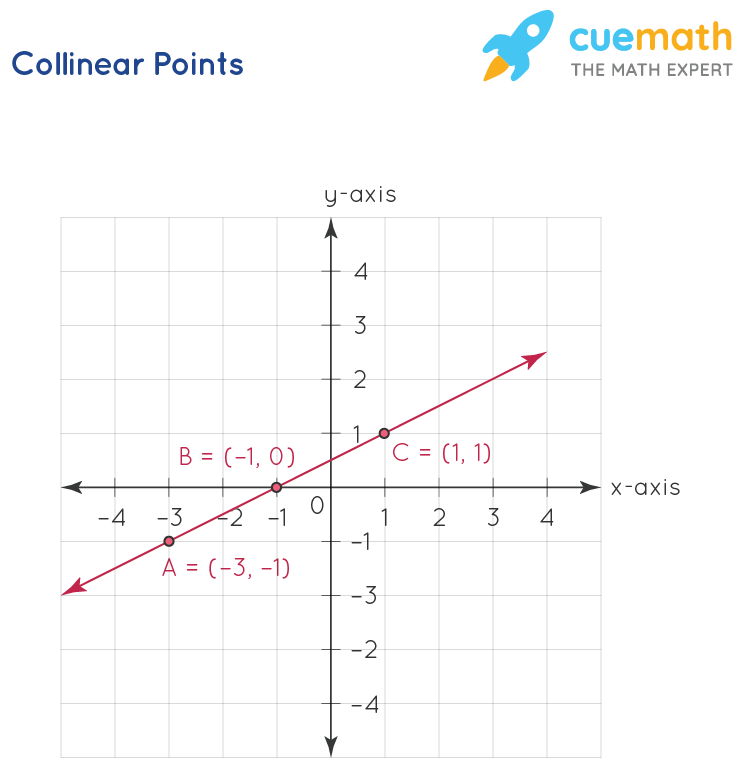
For a computer to ascertain collinearity, it needs a mathematical test. In a 2D plane, three points $P1(x1, y1)$, $P2(x2, y2)$, and $P3(x3, y_3)$ are collinear if the area of the triangle formed by them is zero. This can be calculated using the determinant formula:
$x1(y2 – y3) + x2(y3 – y1) + x3(y1 – y_2) = 0$
Alternatively, if the slope between $P1$ and $P2$ is equal to the slope between $P2$ and $P3$, the points are collinear (assuming $x1 neq x2$ and $x2 neq x3$ to avoid division by zero for vertical lines, which would require a separate check).
$ (y2 – y1) / (x2 – x1) = (y3 – y2) / (x3 – x2) $
In three dimensions, the concept extends. Three points $P1, P2, P3$ are collinear if the vector $P1P2$ is parallel to the vector $P2P3$. This means one vector is a scalar multiple of the other, i.e., $P1P2 = k cdot P2P_3$ for some scalar $k$. This vector approach is robust and computationally efficient.
The ability to perform these tests rapidly and accurately is crucial for countless digital operations, from rendering graphics to detecting patterns in complex datasets. The slight numerical inaccuracies inherent in floating-point arithmetic in computers often necessitate using an epsilon (a very small tolerance value) when checking for “equality” to account for minute deviations that would otherwise lead to false negatives.
Why This Basic Concept Matters in Tech
The significance of collinearity in technology stems from its role as a fundamental geometric primitive. Just as atoms are the building blocks of matter, points and lines are the foundational elements of digital spatial representation. Understanding collinearity allows for:
-
Simplification: Reducing complex geometric structures to their fundamental components.
-
Efficiency: Optimizing calculations by identifying redundant or aligned elements.
-
Validation: Ensuring the accuracy and integrity of spatial data and models.
-
Interpretation: Extracting meaningful patterns from visual and spatial information.
Without a solid grasp of collinearity, many advanced technological applications involving spatial reasoning would be either impossible or prohibitively complex.
Collinearity in Computer Graphics and 3D Modeling
Computer graphics and 3D modeling are perhaps the most direct beneficiaries of geometric principles, and collinearity plays a surprisingly critical role in shaping the visual worlds we interact with daily. From the fidelity of rendered images to the precision of design software, its influence is pervasive.
Optimizing Render Pipelines
In computer graphics, models are composed of vertices (points), edges (lines connecting vertices), and faces (polygons formed by edges). When rendering these models, graphics engines need to process immense amounts of geometric data. Identifying collinear vertices or edges can lead to significant optimizations. For example, if multiple vertices lie on a single edge that appears straight from a certain camera angle, these can be processed more efficiently, reducing the computational load for rendering.
Furthermore, collinearity is essential in algorithms for line-of-sight determination, culling (removing objects not visible to the camera), and collision detection. Simplifying paths or identifying aligned surfaces can accelerate these computations, leading to smoother animations and more responsive applications.
Precision in CAD and Engineering Design
Computer-Aided Design (CAD) and Computer-Aided Manufacturing (CAM) software are the backbone of modern engineering and product design. In these environments, absolute precision is paramount. Collinearity is fundamental for:
-
Drawing Tools: When a designer draws a straight line segment, the software ensures that all intermediate points defining that segment are perfectly collinear. This precision is critical for manufacturing processes where even micron-level deviations can be costly.
-
Alignment and Constraints: Engineers frequently need to align components, create parallel or perpendicular lines, or define specific geometric relationships. Collinearity is implicitly or explicitly used in applying constraints that ensure parts fit together accurately.
-
Feature Recognition: CAD systems often analyze existing geometry to identify features like holes, slots, or planar surfaces. Collinearity checks are part of the process of recognizing these basic geometric primitives, aiding in model analysis and modification.
Without the ability to accurately define and verify collinearity, the entire edifice of digital engineering design would crumble, making precise manufacturing virtually impossible.
Animating Movement and Paths
In animation and game development, objects move along defined paths. These paths are often piecewise linear or are approximated by a series of straight-line segments. Collinearity is involved in:
-
Path Interpolation: When an object moves from point A to point B, the intermediate positions are often calculated by interpolating along a straight line, ensuring all intermediate points are collinear with A and B.
-
Motion Blending: For realistic motion, animations are smoothly blended. Collinearity aids in ensuring that transitions between keyframes follow logical, predictable paths.
-
Camera Movements: Defining smooth camera trajectories, especially in cinematic sequences or virtual tours, relies on ensuring the camera’s path follows a series of collinear segments or a curve approximated by them, providing a controlled and predictable viewer experience.
Algorithmic Applications: Collinearity in Data Science and AI
Beyond visual representations, collinearity plays a subtle yet profound role in the world of data science and artificial intelligence, particularly in areas involving spatial reasoning, pattern recognition, and statistical modeling.
Linearity in Machine Learning Models
In machine learning, especially with models like linear regression, the concept of linearity is central. While “collinearity” in a statistical context usually refers to a strong linear relationship between two or more predictor variables (which can be problematic for model interpretation), the geometric concept of points on a line is also relevant.
-
Feature Engineering: When engineers create new features from existing data, understanding linear relationships (or their absence) can inform which features are most relevant.
-
Visualization: Plotting data to identify linear trends or clusters often implicitly involves assessing collinearity—are data points lining up in a way that suggests a linear correlation or a separable boundary?
-
Geometric Algorithms: Algorithms that work with data points in higher dimensions (e.g., K-Means clustering, Principal Component Analysis) often project or transform data onto lower-dimensional spaces, where geometric relationships like collinearity or linearity become crucial for interpretation and decision-making.
Detecting Edges and Patterns in Computer Vision
Computer vision systems enable machines to “see” and interpret images and videos. Collinearity is a critical concept in several fundamental computer vision tasks:
-
Edge Detection: Algorithms like Canny or Sobel detectors identify sudden changes in image intensity, which often correspond to edges. After initial edge pixel detection, algorithms connect these pixels to form continuous lines. Collinearity tests are used to determine if a series of edge pixels truly forms a straight line segment, which is crucial for higher-level image understanding (e.g., identifying boundaries of objects).
-
Line Segment Detection: Hough Transform, a popular technique, is used to detect lines in an image. It works by transforming points from the image space into a parameter space where collinear points in the image space map to intersecting curves. The points of intersection in the parameter space then reveal the lines.
-
Feature Matching: In applications like object recognition or augmented reality, algorithms match features (e.g., corners, edges) between different images. Identifying whether a set of features forms a collinear pattern in one image helps in matching it to a similar pattern in another, even under different perspectives.
Geospatial Analysis and Mapping
Geographic Information Systems (GIS) and mapping technologies rely heavily on precise spatial data. Collinearity is fundamental to:
-
Route Planning: When determining the shortest or most efficient route between two points, road networks are often represented as a series of connected line segments. Collinearity helps in simplifying these segments and ensuring accurate path calculations.
-
Boundary Definition: Defining political borders, property lines, or natural features often involves creating polygons from a series of ordered points. Ensuring the segments of these polygons are accurately represented, and that specific points are indeed collinear with a boundary segment, is crucial for data integrity.
-
Satellite Imagery Processing: Analyzing satellite imagery for urban planning, environmental monitoring, or disaster response often involves identifying linear features like roads, rivers, or fault lines. Algorithms use collinearity to extract these features accurately from pixel data.
Practical Implications and Advanced Uses in Tech
The utility of collinearity extends further into specialized technological domains, underpinning the functionality of cutting-edge systems that shape our interaction with the physical and digital worlds.
Robotics and Path Planning
In robotics, path planning is the process of finding a sequence of movements that takes a robot from a starting configuration to a target configuration. Collinearity is vital for:
-
Smooth Trajectories: Robots often need to move smoothly to conserve energy or avoid sudden jolts. Path planning algorithms generate trajectories that are piecewise linear, where consecutive segments are sometimes required to be collinear or nearly collinear to ensure a continuous and smooth motion profile.
-
Collision Avoidance: When a robot navigates an environment, it uses sensors to map obstacles. Algorithms might simplify complex obstacle boundaries into a series of line segments. Collinearity checks can help determine if a robot’s planned path segment would intersect with an obstacle’s boundary segment.
-
Manipulator Control: For robotic arms, the end effector often needs to move in a straight line for tasks like welding or assembly. Inverse kinematics algorithms use geometric principles, including collinearity, to calculate the joint angles required to achieve these linear movements.
GPS and Location Services
Global Positioning Systems (GPS) and other location-based services (LBS) are ubiquitous. While triangulation (or trilateration) is the core principle for determining a receiver’s position, collinearity plays a role in various aspects:
-
Antenna Array Processing: Advanced GPS receivers use antenna arrays to improve signal reception and accuracy. Processing signals from multiple antennas often involves phase comparisons, where the geometric arrangement of the antennas and the incoming wavefront (which can be considered locally planar) relies on principles akin to collinearity for accurate spatial filtering.
-
Map Matching Algorithms: When a GPS device shows your position on a map, it doesn’t just display raw coordinates. It uses map matching algorithms to “snap” your position to the nearest road segment. These algorithms often check if a sequence of recorded GPS points is collinear with a road segment to determine if the vehicle is indeed on that road, even with slight GPS inaccuracies.
-
Dead Reckoning Enhancement: In environments where GPS signals are weak or unavailable (e.g., tunnels), vehicles use dead reckoning (inertial navigation). Combining dead reckoning with occasional GPS fixes, especially along straight road segments, can be made more robust by leveraging collinearity to correct drift errors.
Virtual Reality and Augmented Reality
Virtual Reality (VR) and Augmented Reality (AR) create immersive experiences by blending digital content with the real world or generating entirely new digital environments. Collinearity is relevant here for:
-
Spatial Mapping: AR systems, especially, need to understand the geometry of the real world. This involves scanning environments to create a map of surfaces, edges, and points. Identifying collinear points helps in reconstructing accurate linear features like table edges, wall corners, or floor lines, which are crucial for placing virtual objects realistically.
-
Perspective Projection: Rendering 3D virtual objects onto a 2D screen involves complex geometric transformations, including perspective projection. Understanding how lines appear to converge to a vanishing point (a consequence of points being collinear in 3D and then projected) is essential for creating realistic depth and perception.
-
Hand and Eye Tracking: Advanced VR/AR systems track a user’s hands or eyes to enable interaction. The calibration of these tracking systems often involves geometric setups where reference points are arranged in a collinear fashion to ensure accurate spatial mapping and minimize distortion.
Tools and Software Leveraging Collinearity
The theoretical understanding of collinearity translates into practical applications through a multitude of software tools and programming libraries that empower developers and engineers to build sophisticated technological solutions.
CAD/CAM Software Suites
As discussed, software like AutoCAD, SolidWorks, CATIA, and Fusion 360 heavily rely on collinearity for their core functionalities. These tools provide features for:
-
Sketching and Drafting: Users can easily draw perfectly straight lines, arcs, and splines, where the underlying algorithms ensure collinearity of points along straight segments.
-
Geometric Constraints: Engineers can apply constraints such as “collinear,” “parallel,” or “perpendicular” between geometric entities, forcing the software to maintain these relationships even as other parameters change.
-
Analysis and Simulation: Before manufacturing, CAD software can analyze designs for potential flaws or inefficiencies, often checking for geometric integrity, where collinearity plays a role in evaluating straightness, alignment, and connectivity.
GIS Platforms for Spatial Data
GIS software, including ArcGIS, QGIS, and Google Earth Engine, is built upon a foundation of geometric data processing. They use collinearity for:
-
Vector Data Management: Representing geographic features (points, lines, polygons) requires robust geometric algorithms. Collinearity is fundamental for ensuring the accuracy of linear features like roads, rivers, and boundaries.
-
Spatial Analysis: Operations like buffering, intersection, and union all rely on precise geometric calculations, where detecting collinear segments or vertices is a common intermediate step.
-
Geocoding and Routing: Algorithms that convert addresses to coordinates (geocoding) or find optimal routes leverage underlying geometric models that assume and check for collinearity of road segments.
Programming Libraries for Geometric Operations
For developers, a range of programming libraries provides the building blocks for implementing geometric algorithms. These libraries often include functions for testing collinearity or performing operations that implicitly rely on it:
-
NumPy/SciPy (Python): These libraries are crucial for scientific computing, providing powerful array operations and functions for linear algebra. Developers can easily implement collinearity tests using vector operations.
-
OpenCV (C++/Python): A widely used library for computer vision, OpenCV includes numerous functions for edge detection, line detection (e.g., Hough Transform), and geometric transformations, all of which indirectly or directly utilize the concept of collinearity.
-
OpenGL/DirectX (C++/C#): Low-level graphics APIs like OpenGL and DirectX are used to render 3D scenes. While not directly offering a “collinearity test” function, the underlying geometry processing (vertex transformations, rasterization) inherently respects and leverages geometric principles to project 3D collinear points onto a 2D screen correctly.
-
CGAL (C++): The Computational Geometry Algorithms Library (CGAL) is a comprehensive C++ library that provides robust and efficient geometric algorithms, including explicit functions for checking collinearity of points, intersection of line segments, and various other fundamental geometric predicates.
In conclusion, “what is collinear in geometry” transcends a mere academic definition to become a pivotal concept in the architecture of modern technology. Its seemingly simple premise—points on a line—unlocks complex capabilities across computer graphics, AI, robotics, and geospatial systems. As technology continues its relentless advancement, the foundational understanding and application of geometric principles like collinearity will remain indispensable for innovators shaping our digital future.
aViewFromTheCave is a participant in the Amazon Services LLC Associates Program, an affiliate advertising program designed to provide a means for sites to earn advertising fees by advertising and linking to Amazon.com. Amazon, the Amazon logo, AmazonSupply, and the AmazonSupply logo are trademarks of Amazon.com, Inc. or its affiliates. As an Amazon Associate we earn affiliate commissions from qualifying purchases.