
In the dynamic world of brand development, where every name, slogan, and tagline vies for attention, the art of linguistic innovation plays a crucial role. Among the myriad strategies employed to forge a distinct identity, the blending of words stands out as a powerful, often ingenious, technique. Far from being a mere linguistic curiosity, word blending, or the creation of a portmanteau, is a sophisticated strategic tool in a brand builder’s arsenal, capable of encapsulating complex ideas, evoking specific emotions, and ensuring unparalleled memorability. This article delves into the essence of word blending within the brand context, exploring its strategic advantages, the meticulous process behind its creation, and the common pitfalls to navigate, ultimately revealing why this linguistic fusion remains a cornerstone of successful brand identity.
The Art and Science of Linguistic Blending in Branding
At its core, word blending involves combining two or more distinct words, or parts of words, to form a new, single word that carries the meanings or characteristics of its components. While linguists have long studied this phenomenon, its application in branding elevates it from a grammatical construct to a potent marketing instrument.
Defining Word Blending (Portmanteau) in a Brand Context
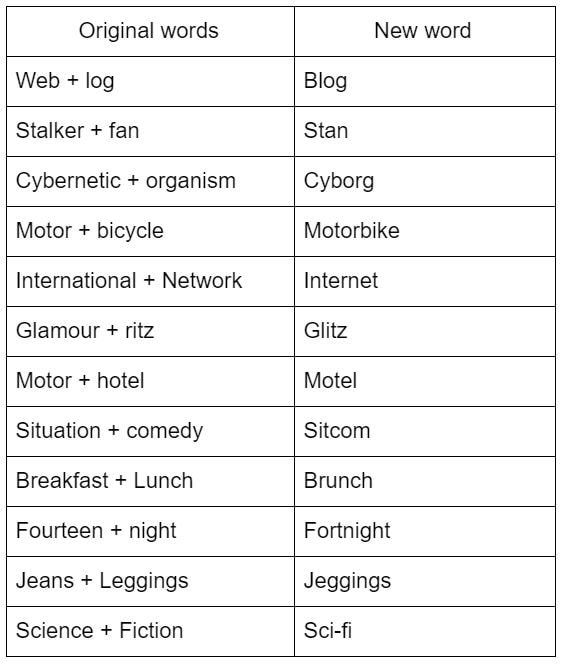
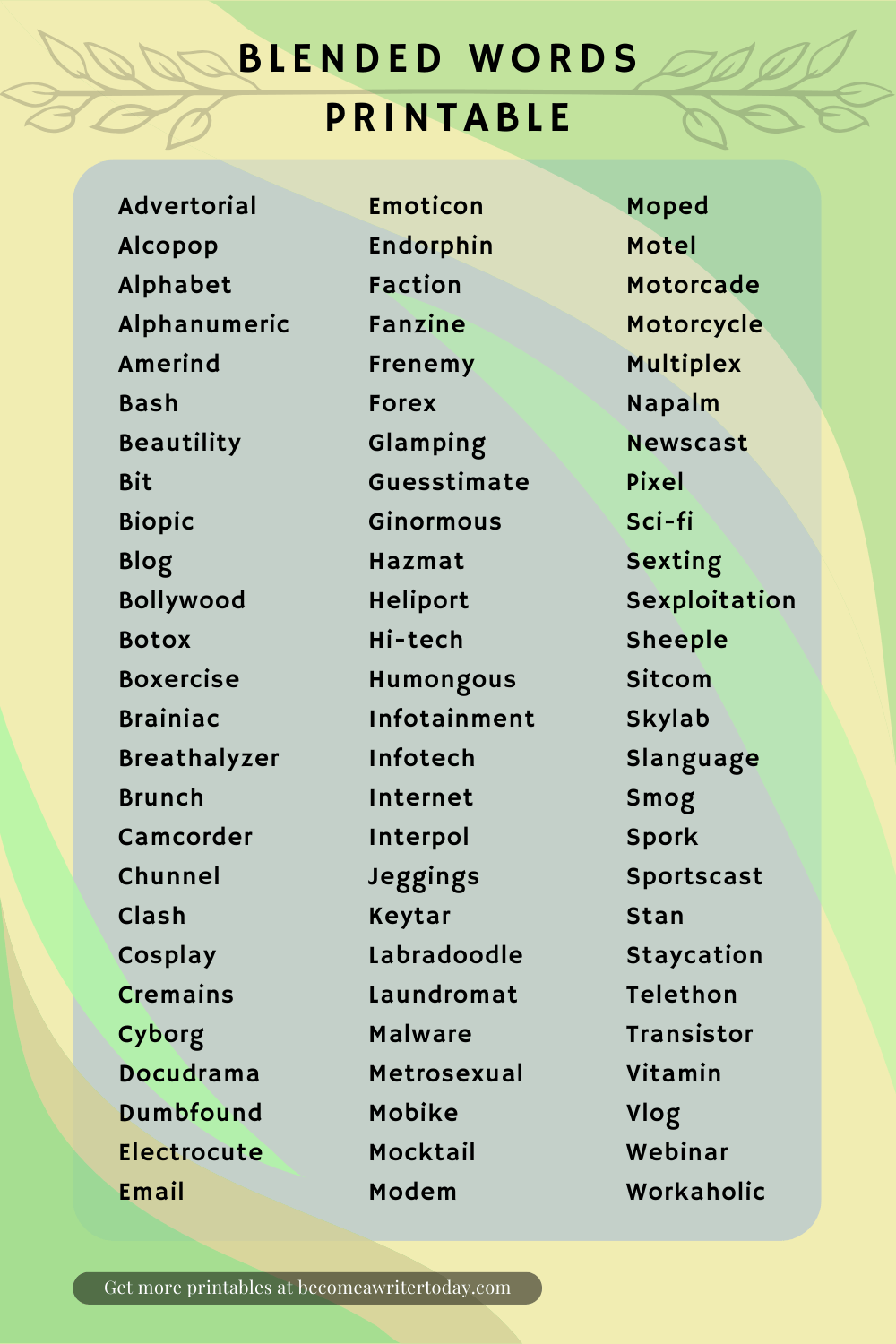
A portmanteau, a term coined by Lewis Carroll in Through the Looking-Glass, refers to a word formed by merging the sounds and meanings of two or more words. Think of “smog” (smoke + fog) or “brunch” (breakfast + lunch). In branding, this technique is employed to create names that are not only unique but also inherently descriptive, often telling a story or hinting at a product’s core benefit through its very structure. Unlike simple compound words (like “notebook”), portmanteaus involve a fusion where parts of the original words are often truncated or overlapped, creating a new phonological and semantic entity. The goal is to distil complex concepts into an elegant, concise, and often evocative package.
Historical Roots and Modern Applications
While the term “portmanteau” gained prominence in the 19th century, the blending of words has likely existed in various forms across languages for millennia. Historically, such blends might have arisen organically through language evolution. However, in modern branding, it’s a deliberate and calculated act. Early commercial examples include “Motel” (motor + hotel) from the early 20th century, a word that perfectly captured the burgeoning car culture and its need for roadside accommodation. Today, the digital age and global marketplace have amplified the necessity for unique, memorable, and legally protectable brand names, making word blending more relevant than ever. From tech giants to boutique startups, brands across sectors leverage this technique to stand out in a crowded market.
Why Brands Blend: Beyond Novelty
The primary driver for brands to engage in word blending extends far beyond mere novelty. It’s a strategic choice rooted in several key objectives:
-
Differentiation: A well-crafted blend immediately distinguishes a brand from its competitors, offering a fresh sound and meaning.
-
Conciseness: It allows brands to convey multiple ideas or attributes in a single, short word, which is crucial for memorability and ease of communication.
-
Meaningful Connection: The blend can subtly hint at the brand’s purpose, values, or product offerings, establishing an immediate cognitive link with the audience.
-
Memorability: Unique, often playful, and distinctive names are easier for consumers to recall and associate with positive experiences.
-
Availability: In an era where many common words and phrases are already trademarked or have established digital footprints, blending offers a pathway to creating truly original and available brand assets.
Strategic Advantages of Blended Brand Names
The tactical application of word blending offers a suite of compelling benefits that contribute significantly to a brand’s long-term success and market positioning.
Memorability and Distinctiveness
A blended word, when executed effectively, possesses an inherent distinctiveness. Because it often doesn’t exist in the standard lexicon, it forces the brain to process something new, making it more memorable. Think of “Netflix” (internet + flicks) – a concise name that perfectly encapsulates its core offering while being highly distinct from traditional media companies. This distinctiveness helps a brand cut through the noise, leaving a lasting impression that is critical for brand recall and recognition. A generic name might fade into the background, but a clever blend tends to stick.
Conveying Meaning and Core Value
One of the most powerful aspects of word blending is its ability to embed meaning directly into the brand name. The component words chosen for blending are typically highly relevant to the brand’s function, promise, or target audience. For instance, “Pinterest” (pin + interest) instantly communicates the platform’s utility: pinning things of interest. Similarly, “Skyscanner” (sky + scanner) immediately suggests travel and searching. This inherent meaning saves advertising dollars and helps consumers quickly grasp what the brand offers without extensive explanation, fostering an immediate connection and understanding of its value proposition.
Brevity and Pronounceability
In an age of digital communication and global markets, shorter, easily pronounceable names are invaluable. They are easier to type, remember, and convey across different languages and cultures. Blended words often achieve this brevity by truncating longer component words, resulting in a compact yet meaningful name. “FedEx” (Federal Express) is a classic example of achieving brevity without losing the essence of the original name. The ease of pronunciation also aids in word-of-mouth marketing, making it simple for customers to share their experiences without stumbling over complex nomenclature.
Global Adaptability and Trademark Potential
A significant challenge for brands with global ambitions is finding names that resonate positively across diverse linguistic and cultural contexts, and that are legally available for trademark registration. Blended words, being novel linguistic creations, often circumvent the issues of existing meanings or negative connotations in other languages that might plague common words. Furthermore, the uniqueness of a blended word significantly increases its chances of being trademarkable, providing strong legal protection for the brand’s identity and reducing the risk of infringement or consumer confusion. This makes blended names particularly attractive for companies seeking international expansion.
The Blending Process: From Concept to Cohesion
Creating a successful blended brand name is not accidental; it’s a deliberate, multi-step process that combines creativity with strategic thinking.
Identifying Core Concepts and Keywords
The initial phase involves a deep dive into the brand’s essence. What are its core values, unique selling propositions, primary functions, and target audience needs? Brainstorming should yield a robust list of keywords and concepts that accurately describe the brand. For a sustainable fashion brand, keywords might include “eco,” “green,” “ethical,” “style,” “wear,” “future,” etc. For a financial tech platform, words like “money,” “finance,” “smart,” “digit,” “flow,” “secure” could be relevant. These keywords serve as the raw material for the blending process, guiding the creative exploration.
Techniques for Effective Word Combination (Overlap, Truncation, Fusion)
Once keywords are identified, various linguistic techniques can be applied:
-
Overlap: This involves finding two words that share a common letter or syllable and merging them at that point. Example: “Pinterest” (Pin + Interest).
-
Truncation: Shortening one or both words and then combining them. Example: “Microsoft” (Microcomputer + Software), “FedEx” (Federal Express).
-
Fusion: More complex combinations where parts of multiple words are creatively interwoven, sometimes changing spellings for phonetic appeal. Example: “Groupon” (Group + Coupon).
-
Substitution: Replacing a letter or sound to create a unique twist while retaining recognition.
Creative brainstorming often involves experimenting with prefixes, suffixes, roots, and even entirely new phonetic constructions based on these core techniques, always keeping the keywords in mind.
Testing and Refinement: Sound, Meaning, and Market Fit
The generated blends must undergo rigorous testing.
-
Phonetics and Pronounceability: Does the name sound good when spoken aloud? Is it easy to pronounce for the target audience? Does it have any awkward sounds or unintended rhythms?
-
Semantic Check: Does the name clearly or subtly convey the intended meaning? Does it evoke the right associations and emotions? Are there any negative connotations, hidden meanings, or cultural sensitivities to be aware of?
-
Memorability: Is it easy to remember? Does it stand out among other names?
-
Visual Appeal: How does it look in various fonts and logos? Is it aesthetically pleasing?
-
Market Fit and Legal Due Diligence: Is the name available for trademark registration in relevant jurisdictions? Is the domain name available? Does it differentiate effectively from competitors? This iterative process of generation, testing, and refinement is crucial to arrive at a truly impactful blended brand name.
Common Pitfalls and How to Avoid Them
While word blending offers immense potential, it’s not without its challenges. Brands must navigate several common pitfalls to ensure their blended name is an asset, not a liability.
Overly Complex or Unpronounceable Blends
The desire for uniqueness can sometimes lead to names that are difficult to say, spell, or remember. A name like “Zythumeron” might sound distinctive, but if consumers can’t easily pronounce or recall it, its marketing effectiveness plummets. The goal is clever, not convoluted. Simplicity and clarity should always be balanced with originality. Testing with a diverse group of people from the target audience can quickly reveal if a name is too much of a tongue-twister.
Unintended Meanings or Negative Connotations
Careless blending can inadvertently create words with undesirable meanings, awkward associations, or even offensive connotations in certain languages or cultures. A name that sounds perfectly innocuous in English might be problematic elsewhere. This necessitates thorough linguistic and cultural checks, especially for brands with international aspirations. Ignorance is not bliss when it comes to brand reputation. Global teams or cultural consultants can be invaluable in this phase of due diligence.
Lack of Originality or Confusion with Competitors
Despite the goal of distinctiveness, some blends can sound generic or too similar to existing brands, leading to consumer confusion or even legal challenges. For example, if many new tech startups use similar blends of “smart” and “flow,” the individual names lose their power. Research into competitor naming conventions and industry jargon is essential to ensure the blended name truly carves out its own space and doesn’t get lost in a sea of similar-sounding brands.
The Importance of Legal Due Diligence
Perhaps the most critical pitfall to avoid is creating a brilliant blended name only to find it’s already trademarked or its domain name is unavailable. Before any significant investment in branding or marketing, comprehensive legal searches for trademark registration, domain name availability, and social media handles are absolutely paramount. Skipping this step can lead to costly re-branding efforts, legal disputes, and significant delays, undermining the entire brand strategy.
Iconic Blends: Case Studies in Branding Success
The power of word blending is best illustrated by the numerous successful brands that have masterfully employed this technique to etch their names into public consciousness.
Tech Innovators and Their Blended Brands
The technology sector, known for its rapid innovation and need for fresh terminology, is a hotbed for blended names.
-
Microsoft: (Microcomputer + Software) – A foundational blend that perfectly articulated the company’s dual focus on hardware (microcomputers) and the programs that run them (software). It was visionary for its time and remains instantly recognizable.
-
Netflix: (Internet + Flicks) – This name not only explained the service (movies over the internet) but also cleverly positioned it against traditional video rental stores, predicting the future of entertainment delivery.
-
Pinterest: (Pin + Interest) – A remarkably descriptive name for a visual discovery engine where users “pin” images of things that “interest” them. Simple, intuitive, and highly effective.
-
Skype: (Sky + Peer-to-peer) – A subtle blend that, while not immediately obvious from “Sky + P2P,” conceptually combines communication “over the sky” with the underlying “peer-to-peer” technology, forming a brief, memorable name.
Consumer Goods and Lifestyle Brands
Blended words are equally effective in consumer-facing industries where creating an emotional connection and conveying convenience are key.
-
Velcro: (Velour + Crochet) – A classic example from the consumer goods sector, deriving its name from the French words describing its two main components. It became synonymous with the product itself.
-
Groupon: (Group + Coupon) – This name perfectly encapsulated its business model: offering deals (coupons) to groups of people. It was a novel concept, and the name made it instantly understandable.
-
Ziploc: (Zip + Lock) – A clear, functional blend that immediately communicates the product’s primary action and benefit – sealing contents with a zip-style lock.
-
Spandex: (Expands) – A clever reordering and truncation of the word “expands,” highlighting the fabric’s core property of elasticity.
Lessons from Master Blenders
What these successful examples teach us is that effective word blending is:
-
Relevant: The component words must be highly pertinent to the brand’s offering.
-
Concise: Shorter, punchier blends are generally more effective.
-
Unique: They carve out their own linguistic territory, reducing confusion.
-
Memorable: They stick in the mind because they are often novel and descriptive.
-
Pronounceable: Easy to say and share, facilitating organic growth.
These brands leveraged linguistic fusion not just for a catchy name, but as a fundamental part of their brand identity and communication strategy.
In conclusion, the blending of words is far more than a linguistic quirk; it is a sophisticated and highly effective strategy for brand development. When executed with precision, creativity, and strategic foresight, a blended name can become the bedrock of a memorable, distinctive, and enduring brand identity, communicating core values and fostering instant recognition in an increasingly competitive global marketplace. By understanding its power, navigating its challenges, and learning from iconic successes, brands can harness the art of linguistic fusion to truly stand out.
aViewFromTheCave is a participant in the Amazon Services LLC Associates Program, an affiliate advertising program designed to provide a means for sites to earn advertising fees by advertising and linking to Amazon.com. Amazon, the Amazon logo, AmazonSupply, and the AmazonSupply logo are trademarks of Amazon.com, Inc. or its affiliates. As an Amazon Associate we earn affiliate commissions from qualifying purchases.