
Blacklight, a term often shrouded in mystique and associated with vibrant, glowing phenomena, is in essence a fascinating piece of technology that harnesses a specific segment of the electromagnetic spectrum: ultraviolet (UV) light. Far from being merely a party trick or a novelty item, blacklight technology plays a crucial role across a myriad of scientific, industrial, security, and entertainment applications. At its core, a blacklight lamp is designed to emit primarily long-wave ultraviolet radiation (UVA) and very little visible light, making its output largely invisible to the human eye. The magic occurs when this invisible light interacts with certain materials, causing them to fluoresce, or glow, in a dazzling array of visible colors. Understanding blacklight means delving into the subtle yet powerful world of UV radiation and its profound technological implications.
The Science Behind Blacklight: Unveiling UV Radiation
To truly grasp what a blacklight is, we must first journey into the fundamental principles of physics that govern light itself. The electromagnetic (EM) spectrum encompasses all forms of electromagnetic radiation, from radio waves with the longest wavelengths to gamma rays with the shortest. Visible light, the portion we can see, occupies only a tiny slice of this vast spectrum, ranging from red (longer wavelengths) to violet (shorter wavelengths).
Understanding the Electromagnetic Spectrum
Just beyond the violet end of the visible spectrum lies ultraviolet (UV) light. Its name, “ultraviolet,” literally means “beyond violet.” Unlike visible light, UV radiation carries more energy and interacts with matter in distinct ways. UV light is typically categorized into three main types based on wavelength:
-
UVA (Long-wave UV): Ranging from 315 nm to 400 nm, UVA is the least energetic and constitutes the majority of UV radiation that reaches the Earth’s surface. Blacklights primarily emit UVA, which is why they are often referred to as “UV-A lamps.” UVA is responsible for tanning and plays a significant role in many blacklight applications.
-
UVB (Medium-wave UV): Ranging from 280 nm to 315 nm, UVB is more energetic than UVA and is the primary cause of sunburn and contributes significantly to skin cancer risk.
-
UVC (Short-wave UV): Ranging from 100 nm to 280 nm, UVC is the most energetic and dangerous type of UV radiation. Fortunately, the Earth’s ozone layer largely filters out all UVC from sunlight. However, artificial UVC sources are used for germicidal applications due to their ability to damage DNA and RNA.
The critical distinction for blacklight technology is its focus on UVA. This specific wavelength is energetic enough to cause fluorescence in many materials but is generally less harmful than UVB or UVC with typical exposure levels, making it suitable for a wider range of applications.
How Blacklights Work: Emission and Fluorescence
The operational principle of a blacklight revolves around two key phenomena: the emission of UV light and the subsequent process of fluorescence.
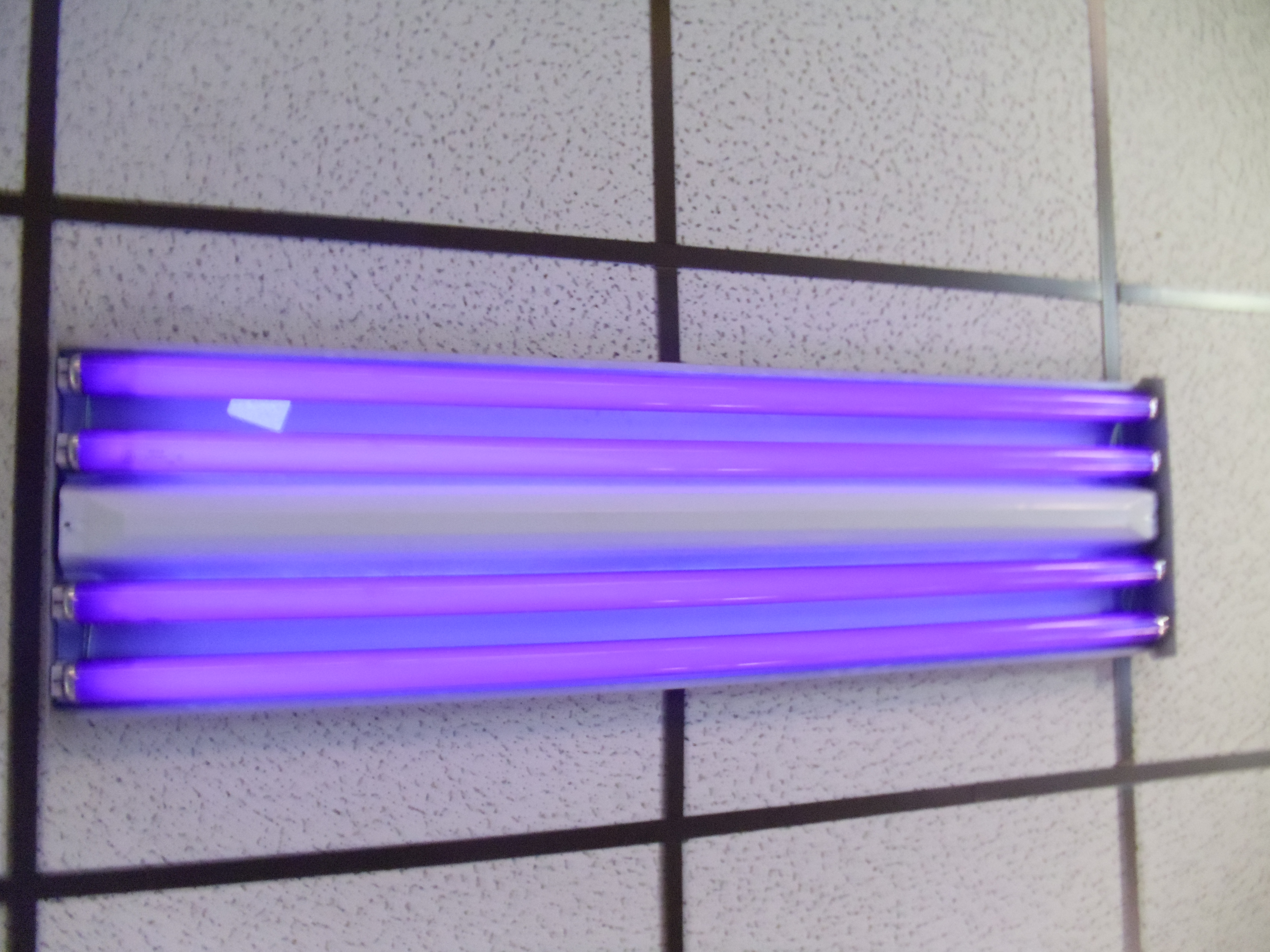
A blacklight lamp works by producing primarily UVA light while minimizing the output of visible light. This is typically achieved through specialized filters or bulb coatings. For instance, traditional fluorescent blacklight tubes use a dark blue or purple filter (known as a Wood’s glass filter) that blocks most visible light but allows UVA to pass through. Inside the tube, a low-pressure mercury vapor arc generates a broad spectrum of UV light, and a phosphor coating converts some of the short-wave UV (UVC) into longer-wave UV (UVA). The filter then ensures that only the UVA light, along with a small amount of deep violet visible light, exits the bulb, creating the characteristic dim purple glow.
The true spectacle begins when this invisible UVA light strikes certain substances, a phenomenon known as fluorescence. Fluorescence occurs when a material absorbs electromagnetic radiation (in this case, UV light) and then immediately re-emits it at a longer wavelength, which falls within the visible spectrum. This re-emission happens almost instantaneously, giving the impression that the object is glowing brightly on its own.
Not all materials fluoresce. Those that do contain special molecules called “fluorophores” or “fluorescent pigments.” These molecules have electron configurations that allow them to absorb UV photons, elevating their electrons to a higher energy state. As the electrons almost immediately drop back to their original energy state, they release the excess energy as photons of visible light. Because some energy is lost during this process (e.g., as heat), the emitted light always has a longer wavelength (and thus lower energy) than the absorbed UV light, making it visible to our eyes. Common fluorescent materials include certain dyes, optical brighteners in paper and fabric, some plastics, minerals, and even natural bodily fluids.
Types of Blacklight Technology and Their Evolution
The technology behind blacklights has evolved significantly since their inception, driven by advancements in material science and lighting efficiency. Each type of blacklight has its unique characteristics, making it suitable for different applications.
Traditional Fluorescent Blacklights
The most common and recognizable form of blacklight is the fluorescent tube. These operate on the same principle as regular fluorescent lamps: an electrical current excites mercury vapor inside a glass tube, producing short-wave UV radiation. However, for blacklights, the tube is coated with a specific phosphor that converts the UVC into UVA. Crucially, the tube is then made of or coated with Wood’s glass – a dark violet-blue filter glass containing nickel oxide. This filter effectively blocks almost all visible light and harmful UVB/UVC, allowing only the UVA to pass through, resulting in the iconic purplish-black glow.
Advantages: Relatively inexpensive, widely available, and good for general-purpose applications over large areas.
Disadvantages: Fragile, contain mercury (environmental concern), produce some heat, and have a somewhat limited lifespan compared to newer technologies.
Incandescent Blacklights
An older and less efficient form of blacklight utilizes an incandescent bulb with a dark blue or purple filter. In these bulbs, a heated filament produces a broad spectrum of light, including a very small amount of UV. The filter attempts to block most of the visible light, allowing only a fraction of the UV and some deep violet visible light to escape.
Advantages: Very inexpensive and can fit into standard light sockets.
Disadvantages: Extremely inefficient at producing UV light, generate a lot of heat, have a short lifespan, and their UV output is significantly weaker than fluorescent or LED alternatives. They are generally only suitable for very casual or novelty uses.
Modern LED Blacklights
Light Emitting Diodes (LEDs) have revolutionized nearly every aspect of lighting, and blacklight technology is no exception. UV LEDs are semiconductor devices that directly emit light in the ultraviolet spectrum when an electric current passes through them. Unlike fluorescent tubes, they don’t rely on mercury vapor or phosphors for UV generation; instead, they are engineered to emit specific UV wavelengths.
Advantages:
-
Energy Efficiency: Far more energy-efficient than fluorescent or incandescent options, consuming less power and producing less heat.
-
Durability and Longevity: LEDs are solid-state devices, making them highly durable and resistant to shock and vibration. They also boast significantly longer lifespans, often tens of thousands of hours.
-
Compact Size: UV LEDs can be incredibly small, allowing for highly flexible designs and integration into compact devices.
-
Instant On/Off: No warm-up time required.
-
Specific Wavelength Control: LEDs can be manufactured to emit very precise UV wavelengths, which is crucial for specialized scientific and industrial applications.
Disadvantages: Higher initial cost for quality UV LED fixtures, and careful heat management is still necessary for optimal performance and lifespan, despite their efficiency.
The rise of UV LEDs has dramatically expanded the potential applications for blacklight technology, enabling smaller, more portable, and more powerful devices.
Specialty and High-Power Blacklight Systems

Beyond consumer-grade applications, specialized blacklight systems exist for demanding industrial and scientific contexts. These often involve arrays of high-power UV lamps (either specialized fluorescent or high-output LEDs) designed to emit very specific and intense UV radiation. Examples include UV curing systems used in manufacturing for hardening resins, inks, and coatings, or large-scale forensic setups requiring uniform and powerful UV illumination. These systems often require additional safety measures due to the higher intensity of UV light produced.
Diverse Technological Applications of Blacklight
The unique properties of blacklight—its invisible output that triggers visible fluorescence—make it an invaluable tool across a vast array of technological domains.
Security and Authentication
One of the most critical applications of blacklight technology is in ensuring security and authenticity.
-
Counterfeit Detection: Blacklights are ubiquitous in finance and retail for verifying currency, credit cards, and official documents. Many modern banknotes incorporate invisible fluorescent security threads or patterns that become visible only under UV light, making counterfeits without these features easy to spot.
-
Invisible Inks and Security Features: Governments and corporations use invisible inks for security marking on passports, visas, licenses, and product packaging. These markings are imperceptible under normal light but glow brightly under blacklight, providing an additional layer of verification.
-
Forensics: In forensic science, blacklights are indispensable for detecting trace evidence that might be invisible to the naked eye. Certain bodily fluids (like semen or saliva), fibers, and even some fingerprints can fluoresce under UV light, aiding crime scene investigators in collecting crucial evidence.
Industrial and Scientific Uses
Blacklight technology plays a vital role in various industrial processes and scientific research.
-
Non-Destructive Testing (NDT): In manufacturing and engineering, blacklights are used in conjunction with fluorescent penetrants or magnetic particles to detect hairline cracks, surface flaws, and leaks in machinery, aerospace components, and welds. The fluorescent material seeps into the defect and glows under UV light, making the imperfection visible without damaging the material.
-
UV Curing: Industries such as printing, electronics, and automotive utilize blacklight (specifically UVA) for rapid curing of UV-sensitive adhesives, coatings, and inks. This process hardens materials quickly and efficiently, reducing production time and improving product quality.
-
Pest Control: While not strictly blacklight (often a mix of UVA/UVB), UV light is used in insect traps to attract nocturnal flying insects. The UV wavelength is particularly attractive to many insect species, making it an effective lure in pest management systems.
-
Mineral and Gemstone Inspection: Geologists and jewelers use blacklights to identify certain minerals and gemstones that exhibit unique fluorescence properties under UV light, helping in classification and authenticity verification.
Entertainment and Artistic Applications
Beyond its practical utility, blacklight also fuels creativity and entertainment.
-
Theatrical and Event Effects: Blacklights are widely used in theaters, nightclubs, concerts, and themed events to create captivating “glow-in-the-dark” environments. Performers or objects painted with fluorescent paints glow dramatically, adding a unique visual dimension.
-
Fluorescent Art: Artists specifically create works that are designed to be viewed under blacklight, utilizing fluorescent pigments to produce vibrant, often surreal, glowing masterpieces.
-
Special Effects: In film and television production, blacklights can be employed to create specific visual effects, reveal hidden messages, or add an ethereal quality to scenes.
Home and Hobbyist Uses
Blacklight technology has also found its way into everyday household and hobbyist applications.
-
Pet Stain Detection: Many organic materials, including pet urine, contain compounds that fluoresce under UV light, making blacklights a popular tool for identifying invisible stains on carpets and upholstery.
-
Scorpion Hunting: Scorpions are known to fluoresce vividly under UV light due to compounds in their exoskeletons, making blacklights an effective tool for spotting them in dark environments.
-
Hygienic Inspection: Blacklights can reveal residues that indicate poor cleaning, such as in hotel rooms or public restrooms, by making certain organic stains visible.
The Future of UV Technology and Blacklight
The trajectory of blacklight technology is inextricably linked with the broader advancements in UV technology. As UV LEDs become more efficient, powerful, and cost-effective, their integration across new sectors is accelerating.
Advancements in UV LED Technology
The ongoing research and development in UV LEDs promise even greater capabilities. Future UV LEDs will likely offer:
-
Increased Efficiency and Power: Leading to brighter, more effective blacklights that consume even less energy.
-
Broader Wavelength Control: Enabling the precise tuning of UV output for highly specialized applications, potentially unlocking new scientific discoveries.
-
Lower Manufacturing Costs: Making advanced UV lighting solutions more accessible for both industrial and consumer markets.
-
Miniaturization: Further reducing the size of UV light sources, allowing for their integration into an even wider array of compact devices.
Emerging Applications and Integration
These technological improvements are paving the way for exciting new applications:
-
Advanced Diagnostics: In healthcare, highly specific UV light could be used for non-invasive diagnostic tools, detecting early signs of diseases or analyzing biological samples with greater precision.
-
Smart Home Integration: UV-A blacklights could be integrated into smart home systems for automatic hygiene checks (e.g., detecting hidden messes) or creating dynamic, responsive ambient lighting.
-
Environmental Monitoring: UV sensors and light sources could be used for detecting pollutants, monitoring water quality, or identifying specific biological agents in the environment.
-
Enhanced Security Features: The ability to embed even more sophisticated and invisible UV security features into products and documents will continue to evolve, staying ahead of counterfeiting efforts.
Ethical Considerations and Safety
As UV technology becomes more powerful and pervasive, ethical considerations and safety precautions will remain paramount. While UVA from typical blacklights is generally considered less harmful than UVB or UVC, prolonged or high-intensity exposure to any form of UV light can pose risks to skin and eyes. Future developments must prioritize built-in safety mechanisms, clear user guidelines, and public education to ensure responsible and beneficial application of this powerful technology. Regulation will play an increasingly important role in standardizing safety measures, especially for industrial and medical UV applications.

Conclusion
From its scientific roots in the electromagnetic spectrum to its multifaceted applications across diverse industries, blacklight technology stands as a testament to human ingenuity. What begins as an invisible wavelength of light transforms into a powerful tool for security, an essential component in manufacturing, a vital aid in scientific discovery, and a source of captivating visual artistry. As LED technology continues to advance, the capabilities and applications of blacklight are only set to expand, promising an even brighter, more “glowing” future for this remarkably versatile piece of technology. Far from being a mere curiosity, blacklight is an indispensable part of our technological landscape, continually evolving to address complex challenges and inspire new forms of innovation.
aViewFromTheCave is a participant in the Amazon Services LLC Associates Program, an affiliate advertising program designed to provide a means for sites to earn advertising fees by advertising and linking to Amazon.com. Amazon, the Amazon logo, AmazonSupply, and the AmazonSupply logo are trademarks of Amazon.com, Inc. or its affiliates. As an Amazon Associate we earn affiliate commissions from qualifying purchases.