
In the intricate tapestry of technology, understanding fundamental principles is paramount. Among these, the “angle of incidence” stands as a cornerstone, influencing everything from how light interacts with a camera lens to how radio waves propagate through the atmosphere. Far from being a mere academic curiosity, this concept is a critical determinant in the design, functionality, and efficiency of countless technological marvels we interact with daily. It dictates the behavior of waves—be they electromagnetic, acoustic, or even particulate—as they encounter a boundary or surface, profoundly impacting their reflection, refraction, absorption, and transmission. For engineers, designers, and innovators across various tech domains, a deep comprehension of the angle of incidence is not just beneficial; it’s indispensable for optimizing performance, enhancing user experience, and pushing the boundaries of what’s possible.
This article delves into the essence of the angle of incidence, exploring its geometric definition, its governing laws, and its widespread applications in a diverse array of technological fields. We will uncover how this deceptively simple concept underpins the complex operations of modern optics, communication systems, energy solutions, and even advanced computing environments like virtual reality, revealing its ubiquitous role in shaping our technological landscape.
The Core Concept: Defining Angle of Incidence
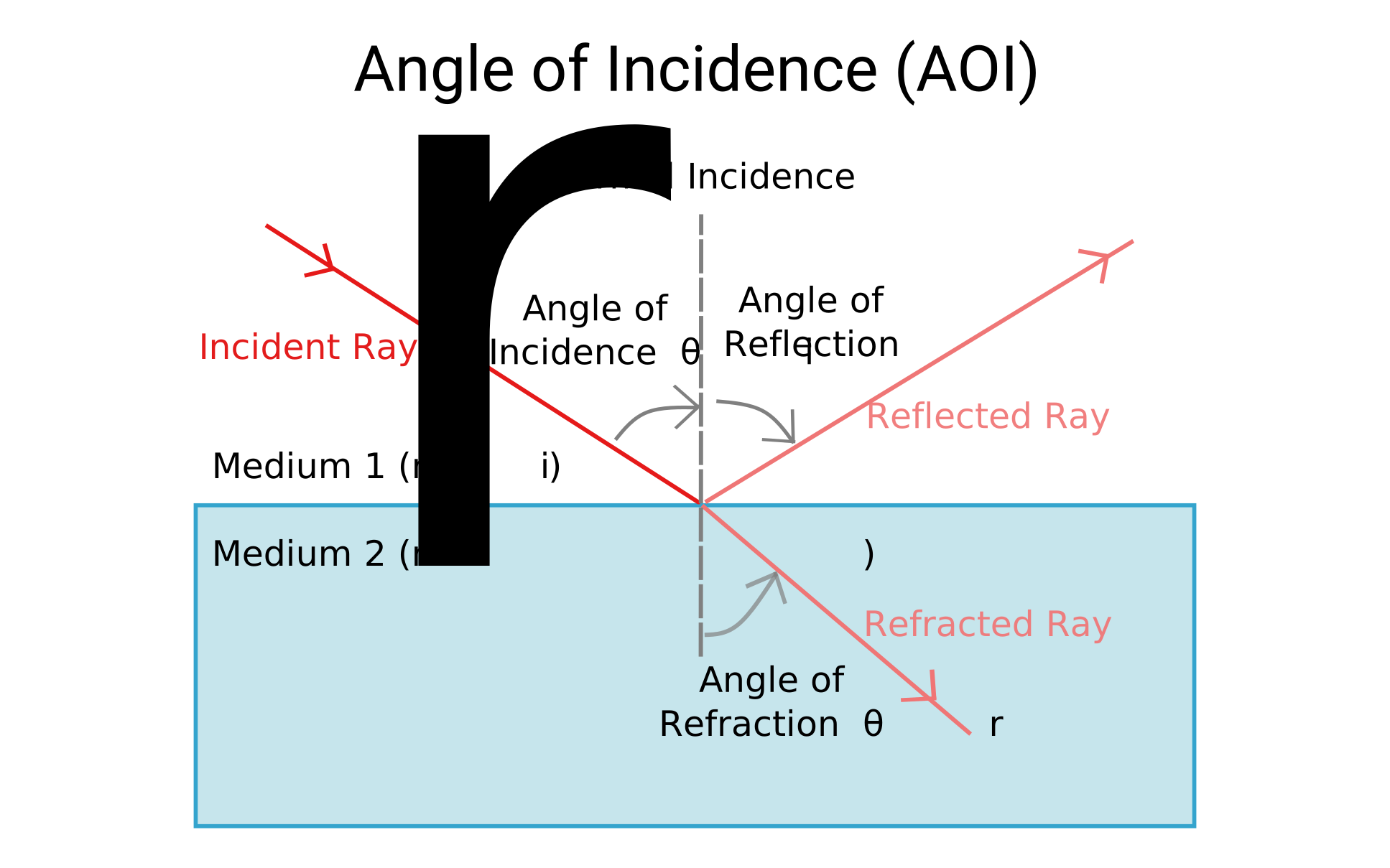
At its heart, the angle of incidence is a measure of the angle between an incoming ray or wave and the normal to the surface it strikes. While the definition might sound straightforward, its implications ripple through virtually every discipline that deals with wave phenomena and surface interactions.
Geometric Foundations: Normal and Incident Ray
To truly grasp the angle of incidence, one must first understand its constituent parts. Imagine a flat surface, such as a mirror or the interface between air and water. When a ray of light (or any wave) approaches this surface, its path leading up to the point of contact is called the incident ray. To define the angle accurately, we introduce a crucial reference line: the normal. The normal is an imaginary line drawn perpendicular to the surface at the exact point where the incident ray strikes. This line serves as our zero-degree reference.
The angle of incidence is then precisely defined as the angle formed between this incident ray and the normal. It is always measured from the normal, not from the surface itself. This convention is critical because it simplifies the mathematical relationships that govern what happens next – whether the ray reflects, refracts, or is absorbed.
The Law of Reflection and Refraction
The angle of incidence is not just a descriptive term; it is a predictive one. Its value directly dictates the behavior of the wave post-interaction, governed by fundamental physical laws:
-
The Law of Reflection: When a wave encounters a surface and bounces off, the angle of reflection (the angle between the reflected ray and the normal) is always equal to the angle of incidence. This principle is fundamental to mirrors, radar systems, and even the design of concert halls for optimal acoustics.
-
Snell’s Law of Refraction: When a wave passes from one medium into another (e.g., light moving from air into glass), its path often bends or “refracts.” Snell’s Law quantifies this bending, relating the angles of incidence and refraction to the refractive indices (optical densities) of the two media. This law is the cornerstone of lens design, fiber optics, and all imaging technologies.
Understanding these laws in conjunction with the angle of incidence allows engineers to precisely predict and control the path of waves, leading to innovative technological solutions.
Measuring the Angle
In practical applications, measuring the angle of incidence can range from simple protractor-based measurements in experimental setups to sophisticated optical sensors and computational models. For complex, non-planar surfaces, the concept of a local normal is used, where the normal is defined perpendicular to the tangent plane at the point of incidence. Advanced optical instruments and software tools leverage this geometric understanding to analyze light paths, design components, and simulate wave behavior in highly detailed environments.
Technological Manifestations in Optics and Imaging
Perhaps nowhere is the angle of incidence more visibly critical than in the realm of optics and imaging. From the cameras in our smartphones to sophisticated telescopes, its principles are woven into the very fabric of how we capture and perceive light.
Lenses, Mirrors, and Image Formation
Every optical device, from a simple magnifying glass to a complex multi-element camera lens, relies on the precise manipulation of light rays through reflection and refraction. The angle at which light strikes the curved surfaces of lenses dictates how much it bends, thereby controlling focus, magnification, and the correction of aberrations. Similarly, mirrors—whether flat, concave, or convex—leverage the law of reflection to direct light, forming virtual or real images. Telescopes and microscopes, for instance, utilize meticulously engineered arrangements of lenses and mirrors, each designed with specific angles of incidence in mind, to gather and magnify light for detailed observation. Without a precise understanding of these angles, coherent image formation would be impossible.
Digital Cameras and Sensor Performance
In digital photography, the angle of incidence plays a crucial role in image quality and sensor performance. Light rays entering a camera lens converge onto the image sensor (CMOS or CCD). The angle at which these rays hit individual photosites (pixels) can affect their efficiency in converting light into an electrical signal. For instance, light striking a sensor at a very oblique angle can lead to vignetting (darkening at the image edges) or color shifts, especially in compact cameras where the lens-to-sensor distance is minimal. Advanced lens designs and micro-lens arrays placed over each pixel are engineered to minimize these adverse effects by ensuring light strikes the active area of the pixel as perpendicularly as possible, optimizing light collection and image fidelity.
Displays and Visual Perception
Modern displays, from LED screens to virtual reality headsets, also contend with the angle of incidence. The viewing angle of a display refers to the range of angles from which the screen can be viewed without significant degradation in brightness, contrast, or color. This is inherently linked to how light is emitted from the display’s surface and the viewer’s angle of incidence relative to that emission. Anti-glare coatings, designed to reduce reflections, work by altering the angle of incidence for ambient light, scattering it rather than reflecting it directly back to the viewer. Furthermore, in AR/VR systems, the precise control of light paths and reflections, often using waveguides or complex optical stacks, is crucial to deliver immersive and distortion-free visual experiences, heavily relying on managing incident angles.
Fiber Optics and Data Transmission
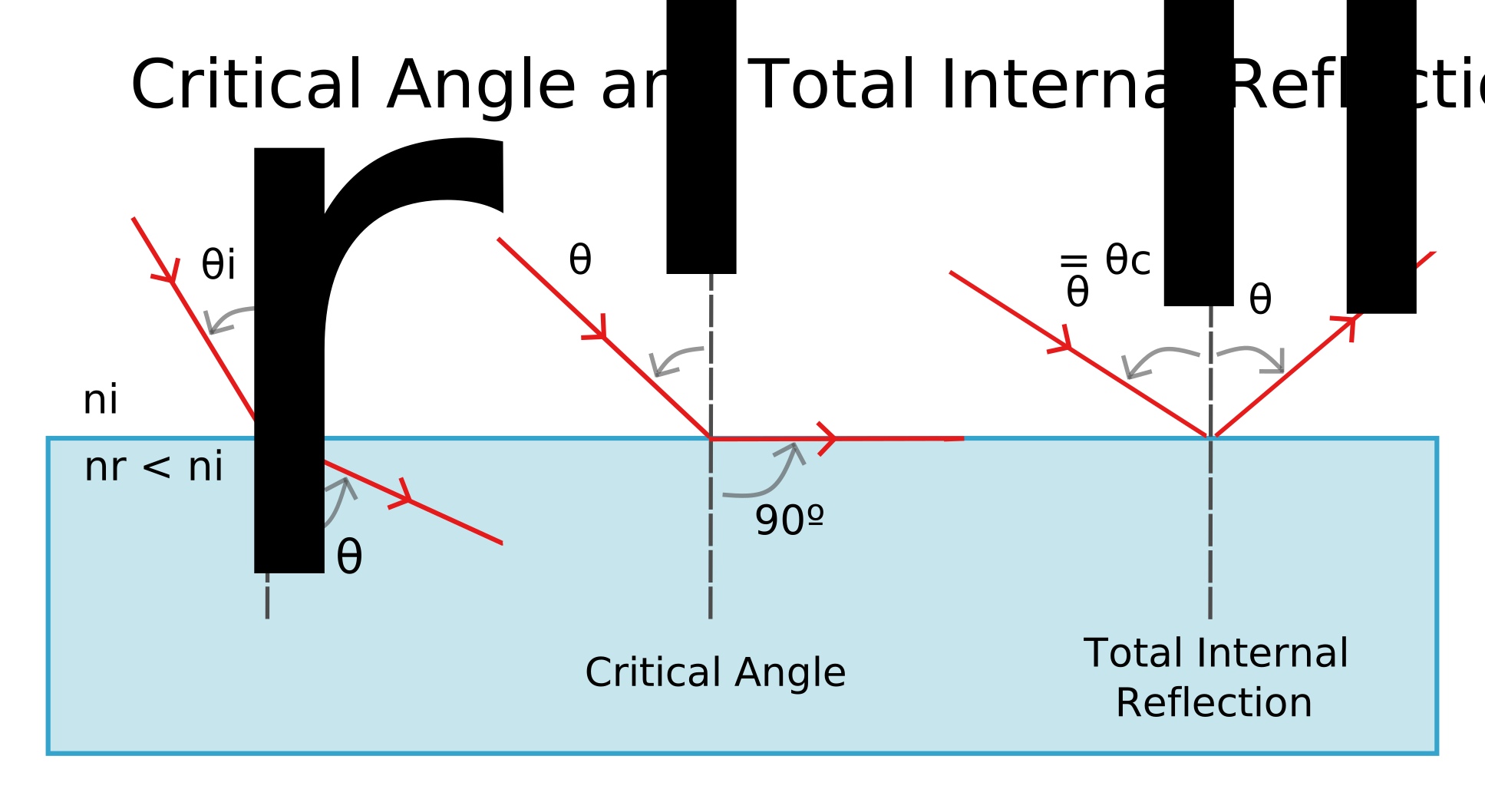
The backbone of global communication, fiber optics, is a prime example of the angle of incidence in action. Data is transmitted as light pulses through thin strands of glass or plastic. The magic here lies in total internal reflection. When light traveling through the fiber (a denser medium) strikes the interface with the cladding (a less dense medium) at an angle of incidence greater than a specific “critical angle,” it is entirely reflected back into the fiber. This allows light to propagate over vast distances with minimal loss, effectively “bouncing” its way through turns and bends. Precise engineering of the fiber’s core and cladding materials, along with the angle at which light is coupled into the fiber, ensures this critical angle is consistently met, enabling high-speed, long-distance data transmission.
Beyond Light: Waves, Signals, and Energy
While often associated with light, the concept of the angle of incidence extends far beyond the visible spectrum, influencing a myriad of other wave phenomena critical to modern technology.
Wireless Communication and Antenna Design

In wireless communication, radio waves behave much like light. The angle at which these electromagnetic waves are transmitted from and received by antennas significantly impacts signal strength, coverage, and interference. Antenna design accounts for desired radiation patterns, directing waves at specific angles to maximize signal propagation towards receivers or to minimize interference with other systems. For satellite communication, the angle of incidence of signals from Earth to a satellite, and vice-versa, is crucial for maintaining stable links and efficient data exchange. Furthermore, in urban environments, signals reflect off buildings, and understanding the angles of incidence and reflection is vital for predicting signal paths and optimizing network coverage, especially in 5G deployments where beamforming technology actively steers signals.
Solar Energy Harnessing
The efficiency of solar panels is heavily dependent on the angle of incidence of sunlight. Solar panels perform optimally when sunlight strikes their surface perpendicularly (angle of incidence close to 0 degrees), maximizing the amount of solar radiation absorbed and converted into electricity. As the sun moves across the sky, the angle of incidence changes, reducing efficiency. This is why solar panel arrays are often tilted at an optimal fixed angle based on latitude, or even employ sophisticated solar tracking systems that continuously adjust the panel’s orientation to keep it perpendicular to the sun’s rays throughout the day, significantly boosting energy output.
Acoustics and Noise Control
Sound waves, too, obey the laws of reflection and absorption governed by the angle of incidence. In architectural acoustics, understanding how sound waves reflect off walls, ceilings, and floors at various angles is paramount for designing spaces with optimal sound quality, whether for concert halls, recording studios, or open-plan offices. Materials chosen for their sound-absorbing or reflecting properties are strategically placed based on anticipated angles of incidence to control echoes, reverberation, and overall noise levels. Active noise cancellation systems also implicitly deal with the phase and angle of incident sound waves to generate counter-waves that cancel out unwanted noise.
Remote Sensing and Lidar Technology
Remote sensing technologies, from radar to Lidar (Light Detection and Ranging), extensively use the angle of incidence. Lidar systems, for example, emit laser pulses and measure the time it takes for these pulses to reflect off objects and return to the sensor. The angle at which the laser beam strikes a surface affects the intensity of the return signal and can influence the accuracy of distance measurements and 3D mapping. By analyzing the angle of incidence and the intensity of reflected light, Lidar can differentiate between various surface types (e.g., vegetation, buildings, water) and create highly detailed topographical maps, which are crucial for autonomous vehicles, urban planning, and environmental monitoring.
Angle of Incidence in Advanced Computing and VR/AR
As technology advances into more immersive and interactive realms, the angle of incidence takes on new significance, particularly in the sophisticated rendering and display technologies of modern computing.
Computer Graphics and Realistic Rendering
In computer graphics, achieving photorealism hinges on accurately simulating how light interacts with virtual objects. Ray tracing algorithms, a cornerstone of modern rendering, simulate the path of individual light rays as they bounce through a virtual scene. Each bounce involves an angle of incidence calculation to determine the angle of reflection or refraction, which in turn influences how light contributes to the final pixel color on the screen. From calculating the specular highlights on a metallic surface to the complex refractions through a glass sphere, the angle of incidence is fundamental to rendering realistic shadows, reflections, and refractions, making virtual worlds indistinguishable from reality.
Virtual and Augmented Reality Experiences
Virtual Reality (VR) and Augmented Reality (AR) headsets rely heavily on precise optical engineering, where the angle of incidence is paramount. For VR, engineers must ensure that the lenses correctly refract light from the display to the user’s eyes, creating a wide field of view without distortion. Mismanagement of incident angles can lead to chromatic aberration, blurriness, or even eye strain. In AR, where virtual images are overlaid onto the real world, complex optical waveguides or “birdbath” optics precisely direct light from miniature projectors to the user’s eye at specific angles, ensuring that the virtual content appears correctly integrated into the user’s real-world view, maintaining focus and spatial consistency. The success of immersive experiences is directly tied to this meticulous angular control.
Sensor Technology and Human-Computer Interaction
Many advanced sensor technologies, from touchscreens to gesture recognition systems, implicitly leverage principles related to the angle of incidence. Infrared sensors, for instance, might detect objects or gestures based on how infrared light is reflected back to them, with the angle of incidence influencing the detection range and accuracy. In some touchscreens, light is internally reflected within the display until a finger or stylus makes contact, changing the angle of incidence and causing some light to escape, which is then detected by sensors. Even in biometric systems like facial recognition or iris scanning, the angle at which light or infrared beams illuminate the subject and reflect back to the sensor can be critical for accurate data capture and analysis.
Optimizing Performance and Mitigating Challenges
The pervasive role of the angle of incidence naturally leads to challenges that engineers must overcome and opportunities for optimization that drive technological progress.
Design Considerations for Efficiency
Every technological system aiming for optimal performance—be it an optical instrument, an antenna, or a solar cell—must carefully consider and engineer for the angle of incidence. This involves:
-
Material Selection: Choosing materials with appropriate refractive indices, reflective properties, or absorption characteristics tailored to the expected incident angles.
-
Surface Geometry: Designing surfaces with specific curvatures or textures to control reflection, refraction, or scattering (e.g., anti-reflective coatings, diffusers).
-
Active Alignment: Implementing mechanisms to dynamically adjust components (like solar trackers or beamforming antennas) to maintain optimal incident angles for varying conditions.
-
System Integration: Ensuring that all components within a system are aligned and positioned to collectively manage incident angles for desired outcomes.
Addressing Glare and Undesirable Reflections
Unwanted reflections and glare, often caused by high angles of incidence for ambient light, pose significant challenges in displays, camera lenses, and sensing equipment. Glare can reduce contrast, obscure information, and even cause discomfort. Technologies like anti-reflective coatings, polarizing filters, and matte surface finishes are specifically designed to mitigate these issues by either absorbing light, scattering it, or selectively filtering out certain angles of incidence, thereby improving clarity and usability.
Material Science and Surface Engineering
Advancements in material science and surface engineering are continually pushing the boundaries of what’s possible with incident angles. Metamaterials, for example, are engineered to have properties not found in nature, allowing for unprecedented control over light and other waves, enabling “perfect lenses” or invisibility cloaks that manipulate angles of incidence in novel ways. Nanostructured surfaces, like those found on moth eyes, can minimize reflection across a broad range of incident angles, inspiring new anti-glare technologies. These innovations demonstrate a continuous quest to precisely control wave interactions at interfaces, directly tied to the mastery of the angle of incidence.
Conclusion
The angle of incidence, while seemingly a straightforward geometric concept, is a foundational pillar supporting a vast array of modern technologies. From the intricate optics of digital cameras and the efficient data flow through fiber optic cables to the power generation of solar panels and the immersive worlds of virtual reality, its principles are woven into the very fabric of innovation. Engineers and scientists across diverse fields continually leverage their understanding of how waves interact with surfaces at specific angles to design, optimize, and troubleshoot complex systems.
As technology continues to evolve, pushing towards ever-greater efficiency, precision, and immersive experiences, the mastery of the angle of incidence will remain a critical skill. It is not just about measuring an angle; it is about predicting behavior, controlling phenomena, and ultimately, shaping the future of technology in profound and impactful ways. Its omnipresence across so many technological domains underscores its status as an indispensable concept in the ever-expanding universe of innovation.
aViewFromTheCave is a participant in the Amazon Services LLC Associates Program, an affiliate advertising program designed to provide a means for sites to earn advertising fees by advertising and linking to Amazon.com. Amazon, the Amazon logo, AmazonSupply, and the AmazonSupply logo are trademarks of Amazon.com, Inc. or its affiliates. As an Amazon Associate we earn affiliate commissions from qualifying purchases.