
In the relentless march of technological innovation, where novel software architectures emerge daily, AI models push the boundaries of cognitive emulation, and digital security threats constantly evolve, the ability to effectively communicate complex ideas is paramount. Within this dynamic landscape, the research paper stands as a cornerstone for knowledge dissemination, validation, and advancement. And at the very forefront of every impactful research paper, serving as its initial and often most crucial point of contact, is the abstract.
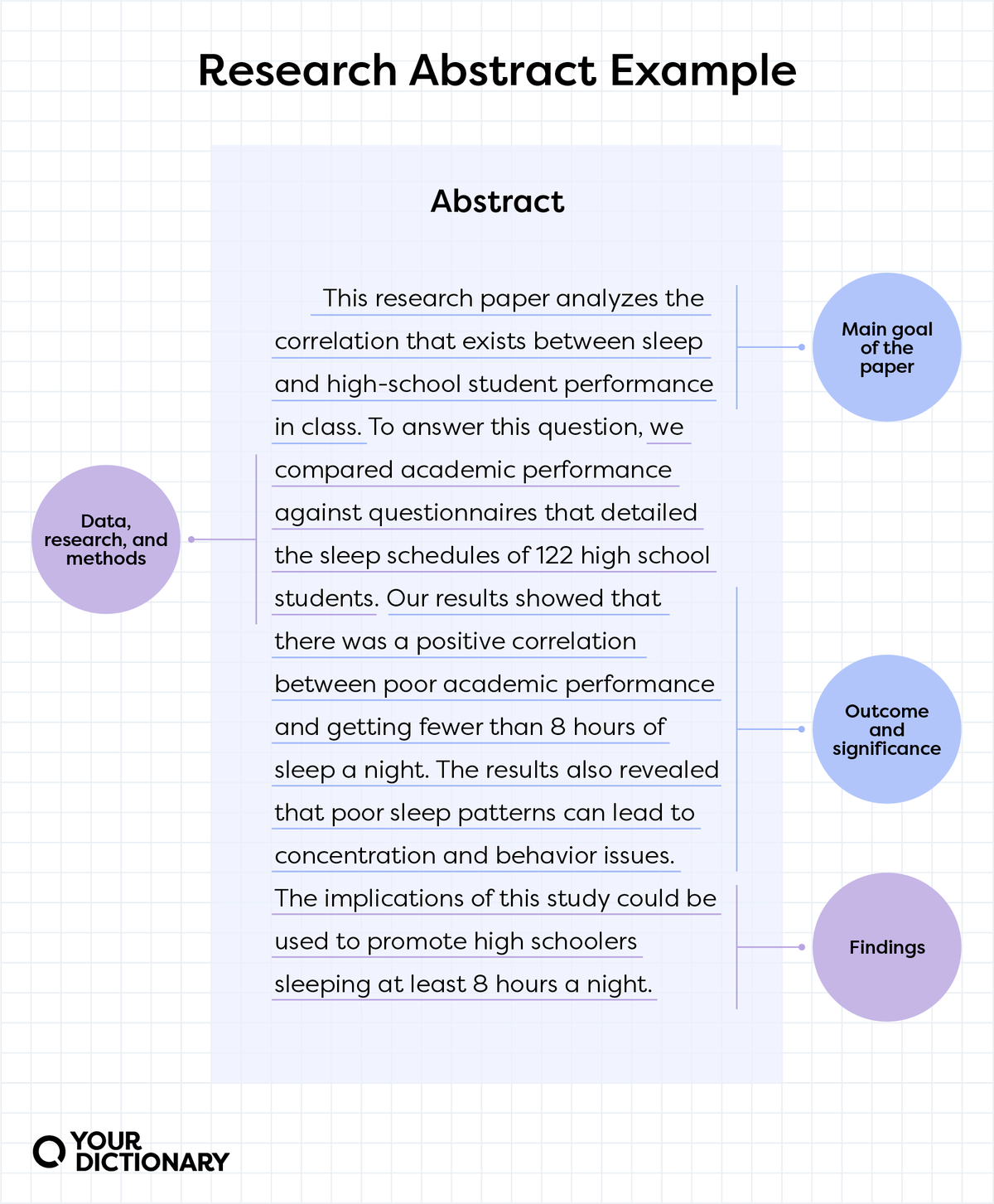
An abstract for a research paper is a concise, self-contained summary that provides a quick overview of the paper’s purpose, methods, results, and conclusions. It acts as a miniature version of the entire document, designed to help potential readers—be they fellow researchers, industry professionals, policymakers, or students—quickly determine the relevance and value of the full paper to their own work or interests. In the tech world, where information overload is a constant challenge, a well-crafted abstract is not just a formality; it’s a vital navigational tool, a filter, and often, the deciding factor in whether a paper receives deeper engagement. For engineers sifting through countless papers on new algorithms, cybersecurity analysts searching for threat intelligence, or data scientists exploring novel machine learning techniques, the abstract is their gateway to understanding and leveraging critical insights. Mastering the art of writing an effective abstract is, therefore, an indispensable skill for anyone contributing to or benefiting from the vast repository of tech research.

The Indispensable Gateway to Tech Research
In an era defined by rapid technological change and an explosion of digital information, the abstract transcends its traditional role as a mere summary to become an indispensable gateway. For the technology sector, it serves as the primary mechanism for efficient knowledge discovery and assessment, dictating the flow of information across research institutions, corporate R&D labs, and open-source communities. Without a compelling abstract, even groundbreaking innovations in AI, cybersecurity, or quantum computing risk remaining overlooked in the deluge of daily publications.
A Time-Saver for the Digital Age
The modern tech professional operates under immense time constraints. Software developers need to quickly ascertain if a new framework offers performance improvements relevant to their current project. AI researchers must rapidly scan dozens of pre-print papers on arXiv to keep abreast of the latest model architectures or training methodologies. Cybersecurity experts require immediate insight into the nature of newly discovered vulnerabilities or proposed defensive mechanisms. In each scenario, the abstract acts as a sophisticated filtering mechanism.
A well-written abstract allows these professionals to extract the core essence of a paper within seconds. It enables them to decide whether to invest significant time in reading the full 20-page document, which might involve navigating dense technical specifications, complex mathematical proofs, or elaborate code snippets. Imagine a scenario where a lead engineer is searching for novel distributed consensus algorithms for a blockchain project. A quick read of abstracts allows them to dismiss papers on unrelated topics like computer vision or natural language processing, and instead focus solely on those that promise relevant advancements in distributed ledger technology, consensus mechanisms, or network resilience. This efficiency is not just convenient; it’s crucial for maintaining productivity and staying competitive in the fast-paced tech industry. It streamlines the research process, ensuring that valuable time is allocated to the most pertinent and promising investigations.
First Impressions in Tech Innovation
Beyond merely saving time, the abstract plays a critical role in shaping the perception and trajectory of tech innovations. It is the very first impression a paper makes, whether submitted to a prestigious tech conference like NeurIPS or Black Hat, a top-tier journal like IEEE Transactions on Pattern Analysis and Machine Intelligence, or even an internal company report detailing a new proprietary algorithm.
For conference organizers, grant committees evaluating proposals for disruptive technologies, or venture capitalists assessing the technical merit of a startup’s core intellectual property, the abstract is often the initial and primary basis for evaluation. A poorly structured or vague abstract can lead to an immediate rejection, regardless of the brilliance contained within the full paper. Conversely, a compelling abstract that clearly articulates a novel technical problem, an innovative solution (e.g., a new cryptographic primitive, a more efficient deep learning architecture), and significant results can capture attention and secure funding, publication, or a coveted presentation slot.
In the highly competitive world of tech, where breakthroughs are eagerly sought and intellectual property is fiercely protected, the abstract is also instrumental in early-stage patent applications. It must succinctly describe the invention’s novelty and utility, laying the groundwork for its legal protection. Essentially, the abstract serves as the paper’s elevator pitch, capable of opening doors to collaboration, investment, and widespread adoption of technological advancements. Its quality directly impacts a paper’s visibility, influence, and ultimately, its contribution to the global tech ecosystem.
Core Components of a High-Impact Tech Abstract
To truly serve its purpose as an indispensable gateway, a tech abstract must systematically address several key components. Each element plays a distinct role in conveying the essence of the research, ensuring that readers from diverse technical backgrounds can quickly grasp the paper’s significance. A well-structured abstract is not merely a summary; it’s a strategic distillation of complex technical work into its most potent form.
Problem Statement & Its Tech Relevance
Every piece of meaningful tech research begins with an identified problem. The abstract must succinctly articulate this problem, framing it within the current technological context and highlighting its significance. This isn’t just about stating an issue but demonstrating why it matters to the tech community. For instance, instead of vaguely saying “traditional machine learning models have issues,” a strong abstract might specify: “Existing convolutional neural networks (CNNs) struggle with adversarial robustness, making them susceptible to subtle, imperceptible perturbations that can lead to catastrophic misclassifications in safety-critical autonomous driving systems.” This immediately grounds the problem in a relevant, high-stakes tech domain. It tells the reader what specific technical gap or challenge the research aims to address, such as improving the efficiency of cloud computing resources, mitigating specific cybersecurity vulnerabilities, or enhancing the interpretability of complex AI models.
Methodology & Tech Implementation
Once the problem is established, the abstract must briefly describe the approach taken to address it. This section should give the reader a glimpse into the technical execution without getting bogged down in intricate details. It should highlight the core methodological innovations or the specific technical framework employed. For example, rather than stating “we used a new algorithm,” a tech abstract would specify: “We propose a novel Transformer-based architecture incorporating a sparse attention mechanism and trained on a large-scale multimodal dataset, outperforming previous benchmarks in cross-domain image-text generation.” Or, for cybersecurity research: “Our methodology involves a custom-built honeypot network designed to capture zero-day exploit attempts targeting industrial control systems (ICS), coupled with real-time anomaly detection using unsupervised machine learning.” Such specifics, even in brief, provide credibility and allow readers to gauge the technical sophistication and reproducibility of the work.
Key Findings & Technological Implications
The results section of an abstract is where the most impactful information resides. It must present the primary outcomes of the research in a clear, quantifiable, and compelling manner. For tech papers, these findings often involve metrics, performance benchmarks, or observed behaviors that directly address the stated problem. The abstract should not just list data points but interpret their significance. For example: “Our proposed framework achieves a 15% reduction in inference latency on edge devices compared to state-of-the-art models, while simultaneously improving prediction accuracy by 3% on the ImageNet dataset.” Or: “We successfully identified three previously unknown CVEs in a widely used open-source network protocol, demonstrating a critical flaw that could lead to remote code execution.” Beyond the findings themselves, the abstract should briefly touch upon their technological implications—how these results advance the field, enable new applications, or resolve existing limitations within the tech landscape.
Conclusion & Future Tech Directions
Finally, the abstract should offer a concise conclusion that ties the findings back to the original problem statement and reiterates the paper’s main contribution. This is not merely a summary of the summary but a reinforcement of the research’s overall impact. Furthermore, a forward-looking statement, even a brief one, can enhance the abstract’s value by indicating potential avenues for future research or real-world applications within the tech domain. For instance: “This work provides a foundational understanding for developing more robust and efficient AI models for resource-constrained environments, paving the way for next-generation ubiquitous AI solutions.” Or: “The identified vulnerabilities underscore the urgent need for enhanced security auditing in critical infrastructure software and suggest directions for novel intrusion detection systems.” This concluding thought leaves the reader with a clear understanding of the paper’s significance and its potential ripple effect on future technological developments.
Crafting a Superior Abstract for Tech Audiences
Beyond merely including the necessary components, the true art of writing a superior abstract for a technology research paper lies in its execution. It demands a delicate balance of precision, conciseness, and strategic keyword integration, tailored specifically for a highly technical and often time-sensitive audience. An abstract that stands out communicates its value efficiently, ensuring it captures the attention it deserves amidst a sea of information.
Precision and Conciseness in Technical Communication
The tech world values clarity and directness. An abstract must reflect this. Every word should be carefully chosen to convey maximum information with minimum verbosity. Vague statements, unnecessary jargon (unless essential and clearly defined within the context), and redundant phrases must be purged. For instance, instead of saying “we looked at different ways to make software faster,” a precise abstract would state: “We investigated compiler optimizations and runtime profiling techniques to enhance the execution speed of embedded systems firmware.” This uses specific technical terms accurately and efficiently.
Conciseness also means avoiding background information easily found elsewhere, elaborate definitions, or exhaustive literature reviews. The abstract assumes a basic level of technical literacy from its audience. Its role is not to educate broadly but to inform specifically about this paper. Maintaining a tight word count (often between 150-300 words, depending on the journal/conference guidelines) forces authors to distil their work to its absolute essence, ensuring every sentence contributes significantly to the overall message. This disciplined approach ensures that a busy tech professional can extract the core value proposition of the paper almost instantaneously.
Keywords for Discoverability in Tech Databases
In the age of digital libraries and sophisticated search engines, keywords are not merely tags; they are critical conduits for discoverability. For tech research, selecting the right keywords is paramount to ensuring the paper is found by the right audience. Think about how a researcher would search for your paper on IEEE Xplore, ACM Digital Library, arXiv, or Google Scholar.
Keywords should encompass the core technologies used (e.g., “Reinforcement Learning,” “Kubernetes,” “Quantum Cryptography”), the problem domain (“Cyber-Physical Systems Security,” “Natural Language Processing,” “Edge Computing”), and the specific contributions (“Federated Learning,” “Adversarial Examples,” “Homomorphic Encryption”). Using a mix of broad and specific terms helps cast a wider net while also attracting highly targeted searches. Many conferences and journals even specify required keywords or provide taxonomies. Ignoring this aspect means your groundbreaking research on a novel blockchain consensus mechanism or an advanced AI-driven anomaly detection system might remain obscure, simply because relevant search queries fail to surface it. Strategic keyword selection is an SEO strategy for academic and industrial research, making your work accessible and impactful within the digital landscape.
Avoiding Common Pitfalls in Tech Abstracts
Even experienced researchers can fall prey to common abstract-writing mistakes, which can significantly detract from a paper’s effectiveness. One major pitfall is providing overly general statements that lack specific technical detail. An abstract that says “This paper addresses challenges in artificial intelligence” is far less informative than one that identifies “challenges in robust multi-agent reinforcement learning for dynamic urban traffic control.” Specificity is key in tech.
Another common error is presenting information or results not actually covered in the full paper. The abstract must be a faithful representation of the content within. Introducing a new algorithm in the abstract that isn’t detailed or tested in the paper will mislead readers and erode credibility. Conversely, failing to highlight the most significant technological findings or contributions is equally detrimental; if the abstract doesn’t showcase the “wow” factor, readers may never delve deeper.
Finally, grammatical errors, typos, and awkward phrasing can create a poor impression, especially in a field where precision and logical rigor are highly valued. Reviewing and proofreading the abstract multiple times, perhaps even having a colleague from the tech domain review it, can catch these crucial errors. A superior abstract is polished, precise, and perfectly reflects the quality and depth of the underlying technical research.
Leveraging Digital Tools and AI for Abstract Enhancement
In the modern tech research ecosystem, authors are no longer solely reliant on manual drafting and editing. A suite of digital tools and increasingly sophisticated AI solutions can significantly aid in crafting, refining, and optimizing abstracts. These tools, when used judiciously, can elevate the quality, clarity, and impact of the abstract, ensuring it meets the rigorous demands of tech audiences and publication venues.
Text Analysis Software for Clarity and Flow
Beyond basic spell checkers, advanced text analysis software can be invaluable for refining the prose of a tech abstract. Tools like Grammarly, Hemingway Editor, or even built-in features in word processors offer more than just grammatical correction; they can analyze sentence structure, identify passive voice, flag overly complex sentences, and suggest simpler alternatives. For technical writing, which often leans towards dense terminology, these tools help ensure the abstract remains readable and engaging without sacrificing precision.
They can help identify repetitive phrasing, suggesting synonyms for commonly used tech terms (e.g., varying “optimize” with “enhance” or “streamline” where appropriate). Furthermore, some tools provide readability scores (e.g., Flesch-Kincaid), offering an objective measure of how easy the text is to comprehend. While tech abstracts need to be precise, they should not be unnecessarily convoluted. Utilizing such software ensures that the abstract maintains a professional tone, exhibits excellent flow, and communicates its technical message with optimal clarity, all crucial for impressing discerning tech reviewers and readers.
AI-Assisted Abstract Generation and Summarization
The emergence of large language models (LLMs) and generative AI has opened new frontiers in academic writing, including abstract generation and summarization. Tools like OpenAI’s ChatGPT, Google’s Bard, or specialized academic writing AI assistants can now take a full research paper or key sections and generate a preliminary abstract draft. They can identify main topics, extract key findings, and synthesize complex information into coherent paragraphs.
For a tech abstract, an AI can be prompted to focus on specific aspects—e.g., “summarize this paper, emphasizing the novel neural network architecture and its performance metrics on GPU hardware.” This can be a tremendous time-saver for busy researchers, providing a solid starting point that can then be manually refined and fact-checked. Similarly, AI-powered summarization tools can take existing long abstracts or sections and help condense them to meet strict word limits.
However, it is crucial to emphasize that AI-generated abstracts require significant human oversight and critical editing. AI models might occasionally hallucinate facts, use generic phrasing, or miss nuanced technical details that are vital to the paper’s contribution. Authors must ensure accuracy, add specific technical jargon that the AI might have overlooked, and infuse their unique voice and emphasis. AI should be viewed as a powerful co-pilot, not a replacement for human intellect and expertise, particularly in the highly specialized domain of tech research.
Version Control and Collaborative Platforms
For multi-author tech research papers—which are increasingly common in complex fields like AI, quantum computing, or large-scale software engineering—managing the abstract writing and revision process can be challenging. This is where version control systems and collaborative platforms become indispensable. Tools like Git (often used with platforms like GitHub or GitLab for code) can also be adapted for managing text documents, allowing multiple authors to track changes, revert to previous versions, and merge contributions seamlessly for the abstract and the entire paper.
Cloud-based collaboration platforms such such as Google Docs, Microsoft 365, or specialized academic writing tools like Overleaf (for LaTeX documents, commonly used in computer science) facilitate real-time co-editing. These platforms allow distributed teams of tech researchers to concurrently work on the abstract, offer comments, track revisions, and ensure consistency across the document. This not only streamlines the collaborative writing process but also reduces the risk of errors, inconsistencies, or overwriting valuable contributions. By leveraging these digital tools, tech teams can collaboratively craft an abstract that is a unified, high-quality representation of their collective research effort.

Conclusion
In the relentless pursuit of progress within the tech industry, where innovations in AI, cybersecurity, software engineering, and hardware development are constantly reshaping our world, the research paper abstract stands as an unsung hero. Far more than a mere summary, it functions as the critical first impression, a sophisticated filter, and an indispensable gateway to the vast ocean of technological knowledge. For tech professionals, researchers, and students alike, mastering the art of crafting a compelling abstract is not just an academic exercise; it is a vital skill that dictates the discoverability, influence, and ultimate impact of their work.
A superior abstract succinctly articulates the core problem within its technological context, highlights the innovative methodologies employed, quantifies key findings with precise technical detail, and succinctly states the implications for the future of technology. It is a carefully engineered piece of writing, optimized for clarity, conciseness, and discoverability through strategic keyword selection. As we navigate an era of unprecedented information density, leveraging digital tools and AI to enhance this crucial component becomes increasingly important, ensuring that groundbreaking research finds its audience and contributes meaningfully to the global tech ecosystem. By prioritizing the abstract, we ensure that the seeds of innovation are not only planted but also seen, understood, and cultivated for the betterment of technology and society.
aViewFromTheCave is a participant in the Amazon Services LLC Associates Program, an affiliate advertising program designed to provide a means for sites to earn advertising fees by advertising and linking to Amazon.com. Amazon, the Amazon logo, AmazonSupply, and the AmazonSupply logo are trademarks of Amazon.com, Inc. or its affiliates. As an Amazon Associate we earn affiliate commissions from qualifying purchases.