
The term VBIED, an acronym for Vehicle-Borne Improvised Explosive Device, represents a particularly insidious form of asymmetric threat that leverages readily available technology for devastating effect. While often associated with specific geopolitical conflicts, the underlying principles and technical challenges posed by VBIEDs are a critical concern for global security professionals, technologists, and defense strategists worldwide. Far from being a relic of past conflicts, the VBIED remains a persistent and evolving threat, demanding continuous innovation in detection, mitigation, and response technologies. Understanding a VBIED isn’t just about acknowledging its destructive potential; it’s about dissecting its technical composition, understanding its operational modus operandi, and critically evaluating the technological arms race between perpetrators and the security apparatus designed to counter them. This article delves into the technical aspects of VBIEDs, exploring their components, the technologies used for their detection, and the innovative countermeasures being deployed in the ongoing effort to enhance security.

The Anatomy of a VBIED: A Technical Overview
At its core, a VBIED is a fusion of existing technologies repurposed for destructive intent. It combines the mobility and payload capacity of a vehicle with the explosive power of an improvised device, creating a mobile weapon system capable of inflicting mass casualties and significant infrastructural damage. The “improvised” nature of these devices means their design can vary wildly, reflecting the ingenuity and resourcefulness of their creators, often utilizing materials and methods outside of conventional military explosive ordnance.
Core Components and Their Integration
While no two VBIEDs are identical, they generally share several fundamental technical components:
-
The Vehicle Platform: This is the most visible and often unsuspecting component. Vehicles range from sedans and vans to trucks and even construction equipment. The choice of vehicle is driven by factors such as payload capacity (to conceal and transport explosives), maneuverability, anonymity, and the target environment. Larger vehicles can carry greater quantities of explosives, increasing destructive potential. The vehicle’s existing electrical system might be exploited or modified to integrate with the detonating mechanism.
-
The Explosive Charge: This is the destructive heart of the VBIED. Unlike manufactured military munitions, these explosives are often improvised, ranging from commercially available materials like ANFO (Ammonium Nitrate Fuel Oil) and fertilizer-based mixtures to military-grade explosives acquired illicitly. The quantity of explosive material can vary from a few kilograms to several tons, dictating the blast radius and the extent of damage. The chemical stability and detonation velocity of the chosen explosive are critical technical considerations for the device’s efficacy.
-
The Initiator/Detonator: This small but crucial component is responsible for triggering the main explosive charge. It typically involves a primary explosive (e.g., a blasting cap) that, when activated, creates a shockwave sufficient to initiate the much larger secondary explosive. Modern initiators can be electrically (wired or wireless), mechanically, or even chemically activated.
-
The Firing/Triggering Mechanism: This system connects the initiator to the perpetrator. Technical sophistication here varies widely. It can be as simple as a direct wire connecting to a switch or as complex as a radio-controlled or cell phone-activated device, a timer, a pressure switch, or even an electronically programmed delay. Wireless triggers present particular challenges for electronic countermeasures, as they operate across various radio frequencies and communication protocols. The ability to encrypt or obfuscate these signals adds another layer of complexity for detection.
-
Concealment and Camouflage: While not a “component” in the explosive sense, the technical aspects of concealment are vital. This involves modifying the vehicle to hide the explosive payload from visual inspection and various detection technologies. False compartments, reinforced structures to bear weight, and methods to mask the smell or density of explosives are all part of this technical challenge for the perpetrator.
The integration of these components requires a degree of technical skill, ranging from rudimentary electrical wiring knowledge to sophisticated understanding of radio electronics and chemical properties. Each element is chosen and adapted to maximize destructive potential while minimizing the risk of premature detection or detonation.
Evolution of VBIED Technology
The VBIED is not a static threat; its evolution mirrors advancements in both military and civilian technology. Early VBIEDs were often crude, relying on direct physical activation. However, over decades, sophistication has grown significantly:
-
Remote Activation: The advent of affordable radio technology and mobile phones revolutionized VBIED deployment, allowing perpetrators to detonate devices from a safe distance, enhancing tactical flexibility and reducing personal risk. This immediately introduced challenges for electronic warfare and signal intelligence.
-
Anti-Tamper Mechanisms: Some VBIEDs incorporate features designed to detonate if the device is tampered with or approached, complicating disarming procedures and increasing risk for bomb disposal technicians. These can range from simple mercury switches to more complex accelerometers or optical sensors.
-
Hardened Vehicles: Increasingly, vehicles are being armored or reinforced not just to protect occupants but to ensure the explosive payload reaches its target even under fire, effectively transforming the VBIED into a mobile fortress designed for its final mission.
-
Drone and Autonomous Vehicle Integration: The horizon of VBIED technology now includes the potential for integration with unmanned aerial vehicles (UAVs) or even ground-based autonomous vehicles. This pushes the envelope towards precision targeting, swarm attacks, and the removal of human risk for the perpetrator, presenting entirely new technological challenges for defense systems.
Technological Detection and Identification
Countering the VBIED threat hinges significantly on effective technological detection and identification. This is a multi-layered approach leveraging a spectrum of sensor technologies, data analytics, and increasingly, artificial intelligence.
Sensor Technologies and Surveillance
The primary defense against VBIEDs involves detecting their presence before they can be deployed effectively. This necessitates advanced sensor arrays:
-
Chemical and Trace Detection: Technologies like ion mobility spectrometry (IMS), gas chromatography-mass spectrometry (GC-MS), and explosive trace detectors (ETD) are employed to identify minute particles or vapors of explosive compounds. These are used at checkpoints, secure perimeters, and in mobile units. However, the efficacy can be affected by environmental factors, concealment methods, and the specific chemical signature of the improvised explosive.
-
X-ray and Gamma-ray Imaging: Large-scale vehicle screening systems utilize high-energy X-rays or gamma rays to produce images of vehicle contents, revealing hidden compartments, anomalous densities, and the presence of suspicious objects. These systems are crucial for cargo screening and at high-security entry points. Advances in resolution and processing speed are continuously improving their capability to “see through” dense materials.
-
Neutron Detection: Techniques like neutron backscatter or thermal neutron activation can detect the presence of nitrogen (a common element in many explosives) within a vehicle. These systems can penetrate more deeply than X-rays and provide elemental composition analysis.
-
Electromagnetic Spectrum Analysis: This involves detecting and analyzing radio frequency (RF) signals that might emanate from a remote detonating device. Spectrum analyzers, RF sniffers, and electronic surveillance measures are used to identify suspicious transmissions that could indicate a VBIED being armed or triggered. This is a constant game of cat and mouse, as perpetrators adapt frequencies and encryption methods.
-
Acoustic and Seismic Sensors: These can be used to monitor for suspicious sounds or vibrations indicative of tampering or the movement of heavy, concealed objects. While less direct for VBIED detection, they contribute to a broader situational awareness system.
AI and Machine Learning in Threat Recognition
The sheer volume of data generated by modern sensor systems, coupled with the need for rapid analysis, has propelled artificial intelligence (AI) and machine learning (ML) to the forefront of VBIED detection:

-
Automated Image Analysis: AI algorithms are now trained on vast datasets of X-ray and other imaging scans to automatically identify patterns indicative of explosives or hidden compartments. This significantly reduces the burden on human operators, improves detection rates, and minimizes false positives. Machine learning models can learn to recognize subtle anomalies that might be missed by the human eye.
-
Behavioral Anomaly Detection: ML models can analyze patterns of vehicle movement, driver behavior, and environmental context (e.g., deviation from normal routes, unusual stopping patterns, suspicious loitering) to flag potential threats. By establishing baselines of “normal” activity, AI can quickly highlight deviations that warrant further investigation.
-
Fusion of Sensor Data: A key strength of AI is its ability to integrate and interpret data from multiple disparate sensor types simultaneously. By correlating chemical signatures with imaging anomalies and behavioral flags, AI systems can build a more comprehensive and accurate threat profile than any single sensor could provide alone. This multi-modal data fusion is critical for robust threat assessment.
-
Predictive Analytics: Beyond real-time detection, AI can analyze historical data, intelligence reports, and geopolitical factors to predict potential threat vectors, likely attack methods, and high-risk areas, allowing for proactive deployment of security resources and technologies.
Countermeasures and Mitigation Technologies
Even with advanced detection, the potential for a VBIED to bypass initial screening necessitates robust countermeasures and mitigation strategies. These technologies aim to prevent a VBIED from reaching its intended target or to minimize its impact if it detonates.
Defensive Barriers and Hardening Techniques
Physical infrastructure plays a crucial role in mitigating the effects of a VBIED:
-
Hostile Vehicle Mitigation (HVM) Barriers: These are engineered structures designed to stop or significantly slow down vehicles, preventing them from penetrating secure perimeters. Technologies include bollards (fixed, retractable, or automatic), crash-rated fences, trenches, and concrete barriers. Their design often incorporates energy-absorbing materials and robust anchoring systems, tested against specific impact forces.
-
Blast-Resistant Construction: For critical infrastructure and high-value targets, architectural hardening techniques are employed. This involves using blast-resistant materials (e.g., reinforced concrete, laminated glass, composite armor), specialized structural designs to dissipate blast energy, and standoff distances to reduce the effective overpressure.
-
Vehicle Arresting Systems: Beyond passive barriers, active systems like pop-up road blockers and tire-shredding devices can quickly deploy to disable or halt a suspicious vehicle, providing a dynamic layer of defense.
Remote Neutralization and Disruption Systems
When a VBIED is detected or suspected, the goal shifts to disabling it safely or disrupting its detonation mechanism from a distance:
-
Electronic Countermeasure (ECM) Jammers: These devices emit powerful radio frequency signals designed to jam or interfere with the communication frequencies used by remote-controlled detonators (e.g., cell phone signals, walkie-talkie frequencies). This creates a “bubble” of RF interference around the target or the suspected VBIED, preventing external signals from reaching the device.
-
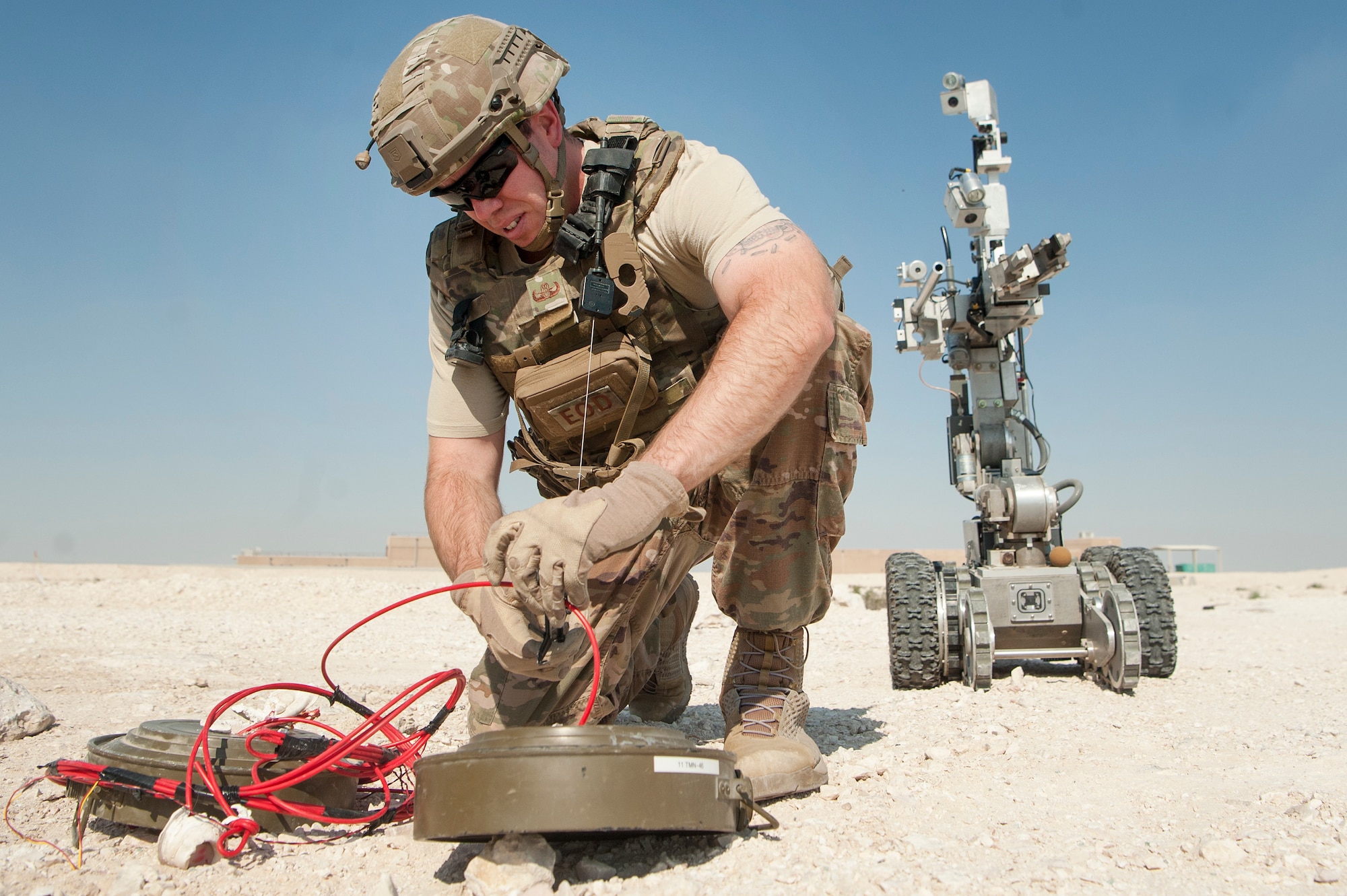
Robotics and Unmanned Ground Vehicles (UGVs): Bomb disposal robots equipped with specialized tools (e.g., manipulators, disruptors, diagnostic sensors) are invaluable for approaching and neutralizing VBIEDs from a safe distance. These UGVs can investigate, move suspicious objects, and even employ water cannons or other disruption tools to safely disarm the device. Advanced robotics are increasingly incorporating AI for improved autonomy and operational efficiency in hazardous environments.
-
Directed Energy Weapons (DEW): While still largely in development or restricted use for this specific application, directed energy technologies (e.g., high-power microwave pulses) are being explored for their potential to disrupt electronics within a VBIED or neutralize its trigger mechanism without causing a full detonation.
The Broader Technological Landscape of Threat Response
The response to VBIEDs extends beyond immediate detection and neutralization, encompassing intelligence gathering, data analysis, and forward-looking technological development to stay ahead of evolving threats.
Data Analysis and Predictive Intelligence
The vast amounts of data collected from various security technologies, surveillance systems, and intelligence sources are invaluable. Big data analytics and machine learning are employed to:
-
Identify Trends and Patterns: Analyze past incidents, perpetrator tactics, and material availability to identify emerging trends in VBIED construction and deployment.
-
Behavioral Modeling: Develop sophisticated models of perpetrator behavior, target selection, and operational methodologies to anticipate future threats.
-
Geospatial Analysis: Overlay threat intelligence onto geographical data to identify high-risk areas and optimize resource allocation for security measures.
Future of Counter-VBIED Technologies
The technological race against VBIEDs is continuous. Future developments are likely to focus on:
-
Miniaturized and Distributed Sensors: Integrating smaller, more pervasive sensors into urban infrastructure and public spaces, creating a more seamless and layered detection network.
-
Enhanced AI Autonomy: Further developing AI systems that can independently identify, track, and even initiate non-lethal disruption of suspicious vehicles or devices, requiring minimal human intervention in the initial stages.
-
Quantum Sensing: Exploring quantum technologies for ultra-sensitive detection of explosives or their precursors, potentially offering capabilities beyond current chemical sensors.
-
Cyber-Physical Security Convergence: As VBIEDs potentially incorporate more sophisticated electronics and even network connectivity (e.g., for autonomous operation), the lines between physical and cyber security will blur. Counter-VBIED strategies will increasingly need to incorporate cyber defense techniques to prevent remote hacking or manipulation of devices.
In conclusion, the VBIED, a stark reminder of technology’s dual nature, presents an ongoing and complex security challenge. The continuous evolution of these devices demands an equally dynamic and innovative response from the technological community. From advanced sensor arrays and AI-driven analytics to robust physical barriers and sophisticated robotic neutralization systems, the fight against the VBIED is a testament to the critical role of technology in safeguarding lives and critical infrastructure in an ever-changing threat landscape.
aViewFromTheCave is a participant in the Amazon Services LLC Associates Program, an affiliate advertising program designed to provide a means for sites to earn advertising fees by advertising and linking to Amazon.com. Amazon, the Amazon logo, AmazonSupply, and the AmazonSupply logo are trademarks of Amazon.com, Inc. or its affiliates. As an Amazon Associate we earn affiliate commissions from qualifying purchases.