
The electric guitar, a ubiquitous symbol of modern music, owes its very voice to a remarkable piece of technology: the pickup. Far from being a mere accessory, the guitar pickup is the indispensable heart of any electric or bass guitar, acting as the primary transducer that transforms the physical vibrations of strings into the electrical signals that amplifiers can then magnify into audible sound. Without it, an electric guitar is little more than a silent piece of sculpted wood and wire. Understanding what a pickup is, how it works, and the various technologies involved is crucial for any musician, sound engineer, or tech enthusiast keen to grasp the mechanics of musical expression.
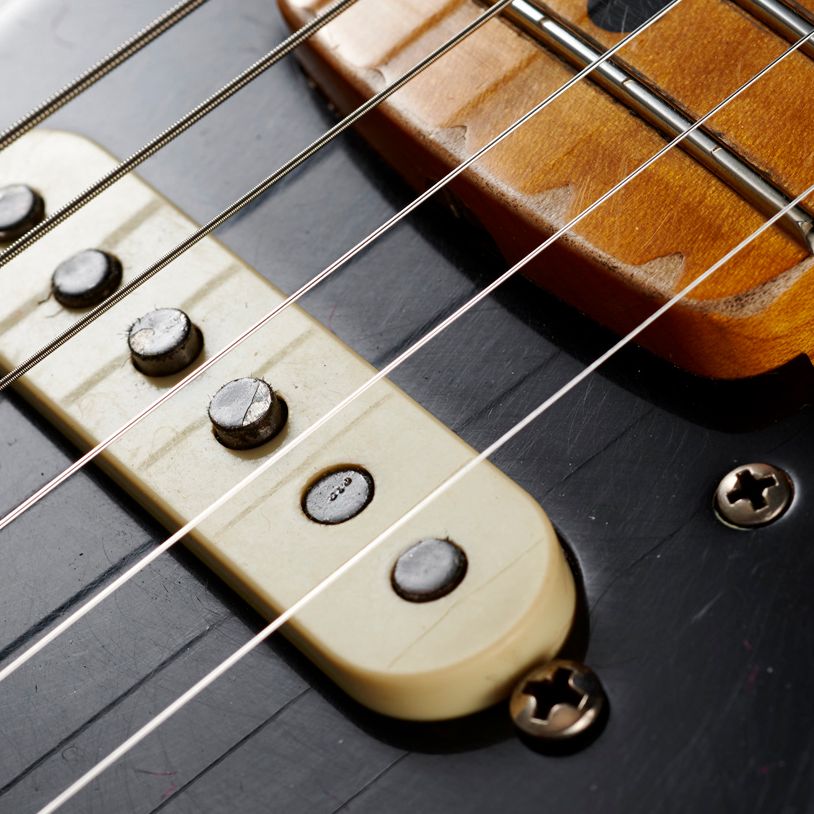
At its core, a guitar pickup is a sophisticated electromagnetic device. It’s designed to detect the subtle movements of vibrating metal strings, which typically sit just above its magnetic field. These movements induce a tiny electrical current within the pickup’s coiled wire, a phenomenon known as electromagnetic induction. This generated current, carrying the sonic signature of the vibrating string, is then routed through the guitar’s internal electronics (volume and tone controls) and out to an amplifier, where it becomes the powerful, articulate sound we associate with electric guitars. This article will delve into the technological intricacies of guitar pickups, exploring their fundamental operation, diverse types, and the innovations that continue to shape their evolution.
The Core Technology: How Pickups Work
To truly appreciate the magic of a guitar pickup, one must first understand the fundamental principles of physics that govern its operation. It’s a marvel of simple yet profound engineering, harnessing electromagnetism to bridge the gap between mechanical vibration and electrical signal.
Electromagnetic Induction: The Physics Behind the Sound
The entire premise of a passive guitar pickup rests on Michael Faraday’s law of electromagnetic induction. This law states that a changing magnetic field through a coil of wire will induce an electromotive force (voltage) across the ends of the coil. In the context of a guitar, this process unfolds as follows:
-
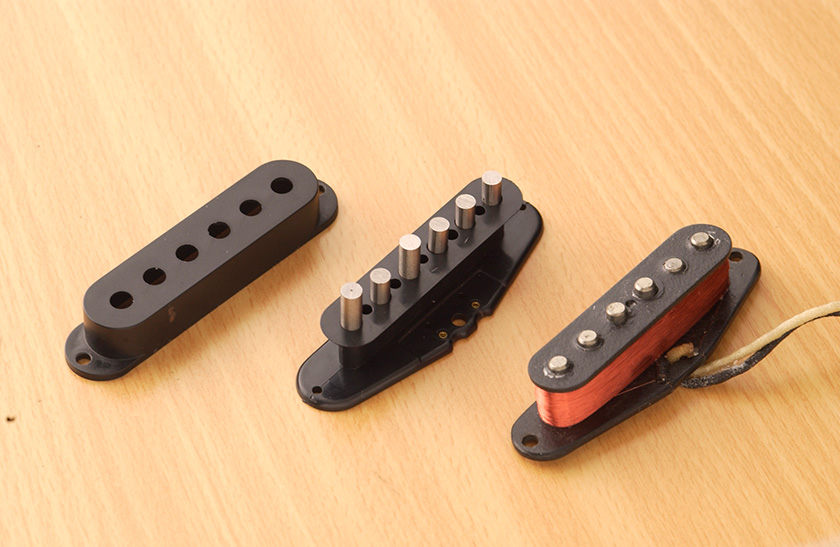
Permanent Magnets: A pickup contains one or more permanent magnets that create a static magnetic field around the strings. These magnets are typically positioned beneath or within the coil, with pole pieces (often small metal rods or blades) extending upwards to focus the magnetic field directly towards the strings.
-
Vibrating Strings: When a guitar string, made of a ferromagnetic material (like steel or nickel), is plucked, it vibrates within this magnetic field.
-
Disruption of the Field: As the string vibrates, it causes microscopic fluctuations and disruptions in the magnetic field lines.
-
Induced Current: These fluctuations in the magnetic field then cut across the numerous turns of fine copper wire that are tightly wound around the magnets (or a bobbin containing the magnets). This constant change in the magnetic flux through the coil induces a tiny alternating electrical current (AC voltage) within the wire.
-
Signal Transmission: This weak AC signal, an electrical representation of the string’s vibration, is then passed through the guitar’s wiring to the output jack, ready to be amplified. The frequency of the induced current precisely matches the frequency of the string’s vibration, determining the pitch, while the amplitude corresponds to the intensity of the vibration, dictating the volume.
Anatomy of a Pickup: Coils, Magnets, and Pole Pieces
While the core principle is consistent, the physical components of a pickup are precisely engineered to achieve specific tonal characteristics.
-
Coil(s): This is arguably the most crucial component. It consists of thousands of turns of extremely fine, insulated copper wire (often between 42 and 44 AWG). The number of turns, the wire gauge, and the winding pattern significantly influence the pickup’s output level, frequency response, and impedance. More turns generally lead to higher output and a warmer, darker tone, while fewer turns can result in a brighter, lower-output sound.
-
Magnets: The type, strength, and arrangement of the permanent magnets are fundamental to the pickup’s character. Common magnet types include Alnico (Aluminum, Nickel, Cobalt) alloys (e.g., Alnico II, V, VIII) and Ceramic. Alnico magnets are known for their warm, vintage tone and lower output, while ceramic magnets typically offer higher output, greater clarity, and a more aggressive sound, often favored in modern rock and metal.
-
Pole Pieces: These are individual metal rods or blades (usually steel, which is attracted to the magnet) that sit beneath each string, extending the magnetic field upwards. They are magnetized by the main magnet(s) and serve to focus the magnetic field precisely where the strings vibrate. The size, shape, and material of the pole pieces also contribute to the tonal profile, affecting string balance and attack.
-
Bobbin: The coil wire is typically wound around a non-magnetic bobbin, which acts as a structural frame for the components.
-
Baseplate and Cover: A baseplate (often brass or nickel-silver) holds the components together, while an optional cover (metal or plastic) protects the coils and magnets and can subtly influence the pickup’s sound by adding a degree of shielding.
From Vibration to Signal: The Signal Chain Explained
The journey from a plucked string to an amplified sound is a chain of technological transformations:
-
Mechanical Energy (String Vibration): The initial input is the kinetic energy of a vibrating string.
-
Electromagnetic Transduction (Pickup): The pickup converts this mechanical energy into a weak alternating electrical voltage.
-
Impedance Matching and Tone Shaping (Guitar Electronics): This tiny signal travels through the guitar’s internal wiring, passing through potentiometers (pots) for volume and tone control. These components present a certain impedance to the signal, influencing its clarity and frequency response.
-
Amplification (Amplifier): The low-level signal is then sent to a guitar amplifier, which dramatically increases its voltage and current, making it powerful enough to drive a loudspeaker. Amplifiers often introduce their own coloration and effects, but the core tonal character originates from the pickup.
-
Acoustic Output (Speaker): The amplifier drives a speaker cone, which converts the electrical signal back into mechanical air vibrations, producing the sound waves that reach our ears.
Types of Guitar Pickups: Shaping Your Sound
The world of guitar pickups is rich with variations, each designed to produce distinct tonal qualities and address specific technical challenges. These different designs are key to the vast sonic palette available to guitarists.
Single-Coil Pickups: Brightness and Clarity
The single-coil pickup is the oldest and most fundamental pickup design, famously associated with Fender guitars like the Stratocaster and Telecaster.
-
Characteristics: Single-coils are renowned for their bright, clear, articulate, and often “glassy” tone with prominent high frequencies and a distinct attack. They offer a dynamic response and are excellent for genres requiring crisp clean tones, chimey arpeggios, and expressive blues or country playing.
-
Technology: They consist of a single coil of wire wound around a set of magnets or magnetized pole pieces.
-
Pros: Excellent clarity, bright and punchy tone, dynamic range.
-
Cons: Susceptible to electromagnetic interference, often picking up 60-cycle hum (a buzzing noise) from electrical mains, lighting, and other electronic devices. This hum is a direct consequence of their single-coil design, which acts like an antenna for ambient electromagnetic noise.
Humbucker Pickups: Power and Noise Cancellation
Invented in the mid-1950s by Gibson, the humbucker (short for “hum-bucking”) was a revolutionary technological advancement designed specifically to combat the noise issues inherent in single-coil designs.
-
Characteristics: Humbuckers produce a fatter, warmer, and higher-output tone compared to single-coils. They are known for their excellent sustain, powerful mid-range, and smoother highs, making them ideal for rock, metal, jazz, and any style requiring a rich, thick, or distorted sound.
-
Technology: A humbucker consists of two single-coil units wired out of phase with each other and typically placed side-by-side or stacked. One coil is wound clockwise, the other counter-clockwise, and their magnetic polarities are also opposed.
-
Noise Cancellation: The ingenious design works by picking up electromagnetic hum in both coils, but because they are wired out of phase, the noise signal is cancelled out when their outputs are combined. The string signal, however, is reinforced, resulting in a significantly quieter operation than single-coils.
-
Pros: Excellent noise cancellation, higher output, fatter and warmer tone, increased sustain.
-
Cons: Can sometimes be perceived as less articulate or “muddy” compared to single-coils due to the increased inductance and bandwidth reduction; the loss of certain high frequencies is a trade-off for hum cancellation.
P90 Pickups: The Best of Both Worlds?
The P90, another Gibson invention pre-dating the humbucker, offers a unique sonic character that bridges the gap between single-coils and humbuckers.
-
Technology: A P90 is essentially a large, wide single-coil pickup, typically using bar magnets underneath the coil and steel screw pole pieces that are magnetized by the bar magnets.
-
Sound Profile: P90s are known for their raw, aggressive, and highly dynamic tone. They offer more output and mid-range growl than a traditional single-coil but retain much of the clarity and bite. They are often described as having “more girth” than a single-coil and “more bite” than a humbucker.
-
Pros: Powerful single-coil tone, excellent dynamics, unique raw sound.
-
Cons: Being a single-coil, P90s are still susceptible to 60-cycle hum, though often less intensely than narrower single-coils due to their larger coil structure.
Active vs. Passive Pickups: Powering Your Tone
Beyond the coil configuration, pickups are also categorized by their power source and internal circuitry.
-
Passive Pickups: These are the traditional pickups discussed so far (single-coils, humbuckers, P90s). They generate their signal solely through electromagnetic induction, without requiring external power. Their output is directly determined by the physical characteristics of the coils and magnets.
-
Pros: Organic, natural tone; dynamic and touch-sensitive; no battery required; simpler electronics.
-
Cons: Lower output levels compared to active pickups; susceptible to impedance loading from long cable runs; more prone to noise (especially single-coils).
-
-
Active Pickups: Active pickups incorporate a small, battery-powered preamplifier built into the pickup itself or located elsewhere in the guitar’s electronics.
-
Technology: The pickup coil itself is often wound with fewer turns, resulting in a very low-output, low-impedance signal. This weak signal is then immediately boosted and buffered by the onboard preamp.
-
Characteristics: Known for their high output, strong signal-to-noise ratio (very low noise), consistent tone regardless of cable length, and often a compressed, focused sound. They are highly popular in metal and high-gain rock for their tight low end and articulate highs under heavy distortion.
-
Pros: Very high output, extremely low noise, consistent tone, excellent for driving effects and amps.
-
Cons: Require a 9V battery (which needs periodic replacement); often described as having a less “organic” or dynamic feel compared to passive pickups; can be less sensitive to picking dynamics.
-
Specialty Pickups: Piezo, Hexaphonic, and More
While less common, other pickup technologies cater to specific needs:
-
Piezo Pickups: These are not electromagnetic. Instead, they use piezoelectric crystals embedded in the bridge or saddle to detect vibrations directly from the guitar’s body or strings. They are commonly found on acoustic-electric guitars to capture a more “acoustic” sound and are also used on electric guitars for specific clean, acoustic-like tones.
-
Hexaphonic/Polyphonic Pickups: These are specialized pickups that provide an independent output for each individual string. This technology is crucial for guitar synthesizers, MIDI conversion, and advanced signal processing, allowing for separate effects or pitch tracking for each string.
Key Technological Innovations and Considerations
The evolution of guitar pickups is a continuous journey of refinement, driven by advancements in materials science, manufacturing techniques, and a deeper understanding of electronics.
Materials Science: Magnets (Alnico vs. Ceramic) and Wire Gauges
The choice of magnetic material profoundly impacts the pickup’s sonic characteristics.
-
Alnico Magnets: Alloys of Aluminum, Nickel, and Cobalt, Alnico magnets come in various grades (e.g., Alnico II, III, IV, V, VIII) with differing magnetic strengths and tonal properties. Alnico II is known for its warm, sweet, and articulate tone, often associated with vintage PAF (Patent Applied For) humbuckers. Alnico V is stronger, offering more punch, brighter highs, and tighter lows, making it very popular for a wide range of genres. Alnico VIII is even stronger, providing higher output and more aggression.
-
Ceramic Magnets: Made from strontium ferrite, ceramic magnets are generally stronger and more consistent in their magnetic field than Alnico. They tend to produce a higher output, brighter, and often more aggressive tone with a tighter bass response, favored for modern high-gain applications.
The gauge (thickness) and insulation of the copper wire used for the coils also play a significant role. Finer wire (higher gauge) allows for more turns in a smaller space, increasing output and altering frequency response, while the insulation type affects durability and sometimes even capacitance.
Winding Techniques: Overwound, Underwound, and Potting
The way the wire is wound around the bobbin is a critical determinant of a pickup’s sound.
-
Number of Turns: More turns (overwound) generally mean higher output, warmer tone, and increased mid-range. Fewer turns (underwound) result in lower output, brighter tone, and more clarity.
-
Winding Pattern:
-
Hand-wound/Scatter-wound: This irregular winding pattern, often associated with vintage pickups, introduces slight variations in capacitance between turns, leading to a more complex harmonic content, often described as “airy” or “vocal.”
-
Machine-wound: Modern production pickups are often precision machine-wound, leading to a more consistent and often tighter sound.
-
-
Potting (Wax Potting): Many pickups are “potted” by immersing them in hot wax. This process fills any air gaps within the coil, preventing the coil windings from vibrating microphonically (feeding back at high volumes) and reducing unwanted squealing. This is a crucial technological step for high-gain applications.
Noise Reduction Technologies: Beyond the Humbucker
While humbuckers effectively tackle 60-cycle hum, ongoing innovation has sought to provide noiseless single-coil tones.
-
Stacked Humbuckers: These are essentially two coils stacked vertically, offering humbucking functionality in a single-coil footprint, though they often sacrifice some of the characteristic single-coil clarity.
-
Dummy Coils: Some systems use a separate, silent coil (a dummy coil) that is not connected to the strings but is electronically out of phase with the main pickup to cancel hum.
-
Digital Noise Gates and Filtering: While not inherent to the pickup itself, external digital technologies are often employed to further clean up the signal, offering more comprehensive noise reduction, especially in high-gain setups.
Digital Integration and Modeling: The Future of Pickups?
The boundaries between analog and digital technology are increasingly blurring in the guitar world. While traditional pickups remain predominantly analog, digital innovations influence how their signals are processed and even how pickups are designed.
-
Pickup Modeling: Digital amplifiers and software plugins can emulate the sonic characteristics of various classic and modern pickups, offering a vast array of tones without needing to physically swap pickups. This technology analyzes the frequency response and dynamic behavior of actual pickups to create digital algorithms.
-
Digital Pickups/Optical Pickups: While not mainstream, some experimental designs explore digital or optical methods to bypass traditional electromagnetic induction. Optical pickups, for instance, use light sensors to detect string vibrations, offering extremely wide frequency response and no hum, but they represent a significant departure from conventional design and have their own set of characteristics. These represent a future frontier in pickup technology, potentially offering unprecedented clarity and signal fidelity.
Selecting the Right Pickup: A Technical Guide
Choosing the right pickup is one of the most impactful decisions a guitarist can make regarding their instrument’s sound. It’s a technical choice that deeply influences the overall tonal character.
Understanding Your Tonal Goals: Genre and Playstyle
The “best” pickup is highly subjective and depends entirely on a guitarist’s desired sound and musical context.
-
Clean and Bright: For pristine cleans, funk, country, or blues, traditional single-coils (like Fender Stratocaster pickups) or brighter P90s are often preferred for their clarity and dynamic range.
-
Warm and Smooth: Jazz guitarists might lean towards humbuckers with lower output and warmer Alnico II or III magnets for their smooth, mellow tones.
-
Rock and Blues: PAF-style humbuckers or hotter P90s offer the perfect blend of bite, warmth, and output for classic rock and blues overdrive.
-
Hard Rock and Metal: High-output humbuckers (often with ceramic magnets) or active pickups (like EMGs or Fishman Fluence) are the go-to for their tight low end, aggressive mid-range, and articulate response under heavy distortion.
-
Versatility: Many modern guitars offer coil-splitting or coil-tapping options on humbuckers, allowing them to mimic single-coil tones for greater versatility, essentially offering two distinct pickup technologies in one.
Compatibility and Installation Considerations
Physical and electrical compatibility are crucial.
-
Size and Routing: Pickups come in standard sizes (e.g., Strat single-coil, Telecaster bridge, P90 soapbar, Humbucker), and the guitar’s body must be routed to accommodate them. Modifications might be necessary for non-standard sizes.
-
Wiring: Swapping pickups often involves soldering and understanding wiring diagrams. Series vs. parallel wiring, phase orientation, and grounding are important technical aspects to consider to avoid hum or thin sound. Active pickups require routing for a battery compartment.
-
Output Impedance: While less of a concern for passive pickups with standard amplifiers, understanding the output impedance of a pickup can be relevant for specific effects pedals or direct-to-interface recording setups.

The Impact of Pickups on Amplifier and Pedal Interaction
The pickup is the first link in the signal chain, and its characteristics profoundly influence how the rest of your gear responds.
-
Amp Input: High-output pickups will push an amplifier harder, leading to earlier breakup and more natural overdrive from the amp itself. Lower-output pickups offer more headroom, allowing the amp’s clean tone to shine through longer.
-
Pedal Interaction: Certain pedals, particularly dirt pedals (overdrives, distortions, fuzzes), react differently to various pickup outputs. An overdrive pedal might sound different when fed a hot humbucker signal versus a clean single-coil signal, requiring different settings to achieve the desired effect. The frequency response of the pickup also determines what frequencies are fed into the pedals, shaping their overall character.
In conclusion, the guitar pickup is an unassuming yet profoundly sophisticated piece of technology. It stands as the critical nexus where the mechanical energy of vibrating strings transforms into the electrical signals that define the electric guitar’s voice. From the pioneering single-coil to the hum-cancelling humbucker, and from passive designs to active powerhouses, each iteration represents a technological step forward, offering musicians an ever-expanding palette of sounds. Understanding the technical principles behind these devices empowers guitarists to not only appreciate the depth of their instrument but also to make informed choices that meticulously craft their unique sonic identity within the vast landscape of music technology.
aViewFromTheCave is a participant in the Amazon Services LLC Associates Program, an affiliate advertising program designed to provide a means for sites to earn advertising fees by advertising and linking to Amazon.com. Amazon, the Amazon logo, AmazonSupply, and the AmazonSupply logo are trademarks of Amazon.com, Inc. or its affiliates. As an Amazon Associate we earn affiliate commissions from qualifying purchases.