
In an age increasingly dominated by wireless communication and cloud computing, it might seem paradoxical to dedicate a deep dive into something as seemingly archaic as a cable. Yet, cables remain the indispensable, often unsung, backbone of our technological world. From powering our homes and charging our devices to transmitting vast oceans of data across continents, cables are the fundamental conduits enabling modern life. To truly understand the fabric of our digital existence, one must first grasp the essence of what a cable is, how it functions, and its pivotal role in the relentless march of technological progress.
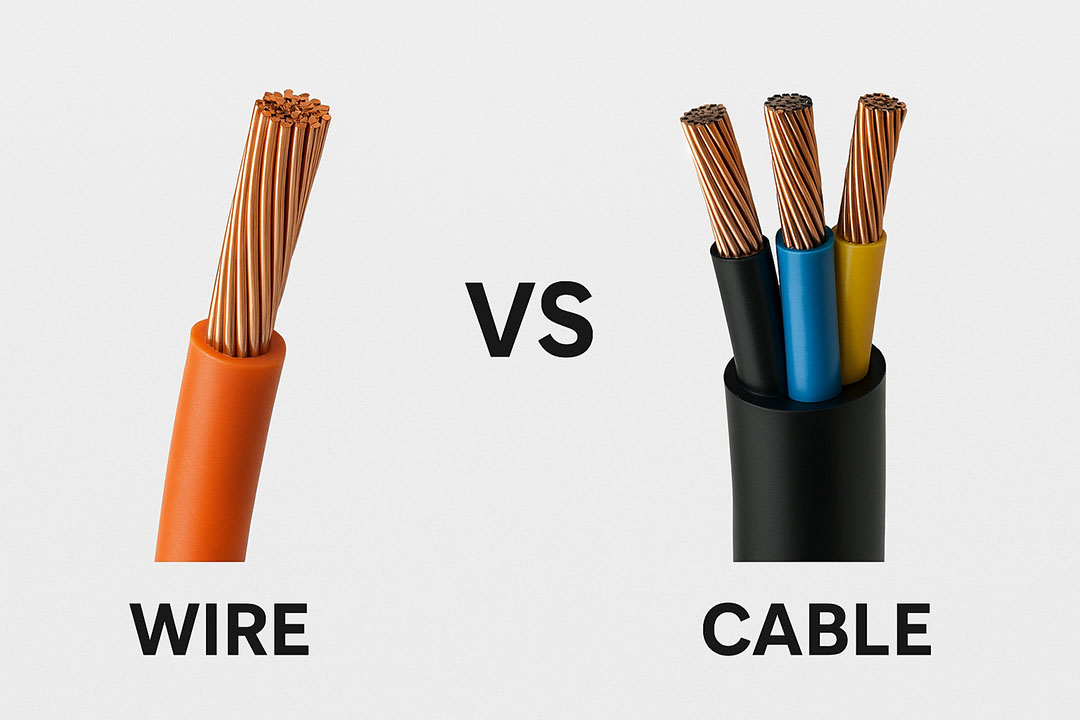
A cable, at its core, is an engineered assembly of one or more wires or optical fibers, typically bound together within a protective sheath, designed to transmit electrical power or data signals over a distance. While simple in concept, the design, materials, and specific configurations of cables are incredibly diverse and complex, tailored precisely to the demands of their intended application. They are the arteries and veins of our infrastructure, facilitating everything from the flick of a light switch to real-time global communication.
The Fundamental Building Blocks of Connectivity
To dissect “what is a cable” is to understand its constituent parts, each playing a crucial role in its overall function and performance. These components are meticulously chosen and assembled to meet specific technical requirements, ensuring reliability, safety, and efficiency.
Defining a Cable: More Than Just a Wire
While often used interchangeably in casual conversation, a “cable” is distinct from a “wire.” A wire is a single conductor, typically metallic. A cable, on the other hand, is an assembly containing multiple wires or optical fibers, often bundled, insulated, and encased in a protective outer jacket. This sophisticated structure allows for enhanced performance, protection against environmental factors, and the ability to carry multiple signals or greater power loads simultaneously. The engineering behind a cable involves considerations of conductivity, insulation, shielding, strength, and environmental resilience, all tailored to its specific purpose.
Core Components of a Cable
Regardless of its specific type or application, most cables share a common set of fundamental components:
-
Conductor: This is the heart of the cable, responsible for carrying the electrical current or light signals.
-
Metallic Conductors: Most commonly copper or aluminum. Copper is highly valued for its excellent electrical conductivity, ductility, and corrosion resistance. Aluminum is lighter and more cost-effective for larger power applications. These conductors can be solid, stranded (for flexibility), or braided.
-
Fiber Optic Conductors: Ultra-thin strands of high-purity glass (silica) or plastic, designed to transmit data as pulses of light. These offer vastly superior bandwidth and immunity to electromagnetic interference compared to metallic conductors.
-
-
Insulation: Wrapped around each individual conductor, insulation is a non-conductive material (dielectric) that prevents the flow of electricity between adjacent conductors and from the conductor to the outside environment. Common materials include PVC (Polyvinyl Chloride), XLPE (Cross-linked Polyethylene), and PE (Polyethylene). Proper insulation is critical for preventing short circuits, ensuring safety, and maintaining signal integrity.
-
Shielding: For many data and some power cables, shielding is added to protect the internal conductors from external electromagnetic interference (EMI) and radio frequency interference (RFI), and conversely, to prevent signals within the cable from interfering with other devices. Shielding can take various forms:
-
Foil Shielding: A thin layer of aluminum or copper foil, effective against high-frequency interference.
-
Braided Shielding: A woven mesh of copper or aluminum wires, providing good protection across a wider frequency range and greater mechanical strength.
-
Combination Shielding: Often, both foil and braid are used together for comprehensive protection.
-
-
Jacket/Sheath: This is the outermost layer of the cable, providing mechanical protection against abrasion, moisture, chemicals, UV radiation, and other environmental factors. Common jacket materials include PVC, LSZH (Low Smoke Zero Halogen) for fire safety, Plenum-rated materials (for use in air-handling spaces), and polyurethane for harsh industrial environments. The jacket also provides structural integrity, holding all internal components together.
-
Connectors: While technically an accessory, connectors are integral to a cable’s function, serving as the interface between the cable and the devices it connects. They ensure a secure and reliable electrical or optical connection. Examples range from simple two-pin power plugs to complex multi-pin data connectors like USB, HDMI, RJ45 (Ethernet), and various fiber optic connectors (SC, LC, ST). The design of a connector is as critical as the cable itself in maintaining signal integrity and ensuring compatibility.
A Spectrum of Cable Types and Their Applications
The sheer diversity of cables reflects the myriad tasks they perform across virtually every sector of technology. Each type is meticulously designed to excel in its specific role, balancing performance, cost, and environmental factors.
Electrical Power Cables
These cables are engineered to transmit electrical energy from power sources to devices. Their primary design considerations revolve around current carrying capacity (ampacity), voltage rating, and safety.
-
Household and Building Wiring: The ubiquitous wires running through walls and ceilings, delivering AC power to outlets and appliances. These typically use copper conductors with PVC or XLPE insulation, often encased in a robust jacket.
-
Industrial Power Cables: Designed for heavier loads and harsher environments, found in factories, machinery, and large power distribution systems. They often feature thicker conductors, more robust insulation, and specialized jackets resistant to chemicals, extreme temperatures, and mechanical stress.
-
High-Voltage Transmission Lines: Massive cables used to transmit electricity over long distances from power plants to substations. These are often overhead lines, but underground and submarine power cables exist, requiring extensive insulation and protective layers.
-
Charging Cables (e.g., USB-C, Lightning): While also capable of data transfer, their fundamental role for many devices is to deliver power. They combine power conductors with data conductors in a compact, flexible form factor.
Data Transmission Cables
This category is vast, encompassing cables designed to carry information signals, from simple audio to high-speed digital data. Their design prioritizes signal integrity, bandwidth, and resistance to interference.
-
Ethernet (Twisted Pair) Cables: The backbone of wired local area networks (LANs). These cables (e.g., Cat5e, Cat6, Cat7, Cat8) consist of multiple pairs of insulated copper wires twisted together. The twisting helps cancel out electromagnetic interference (EMI) from external sources and crosstalk between adjacent pairs. Different categories denote varying levels of performance and bandwidth.
-
Coaxial Cables: Featuring a central conductor, surrounded by an insulating dielectric, a metallic shield, and an outer insulating jacket. This design provides excellent shielding and is commonly used for cable television, internet broadband, and older networking systems (e.g., RG-6, RG-59).
-
Fiber Optic Cables: The pinnacle of data transmission, utilizing light pulses through glass or plastic fibers.
-
Single-Mode Fiber (SMF): Has a very small core diameter, allowing only one mode of light to propagate, enabling extremely high bandwidth and long-distance transmission, often used for backbone networks and long-haul telecommunications.
-
Multi-Mode Fiber (MMF): Has a larger core, allowing multiple modes of light to travel simultaneously. It’s more cost-effective for shorter distances within buildings and data centers.
Fiber optics offer complete immunity to EMI and transmit data at speeds and distances far exceeding copper.
-
-
USB (Universal Serial Bus) Cables: Ubiquitous for connecting peripherals to computers. Different versions (USB 2.0, 3.0, 3.1, 3.2, 4, USB-C) offer varying data transfer rates and power delivery capabilities, typically containing both data and power lines.
-
Video/Audio Cables (HDMI, DisplayPort, DVI, VGA): Designed specifically for transmitting high-resolution video and multi-channel audio signals. HDMI and DisplayPort are digital standards offering superior quality and advanced features, while DVI and VGA are older digital and analog video standards, respectively.
-
Thunderbolt Cables: A high-speed interface developed by Intel (in collaboration with Apple), combining PCI Express (data) and DisplayPort (video) into a single serial signal. Thunderbolt cables offer extremely high bandwidth, enabling connection to external GPUs, multiple displays, and fast storage devices.
Specialized and Hybrid Cables
Beyond the common categories, a vast array of specialized cables exists, tailored for unique requirements:
-
Audio Cables (XLR, TRS, RCA): Designed for specific audio signal transmission in professional audio setups, home theaters, and musical instruments, focusing on low noise and accurate signal reproduction.
-
Industrial Control Cables: Used in automation, robotics, and process control systems, often designed to withstand harsh industrial environments, high temperatures, and electrical noise (e.g., Profibus, DeviceNet).
-
Medical Cables: Highly specialized, meeting stringent biocompatibility, sterilization, and safety standards for use in medical devices and diagnostic equipment.
-
Submarine Cables: Massive, robust cables laid on the ocean floor, forming the critical intercontinental backbone of the global internet and telecommunications network. They are engineered to withstand immense pressure, corrosion, and physical damage over thousands of kilometers.
The Engineering Behind Performance and Reliability
The true marvel of a cable lies not just in its components but in the sophisticated engineering principles applied to ensure its performance, reliability, and longevity in diverse and demanding environments.

Signal Integrity and Noise Reduction
Maintaining the quality of the transmitted signal is paramount, especially for data cables. Engineers employ several techniques to combat signal degradation and interference:
-
Twisted Pairs: As seen in Ethernet cables, twisting two conductors together dramatically reduces electromagnetic interference (EMI) from external sources and crosstalk (interference between adjacent wires within the cable). The electromagnetic fields induced in each wire by an external source are largely canceled out over the length of the twist.
-
Shielding Effectiveness: The efficacy of foil and braided shields in blocking external EMI/RFI is critical. Proper grounding of the shield is essential for it to function correctly, diverting unwanted noise away from the conductors.
-
Impedance Matching: For high-frequency signals, it is crucial that the cable’s characteristic impedance matches the impedance of the connected devices. Mismatches cause reflections, leading to signal loss and distortion.
-
Attenuation and Crosstalk: Attenuation is the loss of signal strength over distance. Crosstalk is the unwanted coupling of signals between different transmission paths. Cable design minimizes both through careful material selection, conductor geometry, and shielding.
Material Science and Environmental Factors
The choice of materials is not arbitrary; it’s a science aimed at optimizing performance for specific conditions:
-
Conductor Purity and Gauge: High-purity copper ensures minimal resistance and signal loss. The gauge (thickness) of the conductor dictates its current-carrying capacity and resistance. Thicker conductors have lower resistance but are less flexible and more expensive.
-
Insulation Properties: The dielectric constant of the insulating material affects signal propagation speed and capacitance. High dielectric strength prevents electrical breakdown, crucial for high-voltage applications.
-
Jacket Resistance: The outer jacket must protect against the operational environment. Materials like PVC offer general protection, while LSZH compounds are vital in public spaces to minimize toxic smoke and corrosive gas in a fire. UV-resistant jackets are needed for outdoor applications, and chemical-resistant jackets for industrial settings.
-
Temperature Ratings and Flexibility: Cables are rated for specific operating temperatures. Extreme temperatures can degrade insulation or conductors. Flexibility is a design trade-off; highly flexible cables often use stranded conductors and softer jacket materials, while rigid cables may offer better durability in fixed installations.
Standards and Certifications
To ensure compatibility, safety, and consistent performance, cables adhere to rigorous industry standards and certifications:
-
IEEE (Institute of Electrical and Electronics Engineers): Develops standards for electrical and electronic technologies, including network protocols (e.g., IEEE 802.3 for Ethernet).
-
TIA/EIA (Telecommunications Industry Association/Electronic Industries Alliance): Specifies performance categories for twisted-pair cabling (e.g., TIA/EIA-568 for Cat5e, Cat6, etc.).
-
ISO (International Organization for Standardization) and IEC (International Electrotechnical Commission): Develop global standards across various industries, including electrical and electronic components.
-
UL (Underwriters Laboratories): A safety certification organization that tests and certifies cables for electrical safety and fire resistance, crucial for products used in construction and consumer electronics.
-
RoHS (Restriction of Hazardous Substances) and CE (Conformité Européenne): Environmental and health safety directives, particularly relevant in Europe, ensuring cables do not contain banned hazardous materials and meet essential safety requirements.
These standards provide a common framework, ensuring that a Cat6 cable from one manufacturer will perform similarly to one from another, and that a power cable is safe to use within its specified ratings.
The Evolution and Future of Cable Technology
The journey of the cable is a story of continuous innovation, adapting to ever-increasing demands for speed, bandwidth, and reliability, even in the face of burgeoning wireless technologies.
From Analog to Digital, Copper to Fiber
The earliest cables were simple copper wires transmitting analog electrical signals, primarily for telegraphy and telephony. The advent of computing and digital communications spurred a massive shift. Digital signals, represented by discrete pulses, allowed for greater data density and error correction.
The 20th century saw the proliferation of coaxial cables for television and early data networks. However, the true revolution came with fiber optics. Leveraging light instead of electricity, fiber optic cables shattered previous bandwidth ceilings, enabling gigabit and terabit speeds over vast distances with virtually no electromagnetic interference. This transition has been pivotal in building the global internet infrastructure, data centers, and high-speed enterprise networks. While copper still dominates local connections and power delivery, fiber is undeniably the future for high-capacity data transmission.
The Interplay with Wireless Technologies
The rise of Wi-Fi, cellular networks (5G), and satellite communication has led some to believe that cables are becoming obsolete. However, this is a misconception. Wireless technologies, while offering unparalleled mobility and convenience for end-users, critically rely on cables for their very existence.
-
Wired Backbones: Every Wi-Fi access point, cellular tower, and satellite ground station is connected to the wider network via high-capacity fiber optic or copper cables. Without these wired backbones, wireless communication would be limited to a very small, isolated area.
-
Limitations of Wireless: Wireless signals are susceptible to interference, have limited range, and often cannot match the sheer speed, reliability, and security of a direct wired connection, especially in data centers or high-performance computing environments. Cables also offer consistent bandwidth that is less affected by network congestion.
-
Emerging Hybrid Solutions: The future likely involves an even more intricate dance between wired and wireless. Hybrid solutions, where cables provide the high-speed core and wireless extends connectivity to endpoints, will continue to evolve, offering the best of both worlds.
Trends and Innovations
The quest for faster, more efficient, and more resilient connectivity continues to drive innovation in cable technology:
-
Higher Bandwidth Demands: With the proliferation of 8K video, virtual reality (VR), augmented reality (AR), and the Internet of Things (IoT), the demand for higher bandwidth is insatiable. This pushes the development of faster Ethernet standards (e.g., 400 Gigabit Ethernet), advanced fiber optic systems, and higher-speed USB and Thunderbolt versions.
-
Power over Ethernet (PoE) Advancements: PoE technology, which delivers both electrical power and data over a single Ethernet cable, is becoming increasingly powerful and sophisticated. This simplifies installations for devices like IP cameras, VoIP phones, and smart lighting, and newer standards (e.g., 802.3bt) support higher power levels.
-
Active Optical Cables (AOCs): These cables integrate optical transceivers directly into the cable ends, allowing for fiber optic speeds over copper-like flexibility and often with less bulk, especially useful for short-to-medium range high-speed connections within data centers.
-
Miniaturization and Flexibility: As devices become smaller and more portable, cables need to follow suit, becoming thinner, lighter, and more flexible without compromising performance or durability.
-
Smart Cables: Future cables might incorporate embedded sensors and microcontrollers, allowing them to self-monitor their performance, detect potential faults, and even adapt their characteristics to optimize signal transmission or power delivery, leading to more resilient and intelligent networks.

Conclusion: The Unsung Heroes of the Digital Age
From the robust submarine cables that bridge continents to the delicate wires powering our smartphones, cables are the silent, vital conduits enabling virtually every aspect of our technologically driven lives. While often overshadowed by the flashy advancements in wireless communication and cutting-edge software, their fundamental role in power distribution, data transmission, and device connectivity remains immutable.
As technology continues its relentless march forward, the humble cable will not disappear. Instead, it will evolve, becoming smarter, faster, and more specialized, continually adapting to new challenges and demands. Understanding “what is a cable” is to appreciate the intricate engineering and critical infrastructure that underpins our interconnected world – the true unsung heroes of the digital age.
aViewFromTheCave is a participant in the Amazon Services LLC Associates Program, an affiliate advertising program designed to provide a means for sites to earn advertising fees by advertising and linking to Amazon.com. Amazon, the Amazon logo, AmazonSupply, and the AmazonSupply logo are trademarks of Amazon.com, Inc. or its affiliates. As an Amazon Associate we earn affiliate commissions from qualifying purchases.