
In today’s interconnected digital landscape, where data flows freely across borders and through countless cloud services, the security and integrity of information have become paramount. Businesses, particularly those operating in the technology sector, are constantly seeking ways to demonstrate their commitment to protecting sensitive data, not just to their clients but also to their own stakeholders and regulatory bodies. This quest for assurance often leads them to a crucial acronym: SOC 2. But what exactly does SOC 2 stand for, and why has it become a cornerstone of trust in the digital age?
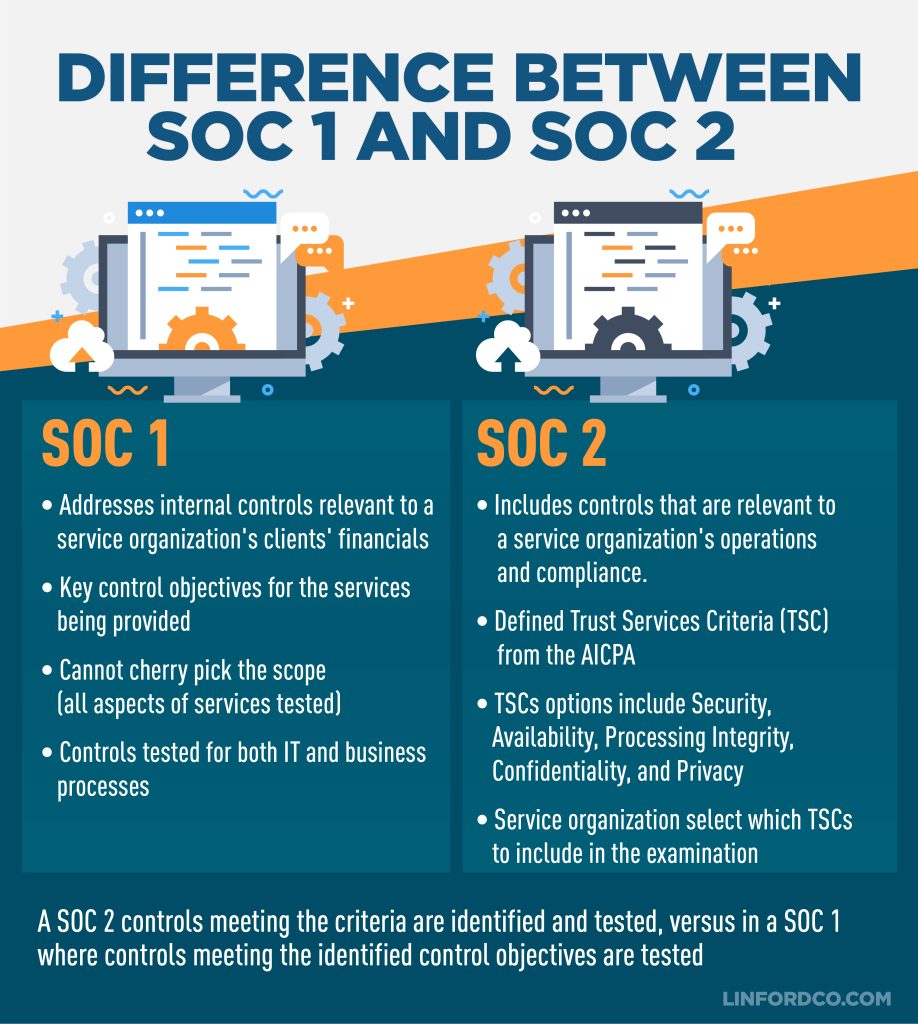
SOC 2, which stands for Service Organization Control 2, is an auditing procedure that ensures service providers securely manage data to protect the interests of their clients and the privacy of their customers. Developed by the American Institute of Certified Public Accountants (AICPA), a SOC 2 report evaluates a service organization’s non-financial internal controls related to security, availability, processing integrity, confidentiality, and privacy of the systems it uses to process user data. Far from being just another compliance checkbox, SOC 2 represents a robust framework for assessing and reporting on an organization’s internal controls over information security, setting a high bar for digital security practices and fostering invaluable trust between service providers and their clientele.
The Core Purpose of SOC 2: Building Digital Trust
At its heart, SOC 2 is designed to provide assurance. In an era where data breaches can cripple businesses and erode public trust, the ability for a service organization to independently verify its security posture is a powerful differentiator. It’s about giving clients, partners, and regulators confidence that their data, or the data of their customers, is being handled with the utmost care and diligence.
Defining Service Organization Control (SOC) Reports
SOC reports are a series of reports issued by independent auditors (typically CPAs) that evaluate the internal controls of service organizations. There are primarily three types:
-
SOC 1 focuses on internal controls relevant to a client’s financial reporting.
-
SOC 2 focuses on controls relevant to security, availability, processing integrity, confidentiality, and privacy of a system. This is the one we are dissecting here.
-
SOC 3 is a general-use report, similar to a SOC 2, but provides less detail and is intended for public consumption, often found on a company’s website.
A SOC 2 report specifically addresses the non-financial controls that protect data and systems. It’s a detailed, in-depth look at a company’s internal operations, policies, and procedures to ensure they meet specific criteria for managing client data securely. This report becomes a vital tool for due diligence, enabling potential clients to assess a vendor’s risk management practices without needing to conduct their own extensive audits.
Who Needs a SOC 2 Report? (SaaS, Cloud Providers, Data Centers)
While any service organization could theoretically pursue a SOC 2 report, it is particularly crucial for businesses that store, process, or transmit customer data digitally. This includes, but is not limited to:
-
Software-as-a-Service (SaaS) providers: Companies offering cloud-based software solutions.
-
Cloud computing providers: Infrastructure-as-a-Service (IaaS) and Platform-as-a-Service (PaaS) providers.
-
Data centers: Facilities that house and manage digital infrastructure.
-
Managed security service providers (MSSPs): Companies offering outsourced cybersecurity services.
-
Payment processors: Organizations handling financial transactions.
-
Healthcare technology providers: Companies managing sensitive patient data (often in conjunction with HIPAA compliance).
Essentially, if your business is entrusted with client data in any significant capacity, a SOC 2 report acts as a powerful testament to your commitment to safeguarding that information. It answers the fundamental question many prospective clients will ask: “Can we trust you with our data?”
The Stakeholders: Clients, Regulators, and Your Business
The beneficiaries of a SOC 2 report are manifold. Clients gain assurance that their data, or their customers’ data, is protected, reducing their own risk exposure and simplifying their vendor due diligence process. For many enterprise clients, a SOC 2 report is a mandatory requirement before engaging with a new service provider. Regulators can leverage SOC 2 reports as evidence of an organization’s adherence to various data protection laws and standards, such as GDPR, HIPAA, or CCPA, though SOC 2 is not a direct compliance certification for these. For your business, the benefits extend beyond mere compliance. It enhances your market reputation, provides a competitive advantage, streamlines sales cycles, and fosters an internal culture of security awareness and operational excellence. It’s not just about proving security; it’s about embedding it into the very fabric of your operations.
Diving Deep into the Trust Services Criteria (TSCs)
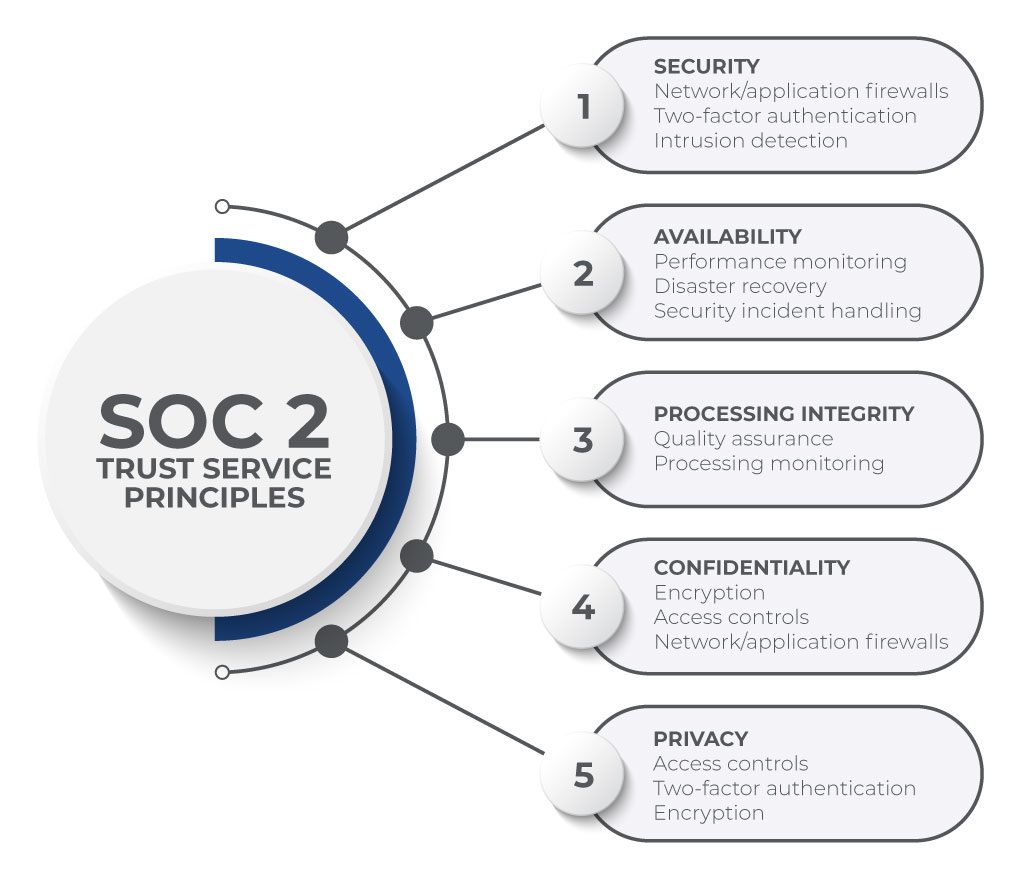
The bedrock of a SOC 2 audit lies in the AICPA’s Trust Services Criteria (TSCs). These five principles form the framework against which a service organization’s controls are evaluated. An organization can choose to be audited against any combination of these, though Security is almost always mandatory.
Security: The Foundational Principle
The Security principle is the bedrock of SOC 2 and is typically the primary focus for most organizations. It refers to the protection of information and systems against unauthorized access, unauthorized disclosure of information, and damage to systems that could compromise the availability, integrity, confidentiality, and privacy of information or systems and affect the entity’s ability to meet its objectives. This includes controls related to:
-
Access controls: Limiting who can access systems and data.
-
Physical security: Protecting data centers and hardware.
-
Network firewalls and intrusion detection: Safeguarding against external threats.
-
System monitoring: Detecting and responding to security incidents.
-
Encryption: Protecting data at rest and in transit.
-
Vulnerability management: Identifying and remediating weaknesses.
Without strong security controls, the other TSCs cannot be adequately maintained, making this principle non-negotiable for almost any SOC 2 report.
Availability: Ensuring Consistent Access
The Availability principle addresses whether the system is available for operation and use as committed or agreed. This doesn’t mean 100% uptime, but rather that the organization meets its uptime commitments to clients, with allowances for planned maintenance. Controls evaluated under Availability include:
-
Performance monitoring: Ensuring systems operate efficiently.
-
Disaster recovery plans (DRP): Procedures for recovering from major disruptions.
-
Backup and recovery procedures: Ensuring data can be restored.
-
Network capacity management: Preventing bottlenecks and outages.
-
Redundancy measures: Ensuring systems have failovers.
For services where continuous access is critical, such as cloud hosting or mission-critical SaaS applications, the Availability principle is paramount.
Processing Integrity: Accuracy and Timeliness
Processing Integrity refers to whether system processing is complete, valid, accurate, timely, and authorized. This principle ensures that data is processed correctly and without errors, and that it accurately reflects the intended operations. It’s not about the integrity of the data itself (which is covered by security), but rather the integrity of the processing. Key controls include:
-
Quality assurance procedures: Ensuring data input and output are correct.
-
Error detection and correction: Mechanisms to identify and rectify processing mistakes.
-
Data validation: Rules to ensure data meets specific criteria before processing.
-
System monitoring: Observing processing activities for anomalies.
This principle is vital for organizations that perform critical data transformations or calculations, such as payment processors or financial analytics platforms.
Confidentiality: Protecting Sensitive Information
The Confidentiality principle addresses whether information designated as confidential is protected as committed or agreed. This refers to information that is not publicly available, such as intellectual property, trade secrets, business plans, or internal communications. Unlike privacy, which focuses on personal data, confidentiality applies to any sensitive information. Controls include:
-
Access controls: Limiting who can view confidential data.
-
Encryption: Protecting confidential data during storage and transmission.
-
Data classification: Identifying and labeling confidential information.
-
Secure data disposal: Ensuring confidential data is properly erased when no longer needed.
-
Non-disclosure agreements (NDAs): Legal agreements to protect confidential information.
Organizations handling proprietary client data, source code, or internal business strategies will emphasize this principle.
Privacy: Handling Personal Data Responsibly
The Privacy principle addresses the collection, use, retention, disclosure, and disposal of personal information in conformity with the commitments in the entity’s privacy notice and with criteria set forth in generally accepted privacy principles (GAPP). This specifically pertains to personally identifiable information (PII). While often confused with confidentiality, privacy is distinct in its focus on individual personal data. Controls related to privacy include:
-
Consent management: Obtaining explicit consent for data collection and use.
-
Data anonymization/pseudonymization: Protecting identities where possible.
-
Data retention policies: Defining how long personal data is kept.
-
Privacy notices: Clearly communicating data practices to individuals.
-
Data subject access requests (DSARs): Mechanisms for individuals to access or modify their data.
For any organization handling customer personal data, especially those operating across different jurisdictions with varying data protection laws (like GDPR or CCPA), the Privacy principle is critically important.
The Journey to SOC 2 Compliance: A Roadmap for Tech Companies
Achieving SOC 2 compliance is not a simple checklist; it’s a comprehensive process that requires significant commitment, resources, and a deep understanding of an organization’s operational controls. The journey typically involves several distinct phases and crucial decisions.
Understanding SOC 2 Type 1 vs. Type 2 Reports
A critical early decision is whether to pursue a Type 1 or a Type 2 report:
-
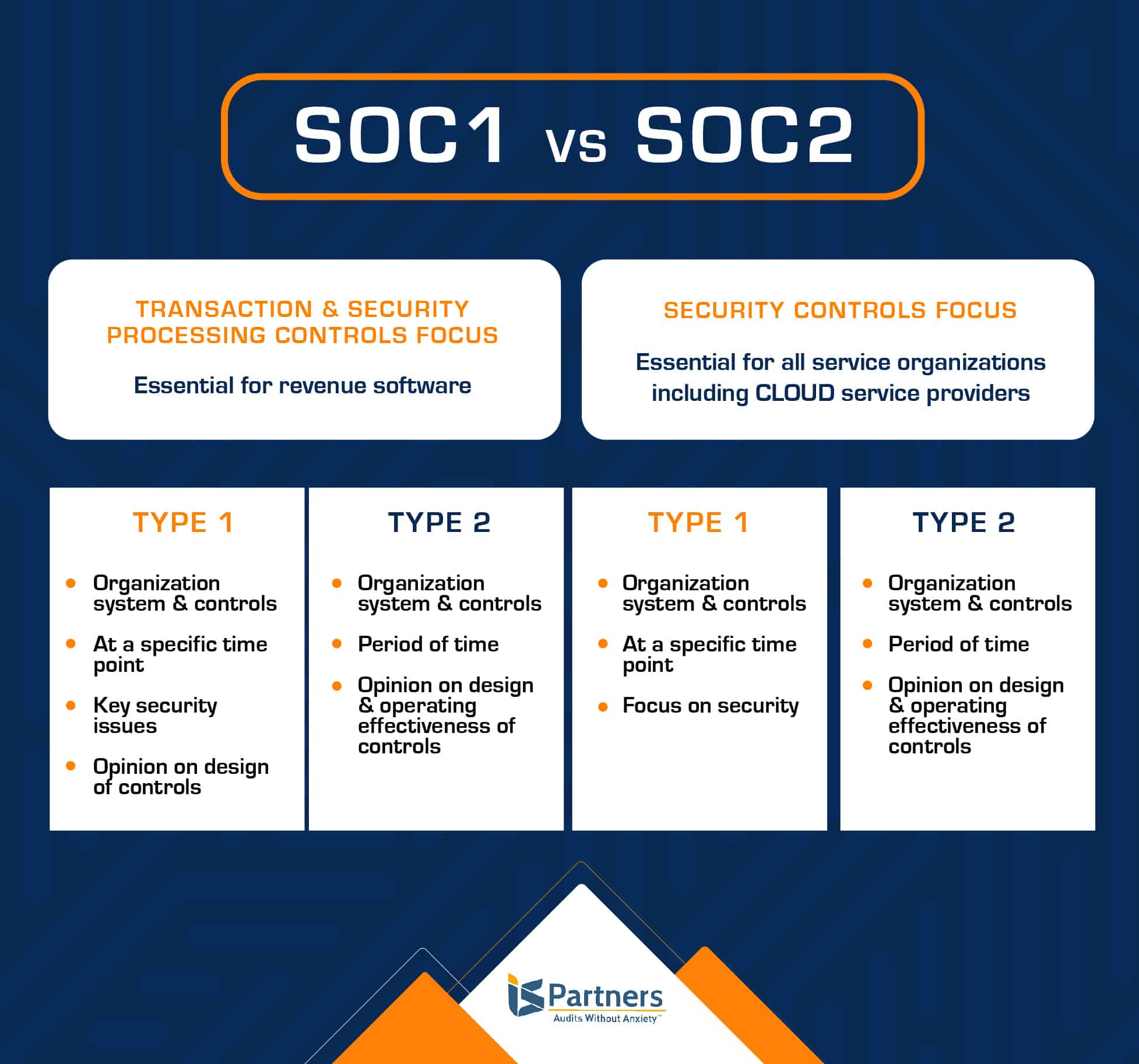
SOC 2 Type 1 Report: This report describes a service organization’s systems and assesses the suitability of the design of its controls at a specific point in time. It essentially confirms that your controls are designed correctly to meet the TSCs. This is often a good starting point for organizations new to SOC 2, providing a snapshot of their security posture.
-
SOC 2 Type 2 Report: This report not only describes the system and assesses the design of controls but also evaluates the operating effectiveness of those controls over a period of time, typically 3 to 12 months. A Type 2 report offers a much stronger level of assurance because it demonstrates that your controls are consistently functioning as intended. Most clients and partners will eventually require a Type 2 report.
While a Type 1 provides a quicker initial certification, a Type 2 is the gold standard, demonstrating sustained commitment to security and operational integrity.
Key Steps in the Audit Process (Scoping, Readiness, Audit, Report)
The path to SOC 2 compliance can be broken down into several stages:
-
Scoping: This involves identifying which services, systems, and data fall under the scope of the audit and which of the five Trust Services Criteria will be included. This is a crucial step that defines the boundaries of the audit.
-
Readiness Assessment (Gap Analysis): Before the formal audit, organizations often conduct a readiness assessment. This involves an internal review (or an external pre-assessment by a consultant) to identify any gaps in their existing controls against the chosen TSCs. This phase helps organizations understand what needs to be implemented or improved before the official audit begins.
-
Remediation: Based on the gap analysis, the organization implements the necessary controls, policies, and procedures to address any identified deficiencies. This can involve implementing new software, updating existing processes, training staff, or refining documentation.
-
Audit Period (for Type 2): For a Type 2 report, the auditor observes and tests the controls over a defined period (e.g., 6 or 12 months) to ensure they are operating effectively and consistently.
-
Formal Audit: An independent CPA firm conducts the official audit. This involves reviewing documentation, interviewing personnel, observing processes, and testing control activities.
-
Report Generation: Upon successful completion of the audit, the CPA firm issues the SOC 2 report, which details the auditor’s opinion on the design and/or operating effectiveness of the controls.
Challenges and Best Practices for Implementation
The SOC 2 journey is not without its challenges. Common hurdles include:
-
Resource Allocation: Dedicating sufficient time, personnel, and budget to the process.
-
Documentation Burden: Creating and maintaining comprehensive policies, procedures, and evidence.
-
Scope Creep: Clearly defining the audit scope and sticking to it.
-
Maintaining Controls: Ensuring controls remain effective beyond the audit period.
Best practices for success include:
-
Executive Buy-in: Gaining full support from leadership.
-
Dedicated Team: Assigning a project manager and a cross-functional team.
-
Phased Approach: Starting with a Type 1 report and then moving to Type 2.
-
Automation: Utilizing compliance automation platforms to streamline evidence collection and monitoring.
-
Continuous Improvement: Treating SOC 2 as an ongoing process, not a one-time event.
-
Choosing the Right Auditor: Selecting an experienced CPA firm that understands your industry.
The Tangible Benefits of SOC 2 for Tech Companies and Their Clients
Achieving SOC 2 compliance offers a multitude of strategic advantages that extend far beyond simply meeting a security requirement. It transforms an organization’s operational framework and market standing.
Enhanced Security Posture and Risk Mitigation
The rigorous process of preparing for and undergoing a SOC 2 audit inherently strengthens an organization’s overall security posture. By forcing a detailed examination of internal controls against industry-recognized criteria, companies identify and remediate weaknesses they might not have otherwise noticed. This proactive approach to risk management leads to:
-
Fewer Security Incidents: Robust controls reduce the likelihood of breaches and data loss.
-
Improved Incident Response: Well-documented procedures ensure swift and effective handling of any security events.
-
Greater Resilience: Enhanced systems and processes mean better recovery from disruptions.
-
Reduced Liability: Demonstrable due diligence can mitigate legal and financial risks in the event of an incident.
The very act of striving for SOC 2 compliance cultivates a culture of security consciousness throughout the organization, embedding security thinking into daily operations rather than treating it as an afterthought.
Competitive Advantage and Market Differentiator
In crowded tech markets, a SOC 2 report serves as a powerful differentiator. Many enterprise clients, particularly those in highly regulated industries, now mandate SOC 2 compliance from their vendors. Possessing a SOC 2 report instantly positions a company as a trustworthy and secure service provider, setting it apart from competitors who lack such accreditation.
-
Access to New Markets: Opens doors to larger clients and industries with strict security requirements.
-
Increased Sales Velocity: Reduces the time spent on security questionnaires and due diligence during the sales process.
-
Enhanced Reputation: Publicly demonstrating a commitment to security builds credibility and brand trust.
-
Premium Positioning: Allows companies to command higher prices by offering a superior, more secure service.
For startups and scale-ups, achieving SOC 2 can be a game-changer, enabling them to compete effectively with larger, more established players by proving their commitment to enterprise-grade security.
Streamlined Vendor Due Diligence and Client Acquisition
One of the most immediate and practical benefits of a SOC 2 report is its ability to streamline the often-arduous vendor due diligence process. Instead of responding to hundreds of unique security questionnaires from prospective clients, organizations can simply provide their comprehensive SOC 2 report.
-
Faster Sales Cycles: Eliminates weeks or even months from the procurement process.
-
Reduced Administrative Burden: Frees up internal resources that would otherwise be dedicated to repetitive security queries.
-
Standardized Assurance: Provides a universally understood and accepted standard of security assurance.
-
Easier Onboarding: Facilitates smoother integration with client security frameworks.
By providing a clear, auditable statement of their control environment, companies simplify the decision-making process for potential clients, accelerating client acquisition and fostering stronger, more trusting business relationships.
Fostering a Culture of Security and Operational Excellence
Beyond the external benefits, the journey to SOC 2 compliance has a profound internal impact. It compels organizations to critically examine and formalize their internal processes, leading to improved operational efficiency and a heightened security awareness among employees.
-
Clearer Policies and Procedures: Forces the documentation and formalization of operational guidelines.
-
Employee Awareness: Regular training and adherence to controls elevate security consciousness across all departments.
-
Accountability: Establishes clear responsibilities for maintaining security controls.
-
Continuous Improvement: The ongoing nature of Type 2 audits encourages regular review and enhancement of security practices.
This cultural shift ensures that security is not an isolated function but an integrated component of every employee’s role, leading to a more resilient and responsible organization overall.
Beyond Compliance: The Future of Digital Security and SOC 2
SOC 2 is not a static destination but an evolving standard in a dynamic threat landscape. Its continued relevance hinges on its adaptability and integration into a broader cybersecurity strategy.
Evolving Threats and the Dynamic Nature of SOC 2
The digital threat landscape is in constant flux, with new vulnerabilities, attack vectors, and sophisticated adversaries emerging regularly. SOC 2, while robust, must continuously adapt. Organizations must recognize that compliance with yesterday’s SOC 2 report doesn’t guarantee security against tomorrow’s threats.
-
Regular Updates: Auditors and the AICPA continuously refine the TSCs and guidance to reflect current best practices and emerging threats.
-
Proactive Security: Companies should not limit their security efforts to merely meeting SOC 2 requirements but strive for a proactive stance, implementing advanced threat detection, intelligence, and response capabilities.
-
Technological Advancement: As AI, quantum computing, and other technologies evolve, SOC 2 frameworks will need to incorporate new considerations for data protection and system integrity.
The dynamic nature of SOC 2 demands that organizations view it as a living document, subject to continuous review and enhancement in response to a changing world.
Integration with Other Compliance Frameworks (ISO 27001, GDPR, HIPAA)
While SOC 2 is a powerful standard, it is often not the only compliance framework an organization needs to address. Many tech companies operate globally or in specific industries, requiring adherence to multiple regulations.
-
ISO 27001: This international standard for information security management systems (ISMS) provides a broader framework for managing information security risks. Many controls implemented for SOC 2 can also contribute to ISO 27001 certification.
-
GDPR (General Data Protection Regulation): For companies handling personal data of EU citizens, GDPR is a critical legal requirement. The Privacy and Confidentiality TSCs in SOC 2 align closely with many GDPR principles, particularly regarding data handling and protection.
-
HIPAA (Health Insurance Portability and Accountability Act): Healthcare technology providers must comply with HIPAA in the US. The Security, Confidentiality, and Privacy TSCs of SOC 2 directly address many of HIPAA’s requirements for protecting Protected Health Information (PHI).
Smart organizations leverage their SOC 2 efforts to simultaneously address requirements for other frameworks, creating a unified and efficient compliance strategy rather than treating each as a separate, siloed initiative. This “comply once, report many” approach optimizes resources and reduces audit fatigue.
Continuous Monitoring and the Path to Perpetual Readiness
The era of point-in-time compliance is rapidly fading. The future of digital security, and by extension, SOC 2, lies in continuous monitoring and perpetual readiness. Rather than scrambling to prepare for an annual audit, organizations are shifting towards maintaining a state of compliance year-round.
-
Automated Compliance Tools: Leveraging software platforms that continuously monitor controls, collect evidence, and alert teams to potential compliance gaps.
-
Internal Audit Programs: Implementing ongoing internal reviews to ensure controls remain effective between external audits.
-
Security by Design: Integrating security and compliance considerations into the development lifecycle from the outset.
-
Regular Training: Ensuring employees receive ongoing security awareness training to reinforce best practices.
This shift towards continuous readiness transforms SOC 2 from a burdensome annual event into an ingrained aspect of operational excellence, ensuring that security is always top of mind and effectively managed.
Ultimately, SOC 2 stands for far more than just “Service Organization Control 2.” It stands for trust, accountability, and a commitment to safeguarding digital assets in an increasingly complex and vulnerable world. For tech companies, embracing SOC 2 is not just about meeting a market demand; it’s about building a resilient, trustworthy, and future-proof foundation for their digital operations.
aViewFromTheCave is a participant in the Amazon Services LLC Associates Program, an affiliate advertising program designed to provide a means for sites to earn advertising fees by advertising and linking to Amazon.com. Amazon, the Amazon logo, AmazonSupply, and the AmazonSupply logo are trademarks of Amazon.com, Inc. or its affiliates. As an Amazon Associate we earn affiliate commissions from qualifying purchases.