
In the increasingly digitized landscape of higher education admissions, the Common Application has emerged as a pivotal technology platform simplifying the application process for millions of students worldwide. At the heart of this intricate system lies a critical component: the recommender. More than just a person, a recommender, within the Common App ecosystem, represents a specific digital role and an essential data point transmitted through a secure online portal. Understanding the technical framework, workflow, and strategic implications of this role is crucial for both applicants and the educators who support them. This article delves into the technical definition, digital processes, and future considerations surrounding recommenders on the Common App, framing it strictly within the context of software functionalities, data transmission, and digital security.
The Digital Backbone of College Admissions: Understanding the Recommender Role
The Common App, at its core, is a sophisticated application management software. Its design aims to standardize and streamline the submission of diverse application materials, including personal essays, academic transcripts, and perhaps most uniquely, external evaluations from educators. Within this digital environment, a “recommender” is a designated user, invited by the applicant, who is granted access to a specific portal to submit confidential assessments and letters on the applicant’s behalf directly to colleges.
Beyond the Essay: Why Recommendations Matter as Digital Data Points
While a student’s essay offers a direct voice and their transcript provides quantitative academic performance, recommendations introduce a third-party, qualitative perspective. On the Common App, these recommendations are not merely informal notes; they are structured digital documents containing specific data fields, rating scales, and uploaded files (the recommendation letter itself). This multi-faceted data provides admissions committees with insights into a student’s character, intellectual curiosity, classroom contributions, and potential for success in a collegiate setting—all delivered through a secure, standardized digital pipeline. The platform’s role is to ensure these diverse data points are consistently collected and securely distributed to hundreds of institutions, integrating seamlessly with their own applicant tracking systems.
Who Can Be a Recommender? Navigating the Common App’s Framework
The Common App’s architecture is designed to accommodate different types of evaluators, each with a distinct role and corresponding set of forms within the digital system. This categorization ensures that colleges receive the specific types of insights they value from appropriate sources.
-
Counselor: This is often the primary school official responsible for submitting the “School Report,” which includes crucial institutional data like school profile, transcript, and a counselor letter of recommendation. The Common App provides a dedicated suite of forms and submission options for counselors, recognizing their central role in validating and contextualizing an applicant’s academic record.
-
Teacher: Academic teachers, particularly those who have taught core subjects, are typically invited to complete “Teacher Evaluation Forms.” These forms often include specific rating scales (e.g., comparing the student to their peers) and provide space for a detailed letter. The platform allows for multiple teacher recommendations, though applicants must adhere to individual college requirements regarding the number allowed.
-
Other Recommender: For those insights that fall outside traditional academic settings, the “Other Recommender” category exists. This could be a coach, an employer, a mentor, or a supervisor from an extracurricular activity. This flexibility in the Common App’s system allows applicants to present a holistic view of their talents and experiences, supported by external validation, even if these recommenders don’t have the same structured forms as counselors or teachers. Each type of recommender interacts with a tailored digital interface designed to gather the most relevant information for their specific role.
The Common App’s Digital Workflow for Recommendations
The process of inviting, submitting, and receiving recommendations through the Common App is a multi-step digital workflow. It begins with the applicant and culminates in the secure transmission of documents to colleges, all managed by the platform’s robust architecture.
Initiating the Invitation: Student’s Role in the Digital Process
The student is the initial catalyst in the recommender workflow. Within their Common App dashboard, students navigate to the “Recommenders and FERPA” section. Here, they formally invite individuals by entering their name and email address. A critical technical and legal step at this stage is the “Waiver of Rights” under the Family Educational Rights and Privacy Act (FERPA). Students must digitally indicate whether they waive their right to view the recommendations submitted on their behalf. From a software perspective, this selection impacts the access privileges associated with the recommendation document; a waived right often enhances the perceived candor and authenticity of the recommendation for admissions committees. Once the invitation is sent, the Common App’s backend system dispatches an automated email to the recommender, containing a unique link to their personalized portal.
The Recommender’s Portal: Submission and Management
Upon clicking the unique link, recommenders are directed to a secure, password-protected portal. This portal serves as their dedicated workspace within the Common App ecosystem. Here, they can view details for each student who has invited them, along with a list of all colleges to which the student is applying that require a recommendation. The portal presents the necessary forms, which typically include:
-
Rating Scales: Digital sliders or checkboxes for evaluating various student attributes (e.g., intellectual curiosity, maturity, leadership) against a peer group.
-
Free-Response Questions: Text fields allowing recommenders to elaborate on specific strengths or experiences.
-
Document Upload Interface: A secure facility for uploading the actual recommendation letter, usually in PDF format. The system typically has built-in checks for file type and size limits to ensure compatibility and prevent abuse.
The recommender portal also provides a dashboard to track submission status for multiple students and institutions. Once a recommendation is submitted for one college, the system allows for efficient re-submission to other colleges the student applies to, preventing redundant work and ensuring consistency across applications. This central management system is a key technological efficiency provided by the Common App.

Seamless Integration: How Recommendations Reach Colleges
After a recommender submits their evaluation and letter through their portal, the Common App’s system takes over the final leg of the digital journey. The submitted data and documents are encrypted and securely stored on the Common App’s servers. When an applicant adds a college to their list and eventually submits their application, the Common App’s backend system is triggered to package all associated materials, including recommendations, and transmit them to the designated college.
This transmission typically occurs through secure data exchange protocols (e.g., SFTP or API integrations) directly into the college’s internal applicant tracking or student information system. This seamless, encrypted transfer ensures that sensitive information arrives securely and accurately, eliminating the need for physical mail or insecure email attachments. The Common App provides a digital audit trail, allowing students and counselors to verify when a recommendation was sent and received by each institution, adding a layer of transparency and accountability to the process.
Optimizing the Recommender Experience through Technology
The Common App isn’t just a conduit; it’s a sophisticated platform designed to facilitate and optimize the complex interaction between applicants, recommenders, and colleges. Its technological features actively work to streamline the process, enhance security, and aid communication.
Leveraging the Platform for Effective Communication
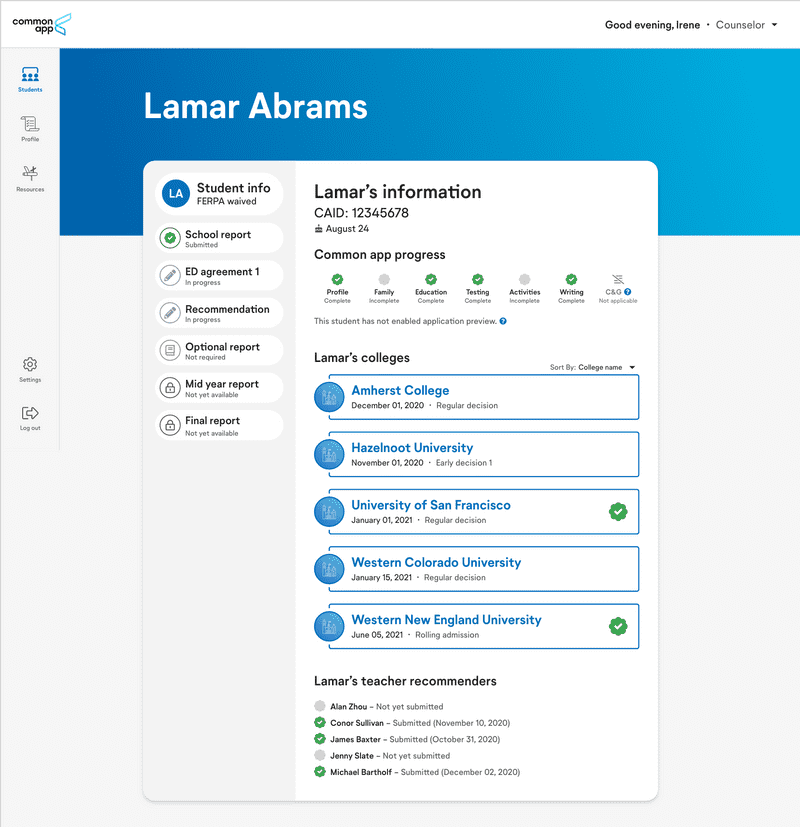
The Common App incorporates various communication features to ensure all parties are informed and on track. When a student sends an invitation, recommenders receive automated email notifications. The platform also sends reminders to recommenders if deadlines are approaching and submissions are pending. Similarly, students and counselors can view the status of recommendation submissions directly within their Common App dashboards – whether an invitation has been opened, a form started, or a letter submitted. This reduces the need for manual follow-ups and provides a centralized, digital record of interaction, significantly improving efficiency and reducing anxiety for all stakeholders. The platform’s notification system is a critical technical tool in managing expectations and deadlines.
Data Integrity and Security in Recommendation Submissions
Given the sensitive nature of recommendation letters, the Common App places paramount importance on data integrity and security. The platform employs industry-standard encryption protocols (like SSL/TLS) to protect data both in transit and at rest. Access to the recommender portal is authenticated, often requiring a unique link and potentially a password, preventing unauthorized access. Furthermore, the system is designed to prevent recommenders from accidentally submitting incomplete forms or incorrect documents by implementing validation checks at the point of upload. The robust security architecture ensures that the confidential evaluations and personal insights contained within recommendations remain private and unaltered from submission until they are securely integrated into a college’s admissions system. This trust in the digital system is fundamental to its widespread adoption.
Common Technical Hiccups and Troubleshooting
Despite the robust design, technical issues can occasionally arise. Recommenders might not receive invitation emails (often due to spam filters), encounter upload errors with their documents, or face challenges navigating the interface. The Common App anticipates these scenarios and provides dedicated technical support resources. Their support documentation often includes FAQs and step-by-step guides for common problems. Furthermore, their support teams are trained to troubleshoot platform-specific issues, such as resetting recommender access, verifying email addresses, or diagnosing upload failures. Proactive engagement with the Common App’s support system, especially in advance of application deadlines, is a crucial best practice for resolving technical challenges efficiently and ensuring timely submission of all application materials.
The Evolving Landscape: AI and the Future of Recommendations
As technology continues to advance, particularly in the realm of Artificial Intelligence, it’s pertinent to consider how these innovations might intersect with the established digital processes of platforms like the Common App, and specifically the recommender function.
Potential Impacts of AI on Recommendation Writing and Evaluation
The integration of AI could manifest in several ways. For recommenders, AI tools could potentially assist in drafting letters by offering grammatical corrections, tone analysis, or even suggesting content based on provided bullet points about the student’s achievements. This could reduce the writing burden and improve the quality of recommendations for busy educators. On the admissions side, AI might be used to analyze large volumes of recommendation text, identify key themes, or summarize critical insights, helping admissions officers process information more efficiently. Such tools could highlight recurring strengths or flag areas of concern across an applicant’s various recommendations, providing an augmented view for human review. However, the Common App, as the gatekeeper, would need to carefully consider the ethical implications of such integrations, ensuring they augment, rather than replace, human judgment and authenticity.

Maintaining Authenticity in a Digital Age
While AI offers intriguing possibilities for efficiency, the core value of a recommendation lies in its authenticity and the genuine human perspective it provides. The Common App’s design currently prioritizes direct, unmediated input from recommenders. Any future technological enhancements, especially involving AI, would need to be meticulously designed to preserve this authenticity. The platform would need to implement robust detection mechanisms for AI-generated content that lacks genuine human insight, or perhaps integrate AI tools in a way that serves merely as an assistant, ensuring the final output remains the recommender’s true voice and evaluation. The challenge for platforms like the Common App will be to leverage technological advancements to improve the process without compromising the integrity and human element that makes recommendations so valuable in college admissions.
In conclusion, a recommender on the Common App is a key participant within a sophisticated digital ecosystem. Their role is meticulously integrated into the platform’s technological design, from the secure invitation and submission portals to the encrypted transmission of confidential documents. Understanding this digital infrastructure is essential for navigating the complex college application process effectively and appreciating how technology underpins a critical human aspect of admissions.
aViewFromTheCave is a participant in the Amazon Services LLC Associates Program, an affiliate advertising program designed to provide a means for sites to earn advertising fees by advertising and linking to Amazon.com. Amazon, the Amazon logo, AmazonSupply, and the AmazonSupply logo are trademarks of Amazon.com, Inc. or its affiliates. As an Amazon Associate we earn affiliate commissions from qualifying purchases.