
In the relentless pursuit of more intelligent machines, sophisticated software, and groundbreaking AI tools, technologists frequently look to the ultimate natural computer: the human brain. At the heart of this biological marvel lies the neuron, the fundamental unit responsible for processing and transmitting information. Among the various types of neurons, the multipolar neuron stands out as the most common and arguably the most significant in terms of its complex processing capabilities, serving as a profound inspiration for artificial intelligence and neuromorphic computing.
While “what is a multipolar neuron” might initially seem like a question purely for biology textbooks, its implications stretch deep into the realm of technology. Understanding the structure, function, and operational principles of these biological components is not merely academic; it provides a blueprint for designing more efficient, adaptable, and powerful AI systems. From the foundational models of perceptrons to the intricate architectures of deep learning, the biological multipolar neuron serves as an enduring muse, pushing the boundaries of what machines can learn and achieve. This article will delve into the essence of multipolar neurons, bridging the gap between their biological reality and their pivotal role as an inspirational force in the tech world.

The Biological Blueprint: Understanding Multipolar Neurons
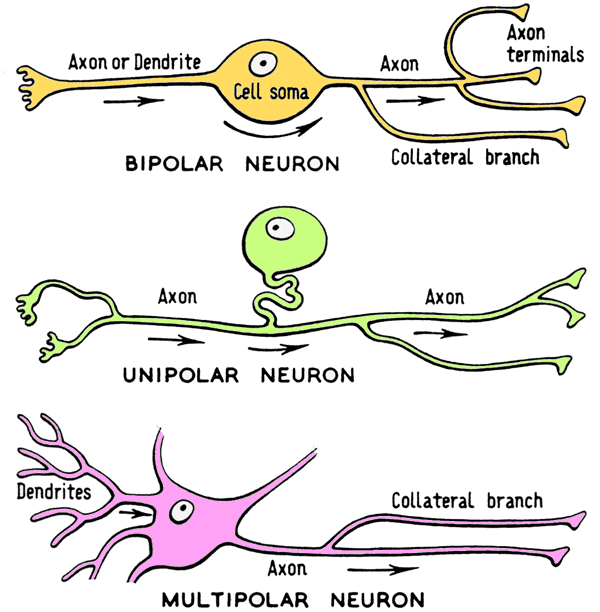
To fully grasp the technological relevance of multipolar neurons, we must first appreciate their biological design. Multipolar neurons are characterized by a single axon and multiple dendrites extending from the cell body (soma). This configuration allows them to integrate a vast amount of information from numerous other neurons, making them central to complex information processing in the central nervous system. They are the workhorses of the brain, responsible for everything from motor control and sensory perception to higher cognitive functions like memory and decision-making.
Anatomy of a Multipolar Neuron: Dendrites, Soma, and Axon
The distinctive architecture of a multipolar neuron is optimized for intricate information handling:
-
Dendrites: These tree-like extensions are the primary receivers of signals from other neurons. A multipolar neuron typically possesses a complex dendritic tree, allowing it to collect input from thousands of synapses simultaneously. This “fan-in” capability is critical for integrating diverse streams of information, acting as the neuron’s input layer.
-
Soma (Cell Body): The central part of the neuron, containing the nucleus and other organelles. The soma is where all incoming signals from the dendrites are integrated. It processes these inputs, and if the cumulative signal reaches a certain threshold, it generates an electrical impulse (action potential). In the context of AI, the soma can be seen as the “processing unit” where weighted sums are computed and activation functions are applied.
-
Axon: A single, elongated projection that transmits the action potential generated by the soma to other neurons or effector cells (like muscles). Axons can be very long, sometimes extending over a meter. At its end, the axon branches into numerous terminals, forming synapses with the dendrites or somas of other neurons. This “fan-out” capability allows a single neuron to influence many downstream neurons, representing the output layer of the biological computation.
Functional Significance in Biological Systems
The multipolar neuron’s design enables its crucial role in biological intelligence:
-
Complex Integration: The extensive dendritic arbor allows for sophisticated spatial and temporal summation of synaptic inputs. This means the neuron can “decide” whether to fire based on the strength and timing of numerous incoming signals, rather than just one. This integrative capability is fundamental to pattern recognition, decision-making, and learning within the brain.
-
Information Transmission: Once an action potential is generated, it propagates rapidly down the axon, transmitting information efficiently across neural networks. The all-or-none nature of action potentials ensures signal fidelity over long distances, a concept that finds its parallel in the binary or activation-threshold behaviors of artificial neurons.
-
Plasticity and Learning: The strength of connections (synapses) between neurons can change over time, a phenomenon known as synaptic plasticity. This is the biological basis of learning and memory. Multipolar neurons, through their vast interconnectivity, are central to these dynamic adaptations, constantly re-weighting their inputs based on experience.
From Biology to Bits: Multipolar Neurons as AI Inspiration
The intricate information processing and learning capabilities of biological multipolar neurons have profoundly inspired the field of artificial intelligence. From the earliest conceptualizations to the most advanced deep learning architectures, the neuron has been the quintessential building block for creating intelligent machines. The objective in AI is often not to perfectly replicate biological neurons but to extract their core computational principles and apply them to artificial systems.
The Perceptron and its Biological Roots
The earliest and most direct computational model inspired by the biological neuron was the perceptron, introduced by Frank Rosenblatt in 1957. A perceptron is a simple algorithm for binary classification, representing the first step towards artificial neural networks.
-
Inputs: Similar to dendrites receiving signals, a perceptron takes multiple binary inputs.
-
Weights: Each input is multiplied by a “weight,” analogous to the varying strengths of synaptic connections in biological neurons.
-
Summation: These weighted inputs are summed up, mirroring the integration of signals in the neuron’s soma.
-
Activation Function: If the sum exceeds a certain threshold (the “bias”), the perceptron “fires” and produces a binary output (e.g., 0 or 1), much like an action potential. This simulates the all-or-none principle of a biological neuron.
While simplistic compared to its biological counterpart, the perceptron laid the groundwork for understanding how networks of these units could learn to perform complex tasks, paving the way for modern neural networks. Its direct inspiration from the biological neuron’s input-process-output mechanism is unmistakable.
Deep Learning Architectures and Neuronal Principles
Modern deep learning, a subfield of AI that uses artificial neural networks with multiple layers, scales the principles observed in multipolar neurons to unprecedented levels.
-
Layers of “Neurons”: Deep learning models consist of an input layer, several hidden layers, and an output layer. Each “node” or “neuron” in these layers performs a calculation similar to a perceptron: it receives inputs, multiplies them by weights, sums them, and passes them through an activation function. The “deep” aspect refers to the number of hidden layers, allowing for hierarchical feature extraction—much like how different layers of biological neurons process increasingly abstract features.
-
Complex Connectivity: While not a one-to-one mapping, the interconnectedness within deep neural networks, where each neuron in one layer typically connects to every neuron in the next layer (in fully connected networks), echoes the vast synaptic connections within the brain. Convolutional Neural Networks (CNNs), for example, mimic the receptive fields of neurons in the visual cortex.
-
Learning through Weight Adjustment: The core of deep learning is training, where the “weights” connecting artificial neurons are adjusted based on feedback, minimizing prediction errors. This process is analogous to synaptic plasticity in biological neurons, where the strength of connections is modified through experience, enabling learning and adaptation. The backpropagation algorithm, a cornerstone of deep learning, efficiently adjusts these weights across many layers.
Neuromorphic Computing: Building Brain-Inspired Hardware
Beyond software simulations, the concept of the multipolar neuron is directly driving the development of neuromorphic computing – a field dedicated to building hardware that mimics the structure and function of the human brain. The goal is to overcome the energy inefficiency and sequential processing limitations of traditional Von Neumann architectures, which separate memory and processing.
Mimicking Neuronal Dynamics in Silicon
Neuromorphic chips aim to integrate memory and processing directly, much like how neurons store and process information locally.
-
Spiking Neural Networks (SNNs): These networks are a step closer to biological realism than traditional ANNs. Instead of continuous values, SNNs communicate using discrete “spikes” or pulses, similar to action potentials in biological neurons. These spikes are event-driven, meaning computation only occurs when a neuron receives a spike, leading to potentially significant energy savings. Multipolar neurons, with their threshold-triggered spiking behavior, are the direct inspiration for these models.
-
Analog Circuits and Synapses: Neuromorphic hardware often uses analog electronic circuits to simulate synaptic weights and neuronal dynamics, enabling faster and more energy-efficient computation. Researchers are exploring various materials and device types, like memristors, which can change their resistance based on the history of current flowing through them, thereby mimicking synaptic plasticity and memory formation at the hardware level.
-
Parallel Processing: The brain’s immense parallel processing capability, enabled by billions of interconnected neurons operating simultaneously, is a key target for neuromorphic chips. These chips feature thousands or millions of artificial neurons and synapses working in parallel, allowing for highly efficient computation of complex tasks that are difficult for traditional serial processors.
Challenges and Future of Multipolar Architectures in AI
Despite significant progress, building hardware that truly captures the complexity of biological multipolar neurons presents substantial challenges:
-
Scale and Complexity: Replicating the sheer number and intricate connectivity of brain neurons (trillions of synapses) in silicon is incredibly difficult.
-
Energy Efficiency: While SNNs promise energy efficiency, the fabrication and reliable operation of large-scale neuromorphic systems remain complex.
-
Learning Algorithms: Developing effective learning algorithms for neuromorphic hardware, especially for SNNs, is an active area of research. Backpropagation, while effective for ANNs, is not directly transferable to spiking dynamics.
-
True Plasticity: Mimicking the dynamic, context-dependent plasticity of biological synapses and dendritic computation, which allows neurons to adapt their responses in sophisticated ways, is an ongoing frontier.
The future of AI, particularly in areas requiring real-time processing, low power consumption, and continuous learning (like autonomous systems, edge AI, and advanced robotics), increasingly points towards deeper integration of biological principles. As our understanding of multipolar neurons and their complex interactions grows, so too will our capacity to engineer truly intelligent and adaptable artificial systems.
The Promise of Bio-Inspired AI: Beyond Current Limits
The continuous exploration of multipolar neurons and their biological brethren holds the key to unlocking AI capabilities that far surpass current limitations. By drawing closer to the brain’s computational paradigm, we can aspire to create AI that is not only more powerful but also more resilient, energy-efficient, and capable of genuine continuous learning and reasoning.
Enhancing Learning and Adaptability
Biological learning is remarkably efficient and adaptable. Humans can learn new concepts from just a few examples, a challenge for even the most advanced deep learning models that often require vast datasets. The sophisticated integration within multipolar neuron dendrites, their inherent plasticity, and the brain’s ability to selectively attend to information all contribute to this efficiency.
-
Few-Shot Learning: By better understanding how individual biological neurons contribute to generalization and abstraction, researchers aim to develop AI models capable of “few-shot learning” – learning effectively from minimal data.
-
Continual Learning: Biological systems learn throughout their lifetime without forgetting previously acquired knowledge, a persistent problem (catastrophic forgetting) in current AI. Bio-inspired architectures derived from multipolar neuron principles could lead to AI systems that can continuously adapt and acquire new skills without needing to be retrained from scratch.

Towards More Energy-Efficient AI
The human brain operates on an astonishingly low power budget (around 20 watts), especially when compared to the massive energy consumption of large-scale AI data centers. This stark contrast highlights the potential for bio-inspired computing to revolutionize energy efficiency in technology.
-
Sparse Activation: Biological neurons typically operate sparsely, meaning only a small percentage of neurons are active at any given time. Spiking neural networks, directly inspired by this, process information only when spikes occur, leading to significant power savings compared to continuously active artificial neurons.
-
Distributed Memory and Processing: The integration of memory and processing within the neuron and across the network in the brain eliminates the energy-intensive data transfer bottlenecks found in traditional computer architectures. Neuromorphic hardware, by mimicking this, can drastically reduce energy consumption for AI tasks.
In conclusion, the question “what is a multipolar neuron” transcends biology to become a cornerstone inquiry for anyone looking to push the frontiers of technology. These remarkable biological units are not just fascinating subjects of scientific study; they are living blueprints for a future where AI is not only smarter but also more intuitive, adaptable, and sustainable. As we continue to unravel the secrets of the multipolar neuron, we empower ourselves to build the next generation of intelligent machines, driving innovation across software, hardware, and the very concept of artificial intelligence itself.
aViewFromTheCave is a participant in the Amazon Services LLC Associates Program, an affiliate advertising program designed to provide a means for sites to earn advertising fees by advertising and linking to Amazon.com. Amazon, the Amazon logo, AmazonSupply, and the AmazonSupply logo are trademarks of Amazon.com, Inc. or its affiliates. As an Amazon Associate we earn affiliate commissions from qualifying purchases.