
The phrase “LLC sole proprietorship” often pops up in conversations among aspiring entrepreneurs and small business owners, reflecting a common misconception about business structures. To be clear from the outset: an LLC (Limited Liability Company) and a sole proprietorship are distinct legal entities. One cannot simultaneously be an LLC and a sole proprietorship in the traditional sense, though a single-owner LLC can be taxed much like a sole proprietorship. Understanding this crucial distinction is paramount for anyone looking to build a financially sound business, as the choice between these structures profoundly impacts your personal liability, tax obligations, administrative burden, and overall financial security.

This guide will demystify both business forms, clarify why the combined term is misleading, and equip you with the insights needed to make an informed financial decision about which structure best suits your entrepreneurial journey.
Unpacking the Sole Proprietorship: Simplicity and Personal Liability
The sole proprietorship is the simplest and most common form of business entity, especially for those just starting out. It’s often the default structure if you begin operating a business without formally registering a different type of entity. However, its simplicity comes with a significant financial risk: unlimited personal liability.
The Easiest Entry Point for Entrepreneurs
A sole proprietorship is an unincorporated business owned and controlled by one individual. From a legal standpoint, there is no distinction between the business and its owner. This means the individual is the business. Starting one requires minimal bureaucracy; you generally don’t need to file any special documents with the state to establish it (though you’ll need any required business licenses or permits specific to your industry or locality).
Financially, this translates to ease of setup and extremely low initial costs. All profits and losses generated by the business are considered the owner’s personal income or loss. For tax purposes, these are reported directly on the owner’s personal income tax return using Schedule C (Form 1040), Profit or Loss from Business. This “pass-through” taxation avoids corporate-level taxes, streamlining financial reporting significantly.
The Double-Edged Sword: Unlimited Personal Liability
The most critical financial downside of a sole proprietorship is unlimited personal liability. Because there’s no legal separation between you and your business, your personal assets—such as your home, car, personal bank accounts, and investments—are not protected from business debts, lawsuits, or other financial obligations. If your business incurs debt it cannot pay, or if it faces a lawsuit and a judgment is awarded against it, your personal assets can be seized to satisfy those obligations.
This lack of asset protection represents a substantial financial risk. For businesses involved in activities with higher potential for lawsuits (e.g., services with high client interaction, physical products) or those requiring significant debt financing, the potential for personal financial devastation is very real.
Tax and Compliance for Sole Proprietors
Tax filing for a sole proprietorship is straightforward. As mentioned, business income and expenses are reported on Schedule C of your personal Form 1040. You pay self-employment taxes (Social Security and Medicare) on your net earnings from self-employment, in addition to regular income tax. You’ll typically need to make estimated tax payments throughout the year to cover both income and self-employment taxes, avoiding penalties.
Compliance is minimal, primarily revolving around maintaining accurate financial records for tax purposes and ensuring you have any necessary local or state business licenses. This low administrative burden is often a key attraction for small businesses and side hustles.
Demystifying the Limited Liability Company (LLC): Protection and Flexibility
The Limited Liability Company (LLC) emerged as a popular business structure specifically designed to combine the liability protection of a corporation with the financial and operational flexibility of a partnership or sole proprietorship. It’s a structure that offers a crucial buffer between your personal and business finances.
A Hybrid Model: Personal Protection, Business Credibility
An LLC is a formal legal business entity created by filing articles of organization with the state. Unlike a sole proprietorship, an LLC is legally separate from its owners, known as “members.” This separation is the cornerstone of its primary benefit: limited liability protection.
Financially, this means that generally, the personal assets of the LLC members are shielded from the LLC’s debts and liabilities. If the business is sued or goes into debt, creditors can typically only pursue the assets of the LLC itself, not the personal assets of its owners. This protection is invaluable for safeguarding personal wealth and providing peace of mind. Beyond protection, forming an LLC can also lend greater credibility to your business, potentially making it easier to secure business loans, attract investors, or win contracts with larger clients who prefer dealing with formally structured entities.
The Cornerstone of LLCs: Limited Liability Protection
The “limited liability” in LLC is not just a catchy name; it’s the defining financial advantage. While exceptions exist (e.g., personal guarantees for loans, fraud, commingling personal and business funds, known as “piercing the corporate veil”), for most compliant LLCs, members are not held personally responsible for the company’s financial obligations or legal judgments.
For an entrepreneur, this translates into a calculable financial risk. The most you stand to lose is typically the capital you’ve invested in the business, not your entire life savings or personal property. This level of financial security is often worth the additional administrative steps and costs associated with forming and maintaining an LLC.
How an LLC is Taxed: The Pass-through Advantage (and Other Options)
One of the most appealing aspects of an LLC from a financial perspective is its tax flexibility. By default, a single-member LLC (an LLC with only one owner) is treated as a “disregarded entity” by the IRS. This means it is taxed like a sole proprietorship. The business’s income and expenses “pass through” to the owner’s personal income tax return (Form 1040), and business profits are reported on Schedule C. The owner pays self-employment taxes and regular income tax on these profits. This is why the confusion between “LLC” and “sole proprietorship” often arises—a single-member LLC is taxed like a sole proprietorship, despite being a separate legal entity.
However, an LLC has the flexibility to elect to be taxed in other ways:
-
S-Corporation (S-Corp): By electing S-Corp status, LLC members who actively work in the business can potentially save on self-employment taxes. They can pay themselves a “reasonable salary” (subject to payroll taxes) and take the remaining profits as distributions, which are not subject to self-employment taxes. This can lead to significant financial savings for profitable businesses.
-
C-Corporation (C-Corp): While less common for small businesses, an LLC can also elect to be taxed as a C-Corp. This subjects the business to corporate income tax (double taxation if profits are then distributed to owners as dividends), but it can be advantageous for businesses planning to raise significant capital through equity investments or seeking certain corporate tax deductions.

This tax flexibility allows business owners to choose the most financially advantageous tax structure as their business grows and evolves, adapting to changes in profitability and ownership.
The Critical Distinction: Why “LLC Sole Proprietorship” is a Misnomer
The phrase “LLC sole proprietorship” creates confusion because it attempts to merge two fundamentally different legal concepts. While a single-member LLC shares tax characteristics with a sole proprietorship, their legal structures and, critically, their financial implications, are miles apart.
Legal Separation vs. Legal Fusion
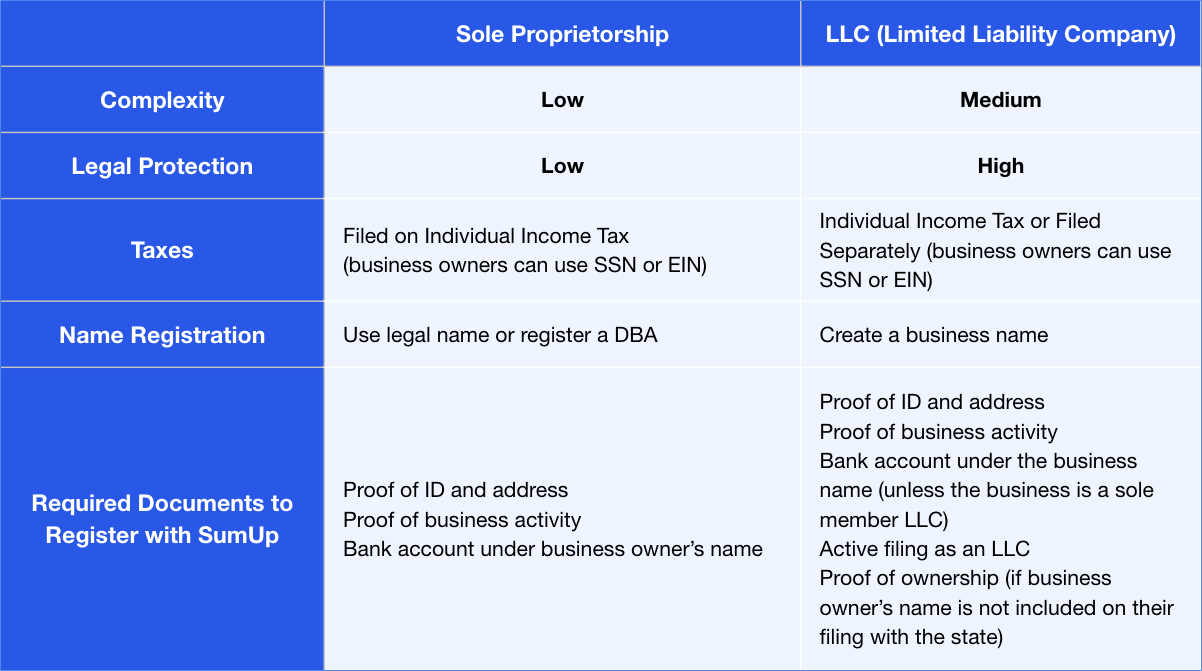
The core difference lies in legal separation. A sole proprietorship is legally indistinguishable from its owner—they are one and the same in the eyes of the law. There’s no legal entity acting as a buffer. In contrast, an LLC is a distinct legal entity, separate from its owners. This separation is fundamental to its ability to provide limited liability protection.
This means that while a “single-member LLC taxed as a sole proprietorship” describes a common scenario for tax purposes, it does not mean the LLC is a sole proprietorship. The LLC maintains its separate legal identity and the protection it affords, regardless of how it’s treated for federal income tax.
Asset Protection: The Defining Financial Factor
The most significant financial divergence between a sole proprietorship and an LLC is asset protection.
-
Sole Proprietorship: Offers no asset protection. Your personal wealth is directly tied to your business’s financial health and legal exposure.
-
LLC: Provides limited liability, shielding your personal assets from business debts and lawsuits (assuming proper corporate formalities are maintained). This is a critical risk management tool for any entrepreneur.
For businesses engaged in high-risk activities, carrying significant debt, or facing potential lawsuits, the financial safeguard provided by an LLC is often non-negotiable. Without it, a single business misstep or adverse event could wipe out years of personal financial planning and savings.
Administrative Overhead vs. Simplicity Trade-off
Another key differentiator is the administrative overhead and associated costs.
-
Sole Proprietorship: Minimal setup, maintenance, and compliance costs. The financial investment in establishing and running the business structure itself is negligible.
-
LLC: Requires formal state filings (Articles of Organization), often an initial filing fee, and typically annual or biennial state fees. It also necessitates maintaining separate bank accounts, keeping accurate financial records, and adhering to operational agreements (like an Operating Agreement). While these costs are usually modest, they are more substantial than for a sole proprietorship.
The decision often comes down to a financial trade-off: is the cost (in terms of time and money) of increased administration and state fees for an LLC worth the financial protection and credibility it offers? For many, the answer is a resounding yes, especially as a business grows.
Choosing Your Path: Financial and Operational Considerations
The decision between operating as a sole proprietorship or forming an LLC should be a calculated one, based on a careful assessment of your business’s financial risks, growth potential, administrative capacity, and personal financial comfort level.
When a Sole Proprietorship Makes Financial Sense
A sole proprietorship can be the financially logical choice in several specific scenarios:
-
Low-Risk Ventures: If your business has minimal liability exposure (e.g., a freelance writer, online consultant with clear terms of service, a very low-stakes hobby business), the need for limited liability protection may be less urgent.
-
Testing an Idea: For entrepreneurs launching a side hustle or testing a business concept with minimal upfront investment, a sole proprietorship offers the quickest and cheapest way to start. It allows you to validate your market and business model without incurring significant setup costs.
-
Minimal Revenue/Profit: If your business generates very little income or operates at a loss, the financial and administrative benefits of an LLC may not outweigh the costs.
-
Simplicity Preferred: For those who prioritize simplicity in tax filing and minimal administrative burden, a sole proprietorship is unmatched.
In these cases, the financial exposure might be deemed acceptable given the low operational costs and ease of entry.
When an LLC is the Financially Prudent Choice
An LLC becomes the financially prudent choice under a broader range of circumstances, particularly as your business gains traction or involves higher risk:
-
Higher Risk Activities: If your business deals with clients in person, sells physical products, provides professional services with potential for errors, or involves significant contracts, the liability protection of an LLC is invaluable. It shields your personal assets from potential lawsuits or business debts.
-
Plans for Growth: If you foresee significant growth, hiring employees, taking on substantial debt, or seeking external funding, an LLC provides a more professional and stable foundation. Lenders and investors often prefer to work with formalized entities.
-
Desire for Personal Asset Protection: This is the strongest driver. If you own significant personal assets (home, savings, investments) and want to keep them separate from your business’s financial performance, an LLC is essential.
-
Credibility and Professionalism: An LLC signals to clients, vendors, and partners that you are running a legitimate, structured business, which can be a financial advantage in securing new opportunities.
-
Tax Optimization Potential: As your business becomes more profitable, the ability to elect S-Corp taxation for potential self-employment tax savings can be a significant financial boon, justifying the LLC formation and maintenance costs.
The Cost-Benefit Analysis: Fees, Taxes, and Time
Making the right choice involves a clear cost-benefit analysis:
-
Setup Costs & Annual Fees: LLCs incur initial state filing fees (ranging from tens to hundreds of dollars) and typically annual or biennial renewal fees. Sole proprietorships generally have none of these, beyond specific business licenses.
-
Tax Implications: While a single-member LLC taxed as a sole proprietorship follows similar tax rules, the option for S-Corp election can lead to substantial self-employment tax savings for profitable LLCs. Weigh these potential savings against the administrative costs and complexities of payroll and more detailed accounting.
-
Time Commitment: LLCs require more administrative upkeep (maintaining separate finances, potential operating agreements, annual reports) compared to the minimal requirements of a sole proprietorship. Evaluate if you have the time or budget for professional assistance.
Ultimately, the investment in forming and maintaining an LLC is often a small price to pay for the financial security and flexibility it provides, especially as your business matures and its financial stakes increase.
Conclusion: Safeguarding Your Financial Future Through Smart Business Structure
The journey of entrepreneurship is fraught with decisions, and few are as foundational and financially impactful as choosing your business structure. While the phrase “LLC sole proprietorship” highlights a common area of confusion, understanding that an LLC is a separate legal entity providing vital liability protection, even when taxed similarly to a sole proprietorship, is a critical step.
A sole proprietorship offers simplicity and low startup costs, ideal for testing concepts or low-risk ventures where personal financial exposure is minimal. However, its unlimited personal liability presents a significant and often unacceptable financial risk for growing or higher-risk businesses. The Limited Liability Company, conversely, provides a robust shield for your personal assets, enhances business credibility, and offers significant tax flexibility, albeit with a slightly higher administrative and financial overhead.
Your choice should align with your business’s inherent risks, its growth trajectory, and your personal comfort with financial exposure. Investing time in understanding these distinctions and consulting with financial professionals, such as an accountant and a business attorney, can save you immense financial and legal headaches down the line. Safeguarding your financial future starts with structuring your business intelligently, ensuring that your entrepreneurial ambitions are built on a foundation of sound financial planning and protection.
aViewFromTheCave is a participant in the Amazon Services LLC Associates Program, an affiliate advertising program designed to provide a means for sites to earn advertising fees by advertising and linking to Amazon.com. Amazon, the Amazon logo, AmazonSupply, and the AmazonSupply logo are trademarks of Amazon.com, Inc. or its affiliates. As an Amazon Associate we earn affiliate commissions from qualifying purchases.