
For many, the General Educational Development (GED) test represents more than just a certificate; it’s a pivotal stepping stone towards enhanced career prospects, higher education, and ultimately, a more secure financial future. While simply passing the GED is an achievement in itself, understanding what constitutes a “high” GED score can illuminate pathways to even greater financial opportunities. This article delves into the nuances of GED scoring, its profound financial implications, and how leveraging a strong score can be a strategic investment in your personal economic growth.
Understanding the GED Scoring System and Its Benchmarks
To fully grasp the financial significance of a high GED score, it’s crucial to first understand how the test is structured and graded. The GED is a comprehensive examination designed to certify that an individual possesses academic skills equivalent to those of a high school graduate.
Decoding the GED Test Structure and Scoring
The GED test is comprised of four distinct subject areas:
-
Reasoning Through Language Arts (RLA): Assesses reading comprehension, writing skills, and grammar.
-
Mathematical Reasoning: Covers quantitative problem-solving, algebra, and geometry.
-
Science: Focuses on life science, physical science, and earth and space science.
-
Social Studies: Explores U.S. history, civics and government, economics, and geography.
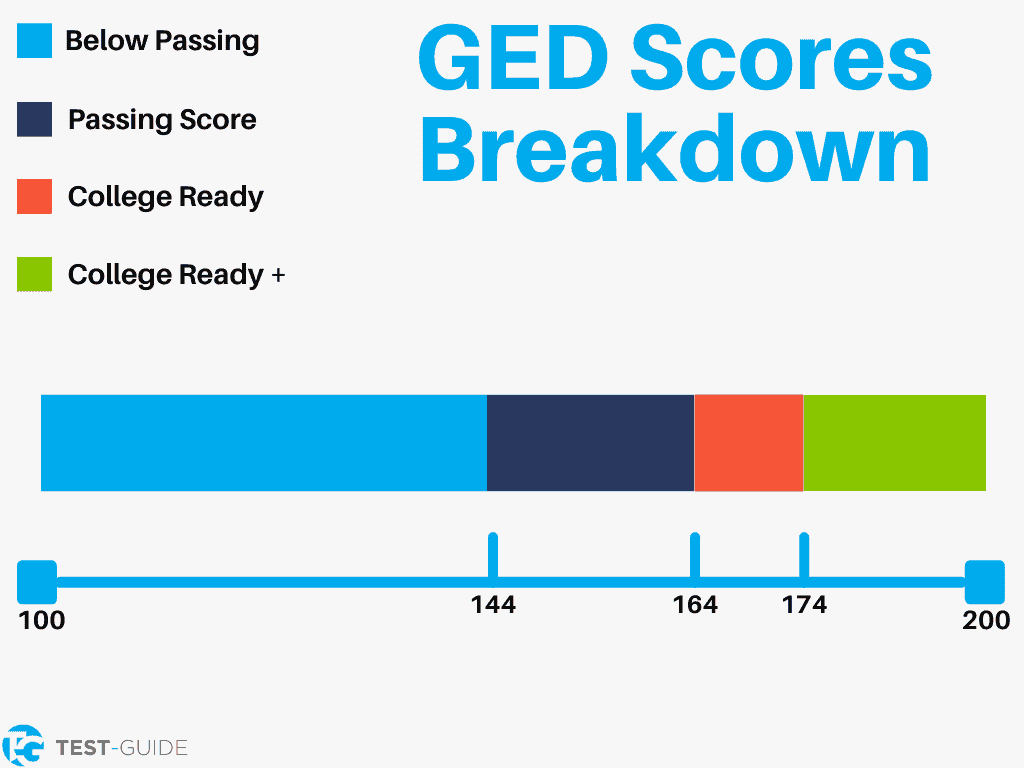
Each subject test is scored on a scale ranging from 100 to 200. To pass the GED and earn your high school equivalency credential, you must achieve a minimum score of 145 on each of the four individual subject tests. This means a total score of 580 is the absolute minimum to pass the entire exam. However, merely meeting the minimum passing threshold doesn’t always unlock the full spectrum of financial advantages available to those who score higher.
Defining “High”: Beyond the Minimum Requirement
While 145 is the baseline for passing, the GED testing service has established additional benchmarks that signify higher levels of academic proficiency, which are critically important when considering future financial and educational pursuits.
-
GED® Passing Score (145-164): This range indicates that you have successfully demonstrated high school equivalency. It fulfills the basic educational requirement for many jobs and allows entry into most colleges and vocational programs. From a financial perspective, this score is a fundamental prerequisite for moving beyond low-wage jobs that do not require a high school diploma.
-
GED® College Ready Score (165-174): Achieving a score within this range on any subject test suggests that you possess the skills typically needed to enroll in credit-bearing college courses without needing remedial classes. For individuals planning to pursue higher education, this score is a significant financial advantage. Remedial courses can be costly in terms of tuition, time, and delayed graduation, so a college-ready score can save thousands of dollars and accelerate academic progress.
-
GED® College Ready + Credit Score (175-200): This is the highest level of achievement. Scores in this range on specific subject tests may qualify you for college credits (typically 3 credits per subject) at participating institutions. This is akin to earning college credits while still taking the GED, offering substantial financial savings by reducing the number of courses or tuition required later. Furthermore, it demonstrates an exceptional level of academic readiness, making you a more attractive candidate for competitive scholarships and university programs.
The Significance of the “High School Equivalency” Standard
The GED credential is intentionally designed to be a robust measure of skills, aligning with national standards for high school graduates. Its widespread acceptance by employers, colleges, and government agencies underscores its validity. From a financial standpoint, earning this credential signals to potential employers and educational institutions that you possess the foundational knowledge and critical thinking skills necessary for success, directly impacting your employability and earning capacity.
The Financial Impact of Earning a GED
The decision to pursue and obtain a GED is, for many, a strategic financial move. It directly addresses the economic disadvantages associated with lacking a high school diploma and opens doors that were previously closed.
Bridging the Income Gap
Statistics consistently show a significant income disparity between individuals with a high school diploma or its equivalent (like the GED) and those without. While specific figures fluctuate with economic conditions and location, individuals without a high school credential often face lower wages, limited opportunities for advancement, and a higher risk of unemployment. Earning a GED can substantially bridge this income gap, leading to:
-
Higher starting salaries: Many entry-level positions requiring a diploma or GED offer better pay than those that do not.
-
Increased earning potential over time: With a GED, you’re more likely to qualify for jobs with structured career paths and opportunities for pay raises.
-
Greater job stability: Employers often prioritize candidates with a foundational education, especially in times of economic uncertainty.
For instance, national data often indicates that high school graduates, on average, earn considerably more over their lifetime than non-graduates. The GED positions you to benefit from this economic trend.
Opening Doors to Better Employment Opportunities
A GED is the minimum educational requirement for a vast number of jobs across various sectors. Without it, individuals are often restricted to low-skill, low-wage labor with minimal growth prospects. By obtaining your GED, you become eligible for:
-
A wider range of entry-level positions: From administrative roles to manufacturing, retail management, and healthcare support, countless jobs list a high school diploma or GED as a mandatory qualification.
-
Civil service and government jobs: Many public sector roles, which often offer competitive benefits and stability, require a high school equivalency.
-
Apprenticeships and skilled trades programs: These valuable pathways to well-paying careers often demand a GED for entry. The financial returns on these programs can be substantial.
The GED acts as a universal key, unlocking access to employment sectors that offer better pay, benefits, and a more fulfilling career trajectory, directly influencing your personal financial health.
Eligibility for Post-Secondary Education and Financial Aid
Perhaps one of the most significant financial advantages of a GED is its role as a prerequisite for higher education. Without a high school diploma or GED, pursuing a college degree or even many vocational certifications is typically impossible. A GED makes you eligible for:
-
Community colleges and vocational schools: These institutions offer affordable pathways to associate degrees, diplomas, and certifications in high-demand fields, which can lead to immediate income boosts.
-
Four-year universities: While competitive, a GED allows you to apply for bachelor’s degree programs, opening the door to professions with even greater earning potential.
-
Federal Student Aid (FAFSA): Eligibility for federal grants, loans, and work-study programs is contingent upon having a high school diploma or GED. These financial aid options are critical for making higher education affordable and reducing out-of-pocket costs, which can be a significant financial burden.
-
Scholarships and grants: Many private scholarships also require applicants to possess a high school diploma or GED.
By enabling access to higher education and the financial support systems designed to make it accessible, the GED serves as a powerful instrument for long-term financial growth and wealth accumulation.

A High GED Score: A Catalyst for Enhanced Financial Prospects
While merely passing the GED offers significant financial advantages, achieving a “high” score, particularly in the college-ready or college-ready + credit tiers, amplifies these benefits exponentially. It transforms the credential from a mere prerequisite into a distinct competitive advantage.
Unlocking Advanced Educational Pathways
A high GED score can significantly streamline and enhance your higher education journey, leading to substantial financial savings and accelerated progress:
-
Waiving placement tests: Many colleges require incoming students to take placement tests in subjects like math and English. A GED College Ready score (165-174) or higher often allows students to bypass these tests, placing them directly into credit-bearing courses. This saves time and avoids the financial cost of remedial classes, which do not count towards a degree.
-
Greater competitiveness for scholarships: A strong academic record, including high GED scores, can make you a more attractive candidate for merit-based scholarships and grants, directly reducing your reliance on loans and out-of-pocket tuition payments.
-
Direct college credit: As mentioned, GED College Ready + Credit scores (175-200) can earn you college credits at participating institutions. This is a direct financial saving, equivalent to paying for fewer courses, and can lead to earlier graduation and entry into the workforce.
These advantages not only reduce the financial burden of college but also enable you to complete your education more efficiently, allowing you to begin earning a higher income sooner.
Standing Out in the Job Market
In a competitive job market, a GED score that goes beyond the minimum can serve as a powerful differentiator, signaling exceptional skills and dedication to potential employers:
-
Demonstrating strong foundational skills: A high score indicates a robust understanding of core academic subjects, critical thinking, and problem-solving abilities – qualities highly valued by employers.
-
Potential for better starting salaries: Employers may view a candidate with a high GED score as more capable and ready for greater responsibility, potentially offering a more attractive starting salary or benefits package.
-
Faster career progression: Employees who demonstrate strong foundational knowledge and a commitment to excellence are often identified for training opportunities and promotions more quickly, leading to accelerated income growth.
-
Credibility for specialized roles: Some roles, even those not requiring a college degree, might prefer candidates who demonstrate academic prowess, for example, in technical support or certain administrative functions.
A high GED score effectively communicates that you are not just capable of meeting basic requirements but are prepared to excel, making you a more valuable asset to any organization.
Accessing Specialized Training and Certifications
Beyond traditional higher education, many lucrative skilled trades and professional certifications require a high school diploma or GED. A strong GED score can provide an edge in securing spots in competitive programs:
-
Competitive vocational programs: Fields like welding, HVAC repair, medical coding, or IT support often have limited spots. High GED scores can demonstrate the academic readiness required to succeed in these rigorous technical programs.
-
Industry certifications: Many valuable certifications (e.g., CompTIA A+ for IT, various project management certifications) require a GED or diploma to sit for the exam. A high GED score suggests a strong learning aptitude that would benefit from such specialized training.
-
Government and military opportunities: A high GED score can open doors to specific branches of the military or government service roles that offer excellent training, benefits, and long-term financial security.
By facilitating entry into these high-value training and certification programs, a high GED score directly translates into access to careers with higher earning potential and greater financial stability.
Maximizing Your GED Investment: Strategies for Financial Growth
Earning a GED, especially a high score, is an investment in your human capital. To truly maximize the financial return on this investment, strategic planning and proactive steps are essential.
Leveraging Your Score for Higher Education
For those aiming for college, a high GED score is a powerful asset.
-
Research institutions wisely: Look for colleges that actively recruit GED graduates and offer clear pathways for transferring any earned college credits. Consider community colleges for affordability and flexibility before potentially transferring to a four-year university.
-
Explore financial aid thoroughly: Complete the Free Application for Federal Student Aid (FAFSA) every year you are in school. Don’t overlook institutional scholarships or grants specific to GED recipients. Your high scores can make you a stronger candidate.
-
Choose programs with strong ROI: Select majors or vocational programs that align with high-demand industries and offer good salary prospects post-graduation. Research average starting salaries and career growth potential for your chosen field.
By strategically navigating the educational landscape, you can ensure that your GED-enabled higher education translates into substantial financial benefits.
Translating Scores into Career Advancement
Your GED is a credential, but how you present it can significantly impact your career trajectory and earning potential.
-
Highlight your achievement on your resume: List your GED, noting any particularly high scores or the “College Ready” distinction, especially if you plan to pursue further education. Frame it as a demonstration of self-motivation and academic capability.
-
Emphasize transferable skills in interviews: Discuss how preparing for and passing the GED honed your time management, critical thinking, problem-solving, and literacy skills – all highly valued in the workplace.
-
Seek out employers who value continuous learning: Many companies offer tuition reimbursement or professional development programs. Use your GED as a foundation to pursue additional certifications or degrees that can lead to promotions and higher pay within your current or future roles.
Your GED is a testament to your commitment to self-improvement; market it effectively to maximize its financial impact.
Budgeting and Financial Planning with Your New Credential
As your earning potential increases thanks to your GED, it’s crucial to manage your finances wisely.
-
Create a robust budget: Understand your income and expenses. A budget helps you make informed decisions about saving, spending, and debt repayment.
-
Start saving and investing early: Even small, consistent contributions to a savings account, retirement fund (like a 401k or IRA), or investment portfolio can grow significantly over time, leveraging the power of compound interest. Your increased income makes this more feasible.
-
Prioritize debt reduction: If you accrue student loans or have other debts, create a plan to pay them off. Less debt means more financial freedom and disposable income for future goals.
-
Build an emergency fund: Aim to save 3-6 months’ worth of living expenses. This financial safety net provides stability and prevents small setbacks from becoming major financial crises.
The financial journey doesn’t end with a diploma; it’s an ongoing process of smart decision-making that your GED has empowered you to undertake with greater confidence and resources.

Conclusion
A GED score is far more than a number on a piece of paper; it’s a measurable indicator of academic achievement that carries significant financial weight. While passing the GED opens doors to fundamental improvements in income and employment, achieving a “high” score amplifies these benefits, acting as a catalyst for advanced educational opportunities, greater career competitiveness, and enhanced financial prospects.
By understanding the GED scoring system, recognizing the profound financial impact of this credential, and strategically leveraging a high score, individuals can transform their lives. The GED represents a powerful investment in oneself, laying a solid foundation for sustainable financial growth, security, and a future rich with opportunity. For those striving for economic empowerment, a high GED score is not just an aspiration but a tangible goal that can truly redefine their financial trajectory.
aViewFromTheCave is a participant in the Amazon Services LLC Associates Program, an affiliate advertising program designed to provide a means for sites to earn advertising fees by advertising and linking to Amazon.com. Amazon, the Amazon logo, AmazonSupply, and the AmazonSupply logo are trademarks of Amazon.com, Inc. or its affiliates. As an Amazon Associate we earn affiliate commissions from qualifying purchases.