
In the intricate universe of biological systems, deoxyribonucleic acid, or DNA, stands as the quintessential blueprint of life. Its iconic double helix structure is instantly recognizable, a testament to nature’s elegant design. But what invisible forces truly bind this complex molecule together, ensuring its remarkable stability and the fidelity of genetic information? The answer lies in a delicate yet powerful interplay of molecular attractions, primarily hydrogen bonds and the precise rules of base pairing. Far from being a mere biological curiosity, a deep understanding of these fundamental bonds is not just crucial for comprehending life itself, but it serves as the bedrock upon which an entire ecosystem of advanced technologies in diagnostics, therapeutics, data storage, and computing is built.
The stability and replicability of DNA are not just marvels of evolution; they are engineering principles that scientists and technologists are actively harnessing. From ultra-sensitive disease detection systems to revolutionary gene-editing tools, and even futuristic data storage solutions, the molecular “glue” holding DNA together is the silent workhorse behind some of the most profound technological advancements of our era. This article delves into the precise mechanisms that bind DNA strands and, more importantly, explores how these foundational molecular principles are being leveraged to push the boundaries of technology.
The Invisible Glue: Hydrogen Bonds and Base Pairing as Engineering Principles
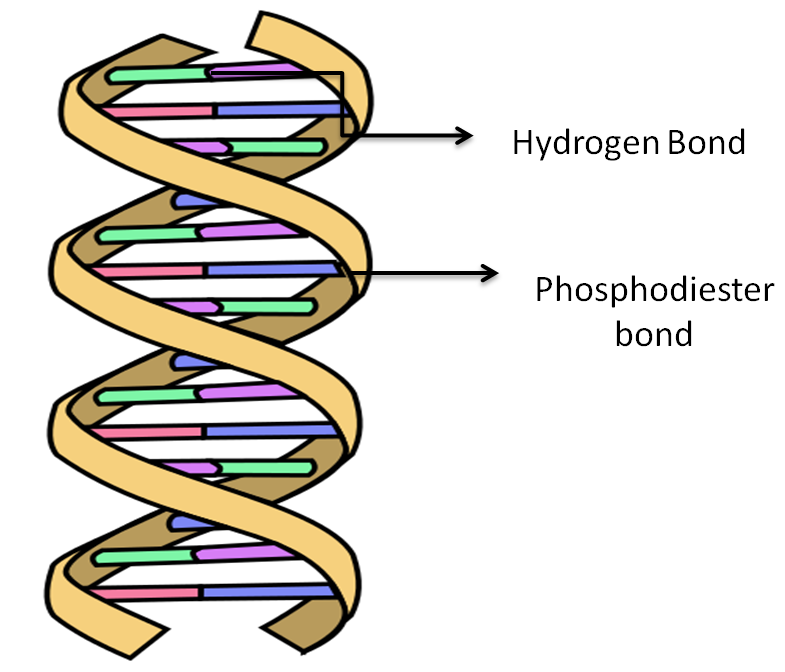
At the heart of DNA’s stability are relatively weak, non-covalent interactions known as hydrogen bonds. Unlike the strong covalent bonds that form the backbone of each individual DNA strand, hydrogen bonds provide the reversible “zipper” that connects two complementary strands. Each DNA strand is a polymer made up of nucleotide units, which consist of a sugar, a phosphate group, and one of four nitrogenous bases: Adenine (A), Guanine (G), Cytosine (C), and Thymine (T).
The magic happens through a highly specific pairing mechanism: Adenine always pairs with Thymine (A-T), and Guanine always pairs with Cytosine (G-C). This specificity, often referred to as Chargaff’s rules, is mediated by hydrogen bonds. A-T pairs form two hydrogen bonds, while G-C pairs form three, making G-C rich regions slightly more stable and requiring more energy to separate. This precise pairing is not accidental; it’s a critical engineering design principle.
-
Specificity and Recognition: The exact fit of A with T, and G with C, provides the molecular recognition necessary for DNA replication, repair, and transcription. In a technological context, this specificity is exploited in designing diagnostic probes that can detect particular DNA sequences, creating highly selective gene-editing tools like CRISPR, and even developing molecular sensors that respond only to specific genetic markers.
-
Reversibility and Dynamic Interactions: Hydrogen bonds are individually weak, meaning they can be broken with relative ease (e.g., by heating, as in PCR) and then reformed. This reversibility is paramount for cellular processes that require DNA strands to separate and re-join, such as replication and transcription. Technologically, this dynamic quality allows for the controlled denaturation and annealing of DNA, central to techniques like PCR, DNA hybridization arrays, and the assembly of DNA nanostructures. It’s akin to a modular assembly system where components can be repeatedly joined and separated.
-
Structural Integrity and Information Storage: Despite their individual weakness, the sheer number of hydrogen bonds along the lengthy DNA molecule confers remarkable overall stability to the double helix. This robust yet flexible structure is ideal for housing and protecting vast amounts of genetic information. For technologists, this stability, combined with the digital-like (A, T, G, C) coding of information, makes DNA an appealing candidate for ultra-dense and long-lasting data storage systems. The predictable geometry ensures that information can be reliably encoded and retrieved.
Understanding these fundamental bonds moves beyond basic biology; it becomes a design manual for engineers and scientists seeking to mimic, manipulate, and harness nature’s most sophisticated information system.
Leveraging DNA’s Stability in Diagnostics and Therapeutics
The predictable behavior of DNA’s hydrogen bonds and base pairing is the cornerstone of modern molecular diagnostics and genetic therapies. Technologies that once seemed futuristic are now commonplace, all thanks to our ability to precisely control the binding and unbinding of DNA strands.

-
Polymerase Chain Reaction (PCR): PCR is a prime example of leveraging DNA’s binding dynamics. This technique revolutionized molecular biology by enabling the amplification of minute quantities of DNA. It works by repeatedly heating DNA to break hydrogen bonds (denaturation), allowing synthetic “primers” to bind to complementary sequences (annealing), and then extending these primers with DNA polymerase (extension). The precise temperature control required for each step directly manipulates the hydrogen bonds, demonstrating an exquisite technological control over molecular interactions. PCR’s applications range from diagnosing infectious diseases (e.g., COVID-19 testing) and genetic disorders to forensic science and paternity testing, all relying on the specific binding dictated by A-T and G-C pairs.
-
Gene Editing Technologies (CRISPR-Cas9): CRISPR-Cas9, a revolutionary gene-editing tool, functions by employing a “guide RNA” molecule that specifically binds to a target DNA sequence through complementary base pairing. This binding guides the Cas9 enzyme to a precise location on the genome, where it can make a cut. The accuracy of CRISPR is entirely dependent on the specificity of hydrogen bonding between the guide RNA and the target DNA. Understanding and designing these complementary sequences allows scientists to precisely edit genes, offering unprecedented potential for correcting genetic defects, developing new cancer therapies, and engineering disease-resistant crops. It’s a molecular search-and-replace function powered by precise binding.
-
Molecular Probes and Biosensors: The ability of DNA strands to hybridize (bind) specifically to complementary sequences is exploited in numerous diagnostic tools. DNA microarrays, for instance, consist of thousands of unique DNA probes immobilized on a chip. When a sample containing target DNA or RNA is introduced, it will only bind to its complementary probe, allowing for the simultaneous detection of hundreds or thousands of genetic markers. Similarly, fluorescently labeled DNA probes are used in techniques like FISH (Fluorescent In Situ Hybridization) to visualize specific genes or chromosomes within cells, aiding in cancer diagnosis and genetic counseling. These technologies are essentially highly sensitive molecular “velcro” systems.
The ongoing advancements in synthetic biology and personalized medicine continue to find new ways to exploit DNA’s fundamental binding properties, leading to ever more precise and effective diagnostic and therapeutic solutions.
DNA as the Ultimate Hard Drive: Data Storage and Computing
Beyond biological applications, the incredible information density and stability of DNA have made it an attractive candidate for next-generation data storage and even computing. The same rules of base pairing that maintain genetic information in living organisms can be repurposed to store digital information.
-
Ultra-Dense Data Storage: Imagine storing all the world’s digital data in a space no larger than a shoebox. This audacious goal might be achievable with DNA. Each base (A, T, C, G) can be seen as a digital unit, allowing for a quaternary (base-4) system, which is more efficient than binary (base-2) for information encoding. The information is encoded by synthesizing specific DNA sequences, which are then dehydrated and stored. Because DNA is exceptionally stable under proper conditions (as evidenced by ancient DNA surviving for thousands of years), it offers a promise of extreme longevity and density far beyond current magnetic tapes or hard drives. Retrieving the data involves sequencing the DNA. Companies and research institutions are actively developing methods for efficient DNA synthesis, sequencing, and error correction, turning a biological molecule into an inert, archival storage medium.
-
Molecular Computing and DNA Nanotechnology: The predictable interactions of DNA strands allow for more than just storage; they can perform computations. DNA computing harnesses the specific binding rules to solve complex problems in parallel. By designing strands that act as logical gates (AND, OR, NOT), researchers can create molecular circuits that process information. While not yet rivaling electronic computers in speed for general tasks, DNA computing excels in problems requiring massive parallelism, such as searching vast databases or solving complex mathematical problems like the “traveling salesman problem.”
-
DNA Origami and Nanomachines: The precision of base pairing allows scientists to “fold” DNA into complex 2D and 3D shapes, much like origami. This technique, called DNA origami, creates nanoscale structures with unparalleled precision. By designing specific sequences, researchers can dictate where strands will bind and fold, creating nanobots, drug delivery vehicles, or even molecular assembly lines. The hydrogen bonds act as the “latches” and “hinges” that hold these intricate nanoscale machines together. These nanostructures have potential applications in targeted drug delivery, ultra-sensitive diagnostic devices, and building blocks for advanced materials.
The prospect of a future where our most precious digital memories and scientific data are preserved in a resilient biological format, or where computations are performed by molecular machines, highlights the extraordinary versatility of DNA’s fundamental binding principles.

Future Frontiers: Security and Advanced AI with DNA Principles
The exploration of DNA’s molecular binding properties continues to inspire innovation in emerging fields, including digital security and advanced artificial intelligence, often through biomimicry.
-
Biomimetic Security Systems: The specificity and complexity of DNA’s base pairing can inspire new paradigms in digital security. Imagine encryption keys generated from unique DNA sequences or secure identification systems that leverage molecular tags. Researchers are exploring how DNA’s self-assembly properties and its ability to act as a complex information carrier could be used to create robust, tamper-proof security tokens or authentication methods that are incredibly difficult to duplicate or forge. The intrinsic “lock and key” mechanism of base pairing offers a powerful model for secure communication and data protection.
-
AI and Machine Learning Inspired by DNA: While not directly using DNA molecules, the principles governing DNA’s structure and function—such as parallelism, error correction, and information encoding—are informing the development of advanced algorithms and artificial intelligence. Concepts from DNA computing, genetic algorithms (which mimic natural selection), and neural networks (inspired by brain biology) demonstrate how biological principles, including those underlying DNA’s stability, can provide robust frameworks for solving complex computational challenges. As we aim for more efficient and resilient AI, the lessons from DNA’s elegant design will likely play an increasing role in guiding algorithmic development.
-
Advanced Materials and Beyond: Beyond traditional tech applications, the predictable self-assembly of DNA is being explored for the creation of novel advanced materials. By designing DNA strands that assemble into specific lattices, researchers can create materials with tailored optical, electrical, or mechanical properties. Imagine fabrics that respond to their environment, smart sensors embedded in building materials, or even self-repairing circuits—all inspired by the robust and programmable interactions of DNA strands.
The seemingly simple question “what holds DNA strands together” unravels a universe of complex molecular interactions that are not only vital for life but are also instrumental in shaping the technological landscape of the 21st century. From the rapid diagnostics that safeguard public health to the mind-boggling potential of DNA data storage and molecular computing, the hydrogen bonds and base pairing rules of DNA are truly the invisible architects of modern biotech innovation. As our understanding deepens and our technological prowess grows, the elegant simplicity of these molecular forces will continue to drive breakthroughs, connecting the fundamental building blocks of biology to the cutting edge of human ingenuity.
aViewFromTheCave is a participant in the Amazon Services LLC Associates Program, an affiliate advertising program designed to provide a means for sites to earn advertising fees by advertising and linking to Amazon.com. Amazon, the Amazon logo, AmazonSupply, and the AmazonSupply logo are trademarks of Amazon.com, Inc. or its affiliates. As an Amazon Associate we earn affiliate commissions from qualifying purchases.