
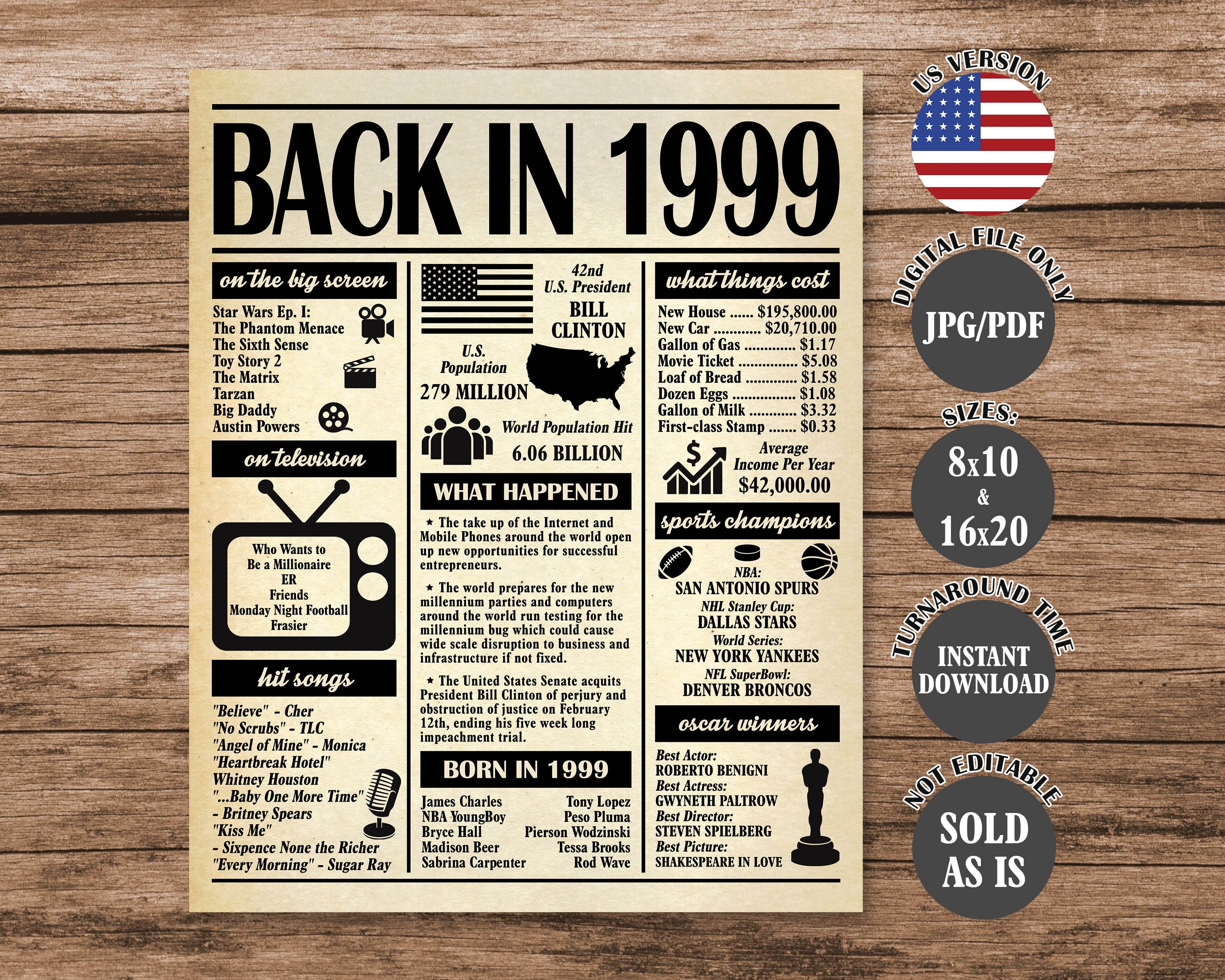
The year 1999 stands as a fascinating nexus in the annals of technological history. It was a time of unprecedented optimism, bordering on irrational exuberance, as the internet transformed from a niche academic tool into a burgeoning commercial and social phenomenon. Yet, beneath this veneer of limitless potential lay profound anxieties, most notably the looming specter of the “Y2K bug,” a global digital ticking bomb that threatened to unravel the meticulously woven fabric of modern computing. As the world braced for a new millennium, 1999 was less a conclusion and more a dramatic prelude, setting the stage for the digital age we inhabit today. It was a year that saw the internet’s ascent reach dizzying heights, the practical application of nascent technologies mature, and the first whispers of challenges that would define the decades to come. To understand “what happened in 1999” is to unpack a pivotal chapter in our digital evolution, a period where innovation converged with apprehension, forever altering the trajectory of human progress.

The Dot-Com Delirium: Internet’s Ascent to the Forefront
1999 marked the zenith of the dot-com bubble, a period characterized by an unprecedented surge in internet-based companies, lavish valuations, and a pervasive belief that traditional economic rules no longer applied to the digital realm. The internet was no longer just a curiosity; it was a gold rush, attracting entrepreneurs, investors, and everyday users alike, all eager to stake their claim in the new frontier.
The Explosive Growth of Web 1.0 and Early E-commerce
By 1999, the World Wide Web, still largely operating under the “Web 1.0” paradigm, had become a household term. Companies like America Online (AOL) continued to dominate internet access with their walled-garden approach, while more open web browsers like Microsoft’s Internet Explorer and Netscape Navigator battled for market share. E-commerce was exploding, with pioneers like Amazon.com significantly expanding beyond books into music, electronics, and toys, demonstrating the viability of online retail. eBay had become a global marketplace, facilitating peer-to-peer commerce on an unimaginable scale. Portals like Yahoo!, Excite, and Lycos served as the primary gateways to the internet, aggregating news, search, and email services, becoming incredibly valuable properties in their own right. The sheer novelty and convenience of these services, combined with increasing internet penetration, fueled a cycle of rapid adoption and exponential growth. This period was defined by a focus on “getting online” and “building an audience,” often with less emphasis on traditional profitability.
Speculation and the Valuation Frenzy
The capital markets responded to this internet boom with unparalleled enthusiasm. Venture capitalists poured billions into fledgling startups, often based on little more than a catchy domain name and a business plan scrawled on a napkin. Initial Public Offerings (IPOs) of internet companies routinely saw their stock prices double or triple on the first day of trading, creating overnight paper millionaires. Companies with little to no revenue but promising “eyeballs” or “clicks” were valued in the hundreds of millions, sometimes billions, of dollars. The prevailing mantra was “get big fast” rather than “get profitable fast.” This speculative frenzy was driven by a genuine belief in the internet’s transformative power, but also by a fear of missing out, leading to an environment where rational valuation often took a backseat to hyperbolic projections and investor herd mentality.
Infrastructure Expansion and the Pace of Connectivity
While much of the public imagination was captured by flashy dot-com companies, significant underlying infrastructure work was also taking place. The backbone of the internet was continually being upgraded, with faster fiber optic cables laid across continents and oceans. However, for most home users, internet access in 1999 was still predominantly via dial-up modems, typically at speeds of 56 kbps. The screech and whine of a modem connecting was a familiar sound, and patience was a virtue for anyone attempting to download even a moderately sized image. Nevertheless, early broadband options like DSL and cable modems were beginning to appear in select markets, hinting at the vastly faster, always-on internet experience that would soon become the norm and truly unlock the potential of the web. This dual reality—exuberant applications built upon often frustratingly slow connections—was a defining characteristic of the year.
The Millennium Bug: A Global Digital Anomaly
Perhaps no single technological concern captured the global imagination and spurred such widespread panic and preparedness efforts as the “Y2K bug” or the Millennium Bug. As 1999 drew to a close, the prospect of computer systems failing worldwide threatened to plunge civilization into chaos.
The Y2K Scare Explained: A Digital Time Bomb
The Y2K problem was rooted in a decades-old programming shortcut. To save precious memory in early computing, programmers often represented years using only two digits (e.g., “99” for 1999) rather than four. The concern was that when the year rolled over from “99” to “00” at midnight on December 31, 1999, computers might interpret “00” as 1900 instead of 2000. This misinterpretation could lead to catastrophic errors in systems reliant on date calculations, potentially affecting everything from financial transactions and power grids to air traffic control and military defense systems. The simplicity of the bug belied the complexity of its potential consequences, igniting a global frenzy.
Global Preparedness and Panic
Governments, corporations, and individuals worldwide invested billions of dollars and countless hours into Y2K remediation efforts. Teams of programmers meticulously scoured legacy code, patching systems, upgrading hardware, and implementing new software solutions to ensure date compliance. Contingency plans were drawn up for every conceivable scenario, from widespread power outages to banking system failures. Public information campaigns sought to both educate and reassure, though sensational media coverage often amplified fears. Consumers hoarded supplies, withdrew cash, and even purchased generators, convinced that the impending rollover would usher in a period of unprecedented disruption. The fear, though often exaggerated, was rooted in a genuine, critical vulnerability that had been overlooked for decades.
The Aftermath and Lessons Learned
As the clock ticked past midnight on January 1, 2000, the world collectively held its breath. The outcome, as history now confirms, was largely uneventful. While minor glitches occurred, the catastrophic breakdowns predicted by doomsayers never materialized. This uneventfulness was not due to luck but rather the colossal, coordinated effort of millions of IT professionals, engineers, and policymakers globally. The “non-event” of Y2K became a testament to the power of human ingenuity and collaborative problem-solving on an international scale. The lessons learned were profound: the critical importance of robust software architecture, foresight in design, and the need for continuous vigilance in maintaining complex digital systems. It also highlighted the interconnectedness of global digital infrastructure and the potential for a single flaw to ripple through countless systems.
Emerging Tech and Gadgets: Glimpses of the Future
Beyond the internet boom and the Y2K scare, 1999 was a year of tangible innovation, with new gadgets and technological advancements offering early glimpses of the digital lifestyles that would soon become commonplace. Personal computing continued its relentless march, while mobile technology began to shed its clunky image, and digital entertainment started to reshape media consumption.
Personal Computing Evolution and the Rise of Windows 2000
Personal computers in 1999 were becoming more powerful and affordable than ever before. Processors from Intel (Pentium III) and AMD (Athlon) pushed clock speeds higher, while RAM capacities increased, allowing for more demanding software. Microsoft released Windows 98 Second Edition, refining its popular operating system, and prepared for the launch of Windows 2000, a more robust, business-oriented OS built on the NT kernel that would pave the way for future Windows versions. While bulky desktop towers still dominated, laptops were becoming increasingly capable and portable, signaling a shift towards mobile computing for professionals. The era of the “family computer” was well underway, with PCs becoming central to home entertainment, communication, and productivity.
Mobile Technology Takes Shape: WAP and Early Feature Phones
The year 1999 saw significant strides in mobile phone technology, though still a far cry from today’s smartphones. Feature phones were becoming smaller, lighter, and more capable. Iconic devices like the Nokia 3210 (released in 1999) captivated users with its internal antenna, customizable covers, and the addictive game Snake. Critically, 1999 marked the widespread introduction of Wireless Application Protocol (WAP), a technology designed to bring internet-like services to mobile phones. While clunky and limited by today’s standards, WAP allowed users to check email, get weather updates, and access rudimentary web pages on their phones, offering a tantalizing preview of the mobile internet. SMS messaging was also taking off globally, providing a simple yet powerful way for individuals to communicate instantly.
Digital Entertainment and Media’s Transformation
The way people consumed media was also undergoing a quiet revolution. MP3 players, though still niche, were gaining traction, and the peer-to-peer file-sharing service Napster (launched in late 1999) would soon ignite a contentious debate about copyright and the future of music distribution. DVD players were rapidly becoming mainstream, offering superior picture and sound quality over VHS and marking the beginning of the end for physical tape media. Digital cameras, while still expensive and offering relatively low resolutions compared to film, were becoming more accessible, allowing consumers to instantly capture and share images without the need for developing film, laying the groundwork for social media’s visual dominance. These innovations underscored a broader shift towards digital content and convenience, challenging established industries and empowering consumers with new forms of access and creation.
The Seeds of Future Innovation and Challenges
While 1999 was defined by its immediate technological highs and anxieties, it also contained the foundational elements for many long-term trends and challenges that would shape the 21st century’s digital landscape.
Open Source Gathers Momentum and Collaborative Development
The philosophy of open-source software, where code is freely available for inspection, modification, and distribution, gained significant ground in 1999. The Linux operating system, spearheaded by Linus Torvalds, was steadily maturing and garnering interest from enterprises as a robust, cost-effective alternative to proprietary systems. The Apache HTTP Server continued its dominance as the most widely used web server software, powering a significant portion of the burgeoning internet infrastructure. This period highlighted the power of collaborative development and the potential for community-driven innovation to challenge corporate giants, laying the groundwork for countless open-source projects that underpin today’s internet.
Cybersecurity’s Infancy and the Dawn of Digital Vulnerabilities
With increased internet connectivity came increased vulnerability. 1999 saw the proliferation of early computer viruses and worms, such as the “Melissa” macro virus, which spread rapidly via email attachments, causing significant disruption. The nascent field of cybersecurity was beginning to grapple with the realities of malicious software, spam, and early forms of phishing. While security measures were rudimentary compared to today’s sophisticated defenses, the year served as a stark reminder that the interconnected digital world also presented new avenues for crime and disruption. It underscored the pressing need for robust digital security protocols and user education, a battle that continues to evolve.
The Looming Bust and the Imperative for Sustainable Innovation
Beneath the frothy surface of the dot-com boom, discerning voices had already begun to question the sustainability of sky-high valuations and the lack of traditional profitability among many internet companies. While the peak exuberance of 1999 would carry into early 2000, the seeds of the dot-com bust were already sown. The year’s intense focus on growth at any cost, often fueled by readily available venture capital, would prove unsustainable. This period, while exhilarating, ultimately highlighted the need for business models to move beyond pure speculation and towards genuine value creation, a critical lesson for subsequent waves of technological innovation.

Conclusion
1999 was a year brimming with paradox: a blend of boundless technological optimism and profound digital apprehension. It was the year the internet shed its experimental skin and donned the mantle of a global, commercial force, transforming communication, commerce, and culture in ways previously unimaginable. The Y2K scare, though ultimately averted by monumental effort, served as a potent global stress test for our digital reliance, forging a new awareness of the critical infrastructure underpinning modern life. Simultaneously, the steady march of innovation in personal computing, mobile devices, and digital media offered tangible previews of the interconnected, always-on world to come.
As the world crossed the threshold into the new millennium, 1999 left behind a rich legacy: an internet poised for further transformation, a heightened understanding of digital security, and a template for both the triumphs and follies of technological speculation. It was a watershed moment, marking both the culmination of a decade of internet growth and the commencement of an entirely new era where technology would not merely augment human experience but fundamentally reshape it. The echoes of 1999 continue to resonate, reminding us of the internet’s meteoric rise, the power of collective action, and the enduring imperative to innovate responsibly in an ever-evolving digital landscape.
aViewFromTheCave is a participant in the Amazon Services LLC Associates Program, an affiliate advertising program designed to provide a means for sites to earn advertising fees by advertising and linking to Amazon.com. Amazon, the Amazon logo, AmazonSupply, and the AmazonSupply logo are trademarks of Amazon.com, Inc. or its affiliates. As an Amazon Associate we earn affiliate commissions from qualifying purchases.