
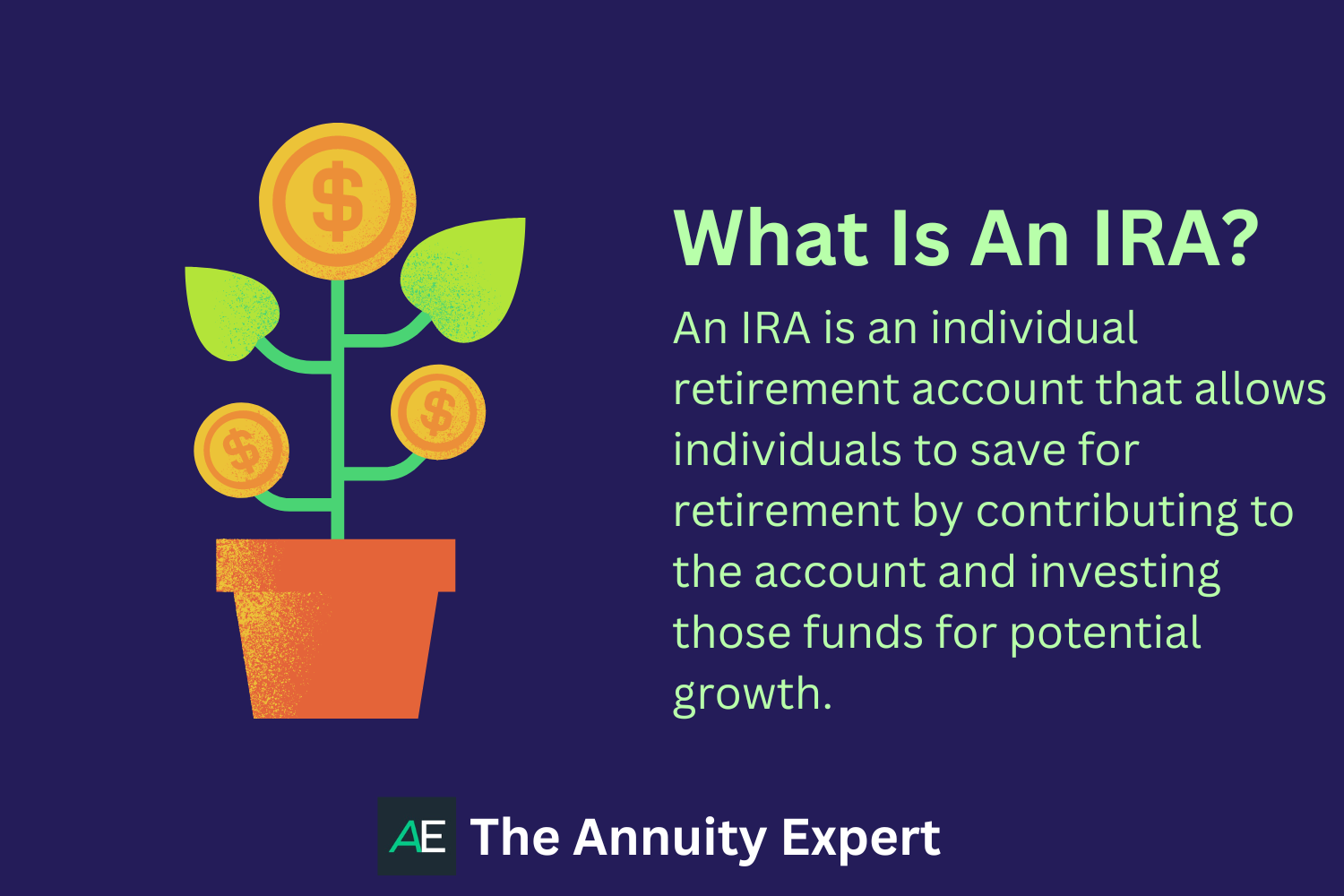
In the vast lexicon of personal finance, few acronyms carry as much weight and potential impact as “IRA.” For many, it’s a familiar term, often heard in discussions about saving for the future. Yet, beyond the abbreviation, a comprehensive understanding of what an IRA truly means, its various forms, and how it can profoundly shape one’s financial destiny often remains elusive. At its core, IRA stands for Individual Retirement Arrangement (though often referred to as an Individual Retirement Account), and it represents a powerful, tax-advantaged savings vehicle designed to help individuals accumulate wealth specifically for their retirement years.

Understanding the nuances of IRAs is not merely an academic exercise; it’s a critical step in building a robust financial plan that can withstand the test of time and provide security in later life. This article will delve deep into the world of IRAs, demystifying their purpose, exploring their different types, and offering strategic insights to help you harness their full potential.
The Core Concept: Defining the Individual Retirement Arrangement
An IRA is more than just a savings account; it’s a specialized investment vehicle that offers significant tax benefits, making it an indispensable tool for long-term financial planning. Its primary objective is to encourage individuals to save for retirement by providing incentives that regular investment accounts do not.
More Than Just an Account: Understanding its Purpose
The fundamental purpose of an IRA is to allow individuals to invest money for retirement in a tax-advantaged way. This means that the money contributed to an IRA, the growth it experiences, or the withdrawals made from it may receive preferential tax treatment compared to investments held in a standard brokerage account. These tax advantages are the core reason why IRAs are so highly valued by financial planners and individuals alike. Without such vehicles, many might find it harder to save sufficiently, given the immediate tax implications of investment gains. IRAs are a government-sponsored initiative to promote self-sufficiency in retirement, recognizing that Social Security alone may not be enough for most individuals. They provide a structured framework, compelling users to think long-term and commit to regular savings habits.
Key Characteristics: Tax Advantages and Contribution Limits
Two defining characteristics of IRAs are their unique tax advantages and the annual contribution limits imposed by the IRS. The type of tax advantage varies depending on the specific IRA, but generally falls into one of two categories: tax-deductible contributions (reducing current taxable income) or tax-free withdrawals in retirement. Crucially, investments within an IRA grow tax-deferred, meaning you don’t pay taxes on interest, dividends, or capital gains until you withdraw the money (in the case of traditional IRAs), or you pay no taxes at all on qualified withdrawals (in the case of Roth IRAs). This compounding growth, unhindered by annual taxation, is an incredibly powerful force over decades.
The IRS sets annual limits on how much an individual can contribute to an IRA across all their accounts. These limits are subject to change year to year and often include a “catch-up contribution” provision for those aged 50 and over, acknowledging that older workers may have less time to save and greater earnings capacity. Adhering to these limits is vital, as over-contributing can lead to penalties. These limits are designed to balance the incentive to save with the government’s need for tax revenue, ensuring that the benefits are widely available but also structured.
Diving Deeper: Exploring the Main Types of IRAs
While the term “IRA” serves as an umbrella, it encompasses several distinct types, each with its own set of rules, benefits, and ideal use cases. Understanding these differences is crucial for selecting the IRA that best aligns with your financial situation and retirement goals.
Traditional IRA: Pre-Tax Contributions and Tax-Deferred Growth
The Traditional IRA is perhaps the most classic form. Contributions to a Traditional IRA are often tax-deductible, meaning they can reduce your taxable income in the year they are made. This can lead to an immediate tax saving. The money then grows tax-deferred, meaning you don’t pay any taxes on the investment gains until you withdraw the funds in retirement. When you do take distributions in retirement (typically after age 59½), these withdrawals are taxed as ordinary income. This structure is often attractive to individuals who expect to be in a higher tax bracket during their working years and a lower tax bracket in retirement. It’s a “tax now, save later” approach regarding contributions, and “tax later” on withdrawals and growth. Eligibility for tax deductibility depends on whether you or your spouse are covered by a retirement plan at work, and your modified adjusted gross income (MAGI).
Roth IRA: After-Tax Contributions and Tax-Free Withdrawals in Retirement
The Roth IRA stands in contrast to the Traditional IRA, offering a different but equally compelling tax advantage. Contributions to a Roth IRA are made with after-tax dollars, meaning they are not tax-deductible in the year they are made. The magic of the Roth IRA lies in its withdrawals: qualified distributions in retirement are entirely tax-free. This includes both your contributions and all the accumulated earnings. To be considered qualified, withdrawals must occur after age 59½ and after the account has been open for at least five years. The Roth IRA is particularly appealing to those who expect to be in a higher tax bracket in retirement than they are today, or for younger individuals who have many years for their investments to grow tax-free. However, Roth IRAs have income limitations for direct contributions, meaning high-income earners may not be eligible to contribute.
SEP IRA: Simplified Employee Pension for the Self-Employed and Small Businesses
For self-employed individuals and small business owners, the Simplified Employee Pension (SEP) IRA offers an attractive retirement savings option. This type of IRA allows employers (including those who are self-employed) to contribute to their own and their employees’ retirement accounts. Contributions are made solely by the employer and are tax-deductible for the employer. For employees, contributions are not included in their taxable income. SEP IRAs boast significantly higher contribution limits than Traditional or Roth IRAs, making them a powerful tool for self-employed individuals looking to supercharge their retirement savings. However, the rules require that contributions be made proportionally for all eligible employees, not just the owner, which is an important consideration for businesses with staff.
SIMPLE IRA: Savings Incentive Match Plan for Employees (for Small Employers)
The Savings Incentive Match Plan for Employees (SIMPLE) IRA is another retirement plan designed for small businesses, typically those with 100 or fewer employees. It’s an accessible option that is simpler to administer than a 401(k) plan. Both employees and employers can contribute to a SIMPLE IRA. Employees can make salary deferral contributions (pre-tax), and employers are required to either make a matching contribution (up to 3% of the employee’s compensation) or a non-elective contribution (2% of the employee’s compensation). This mandatory employer contribution makes it a valuable benefit for employees of small businesses. Like Traditional IRAs, contributions and growth are tax-deferred, with withdrawals taxed as ordinary income in retirement.
Strategic Considerations: Choosing the Right IRA for You
Selecting the appropriate IRA isn’t a one-size-fits-all decision. It requires careful consideration of your current financial situation, income level, employment status, and future tax expectations.
Income Limits and Eligibility: Who Can Contribute to What?
Each IRA type has specific eligibility requirements related to income. For instance, direct contributions to a Roth IRA are phased out and eventually disallowed for individuals whose Modified Adjusted Gross Income (MAGI) exceeds certain thresholds. While there are no income limits for contributing to a Traditional IRA, the ability to deduct those contributions may be limited if you’re also covered by a workplace retirement plan and your MAGI is above a certain level. SEP and SIMPLE IRAs are primarily for self-employed individuals and small businesses, respectively, with their own specific rules regarding establishment and contribution limits. Understanding these income and eligibility criteria is the first step in narrowing down your options.
Contribution Strategies: Maximizing Your Retirement Savings
Simply opening an IRA isn’t enough; consistently contributing to it is key. The power of compounding makes early and regular contributions incredibly effective. Even small, consistent contributions over a long period can accumulate into a substantial sum. Strategies include setting up automatic transfers from your checking account to your IRA, aiming to contribute the maximum allowed each year, and taking advantage of catch-up contributions if you’re over 50. For those with both a workplace plan (like a 401k) and an IRA, balancing contributions to both can be an optimal strategy, often prioritizing contributions up to an employer match in a 401k, then fully funding an IRA, and finally returning to additional 401k contributions.
The Roth vs. Traditional Dilemma: Tax Now or Tax Later?
This is one of the most common and significant decisions for IRA investors. The choice between a Roth and a Traditional IRA hinges on your projection of future tax rates.
-
Choose Roth if: You believe your tax rate will be higher in retirement than it is today. This is often the case for younger individuals just starting their careers, or those who anticipate significant income growth. The appeal of tax-free withdrawals in retirement is immense.
-
Choose Traditional if: You believe your tax rate will be lower in retirement than it is today. This is often suitable for individuals currently in their peak earning years, benefiting from the immediate tax deduction.
-
Consider both: For some, a diversified approach, contributing to both a pre-tax account (like a Traditional IRA or 401k) and an after-tax account (Roth IRA), can provide flexibility in retirement, allowing you to draw from whichever account offers the best tax advantage at the time of withdrawal.
Rollovers and Conversions: Flexibility in Retirement Planning
The world of IRAs also offers flexibility through rollovers and conversions. A rollover typically involves moving funds from a workplace retirement plan (like a 401k) into an IRA when you change jobs or retire. This allows your funds to remain tax-deferred and continue growing, often with a wider range of investment options than a previous employer’s plan. A conversion (specifically a Roth conversion) involves moving funds from a Traditional IRA (or a 401k rollover IRA) into a Roth IRA. While you’ll pay income taxes on the converted amount in the year of conversion, all subsequent growth and qualified withdrawals from the Roth IRA will be tax-free. This strategy can be particularly useful during years when you anticipate being in a lower tax bracket.
Managing Your IRA: Beyond Contributions
Opening and funding an IRA is just the beginning. Effective management involves understanding what you can invest in, how withdrawals work, and how to plan for the eventual distribution of your assets.
Investment Choices: What Can You Hold in an IRA?
Unlike a bank savings account, an IRA is not an investment itself but rather a container for investments. You have a wide array of choices for what to hold inside your IRA, including stocks, bonds, mutual funds, exchange-traded funds (ETFs), and certificates of deposit (CDs). This flexibility allows you to tailor your investment strategy to your risk tolerance, time horizon, and financial goals. Most financial institutions offering IRAs will provide a broad selection of investment options, though self-directed IRAs can even hold alternative assets like real estate or private equity, albeit with more complex rules and higher risks.
Required Minimum Distributions (RMDs): What Happens in Retirement?
For Traditional, SEP, and SIMPLE IRAs, the IRS mandates that you begin taking out money once you reach a certain age (currently 73, though subject to change by legislation). These are known as Required Minimum Distributions (RMDs). The RMD amount is calculated based on your account balance and life expectancy. Failing to take an RMD can result in significant penalties. Roth IRAs are unique in that they do not have RMDs for the original owner, which makes them an excellent estate planning tool as the money can continue to grow tax-free for beneficiaries.
Early Withdrawal Penalties: Navigating the Rules
IRAs are designed for retirement, and withdrawing funds before age 59½ typically incurs a 10% early withdrawal penalty on the taxable portion of the distribution, in addition to regular income taxes. However, there are several exceptions to this rule, such as withdrawals for a first-time home purchase (up to a lifetime limit), qualified higher education expenses, unreimbursed medical expenses, or if you become totally and permanently disabled. Understanding these exceptions can provide a safety net in emergencies, but generally, it’s best to avoid tapping into your IRA before retirement.
Beneficiary Designations: Ensuring Your Legacy
A critical, often overlooked aspect of IRA management is designating beneficiaries. This ensures that your IRA assets pass directly to your chosen heirs upon your death, bypassing probate and often expediting the transfer process. You can designate primary and contingent beneficiaries, and it’s essential to review these designations periodically, especially after major life events like marriage, divorce, or the birth of a child. The rules for inherited IRAs can be complex, varying by the relationship of the beneficiary to the original owner (e.g., spouse vs. non-spouse), making careful planning even more important.
Beyond the Basics: Advanced IRA Strategies and Considerations
For those with more complex financial situations or higher incomes, advanced IRA strategies can help optimize retirement savings and tax efficiency.
The Backdoor Roth IRA: A Strategy for High Earners
As mentioned, direct contributions to a Roth IRA have income limitations. However, high-income earners can often bypass these limits using a “backdoor Roth IRA” strategy. This involves contributing after-tax money to a Traditional IRA (where there are no income limits for non-deductible contributions) and then immediately converting those funds to a Roth IRA. While the conversion itself might trigger a small tax liability if the Traditional IRA has any pre-tax funds, it allows individuals who are otherwise ineligible to gain access to the benefits of a Roth IRA. This strategy requires careful execution to avoid potential tax pitfalls and is best discussed with a financial advisor.
Inherited IRAs: Rules for Beneficiaries
When you inherit an IRA, the rules for withdrawal and taxation depend heavily on your relationship to the deceased account owner (spouse vs. non-spouse) and the specific type of IRA. Spouses generally have the most flexibility, often able to roll over the inherited IRA into their own, or treat it as their own. Non-spouse beneficiaries typically have options like taking a lump sum or transferring the funds to an “inherited IRA” (also known as a beneficiary IRA), subject to specific distribution rules (e.g., the 10-year rule introduced by the SECURE Act for most non-eligible designated beneficiaries). Navigating inherited IRAs correctly is crucial to avoid unintended tax consequences.

The Role of IRAs in a Holistic Financial Plan
Ultimately, IRAs are just one component of a comprehensive financial plan. They should be considered alongside workplace retirement plans (like 401ks), taxable brokerage accounts, emergency savings, and other investments. A holistic approach involves determining how each piece fits together to meet your short-term needs, long-term goals, and legacy planning objectives. Financial advisors can play a vital role in helping you integrate IRAs into your broader financial strategy, ensuring you’re making the most tax-efficient and effective decisions for your unique circumstances.
In conclusion, “IRA” signifies far more than just three letters; it represents a fundamental pillar of personal financial independence. Whether you choose a Traditional, Roth, SEP, or SIMPLE IRA, each offers distinct advantages designed to help you secure a comfortable and financially stable retirement. By understanding their nuances, strategically contributing, and managing them wisely, you can unlock the full power of these essential retirement vehicles and build the future you envision. Don’t let the acronym intimidate you; let it empower your journey towards financial freedom.
aViewFromTheCave is a participant in the Amazon Services LLC Associates Program, an affiliate advertising program designed to provide a means for sites to earn advertising fees by advertising and linking to Amazon.com. Amazon, the Amazon logo, AmazonSupply, and the AmazonSupply logo are trademarks of Amazon.com, Inc. or its affiliates. As an Amazon Associate we earn affiliate commissions from qualifying purchases.