
The burgeoning cannabis industry, spanning both hemp-derived and marijuana-derived products, represents a multi-billion-dollar global market attracting entrepreneurs, investors, and consumers alike. At its core lie two primary cannabinoids: Cannabidiol (CBD) and Tetrahydrocannabinol (THC). While both originate from the cannabis plant, their distinct psychoactive properties, legal statuses, and market dynamics create profoundly different financial landscapes. For anyone looking to invest, launch a business, or simply understand the economic currents shaping this sector, comprehending these fundamental distinctions from a financial vantage point is not just beneficial—it’s essential for navigating opportunity and mitigating risk.

This article delves into the financial implications of the differences between CBD and THC, exploring how their unique characteristics shape market viability, investment strategies, business models, and consumer spending, ultimately dictating profitability and long-term success in this rapidly evolving space.
Navigating the Legal and Regulatory Landscape: Impact on Market Viability
The most significant differentiator between CBD and THC, from a financial standpoint, stems directly from their legal and regulatory treatment. This legal framework dictates everything from production capabilities to market access, profoundly impacting business viability and investment attractiveness.
The Federal Divide: Hemp vs. Marijuana
A landmark shift occurred with the 2018 Farm Bill in the United States, which federally legalized hemp—defined as cannabis containing less than 0.3% Delta-9 THC. This legislative act effectively separated hemp-derived CBD products from marijuana-derived THC products. Financially, this created two distinct industries: a federally permissible hemp industry (primarily focused on CBD, but also other minor cannabinoids) and a state-legal, but federally illegal, marijuana industry (focused on higher concentrations of THC).
For businesses, this divide means entirely different operational paradigms. Hemp businesses, theoretically, can operate across state lines and access traditional financial services (though challenges persist due to lingering perceptions). This broad market access for CBD products allows for wider distribution channels, including e-commerce, conventional retail stores, and grocery chains, significantly expanding their potential customer base and revenue streams. Conversely, marijuana businesses, dealing with THC above the 0.3% threshold, remain subject to federal prohibition, restricting interstate commerce and forcing them to operate within the confines of individual state laws. This fundamental difference in legal status underpins the market structures, investment strategies, and inherent risks for each cannabinoid.
State-by-State Discrepancies and Business Risks
While hemp-derived CBD enjoys federal legality, the regulatory environment is far from uniform. Many states have implemented their own specific rules for CBD production, processing, labeling, and sale, creating a complex patchwork. This can range from requiring specific state licenses to outright bans on certain CBD product types (e.g., edibles in some states). For businesses, this translates into added layers of compliance, legal due diligence, and potentially restricted market entry, which can increase operational costs and limit economies of scale.
The THC market, being federally illegal, is even more fractured. States have diverse approaches, ranging from full recreational legalization to medical-only programs, or outright prohibition. Businesses operating in the THC space must meticulously navigate these state-specific regulations, which often include stringent licensing requirements, cultivation limits, seed-to-sale tracking, and strict marketing restrictions. This fragmentation results in significant barriers to entry, limited market size within individual states, and the inability to leverage interstate commerce for supply chain efficiencies or brand expansion. From a financial perspective, this complexity introduces higher legal risks, unpredictable policy changes, and limits the scalability typically sought by investors.
Compliance Costs and Investment Barriers
The intricate regulatory environment for both CBD and THC imposes substantial compliance costs. Businesses in both sectors must invest heavily in legal counsel, regulatory affairs teams, quality control testing, and specialized software for tracking and reporting. For THC businesses, these costs are often amplified due to stricter licensing fees, security requirements, and a greater need for robust seed-to-sale tracking systems.
Furthermore, the federal illegality of THC creates significant investment barriers. Traditional financial institutions (banks, credit card processors) are often reluctant to service state-legal cannabis businesses due to federal anti-money laundering laws, forcing these companies to rely on cash transactions, specialized credit unions, or alternative financial services. This lack of access to conventional banking, loans, and investment capital inflates the cost of doing business, limits expansion capabilities, and makes it challenging to attract institutional investors. While the CBD industry faces fewer explicit banking restrictions, many financial institutions still exercise caution, leading to higher merchant processing fees and occasional account closures. These financial obstacles contribute to higher capital requirements for cannabis ventures, affecting their valuation, growth potential, and overall financial stability.
Market Dynamics and Investment Opportunities
The legal distinctions between CBD and THC have sculpted vastly different market dynamics, influencing everything from product accessibility to investment valuations and growth trajectories. Understanding these separate markets is crucial for identifying viable investment opportunities.
The CBD Market Boom: Accessibility and Diversification
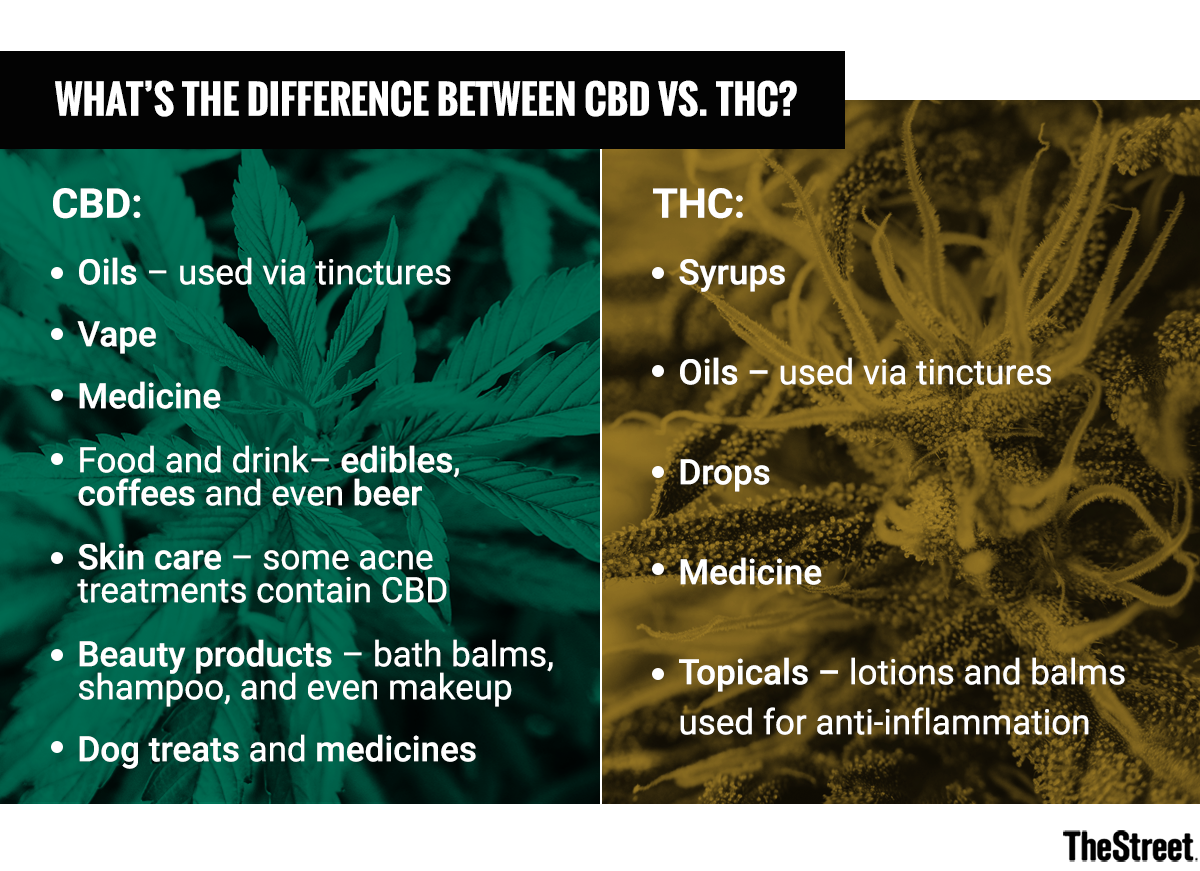
The legal clarity provided by the 2018 Farm Bill unleashed a rapid expansion of the CBD market. Its broad accessibility, coupled with a growing consumer interest in natural wellness alternatives, has fueled an explosion of CBD products. From tinctures, edibles, and topicals to pet products and cosmetics, CBD has permeated various consumer goods categories. For businesses, this translates to lower barriers to entry compared to THC, allowing for more agile startups and a wider range of distribution channels. E-commerce platforms, health food stores, pharmacies, and even major retailers have become avenues for CBD sales.
This widespread accessibility makes the CBD market an attractive, albeit increasingly competitive, space for investors. Opportunities exist across the value chain, from cultivation and extraction to brand development and retail. However, the lower entry barriers also lead to market saturation, intense price competition, and a greater need for product differentiation and robust marketing strategies to capture consumer loyalty. Investors must scrutinize business models for strong branding, unique product offerings, and efficient supply chains to thrive in this crowded landscape.
The THC Market: High Barriers, High Rewards
In stark contrast, the THC market operates behind higher regulatory walls, but often offers the promise of higher profit margins in legal states. The “green rush” mentality in newly legalized markets is driven by the significant revenue potential from recreational and medical sales. Multi-State Operators (MSOs) have emerged as key players, building vertically integrated businesses that control cultivation, processing, distribution, and retail (dispensaries) across multiple legal states. These operations require substantial upfront capital for licenses, infrastructure, and compliance, creating formidable barriers to entry for smaller players.
Investment in the THC market typically involves direct equity in licensed cannabis companies, investment in cannabis-focused ETFs, or private equity ventures. While the risks are higher due to federal illegality and policy uncertainty, the potential for substantial returns is also greater, particularly as more states legalize and markets mature. Investors in the THC space are often betting on future federal legalization or widespread state-level reforms, which would unlock interstate commerce and potentially attract traditional institutional capital, leading to significant valuation uplifts.
Valuations and Growth Trajectories
The valuation metrics and growth projections for CBD-focused companies versus THC-focused companies reflect their differing market realities. CBD companies, operating in a more open and competitive market, often face valuation pressure from commoditization and the need for significant marketing spend. Their growth trajectories are influenced by continued consumer adoption, product innovation, and effective brand building in a crowded market.
THC companies, particularly MSOs, often command higher valuations based on their limited licenses, market share in restricted states, and the expectation of future market expansion through new state legalizations or federal reform. Their growth is tied directly to legislative progress and their ability to efficiently scale operations within the complex regulatory framework. For investors, understanding these distinct valuation drivers and growth catalysts is critical for making informed decisions. The potential for federal legalization of THC could dramatically re-rate the entire cannabis sector, blurring the lines between these two markets and creating new investment dynamics.
Business Models and Profitability
The core differences between CBD and THC necessitate distinct business models, each with its own set of financial implications for profitability, operational efficiency, and capital requirements.
Retail and E-commerce Strategies for CBD
Given its broader legal status, CBD businesses have significant flexibility in their retail and e-commerce strategies. Online sales platforms allow for direct-to-consumer (DTC) models, minimizing overheads associated with brick-and-mortar stores and enabling a national (and even international, with careful navigation) reach. This wider distribution capability means lower customer acquisition costs in some channels and the ability to scale rapidly. CBD products can also be found in an array of traditional retail environments, from specialty boutiques to large pharmacy chains and supermarkets, further broadening their market penetration.
Financially, this means CBD businesses often have lower initial capital requirements for market entry, making them more accessible for entrepreneurs. However, profitability hinges on effective digital marketing, competitive pricing strategies, and strong brand differentiation to stand out in a saturated market. Businesses must carefully manage inventory, logistics, and fluctuating raw material costs (hemp biomass) to maintain healthy margins. The ease of market entry also means a constant influx of new competitors, putting continuous pressure on pricing and the need for innovation.
Seed-to-Sale Vertical Integration in THC Markets
In contrast, the highly regulated THC markets often favor vertical integration – a business model where a single company controls multiple stages of the supply chain, from cultivation and processing to manufacturing, distribution, and retail. This model is capital-intensive, requiring significant investment in cultivation facilities, extraction labs, manufacturing equipment, and dispensary build-outs. However, it offers substantial financial benefits, including greater control over product quality, supply chain efficiency, and crucially, higher profit margins by capturing value at each stage.
Vertically integrated MSOs can manage costs more effectively, ensure consistent product availability, and build brand loyalty through consistent consumer experiences. This model also allows for better compliance management within a complex regulatory environment. For investors, businesses employing this strategy can demonstrate greater stability and control over their financial performance, though they are exposed to the capital intensity and operational complexities of managing diverse operations. The financial success of vertical integration depends heavily on efficient operations, strategic geographical expansion, and adept navigation of state-specific regulations.
Ancillary Businesses and Indirect Investments
Beyond direct involvement with CBD or THC products, a robust ecosystem of ancillary businesses provides essential services and products to both sectors. These “picks and shovels” companies, such as cultivation technology providers (lighting, hydroponics), packaging solutions, specialized marketing agencies, compliance software developers, and independent lab testing facilities, offer a unique investment opportunity.
Financially, ancillary businesses often present a lower-risk profile compared to direct cannabis operators. They benefit from the growth of the overall industry without directly handling the federally prohibited plant, meaning they typically have easier access to traditional banking services and investment capital. Their revenue streams are diversified across multiple clients in both the CBD and THC sectors, offering resilience against market fluctuations specific to one cannabinoid. Investors seeking exposure to the cannabis industry with a more conservative risk appetite often find ancillary businesses attractive, as they offer significant financial upside tied to the industry’s growth without the direct regulatory and product-related complexities.
Consumer Spending and Economic Impact
The fundamental differences between CBD and THC deeply influence consumer motivations, spending patterns, and the broader economic impact of their respective markets.
Health & Wellness vs. Recreational Spending
Consumer spending on CBD products is largely driven by a focus on health and wellness. Users often seek relief from conditions like anxiety, pain, and sleep disorders, leading to a pattern of regular, often recurring, purchases for perceived therapeutic benefits. This creates a market segment characterized by brand loyalty, demand for efficacy, and a willingness to pay for quality products. Businesses in this space focus on educating consumers, building trust, and emphasizing product benefits, with marketing often highlighting natural ingredients and wellness solutions.
THC spending, particularly in recreational markets, is driven by a desire for altered states of consciousness, relaxation, or social enhancement. Medical THC users, similar to CBD users, seek symptom relief, but often for more severe or specific conditions. This divergence impacts product types (e.g., higher demand for flower, vapes, and concentrates in recreational markets; specific dose edibles/tinctures in medical markets) and pricing strategies. Recreational markets often see higher impulse purchases, whereas medical markets prioritize consistent access and personalized advice. Financially, understanding these differing consumer motivations allows businesses to tailor product development, pricing, and marketing strategies for maximum revenue generation within each segment.
Price Elasticity and Market Maturity
The increasing availability and competition in the CBD market have led to greater price elasticity. As more brands enter and product differentiation becomes challenging, consumers have more choices, pushing prices down and demanding better value. This requires CBD businesses to focus on operational efficiencies, innovative product development, and strong brand narratives to justify premium pricing. Mature CBD markets are characterized by a focus on cost leadership or niche specialization.
In contrast, price elasticity in THC markets, especially in newly legalized states, tends to be lower in the initial stages. Limited supply due to strict licensing, combined with high consumer demand, often allows businesses to command higher prices. However, as markets mature and more licenses are issued, competition increases, eventually leading to price compression. Businesses in the THC space must anticipate this evolution, planning for future price adjustments and focusing on cultivation efficiency, brand strength, and diversified product portfolios to maintain profitability in the long run.
Job Creation and Local Economic Benefits
Both the CBD and THC industries contribute significantly to job creation and local economic development. From cultivation and processing to manufacturing, retail, research and development, and ancillary services, the cannabis sector supports a vast array of employment opportunities. These jobs span various skill levels, offering economic uplift in regions that embrace the industry.
Furthermore, state and local governments benefit from substantial tax revenues generated by cannabis sales. These funds are often earmarked for public services, infrastructure projects, and education, providing a tangible economic benefit to communities. For investors and policymakers, recognizing this broader economic impact—beyond direct sales and profits—is crucial. The growth of these sectors drives increased consumer spending in related industries, stimulates real estate development (for cultivation facilities and dispensaries), and fosters innovation, creating a ripple effect throughout local economies and representing a significant financial boon to states that opt for legalization and regulation.

Conclusion
The distinction between CBD and THC transcends mere chemical composition; it defines two fundamentally different financial ecosystems within the broader cannabis industry. Their differing psychoactive effects have led to divergent legal and regulatory frameworks, which in turn have sculpted distinct market dynamics, business models, and investment opportunities.
For investors, understanding these nuances is paramount. The CBD market, characterized by broader accessibility and lower barriers to entry, offers diverse opportunities but demands acute awareness of market saturation and intense competition. The THC market, while fraught with higher regulatory hurdles and federal illegality, promises significant returns for those who can navigate its complex landscape and capitalize on the “green rush” in legal states. Entrepreneurs must tailor their business strategies, from supply chain integration to retail approaches, based on whether they are operating in the high-volume, lower-margin CBD space or the more restricted, potentially higher-margin THC domain.
As the cannabis industry continues its rapid evolution, driven by shifting public opinion, ongoing research, and progressive legislative changes, the financial landscapes of CBD and THC will undoubtedly continue to converge and diverge. Making informed financial decisions in this dynamic sector requires a deep appreciation for these core differences, a keen eye on regulatory developments, and a strategic approach tailored to the unique economic realities of each cannabinoid.
aViewFromTheCave is a participant in the Amazon Services LLC Associates Program, an affiliate advertising program designed to provide a means for sites to earn advertising fees by advertising and linking to Amazon.com. Amazon, the Amazon logo, AmazonSupply, and the AmazonSupply logo are trademarks of Amazon.com, Inc. or its affiliates. As an Amazon Associate we earn affiliate commissions from qualifying purchases.