
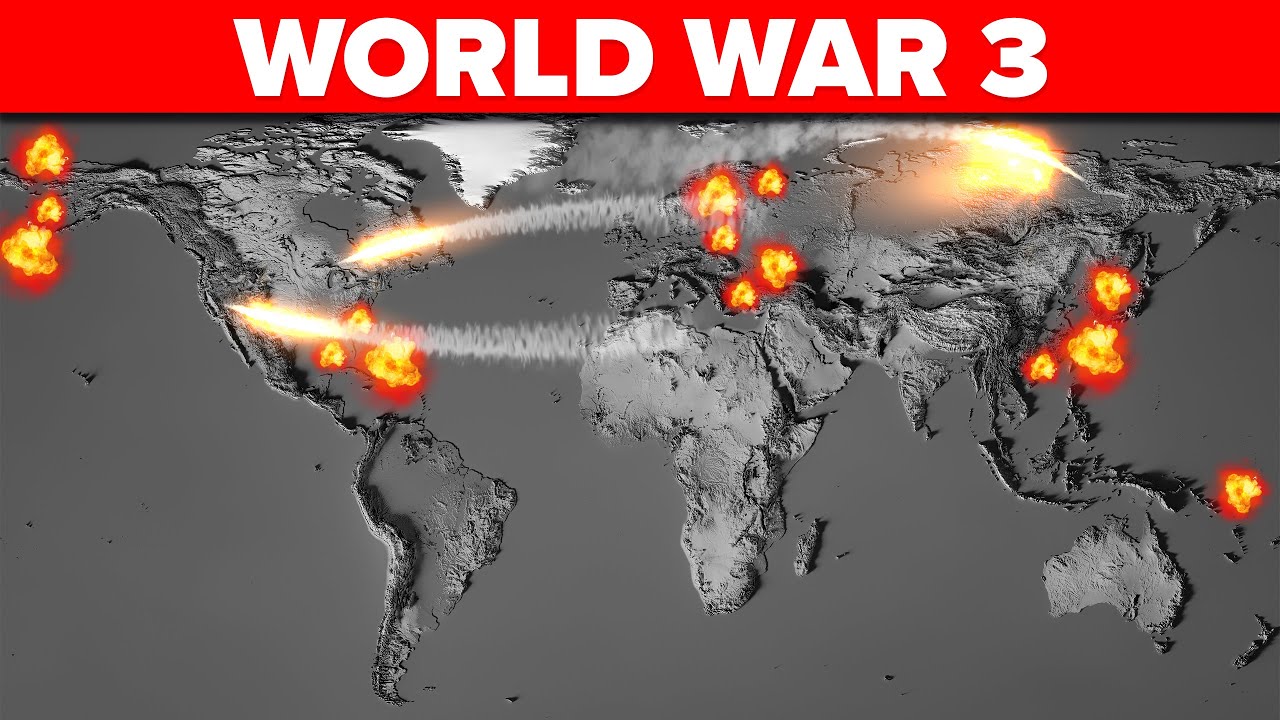
The specter of a third global conflict, though a dreaded prospect, compels us to consider its potential contours, not least of which would be its profound technological definition. Unlike its predecessors, a hypothetical World War 3 would not merely incorporate advanced technology; it would be driven by it, fought through it, and its outcomes fundamentally shaped by the digital and autonomous advancements that have permeated every facet of modern life. From the tactical battlefield to the strategic command centers, and even into the very fabric of civilian society, technology would be both the weapon and the shield, the cause and the consequence. This article delves into the technological landscape of a potential World War 3, exploring how cutting-edge innovations in AI, cybernetics, space technology, and digital security would redefine the nature of conflict, creating a warfare scenario unlike anything humanity has ever witnessed.
The Dawn of Autonomous Warfare: AI at the Front Lines
The concept of warfare has historically been tethered to human decision-making and direct physical engagement. However, the relentless march of artificial intelligence (AI) and robotics is rapidly decentralizing this paradigm, pointing towards a future where machines play an increasingly independent role in combat. In a future global conflict, autonomous systems would not just be tools; they would be participants, analysts, and perhaps even strategists, fundamentally altering the speed, scale, and ethical dimensions of engagement.
Lethal Autonomous Weapon Systems (LAWS)
The most visible manifestation of AI in future warfare would be the widespread deployment of Lethal Autonomous Weapon Systems (LAWS). These are machines capable of selecting and engaging targets without human intervention. Drones, once remotely piloted, would operate in swarms, employing AI to coordinate attacks, identify vulnerabilities, and adapt to rapidly changing combat scenarios. Ground-based robotic units, equipped with advanced sensors and decision algorithms, could conduct reconnaissance, engage enemy positions, and even perform complex logistical tasks in environments too dangerous for humans. Naval vessels, submarines, and aerial platforms would similarly leverage AI for navigation, target acquisition, and defense, enabling operations with unprecedented precision and endurance. The sheer speed at which LAWS could operate, combined with their ability to withstand conditions lethal to humans, would compress decision cycles and escalate conflicts far beyond human reaction times.
AI-Driven Logistics and Predictive Analytics
Beyond direct engagement, AI would revolutionize the logistical backbone of warfare. Sophisticated algorithms would manage vast supply chains, predict equipment failures, optimize resource allocation, and even forecast troop movements and enemy intentions with startling accuracy. Predictive analytics, fueled by massive datasets from surveillance, intelligence, and open-source information, would offer commanders unparalleled situational awareness, enabling proactive strategies rather than reactive responses. AI-powered decision support systems would sift through mountains of data to present commanders with optimal tactical choices, risk assessments, and potential outcomes, essentially augmenting human strategic capabilities to an unprecedented degree. This would reduce the fog of war, but also intensify the pressure to act swiftly and decisively based on algorithmic recommendations.
The Ethics and Control of AI in Conflict
The proliferation of autonomous weapons raises profound ethical and control dilemmas. The question of accountability for autonomous actions – who is responsible when an AI makes a lethal decision – remains unresolved. Furthermore, the potential for AI systems to misinterpret situations, suffer algorithmic biases, or be compromised by enemy cyberattacks introduces unpredictable risks. Nations would grapple with the establishment of ‘human-in-the-loop’ or ‘human-on-the-loop’ protocols, striving to balance the efficiency of autonomy with the imperative for ethical oversight. The development of robust fail-safes, ethical programming frameworks, and secure communication protocols would be paramount, yet the temptation to grant ever greater autonomy in a high-stakes conflict could override these safeguards, pushing humanity into uncharted moral territory.
The Cyber Battlefield: The Unseen War
While physical battles rage, an equally critical, and often unseen, conflict would unfold in the digital realm. Cyber warfare, once a peripheral concern, has matured into a primary domain of engagement, capable of crippling nations without firing a single shot. In a potential World War 3, the cyber battlefield would be as crucial as land, sea, air, and space, dictating the operational readiness and societal resilience of belligerent nations.
Critical Infrastructure as Prime Targets
A hallmark of modern warfare would be the systematic targeting of critical national infrastructure through cyberattacks. Power grids, water treatment plants, transportation networks, financial systems, and communication platforms would become high-value targets. A successful, coordinated cyber offensive could plunge entire regions into darkness, disrupt essential services, halt economic activity, and sow widespread panic, severely impeding a nation’s ability to mobilize and sustain a war effort. The aim would be to create systemic collapse and erode civilian morale, effectively achieving strategic objectives without direct military confrontation. The digital interconnectedness of the modern world makes every nation vulnerable to such disruptive attacks, blurring the lines between military and civilian targets.
Information Warfare and Deepfakes
Beyond disruption, cyber warfare would encompass a sophisticated and pervasive information war. State-sponsored actors would leverage advanced AI to generate hyper-realistic deepfakes, manipulate public opinion through propaganda campaigns, and disseminate disinformation across social media platforms at an unprecedented scale. The goal would be to undermine trust in institutions, sow discord among allies, and demoralize enemy populations. News cycles would be weaponized, truth would become fluid, and the ability to discern fact from fiction would become a critical vulnerability. This digital psychological warfare could be as destructive as kinetic attacks, eroding the social cohesion and political stability necessary for a nation to withstand prolonged conflict.
Digital Security in an Age of Global Conflict
The escalating threat of cyberattacks would necessitate an equally advanced and robust digital security posture. Nations would invest massively in offensive and defensive cyber capabilities, employing elite teams of hackers, network defenders, and digital forensics experts. The development of quantum-resistant cryptography, AI-powered intrusion detection systems, and resilient, decentralized network architectures would become strategic imperatives. However, no system is entirely impervious. The ‘zero-day’ exploit market would boom, and nation-states would constantly be engaged in an arms race to find and patch vulnerabilities faster than their adversaries could exploit them. Businesses and individuals would also be on the front lines, facing heightened risks of data breaches, ransomware attacks, and surveillance, making personal digital security a matter of national importance.
Space: The Ultimate High Ground
The cosmos, once the domain of exploration and scientific endeavor, has increasingly become a contested domain. In a potential World War 3, space would not just be a vantage point; it would be a critical theater of operations, fundamentally influencing global communication, navigation, and intelligence. Control of space would equate to unparalleled strategic advantage, and its disruption would have catastrophic consequences on Earth.
Satellite Warfare and Communication Disruption

Modern militaries and civilian societies are profoundly reliant on satellites for a multitude of functions: GPS for navigation, satellite phones for communication, weather monitoring, and intelligence gathering. In a global conflict, these vital assets would become prime targets. Anti-satellite (ASAT) weapons, ranging from ground-launched missiles to co-orbital interceptors and even directed energy weapons, would be deployed to disable or destroy enemy satellites. Such attacks would aim to blind and deafen an adversary, crippling their ability to coordinate forces, track targets, and maintain internal communications. The disruption of global positioning systems (GPS) alone would severely impair precision-guided munitions, air traffic control, maritime navigation, and countless civilian applications, creating chaos on a planetary scale.
Orbital Weapon Systems and Surveillance
Beyond merely destroying satellites, the militarization of space could extend to the deployment of offensive weapon systems in orbit. While currently subject to international treaties, the pressures of a global conflict could lead to the deployment of space-based kinetic weapons or advanced directed energy platforms capable of striking ground targets or other satellites. Furthermore, reconnaissance and surveillance capabilities from space would reach unprecedented levels of sophistication. Advanced imaging satellites, synthetic aperture radar (SAR), and hyperspectral sensors would provide continuous, real-time intelligence on troop movements, industrial activity, and strategic targets with incredible detail, leaving little room for operational secrecy.
The Militarization of Space and its Geopolitical Stakes
The struggle for dominance in space would be a defining feature of a future global conflict, carrying immense geopolitical stakes. Nations would invest heavily in developing resilient space architectures, including constellations of smaller, more numerous satellites that are harder to disable, and sophisticated ground stations capable of rapid repairs and deployments. The ‘rules of engagement’ in space are nascent, and a full-scale space war could lead to the generation of vast amounts of space debris, rendering orbits unusable for decades, a truly self-destructive act with long-term consequences for all of humanity. The race to control the “ultimate high ground” would transform space from a realm of international cooperation into a new, dangerous frontier of conflict.
Beyond the Battlefield: Societal and Digital Impact
The technological nature of World War 3 would mean its effects would not be confined to traditional battlefields. The digital interconnectedness of the modern world ensures that the conflict would permeate every aspect of civilian life, transforming societies and challenging the very foundations of digital existence.
Surveillance and Data Control
In a global conflict, governments would likely implement unprecedented levels of digital surveillance to maintain internal security, prevent espionage, and control information. Advanced AI-powered facial recognition, ubiquitous CCTV networks, monitoring of digital communications, and data mining of personal online activity would become commonplace. The justification would be national security, but the erosion of privacy and civil liberties would be profound and potentially long-lasting. Citizen data would be a strategic asset, used for identification, tracking, and even predictive policing, transforming the relationship between the individual and the state.
The Role of Civilian Technology and Infrastructure
Civilian technology and infrastructure would be both a target and a resource. The internet, while a powerful tool for information dissemination, would also be a vector for cyberattacks and propaganda. Companies like telecommunication providers, cloud service hosts, and even social media platforms would find themselves on the front lines, forced to cooperate with national security directives, manage outages, and combat misinformation. The resilience of these civilian networks would be crucial for maintaining public order and supporting the war effort, yet their vulnerability would expose societies to immense disruption. Essential services like banking, healthcare, and education, all increasingly reliant on digital systems, would face constant threats, demanding a robust, nationwide digital resilience strategy.
Rebuilding a Digitally Fractured World
Should a global conflict conclude, the aftermath would involve not just physical reconstruction but also a monumental task of digital rebuilding. Severed internet cables, destroyed data centers, compromised networks, and fragmented digital identities would need to be re-established. The trust in digital systems, essential for modern economies and societies, would be severely eroded. Re-establishing secure communication channels, verifying digital identities, and restoring critical digital services would be a decades-long effort. The digital infrastructure of the post-war world might be more decentralized, more resilient by design, and subject to new forms of international governance and security protocols to prevent future digital collapse.
Preparing for the Unimaginable: Digital Resilience
While the prospect of World War 3 is horrifying, understanding its potential technological dimensions is crucial for both prevention and preparedness. The insights gleaned from this analysis underscore the urgent need for robust strategies to enhance digital resilience at all levels.
Strengthening National Cyber Defenses
For nations, strengthening cyber defenses is no longer an optional investment but a critical imperative for national security. This involves not only developing sophisticated technical safeguards like next-gen firewalls, AI-driven threat intelligence, and quantum-resistant encryption, but also fostering a national culture of cybersecurity. Educating the populace, training a skilled cyber workforce, and establishing agile incident response teams capable of reacting to large-scale, coordinated attacks are all vital components. Investment in redundant infrastructure, secure supply chains for hardware and software, and the ability to operate in ‘air-gapped’ or degraded digital environments are essential for maintaining functionality during severe cyber warfare scenarios.
International Collaboration and AI Governance
The global nature of technology and cyber threats necessitates unprecedented international collaboration. Agreements on norms of behavior in cyberspace, shared intelligence on emerging threats, and collaborative defense strategies would be crucial. Furthermore, the ethical implications of AI in warfare demand global dialogue and potential treaties governing the development and deployment of autonomous weapon systems. Establishing clear ‘red lines’ and accountability frameworks for AI could prevent an uncontrolled arms race and mitigate the risks of unintended escalation. Multilateral forums dedicated to digital security and AI governance would be instrumental in forging a more stable and predictable technological future.

Personal Digital Preparedness
Finally, the individual also plays a role in national digital resilience. Basic cybersecurity hygiene – strong passwords, multi-factor authentication, awareness of phishing and disinformation – becomes a form of civilian defense. Understanding how critical infrastructure might be affected and having contingency plans for digital outages would be prudent. Empowering citizens with critical digital literacy skills to discern credible information from propaganda is also vital. While technology brings vulnerabilities, it also offers tools for communication, organization, and resilience, making informed personal digital preparedness a crucial component of societal fortitude in an increasingly digital and uncertain world.
In conclusion, World War 3, were it to transpire, would be a conflict utterly transformed by technology. AI would imbue weapons with autonomy, cyber warfare would destabilize nations without a single shot, and space would become the ultimate strategic high ground. The societal impact would be profound, demanding unprecedented levels of digital security and resilience from individuals and nations alike. Understanding this technologically driven landscape is not merely an academic exercise; it is a critical step towards preventing such a future and, failing that, building the digital fortitude to withstand its devastating consequences.
aViewFromTheCave is a participant in the Amazon Services LLC Associates Program, an affiliate advertising program designed to provide a means for sites to earn advertising fees by advertising and linking to Amazon.com. Amazon, the Amazon logo, AmazonSupply, and the AmazonSupply logo are trademarks of Amazon.com, Inc. or its affiliates. As an Amazon Associate we earn affiliate commissions from qualifying purchases.