
The stock market has long been viewed as a primary engine for wealth creation, a sophisticated mechanism where capital grows, and futures are secured. Yet, despite its critical role in the broader economy and individual financial planning, the question of who actually participates in this market remains a perennial point of inquiry. Understanding “what percentage of Americans own stock” isn’t merely a statistical exercise; it’s a deep dive into economic equity, financial literacy, and the prevailing pathways to long-term prosperity in the United States.
The landscape of stock ownership in America is dynamic, shaped by economic cycles, technological advancements, and evolving social attitudes towards investing. From the bustling trading floors of Wall Street to the quiet retirement accounts managed by digital platforms, the avenues for participation have diversified, yet disparities persist. This article will explore the current prevalence of stock ownership, dissect the demographic factors influencing participation, examine the various modes of investment, and shed light on the barriers that prevent a significant portion of the population from harnessing the power of the stock market.
The Current Landscape of Stock Ownership in America
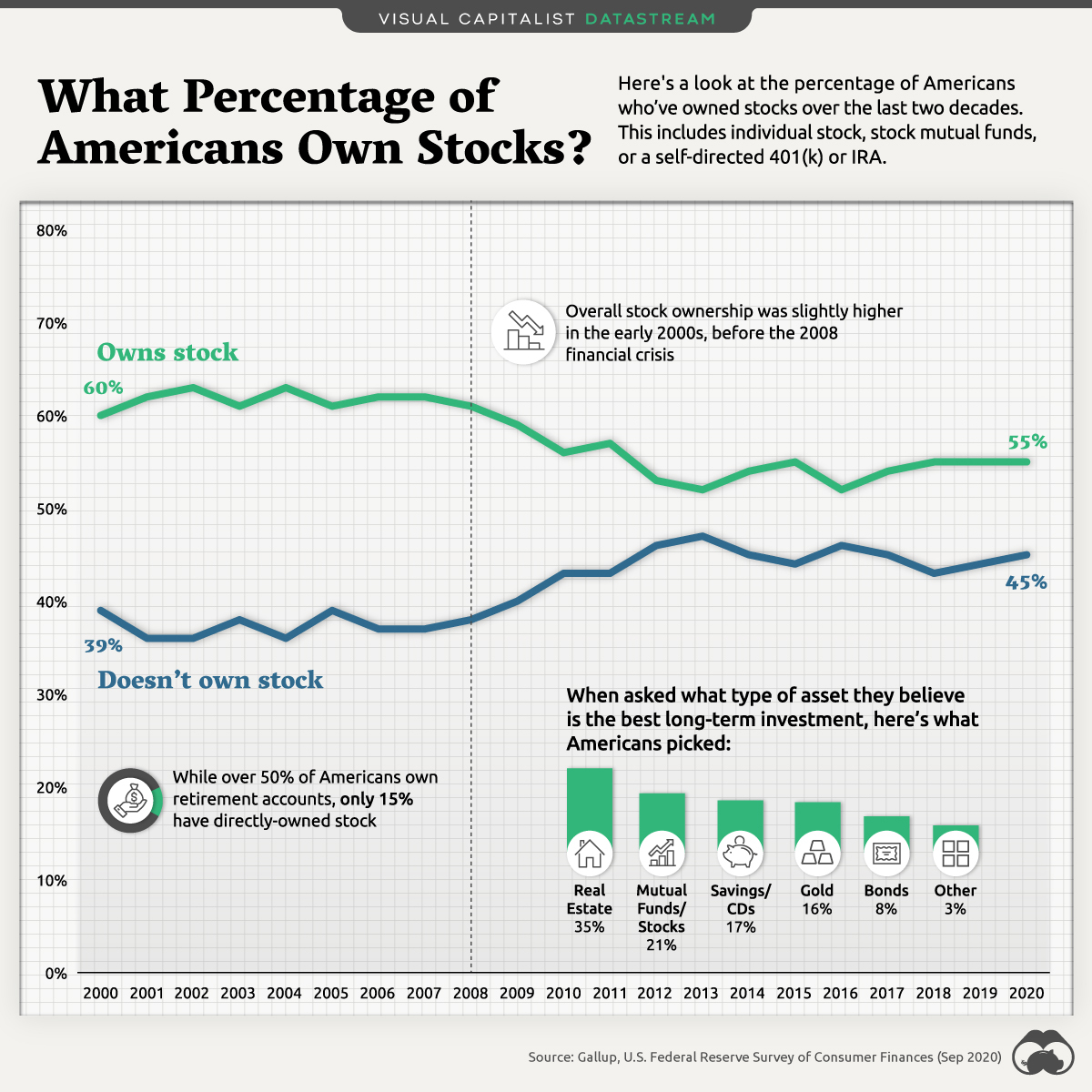
Pinpointing an exact, universally agreed-upon percentage of Americans who own stock can be challenging, as figures vary slightly depending on the survey methodology, the definition of “stock ownership” (direct vs. indirect), and the timing of the data collection. However, consistently, major financial institutions and governmental bodies provide estimates that offer a clear picture.
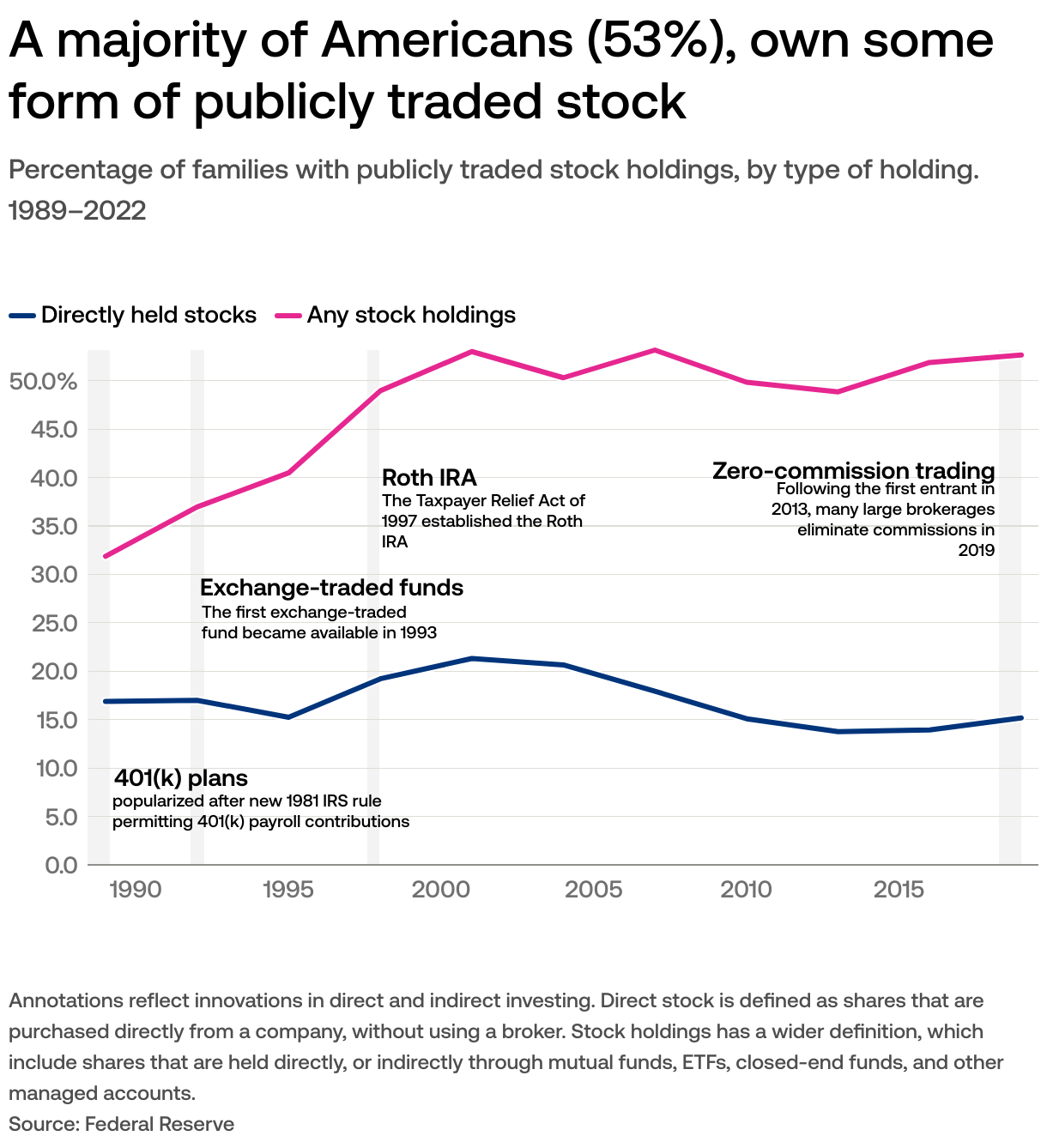
Data from the Federal Reserve’s triennial Survey of Consumer Finances (SCF) is one of the most authoritative sources. The most recent SCF data often indicates that just over half of American households own stock, either directly or indirectly. For instance, the 2019 SCF showed that 53% of families owned stock either directly or indirectly through mutual funds, exchange-traded funds (ETFs), or retirement accounts like 401(k)s and IRAs. While this number fluctuates slightly with each survey, it generally hovers around the 50-60% mark. Other surveys, such as those conducted by Gallup, sometimes report higher figures, occasionally nearing 60% or even 65%, particularly when including all forms of indirect ownership through employer-sponsored retirement plans.
Historically, stock ownership has seen significant shifts. It peaked in the late 1990s and early 2000s, often attributed to the dot-com boom and increased accessibility through early online brokerages. Following the 2008 financial crisis, participation rates saw a decline as trust in the market eroded and economic uncertainty prevailed. However, the subsequent bull market and the advent of user-friendly investment apps have once again spurred renewed interest, particularly among younger generations. The long-term trend, despite fluctuations, indicates a persistent gap between those who participate in the market and those who do not, raising questions about financial inclusion and wealth distribution.
Who Owns Stock? A Demographic Breakdown
Stock ownership is far from evenly distributed across the American population. A closer look reveals significant disparities influenced by a range of demographic factors. Understanding these divisions is crucial for comprehending the broader implications for wealth inequality.
Age and Generational Divides
Age plays a substantial role in stock ownership. Younger generations, such as Gen Z and younger Millennials, tend to have lower participation rates in direct stock ownership, often due to fewer accumulated assets, student debt, and shorter career histories. However, many are beginning to invest through employer-sponsored retirement plans or low-cost robo-advisors. As individuals age and accumulate more wealth, their participation typically increases, peaking among those nearing retirement (Gen X and older Baby Boomers) who have had decades to contribute to retirement accounts and potentially build direct investment portfolios. This pattern is natural, reflecting the life cycle of wealth accumulation.
Income and Wealth Disparities
Perhaps the most pronounced determinant of stock ownership is income and wealth. There is a strong, direct correlation: the wealthier a household, the more likely they are to own stock. Households in the top income quintiles exhibit significantly higher rates of stock ownership, often exceeding 80-90%. Conversely, participation rates drop dramatically for lower-income households, where disposable income for investment is scarce after covering basic living expenses. This creates a feedback loop where those with less capital are less able to leverage the market’s growth potential, exacerbating wealth inequality.
Education and Professional Status
Higher levels of education are generally associated with greater financial literacy and, consequently, higher rates of stock ownership. Individuals with college degrees and advanced professional qualifications are more likely to understand the benefits of investing and have the means to do so. Similarly, those in professional, managerial, or white-collar occupations often have access to employer-sponsored retirement plans with matching contributions, which significantly boosts their indirect stock ownership. Blue-collar workers or those in lower-paying service industries may not have such benefits, or their wages may not allow for discretionary investing.
Race and Ethnicity
Significant racial and ethnic disparities in stock ownership persist. White households consistently exhibit higher rates of stock ownership compared to Black, Hispanic, or other minority households. These disparities are often rooted in historical inequalities, lower intergenerational wealth transfer, differences in financial literacy access, and systemic barriers to economic opportunity. Addressing these gaps is a critical component of efforts to achieve broader economic equity.
Gender and Household Dynamics
While gender differences in overall stock ownership rates have narrowed over time, subtle variations remain. Women, historically, have been less represented in direct stock ownership, though their participation in retirement accounts is robust. Household dynamics also play a role; dual-income households with greater financial resources and potentially two employer-sponsored retirement plans often have higher aggregate stock ownership compared to single-person or single-income households.
Pathways to Stock Market Participation
For those who do own stock, the methods and vehicles through which they participate are diverse, ranging from traditional direct investments to more modern, accessible platforms. These pathways significantly influence who invests and how.
Direct Stock Ownership vs. Indirect Investments
The most common form of stock ownership is indirect, primarily through retirement accounts. This includes 401(k)s, 403(b)s, IRAs, and other defined contribution plans that invest in mutual funds, ETFs, or target-date funds which, in turn, hold portfolios of stocks and bonds. This method is often employer-sponsored, automated, and requires less active management from the individual. Direct stock ownership involves purchasing individual company shares or specific ETFs/mutual funds directly through a brokerage account. While this offers greater control, it also demands more research and active decision-making.
The Role of Retirement Accounts
Employer-sponsored retirement plans, particularly 401(k)s and 403(b)s, are the primary conduit through which many Americans gain exposure to the stock market. The automatic enrollment features, combined with employer matching contributions, make these plans incredibly effective wealth-building tools. For many, this might be their only form of stock ownership. Individual Retirement Accounts (IRAs), both traditional and Roth, also serve as crucial vehicles for long-term investing, allowing individuals to save for retirement with tax advantages, either independently or through rollovers from employer plans.
The Rise of Retail Investing Platforms
The last decade has witnessed a revolution in retail investing, largely driven by commission-free trading apps and platforms. Companies like Robinhood, Fidelity, Charles Schwab, and E*TRADE have democratized access to the stock market, allowing individuals to buy and sell stocks, ETFs, and even cryptocurrencies with minimal effort and cost. This increased accessibility has particularly resonated with younger investors, lowering the barrier to entry for direct stock ownership and fostering greater engagement with financial markets. The rise of robo-advisors has also played a significant role, offering automated, low-cost portfolio management for those who prefer a hands-off approach.
Barriers to Entry and Non-Participation
Despite the clear benefits of stock market participation, a substantial portion of Americans remain on the sidelines. Understanding these barriers is essential for developing strategies to promote broader financial inclusion.
Financial Constraints
The most obvious barrier is a lack of disposable income. For millions of Americans, the entirety of their income is consumed by essential expenses such as housing, food, transportation, and healthcare. High living costs, stagnant wages, and significant burdens like student loan debt leave little to no room for savings, let alone investment. Without a financial buffer, the idea of investing in a volatile market can seem like an unattainable luxury or an unnecessary risk.
Knowledge Gaps and Perceived Complexity
Financial literacy is a critical determinant. Many individuals lack a basic understanding of how the stock market works, the different types of investments, or the long-term benefits of compounding. The financial world can appear complex and intimidating, filled with jargon and seemingly opaque mechanisms. This perceived complexity can create a significant psychological barrier, leading to inertia or a complete avoidance of investing. Fear of making a wrong decision or losing money due to a lack of understanding is a powerful deterrent.
Risk Aversion and Past Experiences
Investing inherently involves risk. While the stock market has historically delivered strong long-term returns, it also experiences periods of significant volatility and downturns. For those who have lived through market crashes (like 2000 or 2008), or who have seen friends and family suffer financial losses, a deep-seated risk aversion can develop. This fear of losing hard-earned money can outweigh the potential for growth, leading many to keep their savings in lower-yielding, but perceived as safer, bank accounts.
Lack of Trust in Financial Institutions
Historical injustices, predatory lending practices, and a general sense of not being understood or valued by mainstream financial institutions have fostered a deep-seated distrust among certain demographic groups, particularly minority communities. This lack of trust can manifest as an unwillingness to engage with brokerages, financial advisors, or the broader investment ecosystem, further contributing to lower participation rates.
Implications for Financial Well-being and Economic Equity
The percentage of Americans who own stock is more than just a statistic; it has profound implications for individual financial well-being, retirement security, and the broader goal of economic equity.
Wealth Accumulation and Retirement Security
Stock ownership is arguably the most powerful engine for long-term wealth accumulation. Over extended periods, the returns from the stock market have historically outpaced inflation and other asset classes, allowing investments to grow exponentially through the power of compounding. For those without stock market exposure, their savings often erode in value over time due to inflation, making it significantly harder to build substantial wealth, purchase homes, fund education, or achieve a comfortable retirement. A large portion of an individual’s retirement security hinges on the growth of their invested assets, primarily stocks.
Bridging the Wealth Gap
The disparities in stock ownership directly contribute to the persistent wealth gap in America. If only a segment of the population is participating in the primary mechanism for wealth creation, those excluded will inevitably fall further behind. Broadening stock ownership is not just about individual prosperity; it’s about fostering greater economic equity and ensuring that more Americans have a legitimate shot at building financial stability and intergenerational wealth. This requires addressing the systemic and individual barriers that prevent participation.

Strategies for Encouraging Greater Participation
To increase the percentage of Americans owning stock and foster a more inclusive financial system, several strategies can be employed. Enhanced financial education, starting in schools and extending through adult life, can demystify investing and build confidence. Policies that encourage employer-sponsored retirement plans, improve access to affordable financial advice, and simplify investment processes can lower barriers. The continued innovation in low-cost, user-friendly investment platforms is also crucial. Ultimately, creating a culture where investing is seen as an accessible and essential part of financial planning for all Americans, not just the affluent, is paramount to building a more financially secure and equitable society.
aViewFromTheCave is a participant in the Amazon Services LLC Associates Program, an affiliate advertising program designed to provide a means for sites to earn advertising fees by advertising and linking to Amazon.com. Amazon, the Amazon logo, AmazonSupply, and the AmazonSupply logo are trademarks of Amazon.com, Inc. or its affiliates. As an Amazon Associate we earn affiliate commissions from qualifying purchases.