
The global demographic landscape is a tapestry woven from centuries of migration, economic shifts, and social transformation. For those analyzing global markets, consumer demographics, and the distribution of wealth, understanding the statistical presence of specific groups is essential. When looking at the Jewish population, the data reveals a fascinating case study in niche demographics—one that requires an understanding of how small, highly concentrated populations influence global economic networks, educational attainment, and professional sectors.
The Quantitative Reality: Current Global Statistics
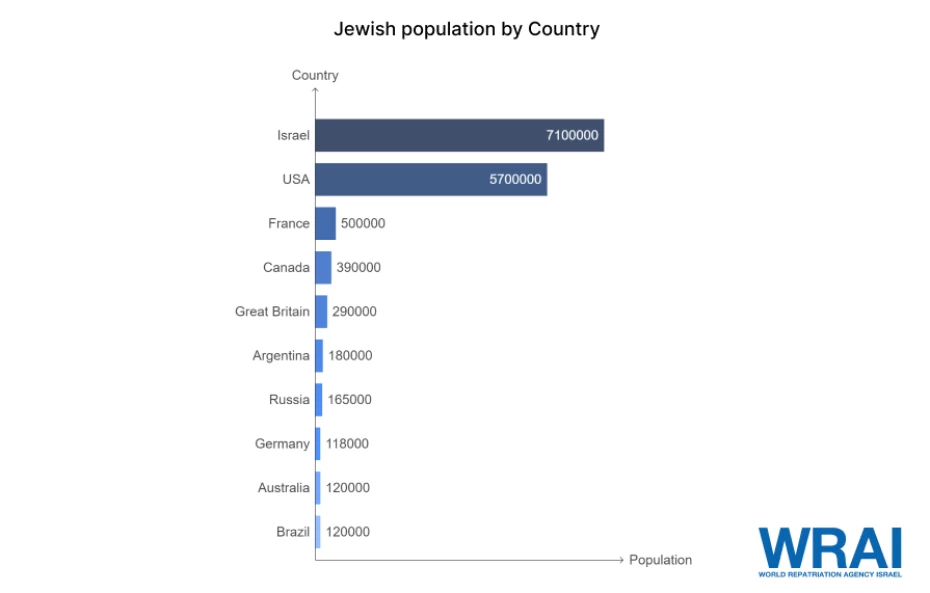
To understand the percentage of Jews in the world, one must first look at the raw numbers provided by demographic research organizations such as the Jewish Agency for Israel and the Pew Research Center. As of the most recent census data, the global Jewish population stands at approximately 15.7 million individuals.

The Mathematical Breakdown
When measured against the total global population—which surpassed 8 billion people in late 2022—the percentage of Jews in the world is approximately 0.2%. This figure is strikingly low in terms of sheer volume, placing the population firmly in the category of a “micro-demographic.”
The Concentration Factor
However, raw percentages can be deceptive in a business or sociological context. While the global percentage is 0.2%, the distribution is highly asymmetrical. Roughly 85% of the world’s Jewish population resides in just two countries: the United States and Israel. In these specific hubs, the local demographic density is significantly higher than the global average, leading to distinct cultural and economic clusters that influence local markets, real estate, and consumer trends.
Economic Implications of Small-Population Demographics
In the world of finance and brand strategy, demographic size does not always correlate with economic impact. A small population with high levels of education, professional networking, and global mobility can exert a disproportionate influence on the economy.
Human Capital and Education
Demographic studies consistently show that populations with high educational attainment levels often correlate with higher per-capita income and increased investment activity. The Jewish community globally exhibits some of the highest rates of tertiary education completion. From an investment perspective, this translates into a high concentration of professionals in sectors such as technology, medicine, law, and financial services.
Market Niche and Purchasing Power
For brands, the “0.2% reality” is not a deterrent but a signifier of a specialized market segment. Businesses often look at these demographics to understand consumer behavior patterns. Because the Jewish population is heavily concentrated in major global financial centers—such as New York, London, Tel Aviv, and Los Angeles—they are often over-indexed in high-growth industries. Marketing strategies aimed at these hubs often account for specific lifestyle needs, cultural preferences, and community-driven business networks that have been cultivated over generations.
Analyzing the Impact of Migration on Global Wealth Distribution

The history of the Jewish population is one of movement. Historical shifts in migration patterns have directly shaped the modern distribution of this 0.2% of the global population. This movement has been a primary driver in the professionalization of the diaspora.
The Diaspora and Financial Networks
The history of the diaspora has necessitated the development of strong, trust-based business networks that transcend borders. Today, this manifests as a sophisticated ecosystem of venture capital, philanthropy, and entrepreneurship. Investors and financial analysts often note that when a specific demographic is spread globally but remains tightly connected through cultural or professional ties, the velocity of capital within that group tends to be higher than average.
Modern Relocation Trends
In recent decades, we have seen a significant shift toward Israel as a primary hub for tech innovation. This has created a unique phenomenon where a small nation is currently one of the world’s most dense concentrations of startups and “unicorn” companies. For the global venture capital market, this is a prime example of how a small percentage of the total world population can become a central pillar of the global tech economy. The “Startup Nation” branding is not merely a slogan; it is a reflection of how a concentrated, highly educated demographic can punch significantly above its weight in the global financial arena.
Challenges and Opportunities in Niche Demographics
When a group represents only 0.2% of the world, identifying them through standard data collection can be difficult. This presents both a challenge and an opportunity for those managing brands or financial portfolios.
Data Collection and Market Research
Because the population is small, standard polling and demographic analysis often fail to capture the nuances of the community. Large-scale data sets might overlook specific segments due to the small sample size. Consequently, businesses and investment firms often rely on qualitative research, community-level insights, and specific geographic focus to understand this segment. This level of granular research often yields better, more actionable insights than broad-spectrum demographic data.
Future Projections and Economic Growth
Predicting the future of this demographic requires looking at birth rates, assimilation, and immigration patterns. Unlike larger, rapidly growing demographic groups, the Jewish population has remained relatively stable in size for decades. For financial planners and marketers, this stability offers a predictable, if niche, market.
There is an increasing interest in how this group engages with global financial tools, impact investing, and sustainable business models. As the world moves toward more specialized, personalized economies, the lessons learned from analyzing small, high-impact demographics like this one are becoming increasingly valuable. The goal for any modern marketer or investor is to move beyond the raw percentage and look at the “density of impact”—a metric that, in the case of the Jewish population, reveals a community that remains a cornerstone of global professional and financial innovation.
Conclusion: Understanding the 0.2% Metric
Ultimately, the answer to “what is the percentage of Jews in the world” is a starting point, not a conclusion. When viewed through the lens of professional strategy and global finance, the 0.2% figure serves as a reminder that meaningful influence is not strictly a numbers game.
The concentration of human capital, the presence in key economic corridors, and a long-standing tradition of education and entrepreneurship ensure that this small demographic segment continues to play a significant role in the global market. Whether you are building a brand, managing an investment portfolio, or analyzing technology trends, looking at the quality of the demographic data rather than just the quantity provides a much clearer picture of where the world’s real economic drivers are located. By focusing on these high-impact hubs, investors and strategists can better understand how to navigate a global economy that is defined as much by its connections as it is by its size.
aViewFromTheCave is a participant in the Amazon Services LLC Associates Program, an affiliate advertising program designed to provide a means for sites to earn advertising fees by advertising and linking to Amazon.com. Amazon, the Amazon logo, AmazonSupply, and the AmazonSupply logo are trademarks of Amazon.com, Inc. or its affiliates. As an Amazon Associate we earn affiliate commissions from qualifying purchases.