
Equity is a term frequently encountered across various domains of finance and economics, yet its precise meaning can vary depending on the context. At its heart, equity represents ownership or the residual value of an asset after all liabilities are accounted for. It is a cornerstone concept for understanding investments, business finance, and personal wealth, offering insights into financial health, risk, and potential returns. This article will delve into the multifaceted definition of equity, exploring its applications in different financial landscapes, from individual investments to corporate balance sheets, and its broader implications for wealth creation.
Equity at its Core: Ownership and Value
The most fundamental understanding of equity revolves around the concept of ownership and the inherent value derived from that ownership. Whether you’re talking about a share in a company, a stake in real estate, or the net worth of a business, equity signifies a claim on assets that remains after all debts have been satisfied.
Equity as Ownership Share
In its simplest form, equity represents an ownership interest. When an individual purchases shares in a company, they are acquiring equity in that company, making them a part-owner. This ownership entitles them to a claim on the company’s assets and earnings, proportional to the number of shares they hold. For private companies, equity ownership is often held by founders, employees, and early investors, granting them direct control and a share of the profits. This ownership isn’t merely symbolic; it often comes with voting rights on key corporate decisions and the potential to receive dividends or a share of proceeds if the company is sold.
Equity as a Residual Claim
A critical accounting principle defines equity as the residual claim on assets. This can be summarized by the basic accounting equation:
Assets – Liabilities = Equity
This formula illustrates that equity is what’s left over for the owners once all the company’s debts and obligations have been paid off. If a business were to liquidate all its assets and use the proceeds to settle all its liabilities, the remaining funds would belong to the equity holders. This concept applies equally to personal finance. For an individual, their net worth (a form of personal equity) is calculated by subtracting their total liabilities (mortgages, loans, credit card debt) from their total assets (cash, investments, property). Understanding equity as a residual claim is crucial because it highlights the fundamental risk equity holders bear: they are the last in line to be paid if a company faces financial distress or bankruptcy.
The Concept of Equity in Real Estate
Beyond corporate structures, equity is a vital concept in real estate. Home equity refers to the portion of your property that you truly own. It is calculated by subtracting the outstanding balance of your mortgage and any other liens from the current market value of your home. For example, if your home is valued at $500,000 and you have a mortgage balance of $200,000, your home equity is $300,000. This equity is a significant component of personal wealth for many individuals, as it can grow over time through principal payments on the mortgage, property value appreciation, or home improvements. It can also be a source of liquidity through home equity loans or lines of credit, though accessing it means taking on more debt.
Equity in the Investment Landscape
For investors, understanding equity is paramount, as it forms the basis of one of the most common and potentially lucrative asset classes: stocks. Equity investments offer a unique blend of risk and reward that differentiates them from other financial instruments.
Publicly Traded Equity: Stocks
When most people think of equity in an investment context, they are thinking of stocks (or shares) in publicly traded companies. These represent fractional ownership stakes in corporations listed on stock exchanges. Investing in stocks means becoming an equity holder, giving you a claim on the company’s future earnings and assets. Common stock typically comes with voting rights and the potential for capital appreciation (the stock price increasing) and dividends. Preferred stock usually offers fixed dividend payments but often without voting rights, sitting somewhere between common equity and debt in terms of priority. The market capitalization of a company (share price multiplied by the number of outstanding shares) is a direct measure of its total equity value as perceived by the market.
Private Equity and Venture Capital
Beyond public markets, private equity refers to investments made in companies that are not publicly traded on a stock exchange. This can include anything from mature private businesses to early-stage startups. Venture capital (VC) is a specific form of private equity focused on funding new, high-growth potential companies, often in technology and innovation. Investors in private equity and VC funds typically acquire a significant ownership stake in these companies, aiming to grow their value substantially over several years before exiting through an acquisition, an initial public offering (IPO), or a sale to another private equity firm. These investments are characterized by higher risk due to illiquidity and the nascent stage of the companies, but also offer the potential for exceptionally high returns.
The Risk-Reward Profile of Equity Investing
Equity investments are generally considered to have a higher risk profile compared to fixed-income investments like bonds. This is because equity holders are junior to debt holders in the event of bankruptcy, meaning they are the last to be paid. Stock prices can also be highly volatile, fluctuating due to market sentiment, economic conditions, company-specific news, and geopolitical events. However, this higher risk is balanced by the potential for greater returns over the long term. Historically, equity markets have outperformed most other asset classes, offering significant capital appreciation and dividend income. The power of compounding returns on equity investments is a cornerstone of long-term wealth building, making them a crucial component of many investment portfolios despite their inherent volatility.
Equity in Business Finance and Accounting
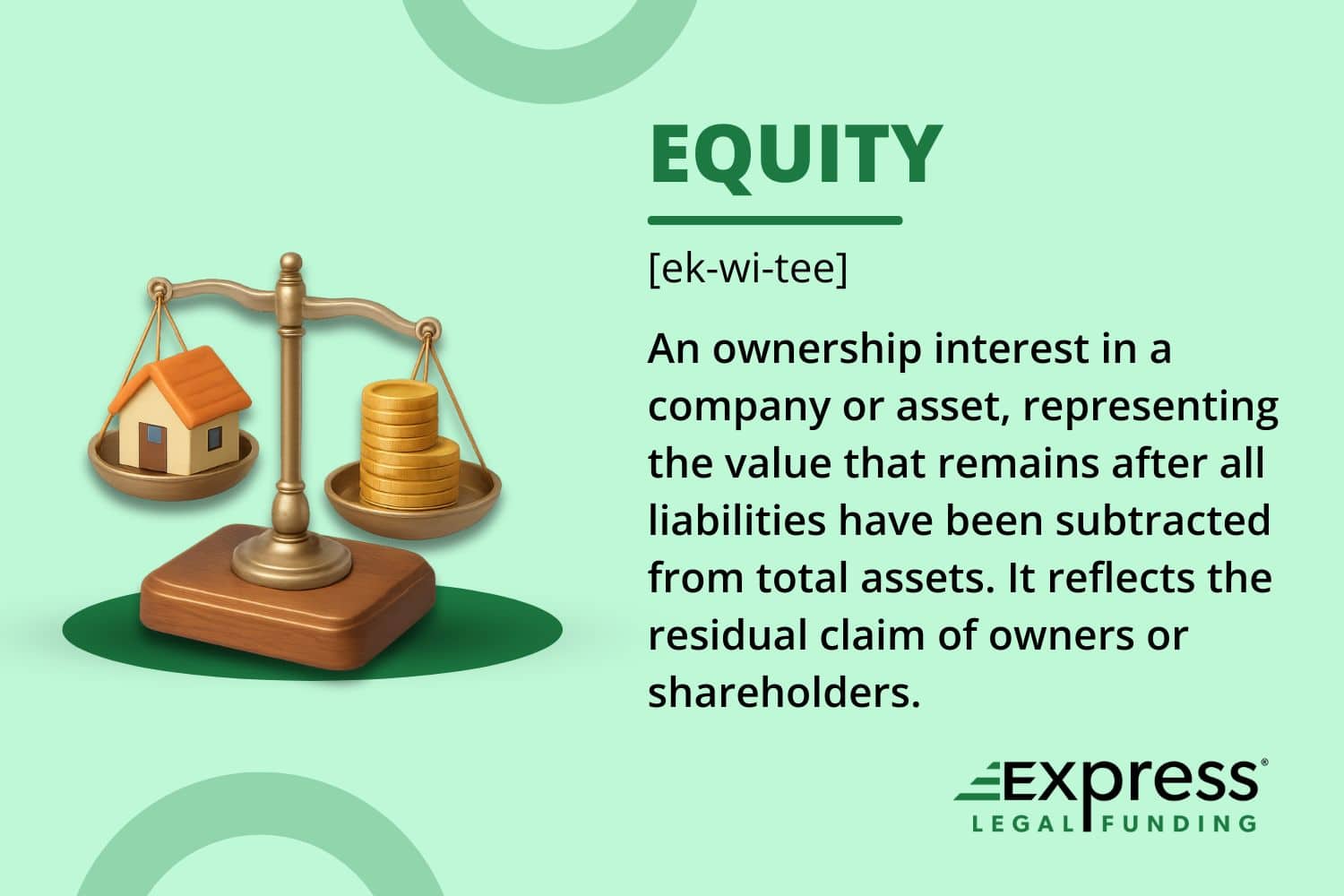
For businesses, understanding equity is fundamental to financial management, strategic planning, and communicating financial health to investors and creditors. It represents the owners’ stake and is a critical component of a company’s balance sheet.
Shareholder Equity on the Balance Sheet
The shareholder equity section of a company’s balance sheet provides a detailed breakdown of the owners’ stake. It typically comprises several key accounts:
-
Common Stock and Preferred Stock: The par value of shares issued to investors.
-
Additional Paid-in Capital (APIC): The amount investors paid for shares above their par value.
-
Retained Earnings: Accumulated net income that the company has kept over time rather than distributing as dividends. This is a vital source of internal funding for growth.
-
Treasury Stock: Shares that the company has repurchased from the open market.
-
Accumulated Other Comprehensive Income (AOCI): Gains and losses from certain non-owner transactions (e.g., foreign currency translation adjustments) that are not recognized in net income.
Together, these accounts paint a comprehensive picture of how much capital has been invested by owners and how much profit has been reinvested in the business.
The Importance of Equity for Business Health
A robust equity base is a strong indicator of a company’s financial health and stability. High levels of equity, particularly retained earnings, signify that a company has strong internal funding capabilities, reducing its reliance on external debt. This financial independence allows businesses to weather economic downturns, invest in growth opportunities, and pursue long-term strategies without the pressure of high debt servicing costs. Lenders and creditors also look favorably on companies with strong equity positions, as it provides a buffer against losses and reduces their risk exposure, potentially leading to more favorable lending terms.
Equity Financing vs. Debt Financing
Businesses typically have two primary ways to raise capital: equity financing and debt financing.
-
Equity Financing: Involves selling ownership stakes (shares) in the company to investors. While it doesn’t incur interest payments or require repayment, it dilutes the ownership percentage of existing shareholders and can impact control. It’s often preferred by startups or high-growth companies that may not have the cash flow to service debt.
-
Debt Financing: Involves borrowing money from banks or issuing bonds, which must be repaid with interest. Debt does not dilute ownership but adds a fixed financial obligation that can strain cash flow if the business underperforms.
The optimal mix of equity and debt, known as the capital structure, is a crucial strategic decision for any business, balancing the cost of capital with risk and control.
Measuring and Valuing Equity
Analyzing a company’s equity involves more than just looking at the balance sheet; it requires evaluating key financial ratios and applying various valuation methodologies to determine its true worth.
Key Metrics for Equity Analysis
Several financial ratios utilize equity to provide insights into a company’s performance and financial leverage:
-
Book Value Per Share (BVPS): Calculated as (Total Shareholder Equity – Preferred Equity) / Number of Common Shares Outstanding. It represents the net asset value of the company on a per-share basis if all assets were liquidated at their balance sheet values.
-
Return on Equity (ROE): Net Income / Average Shareholder Equity. ROE measures how efficiently a company is using shareholder investments to generate profits. A higher ROE generally indicates better financial performance.
-
Debt-to-Equity (D/E) Ratio: Total Debt / Total Shareholder Equity. This ratio indicates the extent to which a company is financing its operations with debt rather than its own equity. A high D/E ratio suggests higher financial risk.
-
Earnings Per Share (EPS): Net Income / Number of Common Shares Outstanding. While not directly an equity ratio, EPS is critical for equity investors as it shows how much profit a company makes per share, directly impacting stock valuations.
Equity Valuation Methods
Valuing a company’s equity is a complex process often performed by financial analysts and investors to determine if a stock is fairly priced. Common methods include:
-
Discounted Cash Flow (DCF): This method estimates the value of a company based on its projected future free cash flows, discounted back to the present value. The residual value after accounting for debt is the equity value.
-
Price-to-Earnings (P/E) Ratio: One of the most common valuation multiples, it compares a company’s share price to its earnings per share. It helps determine if a stock is over- or undervalued relative to its earnings.
-
Dividend Discount Model (DDM): For companies that pay dividends, this model values a stock based on the present value of its expected future dividends.
-
Asset-Based Valuation: Values a company based on the fair market value of its underlying assets, minus its liabilities. This is often used for companies with significant tangible assets or in liquidation scenarios.
The Broader Implications of Equity
While primarily a financial term, the concept of equity extends its influence into broader economic and personal financial well-being, emphasizing long-term growth and stability.
Building Personal Wealth Through Equity
For individuals, building personal wealth often involves accumulating various forms of equity. Investing in stocks, owning a home, or having an ownership stake in a business are all pathways to growing personal equity. Over time, through capital appreciation, reinvestment of dividends, and principal payments on mortgages, this equity can compound significantly, forming the bedrock of retirement savings, funding for children’s education, or providing a financial safety net. A diversified portfolio that includes equity investments is a common strategy for achieving long-term financial goals and combating inflation.

Understanding Equity in Economic Context
In a broader economic sense, “equity” can also refer to fairness and justice in the distribution of wealth and opportunities. While distinct from financial equity, there is an indirect link. Access to financial markets, opportunities for business ownership, and the ability to build home equity are often unevenly distributed, contributing to disparities in economic equity. Policies aimed at improving financial literacy, access to capital for underserved communities, and promoting broader participation in asset ownership are all efforts to foster a more equitable economic landscape. Understanding financial equity’s role in individual and corporate success helps shed light on how these wealth-building mechanisms can either exacerbate or alleviate broader economic inequalities.
In conclusion, equity is a versatile and indispensable term in finance. Whether viewed as ownership, a residual claim on assets, a key investment class, or a measure of financial health, its understanding is crucial for investors, business owners, and individuals seeking to navigate the complex world of money and wealth creation. By appreciating its various definitions and applications, one can make more informed decisions, build more resilient financial structures, and contribute to a deeper understanding of economic dynamics.
aViewFromTheCave is a participant in the Amazon Services LLC Associates Program, an affiliate advertising program designed to provide a means for sites to earn advertising fees by advertising and linking to Amazon.com. Amazon, the Amazon logo, AmazonSupply, and the AmazonSupply logo are trademarks of Amazon.com, Inc. or its affiliates. As an Amazon Associate we earn affiliate commissions from qualifying purchases.