
The journey to homeownership is often viewed as a cornerstone of the American dream, a significant financial milestone that promises stability, wealth accumulation, and a place to call your own. However, before keys can be turned, prospective buyers face a crucial hurdle: the down payment. This initial lump sum of cash, paid upfront as a percentage of the home’s purchase price, is not merely a formality; it is a critical component of securing a mortgage and a significant determinant of the long-term financial health of a homeowner. Understanding what constitutes an “average” house down payment, why it varies, and how to strategically approach it is essential for anyone aspiring to enter the real estate market.
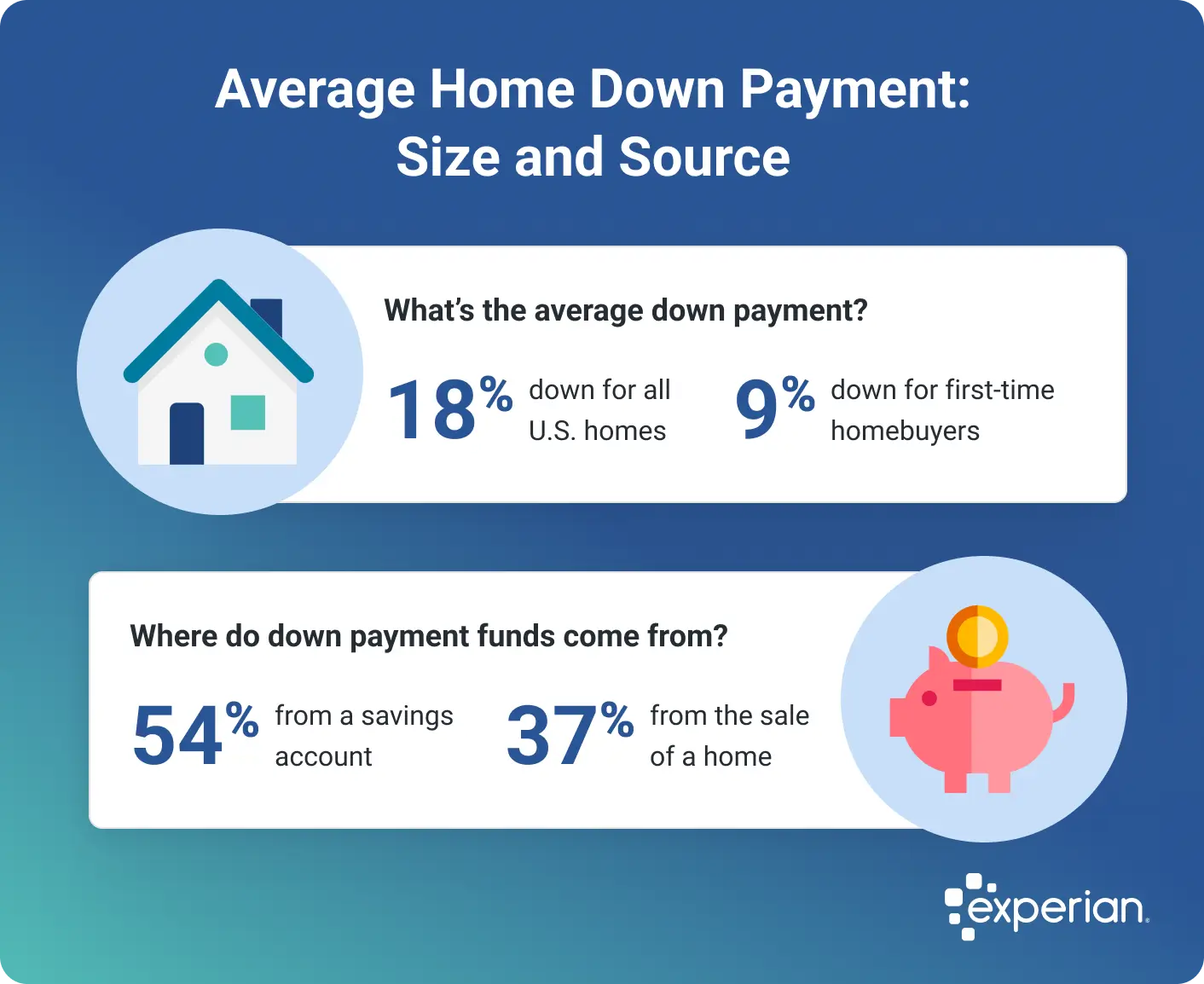
The concept of an “average” down payment is often elusive, influenced by a myriad of factors including market conditions, loan types, buyer demographics, and geographical location. While the traditional advice of a 20% down payment has long been a benchmark, the reality for many homebuyers today is far more nuanced. This article delves into the complexities surrounding house down payments, offering a comprehensive guide to navigating this pivotal aspect of home financing.
Understanding the Down Payment Landscape
The down payment serves as the financial bedrock of a home purchase, representing the buyer’s initial equity in the property. It’s the tangible manifestation of commitment and financial stability, signaling to lenders that a borrower has skin in the game.
Defining the Down Payment
At its core, a down payment is a cash payment made by the buyer to the seller, or directly into an escrow account, at the time of purchase. It reduces the amount of money you need to borrow from a lender, thereby lowering your loan-to-value (LTV) ratio. For example, if you purchase a $300,000 home with a $30,000 down payment, you would finance $270,000, and your LTV ratio would be 90% ($270,000 / $300,000). This upfront investment covers a portion of the purchase price, and the remaining balance is financed through a mortgage.
The Significance of a Down Payment
The importance of a down payment extends beyond simply reducing the borrowed amount. For lenders, it mitigates risk. A larger down payment indicates a borrower’s financial discipline and reduces the likelihood of default, as the borrower has a greater personal stake in the property. This reduced risk often translates into more favorable loan terms for the borrower, including lower interest rates.
For the borrower, a significant down payment provides immediate equity in the home, acting as a buffer against potential market fluctuations. It also often eliminates the need for private mortgage insurance (PMI), a monthly premium typically required by lenders when a borrower puts down less than 20% on a conventional loan. Avoiding PMI can save homeowners hundreds of dollars each month, significantly reducing their overall housing costs.
The Elusive “Average”
When discussing the “average” down payment, it’s crucial to understand that this figure is highly fluid. National averages can be misleading because they aggregate data across wildly different housing markets and buyer profiles. For instance, a first-time homebuyer might put down significantly less than someone selling their previous home and rolling over equity. Similarly, the down payment in a high-cost coastal city will naturally be much higher in absolute dollar terms than in a more affordable rural area, even if the percentage remains similar. Recent data often shows that the median down payment for first-time homebuyers hovers around 6-7%, while repeat buyers typically put down 17% or more, often leveraging equity from a previous sale.
Factors Influencing Down Payment Averages
The size of an average house down payment is not static; it’s a dynamic figure shaped by a confluence of economic, financial, and personal circumstances. Understanding these influencing factors can help prospective buyers set realistic expectations and tailor their savings strategies.
Market Conditions and Home Prices
The overall health of the housing market plays a pivotal role. In a robust seller’s market with escalating home prices, the dollar amount required for even a modest percentage down payment will increase. Conversely, in a buyer’s market, where prices might be stagnating or falling, the same percentage could translate to a lower dollar figure. Economic factors like inflation, interest rates, and the broader economic outlook also affect affordability and, consequently, what buyers are able and willing to put down. Higher interest rates, for example, increase monthly mortgage payments, potentially leading buyers to put down more upfront to reduce their financed amount and secure a lower monthly obligation.
Loan Types and Lender Requirements
Different mortgage products come with varying down payment requirements, significantly influencing what is considered “average” across the spectrum of buyers.
-
Conventional Loans: Traditionally, these loans recommend a 20% down payment to avoid PMI. However, many conventional loan programs now allow down payments as low as 3% or 5%, though PMI will be required.
-
FHA Loans: Backed by the Federal Housing Administration, these loans are popular among first-time homebuyers for their more lenient credit requirements and a low down payment of just 3.5%.
-
VA Loans: Offered to eligible service members, veterans, and surviving spouses, VA loans are a standout as they often require no down payment at all, offering 100% financing.
-
USDA Loans: Designed for low-to-moderate-income buyers in eligible rural areas, USDA loans also typically require no down payment.
Buyer Demographics and Financial Health
The financial profile of the buyer significantly impacts the down payment. First-time homebuyers, often with less accumulated wealth, typically make smaller down payments compared to repeat buyers who might be able to leverage equity from a previous home sale. Factors such as a buyer’s income level, credit score, and existing debt-to-income ratio can also influence how much a lender is willing to finance and, by extension, the recommended down payment. A strong credit score, for instance, might open doors to loan products with more flexible down payment options.
Geographical Variations
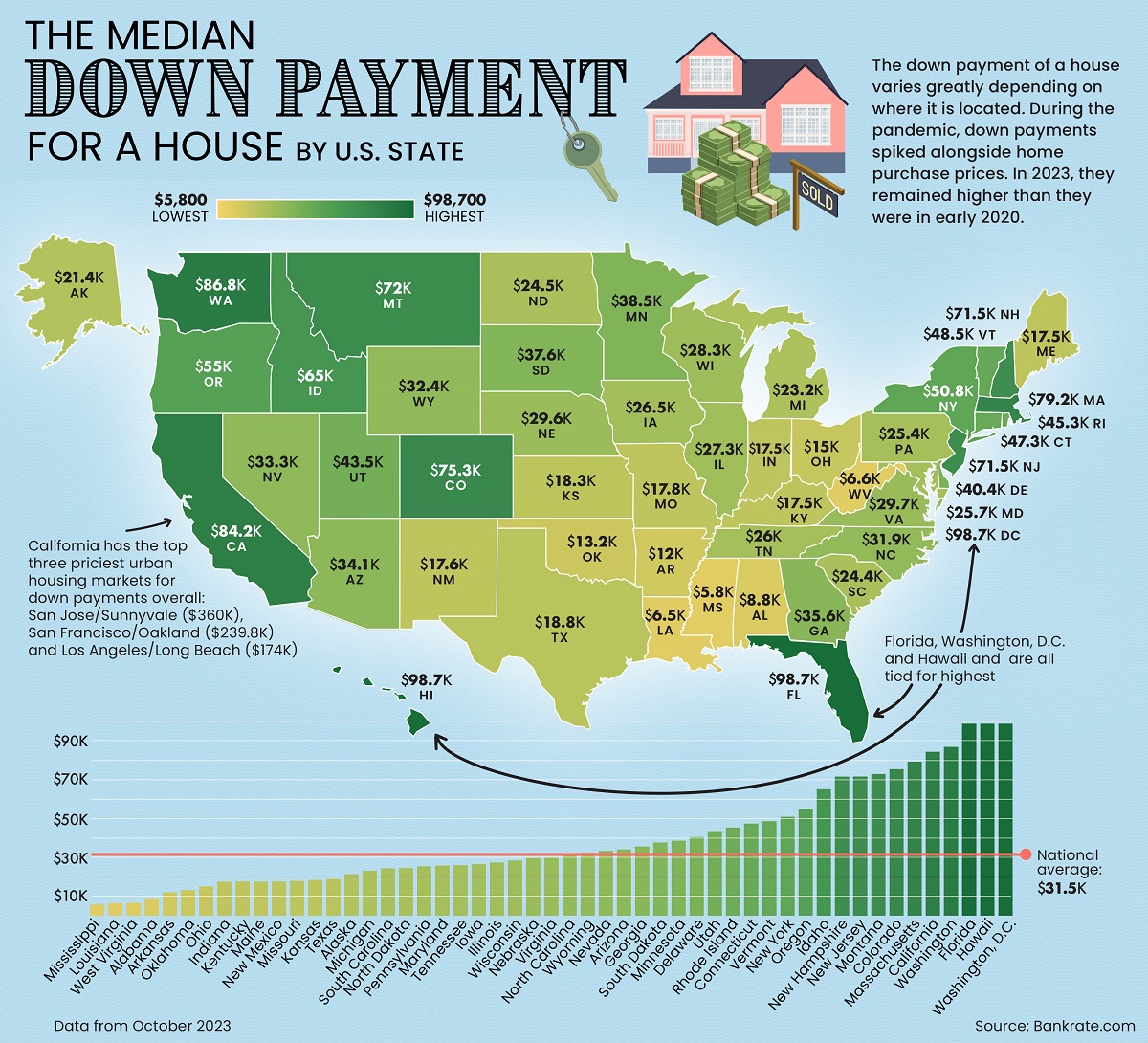
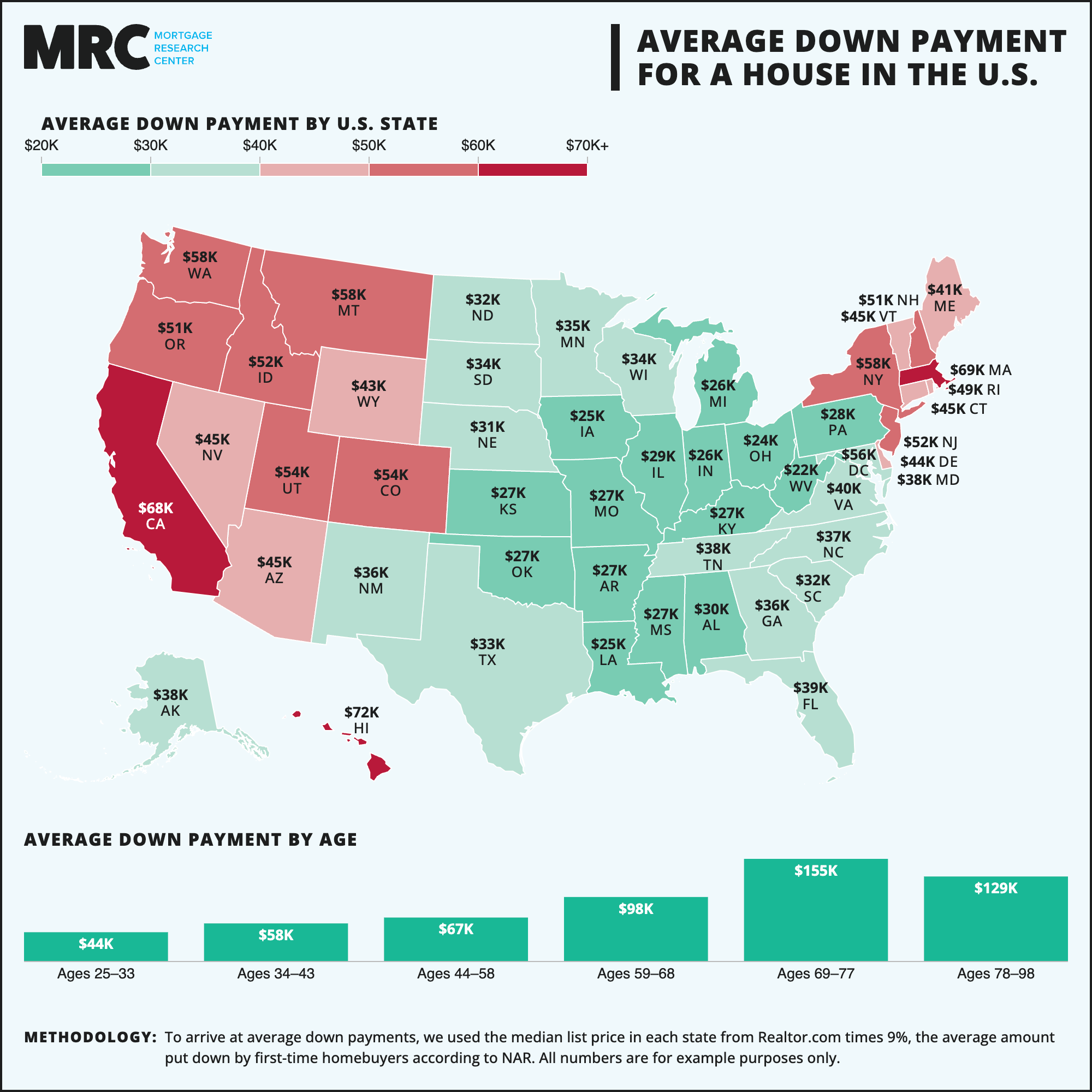
Perhaps one of the most significant influences is geography. The “average” down payment in a high-cost-of-living area like San Francisco or New York City will be dramatically higher in absolute terms than in a more affordable region in the Midwest or South. Even within states, urban centers will typically demand larger down payments than surrounding suburban or rural areas due to higher property values. These regional disparities mean that local averages are far more relevant than national statistics for individual homebuyers.
Strategies for Saving Your Down Payment
Saving for a down payment is often the most challenging part of the homebuying process. It requires discipline, strategic planning, and sometimes, a little creativity.
Creating a Realistic Savings Plan
The first step is to determine a target down payment amount based on your desired home price range and preferred loan type. Once you have a target, establish a clear timeline. Break down your total savings goal into manageable monthly or bi-weekly contributions. Utilize a budget to track income and expenses, identifying areas where you can cut back to accelerate your savings. Automated transfers to a dedicated savings account can significantly boost your progress by making saving a non-negotiable part of your financial routine.
Income Enhancement and Expense Reduction
To supercharge your down payment savings, consider strategies to both increase your income and reduce your outflow.
-
Increase Income: Explore side hustles, freelance work, overtime at your current job, or even negotiating a raise. Every extra dollar earned can be directed straight to your down payment fund.
-
Reduce Expenses: Scrutinize your discretionary spending. Areas like dining out, entertainment, subscriptions, and non-essential purchases are often prime candidates for reduction. Temporary sacrifices can lead to long-term gains in homeownership.
Utilizing Specialized Savings Vehicles
Where you store your down payment savings can also impact its growth.
-
High-Yield Savings Accounts: These accounts offer better interest rates than traditional savings accounts, allowing your money to grow slowly but steadily without risk.
-
Certificates of Deposit (CDs): For funds you won’t need for a specific period, CDs can offer slightly higher returns, though they typically lock up your money for a set term.
-
Investment Accounts (for longer horizons): If your homebuying timeline is several years out, you might consider investing a portion of your down payment savings in low-risk investments like diversified ETFs or mutual funds. However, for shorter timelines (under 3-5 years), market volatility makes this strategy riskier, and liquid savings accounts are generally preferred.
Leveraging Financial Gifts and Assistance Programs
Don’t overlook external sources of funding.
-
Gift Funds: Many lenders allow a portion, or even the entirety, of a down payment to come from gift funds provided by family members. There are specific rules and documentation required, such as a gift letter, to ensure these funds are legitimate and not a disguised loan.
-
Down Payment Assistance Programs (DAPs): Federal, state, and local governments, as well as non-profit organizations, offer various DAPs. These can come in the form of grants (which don’t need to be repaid), second mortgages with deferred payments, or low-interest loans. Eligibility often depends on income limits, location, and whether you are a first-time homebuyer.
Beyond the Average: Exploring Low and No-Down Payment Options
While a 20% down payment is often lauded, it’s not a universal requirement. Many programs exist to help buyers, especially first-timers, enter the market with significantly less upfront capital.
FHA Loans: A Popular Choice for Smaller Down Payments
FHA loans, insured by the Federal Housing Administration, are a cornerstone for many first-time and moderate-income homebuyers. They require a minimum down payment of just 3.5% of the purchase price, making homeownership accessible to a wider range of individuals. While FHA loans offer flexibility, they do come with mandatory mortgage insurance premiums (MIP), both an upfront fee and an annual premium, which can increase the overall cost of the loan.
VA Loans: Zero Down for Veterans
A profound benefit for those who have served our country, VA loans are guaranteed by the U.S. Department of Veterans Affairs. Eligible service members, veterans, and surviving spouses can often secure a mortgage with no down payment whatsoever. This is an incredible advantage, as it significantly reduces the upfront financial burden. VA loans also typically come with competitive interest rates and do not require private mortgage insurance, although a funding fee usually applies.
USDA Loans: Rural Opportunities with No Down Payment
The U.S. Department of Agriculture (USDA) offers a unique mortgage program for eligible individuals and families purchasing homes in designated rural areas. Similar to VA loans, USDA loans often require no down payment, making them highly attractive for those looking to buy outside major metropolitan centers. These loans come with income limits and specific property eligibility requirements, ensuring they serve their intended demographic.
Conventional Loans with Low Down Payments
Even conventional loans, which are not government-backed, have evolved to offer more flexibility. Many lenders now provide conventional loan options with down payments as low as 3% or 5%, often through programs like Fannie Mae’s HomeReady or Freddie Mac’s Home Possible. While these options make homeownership more accessible, they typically require private mortgage insurance (PMI) until the borrower builds sufficient equity (usually 20-22%) in the home.
The Role of Private Mortgage Insurance (PMI)
When a down payment is less than 20% on a conventional loan, lenders typically require PMI. This insurance protects the lender in case the borrower defaults. While it adds to your monthly housing expense, it’s a necessary trade-off for many who cannot afford a larger down payment. The good news is that PMI is generally cancelable once you’ve reached 20% equity in your home, either through principal payments or increased property value.
The Long-Term Impact of Your Down Payment
The decision about your down payment isn’t just about getting into a home; it has profound and lasting implications for your financial future as a homeowner.
Building Equity Faster
A larger down payment directly translates to greater initial equity in your home. Equity is the portion of your home that you truly own, calculated as the home’s current market value minus your outstanding mortgage balance. Starting with more equity means you build wealth faster, providing a stronger financial cushion and greater flexibility down the line, such as access to home equity loans or lines of credit if needed.
Lower Monthly Mortgage Payments
The less you borrow, the less you have to pay back each month. A larger down payment reduces your principal loan amount, which in turn leads to lower monthly mortgage payments. This can free up significant cash flow, allowing you to allocate funds to other financial goals, build an emergency fund, or simply enjoy more financial breathing room. Even a small reduction in the financed amount can have a cumulative impact over a 15-year or 30-year mortgage term.
Access to Better Interest Rates
Lenders view a larger down payment as a sign of a lower-risk borrower. This reduced risk often qualifies you for more favorable mortgage interest rates. Even a fractional difference in the interest rate can save tens of thousands of dollars over the life of a loan. This is because a lower interest rate means less of your monthly payment goes towards interest and more towards paying down the principal balance.
Financial Flexibility and Future Planning
A substantial down payment can provide greater financial flexibility. It can mean less financial strain if unexpected expenses arise or if your income fluctuates. Furthermore, avoiding PMI on a conventional loan means those monthly savings can be redirected towards accelerating principal payments, investing, or bolstering other savings, further strengthening your financial position and accelerating your path to financial independence.
In conclusion, while the “average” house down payment varies widely, typically ranging from 3% to 20% or more depending on loan type and individual circumstances, the underlying principles remain constant. A down payment is a critical financial commitment that influences everything from your monthly payments and interest rates to your long-term wealth accumulation. By understanding the diverse range of loan products, strategically saving, and leveraging available assistance programs, aspiring homeowners can navigate the complexities of down payments and confidently step onto the path of homeownership, securing their place in the real estate market.
aViewFromTheCave is a participant in the Amazon Services LLC Associates Program, an affiliate advertising program designed to provide a means for sites to earn advertising fees by advertising and linking to Amazon.com. Amazon, the Amazon logo, AmazonSupply, and the AmazonSupply logo are trademarks of Amazon.com, Inc. or its affiliates. As an Amazon Associate we earn affiliate commissions from qualifying purchases.