
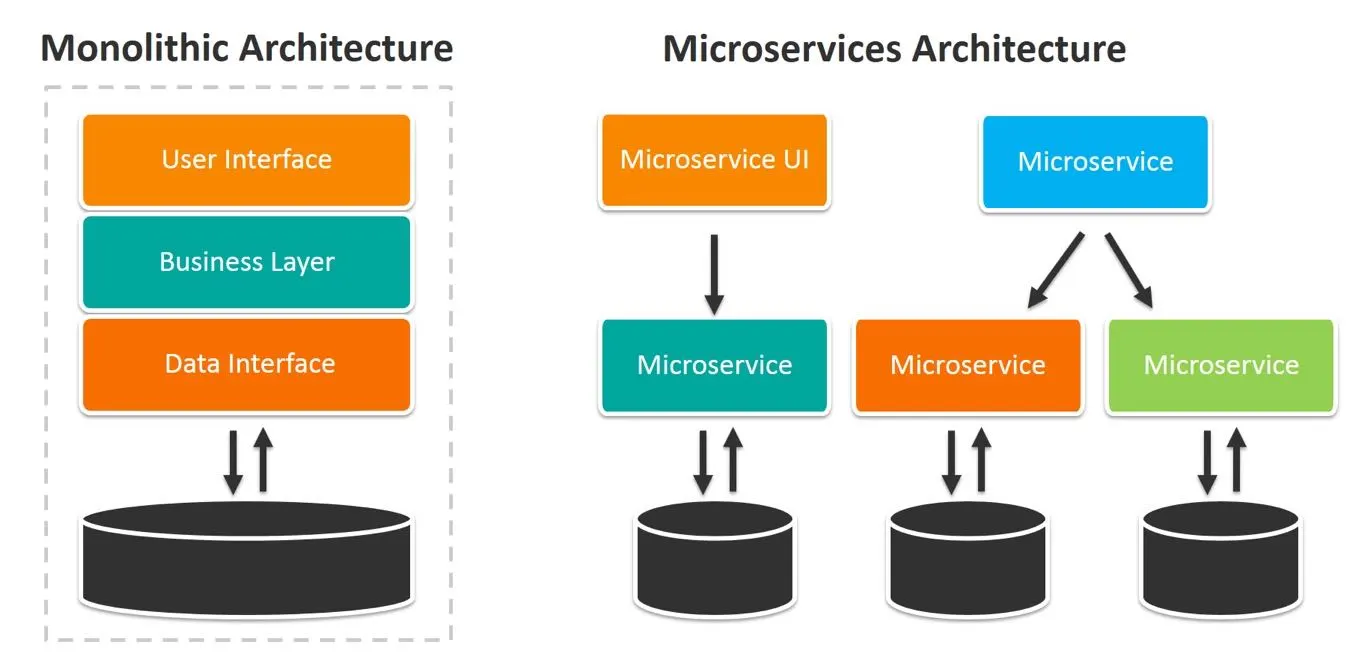
In the ever-evolving landscape of software development, architecture serves as the foundational blueprint upon which applications are constructed. Among the various architectural styles, “monolithic” stands as perhaps the oldest and most traditional. At its core, a monolithic application is built as a single, unified unit. This means that all its components – including the user interface, business logic, and data access layers – are tightly coupled and exist within a single codebase. When deployed, it runs as one cohesive process, sharing resources and operating within a singular environment.
For decades, the monolithic approach was the de facto standard for building almost any software application, from small websites to large enterprise systems. Its appeal stemmed from its apparent simplicity, particularly in the early stages of development. A developer could focus on building features within a single repository, deploy a single artifact, and manage a single set of dependencies. This straightforwardness made it an attractive option for startups, small teams, and projects with well-defined, albeit limited, scopes. However, as applications grew in complexity, traffic, and team size, the inherent challenges of the monolithic structure began to surface, prompting a re-evaluation of its suitability and paving the way for alternative architectures. Understanding what a monolithic application entails – its structure, benefits, and inherent drawbacks – is crucial for any technology professional seeking to make informed decisions about system design in today’s diverse software ecosystem.

The Anatomy of a Monolithic Application
To truly grasp the concept of a monolithic system, it’s essential to dissect its internal structure and understand how its various parts interoperate. Unlike modern distributed systems, a monolithic application embodies a comprehensive and self-contained design.
Single Codebase and Unified Deployment
The defining characteristic of a monolithic application is its single codebase. Every feature, module, and layer of the application resides within one repository. This includes the presentation layer (user interface), the business logic that defines the application’s core functionality, and the data access layer responsible for interacting with databases and external services. This unified structure means that all functionalities are intertwined, compiled, and packaged together into a single, deployable artifact – often a WAR file in Java, an executable in .NET, or a single web application bundle. When a new version of the application is released, the entire application, regardless of whether a single line of code changed in one small module, must be rebuilt and redeployed. This unified deployment strategy simplifies the initial CI/CD pipeline setup but can become a bottleneck as the application scales.
Tightly Coupled Components and Shared Resources
Within a monolithic architecture, the various components are inherently tightly coupled. Different modules and functionalities often share common libraries, data structures, and even directly invoke functions or classes across boundaries. For instance, a user interface component might directly call a business logic component, which in turn might directly interact with the data access layer, all within the same memory space. This tight coupling facilitates rapid development initially because developers can easily access and modify any part of the system. However, it also means that changes in one component can have unforeseen ripple effects across others, making the system more fragile over time.
Furthermore, monolithic applications typically share a common set of resources. This most commonly includes a single database instance where all application data resides, often in a highly normalized schema. While this simplifies data management and transactions in the early stages, it can lead to performance bottlenecks as the application scales, as all operations contend for the same database resources. Other shared resources might include caching layers, message queues, or external services that the entire application leverages. The shared nature of these resources emphasizes the unified operational footprint of the monolithic approach.
Advantages of Monolithic Architecture
Despite the shift towards distributed systems, monolithic architectures continue to hold a viable place in the software development landscape, particularly for specific use cases. Their inherent simplicity and directness offer several compelling advantages, especially during the initial phases of a project.
Simplicity in Development and Debugging
For smaller teams or projects with limited scope, the monolithic approach dramatically simplifies the development process. With a single codebase, developers don’t have to navigate complex communication protocols between services, manage distributed transactions, or worry about service discovery. All code resides in one place, making it easier to understand the overall structure and how different parts interact. This unified view also simplifies debugging: when an issue arises, developers can typically trace the execution path and inspect variables within a single process, using familiar debugging tools. This contrasts sharply with distributed systems, where tracing an error might involve sifting through logs from multiple services running on different machines. The absence of inter-service communication overhead also means that development environments are simpler to set up, requiring fewer dependencies and configurations.
Simplified Deployment and Management
The “one application, one deployment” model of monolithic architectures offers significant advantages in terms of deployment and operational management, particularly in the early stages. The entire application is packaged into a single executable or archive, which can be deployed to a server or container with relative ease. This eliminates the complexities associated with orchestrating deployments across multiple, independent services, each with its own lifecycle and dependencies. Consequently, CI/CD pipelines for monolithic applications are often more straightforward to design and implement initially.
From an operational standpoint, managing a single application instance is generally simpler than managing a multitude of interconnected services. Monitoring tools can focus on one process, log management is consolidated, and resource allocation can be handled for the entire application. This reduced operational overhead can be a major benefit for startups or teams without dedicated DevOps expertise, allowing them to focus more on feature development rather than infrastructure management. While scaling a monolith eventually becomes complex, the initial deployment and management overhead is undeniably lower than that of a distributed system.
Disadvantages and Challenges
While monolithic architectures offer simplicity in certain contexts, their limitations become increasingly apparent as applications grow in size, complexity, and user base. These drawbacks are often the primary drivers for organizations to consider alternative architectural styles.
Scalability and Technology Lock-in Issues
One of the most significant challenges with monolithic applications is their inherent difficulty in scaling efficiently. Since the entire application is deployed as a single unit, scaling often means replicating the entire application instance, even if only a small component is experiencing a bottleneck. For example, if only the image processing module is under heavy load, the entire application—including less-utilized components like the user profile management—must be scaled up, leading to inefficient resource utilization. This “vertical scaling” (increasing the resources of a single machine) eventually hits physical limits, and “horizontal scaling” (running multiple identical instances) can still be inefficient.
Furthermore, monolithic architectures often suffer from technology lock-in. Once a specific technology stack (e.g., Java with Spring Boot, Ruby on Rails) is chosen for the entire application, it becomes incredibly challenging to introduce new languages, frameworks, or database technologies for specific modules. This limits flexibility and prevents teams from leveraging the best-suited tools for particular problems, hindering innovation and potentially leading to a stale technology stack over time. Migrating even a small part of the application to a new technology often requires refactoring substantial portions of the monolithic codebase.
Slower Development Cycles and Reliability Concerns
As a monolithic application grows, its codebase can become vast and unwieldy, earning it the moniker “the big ball of mud.” This makes it increasingly difficult for new developers to onboard and understand the entire system. Even experienced developers find that changes in one part of the code can unintentionally affect distant, seemingly unrelated parts, leading to frequent bugs and regressions. The large codebase also results in longer build times and slower deployment cycles. A single small bug fix might necessitate a full rebuild and redeployment of the entire application, extending the time it takes to get updates into production and hindering agile development practices.
Reliability and resiliency are also major concerns. In a monolithic system, a failure in any single component can lead to the collapse of the entire application. If, for instance, a memory leak occurs in one obscure module, it can exhaust resources and bring down the entire system, impacting all users and functionalities. This “single point of failure” significantly reduces the application’s fault tolerance and availability. In contrast, distributed systems are designed with isolation in mind, so the failure of one service does not necessarily impact others, allowing for greater resilience. The tightly coupled nature of monoliths also makes it harder to isolate and resolve performance issues, as resource contention can stem from anywhere within the unified process.
When to Consider a Monolithic Architecture
Despite its drawbacks for large-scale, complex systems, the monolithic architecture is far from obsolete. There are specific scenarios where its simplicity and directness make it an entirely appropriate, and often superior, choice. Understanding these contexts is key to making an informed architectural decision.
Small, Simple Applications and MVPs
For small-scale applications, proof-of-concept projects, or Minimum Viable Products (MVPs), a monolithic architecture often presents the quickest path to market. When the application’s domain is well-understood and not excessively complex, and the team size is modest, the overhead of managing a distributed system is simply not warranted. The ability to develop, test, and deploy a complete application as a single unit significantly accelerates the initial development cycle. Startups, for example, often choose a monolithic approach for their first product iterations because it allows them to validate ideas, gather user feedback, and iterate rapidly without investing heavily in complex infrastructure that might not be necessary if the product doesn’t gain traction. The focus remains squarely on delivering core functionality rather than architectural elegance.
Teams with Limited Resources or Expertise
Organizations with small development teams, limited budgets, or a lack of experience with distributed systems paradigms will find a monolithic architecture much easier to manage. The learning curve for building and operating a monolithic application is considerably shallower compared to microservices or other distributed architectures, which require expertise in areas like service discovery, distributed tracing, container orchestration, and fault tolerance patterns. For teams just starting out or those with limited access to specialized DevOps talent, the operational simplicity of a monolith means they can allocate more resources and focus to feature development. This is not to say that building a robust monolith is trivial, but the initial complexity overhead is significantly lower. The cost of infrastructure and tooling is also generally lower for monolithic deployments, as there are fewer moving parts to provision and monitor.

The Evolution: From Monoliths to Microservices (and Beyond)
The journey of software architecture is often cyclical, with innovation driven by the pain points of prevailing paradigms. The challenges posed by monolithic applications, particularly as enterprise systems scaled in complexity and traffic, spurred the development and adoption of alternative architectural styles.
The most prominent successor to the traditional monolith has been the microservices architecture. Microservices represent a fundamental shift, breaking down a large, monolithic application into a collection of small, independent, loosely coupled services. Each service typically owns its data, has its own codebase, can be developed by independent teams, and deployed autonomously. This architectural style directly addresses many of the monolith’s drawbacks: it allows for independent scaling of services, enables teams to choose the best technology for each service (“polyglot persistence” and “polyglot programming”), speeds up development and deployment cycles for large teams, and enhances system resilience by isolating failures.
However, the shift to microservices is not without its own set of complexities. While microservices solve many problems, they introduce new challenges related to distributed systems, such as managing inter-service communication, distributed data consistency, service discovery, API gateways, and much more complex operational overhead. The “simple” problems of a monolith are replaced by “complex” problems of a distributed system.
Consequently, modern architectural thinking often advocates for a pragmatic approach. Many successful companies started with a monolith and only later began a “strangler fig” pattern refactoring, gradually extracting microservices from the existing monolithic codebase. This allows them to incrementally move towards a distributed system, addressing bottlenecks as they arise, rather than undergoing a risky, large-scale re-architecture. Furthermore, hybrid approaches are gaining traction, where core stable functionalities might remain monolithic, while rapidly evolving or highly scalable components are developed as microservices. Even the concept of a “modulith” or “modular monolith” has emerged, suggesting that a well-designed monolith with strong internal module boundaries can achieve many benefits of microservices without the full operational burden of distributed systems.
In conclusion, “what is monolithic” is not merely a question of historical software design but a crucial concept for understanding architectural trade-offs. While microservices and other distributed patterns have gained immense popularity, the monolithic architecture remains a valid and often optimal choice for specific types of projects. The key lies in understanding its characteristics, weighing its advantages against its disadvantages, and making an informed decision based on the project’s specific requirements, team capabilities, and anticipated growth. Modern software development is about choosing the right tool for the job, and the monolith, in its appropriate context, is still a powerful tool in the architect’s arsenal.
aViewFromTheCave is a participant in the Amazon Services LLC Associates Program, an affiliate advertising program designed to provide a means for sites to earn advertising fees by advertising and linking to Amazon.com. Amazon, the Amazon logo, AmazonSupply, and the AmazonSupply logo are trademarks of Amazon.com, Inc. or its affiliates. As an Amazon Associate we earn affiliate commissions from qualifying purchases.