
In the intricate ecosystem of modern home comfort, few systems play as pivotal a role as the heating, ventilation, and air conditioning (HVAC) unit. Among the various configurations, “forced air” stands out as arguably the most common and versatile technology for climate control in residential properties across North America and beyond. But beyond the jargon, what exactly does forced air mean in a house, and why has this particular technology become such a cornerstone of domestic living?
At its core, a forced air system is precisely what its name implies: it’s an HVAC setup that uses a fan or “blower” to force conditioned air (either heated or cooled) through a network of ducts and into various rooms of a house. This continuous circulation of air is what provides consistent temperature regulation, ensuring comfort regardless of the season. Far more than just a heater or an air conditioner, a modern forced air system is a sophisticated piece of integrated technology designed to manage not only temperature but also often humidity and air quality, making it a comprehensive solution for indoor environmental control. Understanding this technology isn’t just about knowing how your home gets warm or cool; it’s about appreciating a finely tuned engineering marvel that directly impacts your daily comfort, health, and energy consumption.

The Fundamental Mechanics of Forced Air Systems
To truly grasp the concept of forced air, it’s essential to delve into its operational principles and the interplay of its primary components. This system is a prime example of integrated technology, where several parts work in concert to achieve a single, critical objective: climate control.
The Core Principle: Air Circulation for Climate Control
The fundamental principle behind a forced air system is deceptively simple: condition air centrally and then distribute it evenly. Unlike radiant heating systems that warm surfaces or objects directly, or ductless mini-split systems that condition air in individual zones without extensive ductwork, forced air systems manipulate the entire volume of air within a home.
Here’s a step-by-step breakdown of the process:
-
Return Air Intake: Air from the living spaces, having warmed up (in winter) or cooled down (in summer) after circulating, is drawn back into the system through return air vents and ducts.
-
Filtration: Before entering the central unit, this “return air” passes through an air filter. This critical step removes dust, pollen, pet dander, and other airborne particles, protecting both the system components and improving indoor air quality.
-
Conditioning: The filtered air then enters the central HVAC unit.
-
For Heating: If the thermostat calls for heat, the air passes over a heat exchanger in a furnace (typically fueled by natural gas, propane, or oil) or through heating coils (for electric furnaces/air handlers) or is warmed by a heat pump.
-
For Cooling: If the thermostat calls for cooling, the air passes over an evaporator coil, which is part of an air conditioning unit or heat pump. The refrigerant inside the coil absorbs heat from the air, cooling it down.
-
-
Blower Motor Activation: Once conditioned, a powerful fan, known as the blower motor, activates. This is the “force” in forced air. It pushes the treated air into the supply ductwork.
-
Distribution: The conditioned air travels through a network of supply ducts, which branch out to various rooms in the house.
-
Delivery: Finally, the air exits the ducts through supply registers or vents, entering the living spaces and completing the cycle. As this conditioned air circulates, it gradually displaces the existing air, bringing the room to the desired temperature.
Key Components of a Forced Air System
Understanding the individual pieces of technology that comprise a forced air system provides a clearer picture of its sophisticated operation:
-
Furnace/Air Handler: This is the heart of the system. In heating-dominant climates, a furnace is common, burning fuel to generate heat. In cooling-dominant or mixed climates, an air handler often houses the blower and the evaporator coil for AC, and may include electric strip heaters for auxiliary heat, or work in tandem with a heat pump for both heating and cooling.
-
Blower Motor: Located within the furnace or air handler, the blower motor is responsible for moving air throughout the entire ductwork system. Modern blowers often feature variable speeds, allowing for more precise airflow control and enhanced efficiency.
-
Ductwork: This is the “circulatory system” of the house, a network of sheet metal or flexible tubing that transports air. It’s divided into two main types:
-
Supply Ducts: Carry conditioned air from the HVAC unit to the rooms.
-
Return Ducts: Carry stale or circulated air back to the HVAC unit for re-conditioning.
-
-
Vents/Registers: These are the grilles where conditioned air enters (supply registers) and leaves (return vents) the rooms. They often have adjustable louvers to direct airflow.
-
Thermostat: The “brain” of the system, the thermostat is a control device that monitors the indoor temperature and signals the furnace or air handler to turn on or off based on the user’s desired settings. Modern smart thermostats leverage advanced algorithms and connectivity for optimal performance.
-
Filter: A replaceable component located at the return air intake or within the central unit. Its primary function is to trap airborne particles, protecting both the HVAC equipment from dust buildup and improving indoor air quality by removing allergens and pollutants.
Advantages and Disadvantages of Forced Air Technology
Like any pervasive technology, forced air systems come with a distinct set of benefits that have cemented their popularity, alongside certain limitations that homeowners should be aware of.
Why Forced Air Remains a Popular Choice (Advantages)
The widespread adoption of forced air systems isn’t accidental; it’s a testament to their inherent advantages in providing comprehensive home comfort.
-
Efficiency and Speed: Forced air systems can heat or cool a space relatively quickly compared to radiant systems. The rapid circulation of conditioned air means that temperature changes are felt almost immediately throughout the desired areas. Modern systems with variable-speed blowers and multi-stage heating/cooling further enhance this efficiency by precisely matching output to demand.
-
Versatility: One of the most significant advantages is its integrated nature. A single ductwork system can be used for both heating (via a furnace or heat pump) and cooling (via an air conditioner or heat pump), eliminating the need for separate distribution networks. This streamlines installation and maintenance.
-
Indoor Air Quality (IAQ) Management: The forced air pathway provides an ideal conduit for integrating various indoor air quality solutions. Filters are standard, but systems can easily accommodate humidifiers (to add moisture), dehumidifiers (to remove moisture), UV germicidal lamps (to kill airborne pathogens), and whole-home air purifiers. This makes forced air a powerful tool for creating a healthier indoor environment, particularly for those with allergies or respiratory sensitivities.
-
Cost-Effectiveness: While initial installation costs can vary, forced air systems often present a more cost-effective whole-home solution compared to extensive radiant floor heating or multiple ductless mini-split units, especially for new constructions designed with ductwork in mind. The widespread availability of parts and technicians also contributes to competitive pricing for maintenance and repairs.
-
Zoning Potential: While adding complexity and cost, forced air systems can be zoned. This involves installing motorized dampers in the ductwork, controlled by multiple thermostats, to direct conditioned air only to specific areas of the house. This allows for customized comfort in different rooms and can lead to significant energy savings by not heating or cooling unoccupied spaces.
Understanding the Limitations (Disadvantages)
Despite its many advantages, forced air technology is not without its drawbacks, which are important considerations for homeowners.
-
Ductwork Requirements: The extensive network of ducts is perhaps the biggest constraint. It requires significant space within walls, ceilings, and floors, which can be challenging in older homes not designed for it. Ductwork can also be prone to leaks if not properly sealed and insulated, leading to energy loss. Furthermore, ducts can accumulate dust, allergens, and mold if not regularly cleaned, negatively impacting IAQ.
-
Noise Levels: The operation of the blower motor, combined with the sound of air moving through ducts and registers, can generate noticeable noise. While modern systems are significantly quieter than older models, some level of ambient sound is inherent to the system’s operation.
-
Uneven Heating/Cooling: In poorly designed, improperly installed, or poorly maintained systems, uneven temperature distribution can be a common complaint. Rooms farthest from the unit, or those with inadequate insulation, may receive less conditioned air, leading to hot or cold spots.
-
Air Dryness: In heating mode, especially during colder months, furnaces can significantly dry out indoor air. This can lead to discomfort, such as dry skin, irritated sinuses, and static electricity, and can even damage wooden furniture or flooring. While humidifiers can mitigate this, they are an additional component.
-
Energy Consumption: Older or inefficient forced air systems, particularly those with leaky ductwork or outdated components, can be significant energy hogs. The constant movement of air requires electrical power for the blower, and if the system is oversized or undersized for the home, it can cycle on and off more frequently, wasting energy.
Technological Advancements in Forced Air Systems
The world of HVAC is constantly evolving, and forced air technology is no exception. Recent decades have seen remarkable innovations that enhance efficiency, comfort, and control, transforming these systems from simple climate controllers into sophisticated home environmental managers.
Smart Thermostats and Advanced Controls
The most visible advancement in forced air systems is arguably the integration of smart thermostat technology. These devices have moved far beyond basic temperature setting:
-
Remote Access and Control: Homeowners can adjust settings, monitor usage, and receive alerts from anywhere via a smartphone app, offering unparalleled convenience.
-
Learning Algorithms: Many smart thermostats “learn” household preferences and schedules, automatically optimizing heating and cooling cycles for comfort and energy savings.
-
Zoning Integration: Advanced control panels allow for precise climate control in different areas of the home, each managed by its own thermostat, ensuring comfort where it’s needed most and conserving energy in unoccupied zones.
-
Energy Reporting: Detailed usage data helps homeowners understand their energy consumption patterns and identify opportunities for savings.
-
Integration with Home Automation: Smart thermostats seamlessly connect with broader smart home ecosystems, allowing for unified control alongside lighting, security, and other devices.
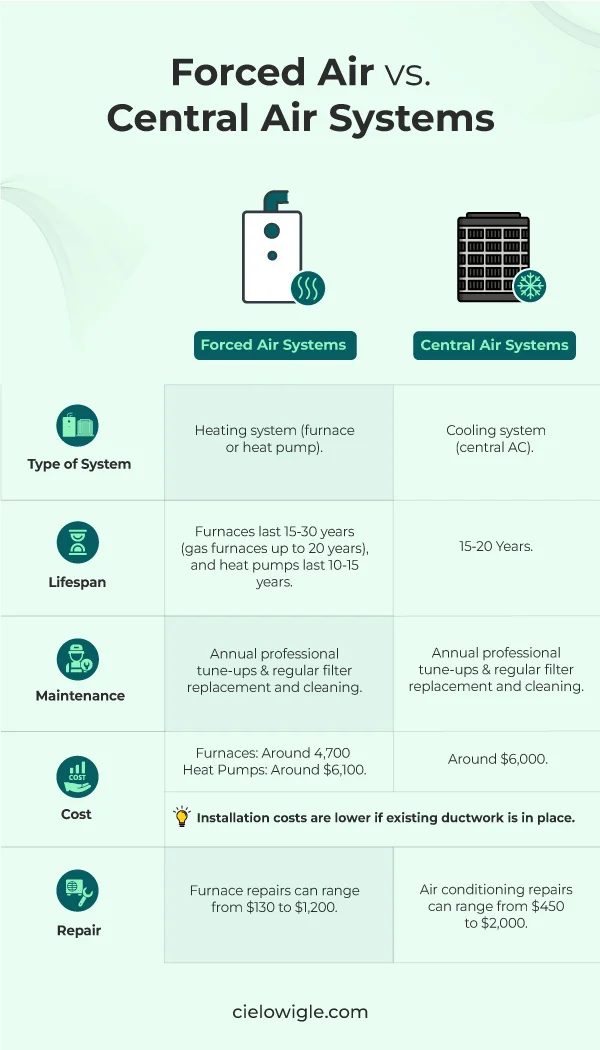
High-Efficiency Furnaces and Heat Pumps
The core heating and cooling units themselves have seen significant technological leaps:
-
Variable-Speed Blowers: Instead of operating at a single “on” or “off” speed, variable-speed blowers can adjust their airflow precisely. This leads to quieter operation, more consistent temperatures, better humidity control, and substantial energy savings by preventing sudden temperature swings.
-
Multi-Stage/Modulating Furnaces: Traditional furnaces are either fully on or fully off. Multi-stage furnaces have two or more heat output levels (e.g., 60% and 100%), allowing them to operate at a lower, more efficient capacity during milder weather. Modulating furnaces take this further, continuously adjusting their heat output in small increments (e.g., from 40% to 100%) to perfectly match the home’s heating needs, maximizing efficiency and comfort.
-
High-Efficiency Heat Pumps: Modern heat pumps offer incredibly efficient heating and cooling by transferring heat rather than generating it. Innovations like inverter technology allow them to precisely modulate their output, further boosting efficiency (measured by SEER for cooling and HSPF for heating) and providing consistent comfort even in colder climates.
-
Condensing Furnaces: These furnaces extract more heat from the combustion gases than older models by condensing water vapor, achieving AFUE (Annual Fuel Utilization Efficiency) ratings of 90% or higher, significantly reducing fuel consumption.
Enhanced Filtration and Air Purification
The forced air ductwork provides an excellent channel for improving indoor air quality, and the technology in this area has become highly sophisticated:
-
High-MERV Filters: MERV (Minimum Efficiency Reporting Value) ratings indicate a filter’s effectiveness. While standard filters are MERV 4-8, advanced filters with MERV ratings of 11-16 can capture much smaller particles, including pollen, pet dander, mold spores, and even some bacteria and viruses.
-
HEPA Filtration Systems: For those with severe allergies or asthma, whole-home HEPA (High-Efficiency Particulate Air) filtration systems can be integrated into forced air units, capturing 99.97% of particles 0.3 microns or larger.
-
UV Germicidal Lamps: Installed within the ductwork or air handler, these lamps use ultraviolet light to sterilize airborne pathogens like bacteria, viruses, and mold spores as they pass through the system.
-
Electronic Air Cleaners: These devices use an electrostatic charge to attract and capture microscopic particles, providing superior air purification without impeding airflow as much as dense HEPA filters might.
Ductwork Innovation and Sealing
While often out of sight, improvements in ductwork technology are crucial for overall system efficiency:
-
Aeroseal Technology: This patented process involves injecting a polymer sealant into the duct system while it’s pressurized. The sealant particles adhere to any leaks, effectively sealing them from the inside out. This significantly reduces energy loss (often by 15-30%) and improves system performance and comfort.
-
Improved Duct Design and Insulation: Advanced CAD software allows for optimal duct routing and sizing, minimizing airflow resistance and ensuring balanced distribution. Better insulation materials for ducts reduce heat loss or gain as air travels through unconditioned spaces like attics or crawl spaces.
-
Smart Vents: Some systems now feature smart vents that can open or close automatically, often integrated with a smart thermostat or zoning system, to direct airflow more precisely and optimize temperatures in individual rooms.
These technological advancements underscore that forced air systems are dynamic technologies. They continue to evolve, offering homeowners increasingly efficient, comfortable, and healthy indoor environments.
Maintenance and Optimization for Your Forced Air System
Even the most advanced forced air system is only as good as its maintenance. Neglecting your HVAC technology can lead to decreased efficiency, premature breakdowns, higher energy bills, and compromised indoor air quality. Proactive care is key to ensuring longevity and optimal performance.
Essential Routine Maintenance Tasks
Regular, straightforward maintenance can significantly impact your system’s efficiency and lifespan.
-
Regular Filter Replacement: This is arguably the most critical and easiest task. Air filters trap dust, pollen, pet dander, and other particles, preventing them from recirculating in your home and clogging your HVAC unit. A dirty filter restricts airflow, forcing your blower motor to work harder, which wastes energy and can lead to system wear. Check your filter monthly and replace it every 1-3 months, depending on usage, pets, and household activity. Choose filters with an appropriate MERV rating for your needs (higher MERV for better filtration, but ensure your system can handle the increased airflow resistance).
-
Annual Professional Tune-Ups: Schedule a professional HVAC technician to inspect your system annually, typically in the spring for AC and fall for heating. A tune-up usually involves:
-
Cleaning: Coils, burners, and other components.
-
Lubrication: Moving parts to reduce friction.
-
Inspection: Electrical connections, refrigerant levels (for AC/heat pumps), gas lines (for furnaces), and safety controls.
-
Calibration: Thermostat and other controls.
-
Ductwork Check: For leaks or obstructions.
This preventative maintenance identifies minor issues before they become costly major repairs and ensures the system operates at peak efficiency.
-
-
Keeping Vents and Registers Clear: Ensure that supply and return vents are not blocked by furniture, curtains, or rugs. Obstructions impede airflow, causing uneven temperatures and forcing the system to work harder. Regularly dust or vacuum registers to prevent buildup.
-
Checking Outdoor Unit (for AC/Heat Pump): Keep the outdoor condenser unit (if applicable) free of debris like leaves, grass clippings, and overgrown shrubs. Adequate airflow around the unit is essential for efficient heat exchange.
Troubleshooting Common Issues
While professional help is often necessary, understanding common issues can help you diagnose minor problems or know when to call a technician.
-
Poor Airflow: Check the air filter first. Ensure no vents are blocked. If the issue persists, it could indicate duct leaks, a failing blower motor, or an obstruction in the ductwork, requiring professional inspection.
-
Strange Noises:
-
Screeching: Often a sign of a failing motor bearing or belt.
-
Banging/Clunking: Could be a loose part or a problem with the blower fan.
-
Rattling: Might be loose ductwork or panels.
-
Hissing/Bubbling (AC/Heat Pump): Could indicate a refrigerant leak.
These noises usually warrant a professional’s attention.
-
-
Inconsistent Temperatures: After checking filters and ensuring no blocked vents, inconsistent temperatures might point to duct leaks, an improperly sized system, a failing thermostat, or issues with specific components like heating elements or refrigerant levels.
-
System Not Turning On: Check the thermostat settings, ensure the power switch for the furnace/air handler is on, and check your circuit breaker. If these are fine, it’s time to call a professional.
Energy-Saving Tips for Forced Air
Optimizing your forced air system isn’t just about maintenance; it’s also about smart usage.
-
Thermostat Programming: Utilize your smart thermostat’s programming features to set back temperatures when you’re away or asleep. Even a 7-10 degree Fahrenheit setback for 8 hours can save significant energy.
-
Insulation and Weatherization: Your HVAC system works hard to condition the air, but good home insulation and proper weatherization (sealing gaps, cracks, and windows) prevent that conditioned air from escaping. This reduces the load on your forced air system and lowers energy bills.
-
Proper Sizing of the System: An HVAC system that is too large will short-cycle (turn on and off too frequently), leading to uneven temperatures, reduced dehumidification, and increased wear. A system that is too small will run constantly, struggling to reach desired temperatures and driving up energy costs. Ensure your system is correctly sized for your home’s square footage and climate zone.
-
Use Ceiling Fans: In summer, ceiling fans can create a wind-chill effect, allowing you to set your thermostat a few degrees higher without sacrificing comfort. In winter, some fans can be reversed to push warm air down from the ceiling.
-
Window Treatments: Close blinds and curtains on sunny windows in summer to block heat gain, and open them in winter to let natural warmth in.
By consistently implementing these maintenance routines and energy-saving strategies, homeowners can maximize the efficiency, comfort, and longevity of their forced air HVAC systems, ensuring a comfortable and cost-effective indoor environment for years to come.

Conclusion
The term “forced air” in the context of a house refers to a sophisticated and pervasive HVAC technology that forms the backbone of indoor climate control for millions. It’s a system designed to condition air centrally—whether heating, cooling, or purifying—and then distribute that air throughout a home via an intricate network of ducts and vents. This technology provides rapid temperature changes, versatile functionality (handling both heating and cooling), and a platform for integrating advanced indoor air quality solutions, making it a comprehensive choice for modern living.
While offering significant advantages in efficiency, speed, and overall comfort management, forced air systems do present considerations such as the need for extensive ductwork, potential noise levels, and the importance of diligent maintenance to prevent energy loss and ensure consistent performance. However, ongoing technological advancements, from smart thermostats and variable-speed units to advanced filtration and duct sealing techniques, continue to refine and improve these systems, making them smarter, more efficient, and more responsive to individual homeowner needs.
Understanding what forced air means, how it operates, and how to maintain it effectively is not merely about technical knowledge; it’s about empowering homeowners to optimize their living environment. By embracing regular maintenance, leveraging technological innovations, and adopting energy-saving habits, individuals can ensure their forced air system delivers consistent comfort, healthy indoor air, and efficient operation, truly making a house a home, regardless of the climate outside.
aViewFromTheCave is a participant in the Amazon Services LLC Associates Program, an affiliate advertising program designed to provide a means for sites to earn advertising fees by advertising and linking to Amazon.com. Amazon, the Amazon logo, AmazonSupply, and the AmazonSupply logo are trademarks of Amazon.com, Inc. or its affiliates. As an Amazon Associate we earn affiliate commissions from qualifying purchases.