
In an era defined by escalating cyber threats and the relentless demand for faster, more reliable digital infrastructure, the underlying hardware components that fortify our networks have never been more critical. While the term “ASIC” (Application-Specific Integrated Circuit) often conjures images of cryptocurrency mining rigs, its true impact stretches far beyond digital gold, playing a foundational, albeit often unseen, role in the very fabric of network security. Experts in the field increasingly highlight the indispensable nature of ASICs for establishing robust, high-performance, and resilient digital defenses.
Unlike general-purpose CPUs or GPUs, ASICs are custom-designed microchips optimized to perform a very specific function with unparalleled efficiency, speed, and power consumption. This specialization makes them ideal candidates for tackling the computationally intensive and time-sensitive challenges inherent in securing modern networks. From accelerating complex cryptographic operations to enabling lightning-fast packet inspection and establishing hardware roots of trust, ASICs are the silent workhorses that empower cutting-edge security solutions. This article delves into why experts recommend ASICs for network security, exploring their key applications, the benefits they confer, and the future landscape of their integration into our digital defenses.
Understanding ASICs in the Digital Security Landscape
The digital realm’s ever-expanding complexity, coupled with the sophisticated nature of cyberattacks, necessitates specialized hardware that can keep pace. This is where ASICs step in, offering a level of performance and efficiency that general-purpose processors simply cannot match for particular tasks.
Beyond Cryptocurrency: The True Potential of ASICs
An Application-Specific Integrated Circuit is, as its name suggests, a chip designed for a single, specific purpose. This could be anything from controlling a refrigerator’s compressor to processing signals in a 5G base station. While their high-profile use in cryptocurrency mining has given them a certain notoriety, it’s crucial to understand that this is merely one application exploiting their core advantages: speed, power efficiency, and dedicated performance for a repetitive, computationally intensive task.
For network security, these advantages translate into the ability to execute highly specialized operations—like encryption, decryption, or deep packet analysis—at wire speed, with minimal latency and reduced power draw. This contrasts sharply with general-purpose CPUs, which, while flexible, must divide their resources across a multitude of tasks, leading to compromises in speed and efficiency for any single, specialized operation. The inherent architecture of an ASIC, custom-built from the ground up for its intended function, allows for unparalleled optimization at the hardware level, pushing the boundaries of what’s possible in high-performance computing.
Why Specialized Hardware Matters for Network Security
Network security isn’t just about identifying threats; it’s about identifying them fast and responding even faster, often under immense traffic loads. Modern networks handle terabits of data per second, and a security system that can’t process this data at line rate becomes an immediate bottleneck, negating its protective value. The unique demands of network security include:
-
High-speed packet inspection: Examining every data packet for malicious content, policy violations, or anomalies without slowing down network traffic.
-
Real-time cryptographic operations: Encrypting and decrypting vast amounts of data for secure communications (VPNs, TLS/SSL) with imperceptible latency.
-
Intrusion detection and prevention: Rapidly identifying and blocking known and zero-day threats through complex pattern matching and behavioral analysis.
-
DDoS mitigation: Filtering out massive volumes of malicious distributed denial-of-service traffic without impacting legitimate users.
General-purpose CPUs, while powerful, are not architecturally optimized for these specific, often parallelizable, and repetitive tasks at extreme speeds. Their instruction sets and memory architectures are designed for flexibility across diverse workloads, not absolute peak performance on one. ASICs, on the other hand, can embed the logic for these security functions directly into their silicon, executing them orders of magnitude faster and more efficiently. This specialized hardware is essential for building security infrastructure that is not only robust but also capable of meeting the performance requirements of today’s hyper-connected world.
Key Areas Where ASICs Enhance Network Security
The direct benefits of ASIC integration into network security are evident across several critical domains, each contributing to a more resilient and performant defensive posture.
Accelerating Cryptographic Operations
One of the most profound impacts of ASICs in network security is their ability to accelerate cryptographic operations. Encryption and decryption are computationally intensive processes that, when performed solely by general-purpose CPUs, can significantly degrade network performance, especially for high-volume secure communications.
ASICs are designed to rapidly execute standard cryptographic algorithms such as AES (Advanced Encryption Standard), SHA (Secure Hash Algorithm), and RSA (Rivest-Shamir-Adleman). This hardware acceleration is crucial for:
-
VPNs (Virtual Private Networks): Enabling high-throughput, low-latency encrypted tunnels for secure remote access and site-to-site communication.
-
TLS/SSL Offloading: Taking the burden of establishing and maintaining secure web connections (HTTPS) off web servers, freeing up CPU cycles for application logic and improving user experience.
-
Hardware Security Modules (HSMs): Dedicated, often ASIC-based devices that securely store and manage cryptographic keys, perform sensitive cryptographic operations, and enforce strong authentication. By offloading these tasks to specialized hardware, the risk of key compromise is drastically reduced, and performance is maximized.
The ability of ASICs to handle these operations at wire speed ensures that security does not become a performance bottleneck, allowing organizations to deploy comprehensive encryption without sacrificing network efficiency.
High-Performance Packet Processing and Deep Packet Inspection (DPI)
In the ongoing battle against evolving cyber threats, the ability to inspect network traffic thoroughly and at scale is paramount. Deep Packet Inspection (DPI) involves examining the data payload of packets, not just their headers, to identify malicious content, policy violations, or application-specific signatures. This is an incredibly resource-intensive task, especially in high-speed networks.
ASICs excel in this area by providing:
-
Line-Rate Packet Analysis: They can process and analyze millions of packets per second without introducing latency, a capability essential for modern network speeds.
-
Pattern Matching and Signature Detection: Custom ASIC logic can be highly optimized for rapidly identifying known attack signatures, malware patterns, and protocol anomalies embedded within traffic streams.
-
Policy Enforcement: Integrated into next-generation firewalls (NGFWs) and intrusion detection/prevention systems (IDPS), ASICs enable these devices to enforce complex security policies and respond to threats in real-time, blocking malicious traffic before it can reach its target.
By offloading these intensive tasks to ASICs, security appliances can maintain high throughput and low latency, ensuring that network performance remains unaffected while providing granular, real-time threat detection and prevention.
Hardware Root of Trust and Secure Boot
Establishing an unassailable foundation of trust is fundamental to securing any system. ASICs play a crucial role in creating a hardware root of trust, a small, immutable hardware module that serves as the first point of trust in a system.
-
Secure Boot: An ASIC can be programmed to verify the integrity of firmware and software components during the boot process. By cryptographically checking each stage of the boot sequence against known good signatures, it ensures that no unauthorized or malicious code has been injected. If a discrepancy is found, the boot process can be halted, preventing a compromised system from starting.
-
Tamper Detection and Protection: Some ASICs can be designed with physical tamper detection mechanisms, alerting or even disabling the device if physical intrusion is attempted.
-
Supply Chain Security: By providing an immutable hardware anchor, ASICs help mitigate risks from supply chain attacks, ensuring that devices have not been tampered with during manufacturing or transit.
This hardware-level security forms the bedrock for all subsequent software security layers, creating a highly resilient defense against sophisticated attacks aimed at subverting system integrity from its very genesis.
DDoS Mitigation and Traffic Filtering
Distributed Denial of Service (DDoS) attacks are designed to overwhelm a target system with a flood of malicious traffic, rendering it unavailable to legitimate users. Mitigating these attacks effectively requires the ability to rapidly identify, classify, and filter out malicious traffic volumes that can reach terabits per second.
ASICs are ideal for DDoS mitigation because they can:
-
Process Traffic at Scale: Their high-speed processing capabilities allow them to inspect and analyze massive influxes of traffic at the network edge, before it impacts internal resources.
-
Pattern Recognition for Attack Vectors: ASICs can be optimized to quickly identify common DDoS attack patterns (e.g., SYN floods, UDP floods, DNS amplification) and apply filtering rules with extreme precision and speed.
-
Maintain Legitimate Traffic Flow: By offloading the filtering task, ASICs ensure that legitimate traffic is minimally affected, maintaining service availability even under attack.
Deploying ASIC-based DDoS mitigation solutions at strategic points in the network infrastructure provides a robust first line of defense, protecting critical online services from disruption.
Expert-Recommended ASIC Applications and Implementations
When experts recommend ASICs for network security, they are often referring to their integration into specialized, high-performance security solutions rather than standalone ASIC purchases.
Dedicated Security Appliances and Network Processors
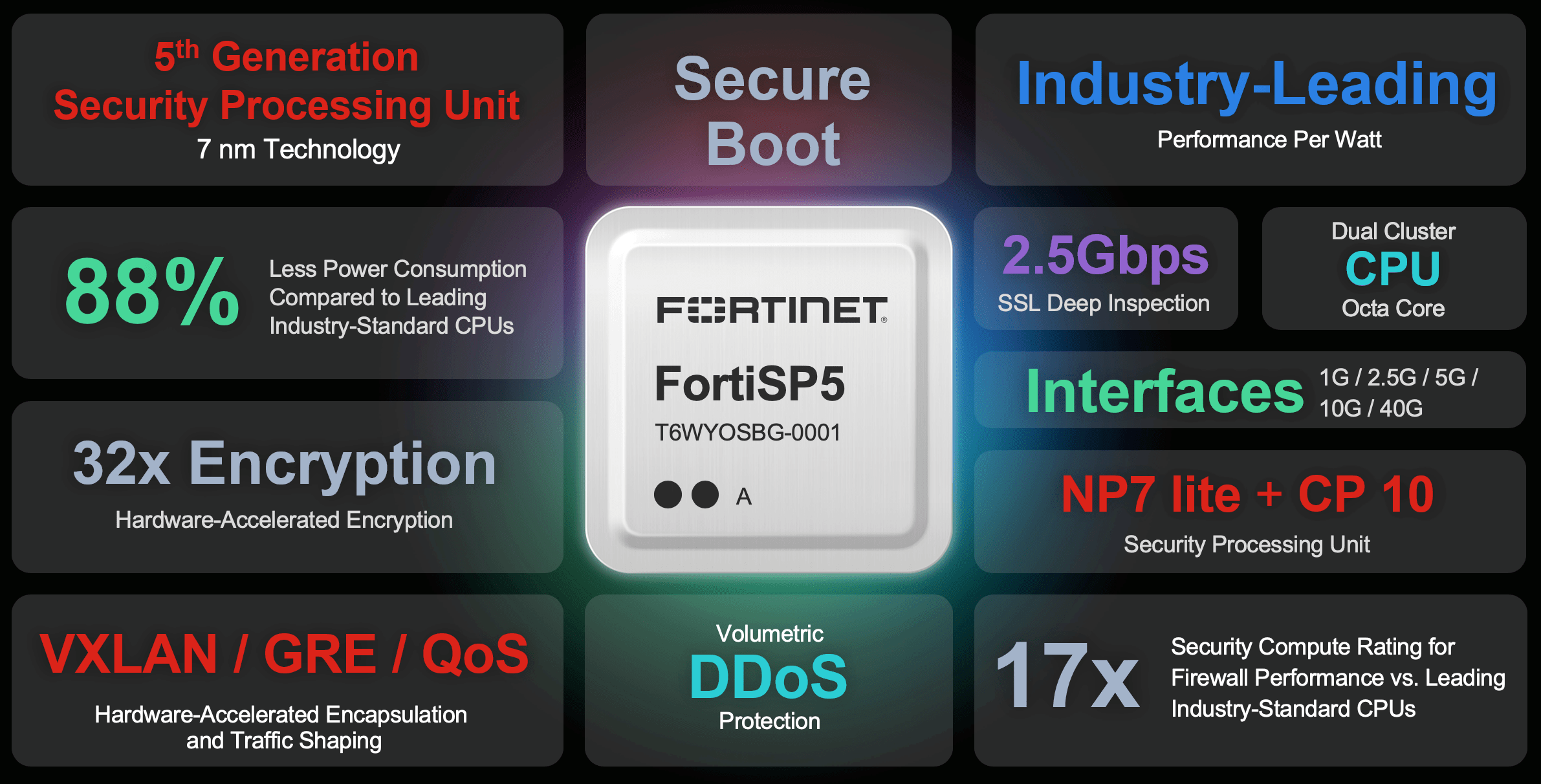
Leading cybersecurity vendors—such as Palo Alto Networks, Fortinet, Cisco, and Check Point—extensively integrate custom or commercially available ASICs into their flagship security appliances. These aren’t just chips; they are sophisticated network processors (NPUs) or security processing units (SPUs) built around ASIC technology.
-
Next-Generation Firewalls (NGFWs): These appliances use ASICs to accelerate complex functions like application identification, deep packet inspection, and threat prevention, allowing them to maintain high throughput even with all security features enabled. Fortinet’s FortiGate series, for example, heavily leverages its custom SPU (Security Processing Unit) ASICs for this purpose.
-
VPN Concentrators: For large enterprises requiring thousands of simultaneous secure tunnels, ASIC-powered VPN concentrators provide the necessary cryptographic acceleration to handle the immense encryption/decryption workload without performance degradation.
-
Intrusion Prevention Systems (IPS): ASIC integration allows IPS devices to perform line-rate inspection and blocking of malicious traffic, offering real-time protection against exploits and attacks.
These turnkey solutions provide organizations with high-performance security infrastructure that is optimized at the hardware level, offering superior speed, efficiency, and reliability compared to software-only or general-purpose hardware alternatives.
Hardware Security Modules (HSMs) and Trusted Platform Modules (TPMs)

HSMs and TPMs are quintessential examples of ASIC-based security solutions that experts unequivocally recommend for critical security functions:
-
Hardware Security Modules (HSMs): These are dedicated cryptographic processors designed to securely generate, store, and manage cryptographic keys, as well as perform cryptographic operations in a tamper-resistant environment. HSMs are often built around custom ASICs to achieve high performance for operations like digital signing, encryption, and certificate management, while adhering to stringent security standards (e.g., FIPS 140-2). They are crucial for Public Key Infrastructure (PKI), database encryption, and cloud security.
-
Trusted Platform Modules (TPMs): While more prevalent in endpoint devices (laptops, servers), TPMs are also ASIC-based security chips that provide cryptographic functions, secure storage for keys and measurements, and support for secure boot processes. They establish a root of trust for the host system, protecting against firmware and software tampering.
The recommendation for HSMs and TPMs stems from their ability to create a strong, hardware-backed foundation for cryptographic operations and system integrity, offering a level of security that cannot be replicated by software alone.
Custom ASIC Design for Hyperscale Environments
For organizations operating at a massive scale—such as global cloud providers, large financial institutions, or national defense entities—off-the-shelf solutions, while powerful, may not always meet their unique performance, efficiency, or security requirements. In these hyperscale environments, experts may recommend or even undertake custom ASIC design.
-
Tailored Performance: Designing custom ASICs allows for maximum optimization for specific workloads, achieving unprecedented levels of performance and efficiency for specialized security tasks unique to their operations.
-
Enhanced Security Features: Custom ASICs can embed proprietary security features, tamper detection mechanisms, and cryptographic accelerators that go beyond standard offerings, providing a competitive edge in defense.
-
Cost Efficiency at Scale: While the upfront design and fabrication costs are immense, for deployments involving millions of units or processing exabytes of data, the long-term operational cost savings (power, cooling, performance per dollar) can justify the initial investment.
This approach is typically reserved for organizations with significant resources and highly specialized needs, demonstrating the ultimate level of commitment to hardware-level security.
Challenges and Considerations in ASIC Adoption for Security
Despite their undeniable advantages, the widespread adoption of ASICs for every security need faces practical challenges and requires careful consideration.
Cost and Development Complexity
The primary barrier to entry for ASICs is their significant upfront cost and development complexity. Designing an ASIC from scratch requires:
-
High Non-Recurring Engineering (NRE) Costs: These include design, verification, mask creation, and initial fabrication, often running into millions of dollars.
-
Long Development Cycles: ASIC design is a lengthy process, typically taking 18-36 months from concept to production, making it challenging to respond quickly to rapidly evolving threat landscapes.
-
Specialized Expertise: A highly specialized team of hardware engineers, verification engineers, and architects is required, which is a scarce and expensive resource.
These factors mean that ASICs are generally only economically viable for high-volume applications or extremely critical, performance-sensitive tasks where the long-term benefits outweigh the initial investment.
Flexibility vs. Specialization
ASICs are inherently specialized, offering peak performance for their intended function. However, this comes at the cost of flexibility. Once an ASIC is fabricated, its functionality is largely fixed.
-
Lack of Reconfigurability: Unlike Field-Programmable Gate Arrays (FPGAs), which can be reprogrammed in the field to adapt to new algorithms or threats, ASICs cannot be easily modified. This can be a disadvantage in the dynamic world of cybersecurity, where new attack vectors and mitigation techniques emerge constantly.
-
Trade-offs: Organizations must weigh the benefits of ultimate performance and efficiency (ASIC) against the need for adaptability and lower development costs (FPGAs or general-purpose processors). For many evolving security tasks, FPGAs offer a compelling middle ground, providing hardware acceleration with programmability.
Choosing between ASIC, FPGA, or general-purpose hardware often boils down to a strategic decision balancing performance, cost, and the anticipated longevity and stability of the required functionality.
Supply Chain Security Risks
The globalized nature of semiconductor manufacturing introduces inherent supply chain security risks for ASICs. From design to fabrication and assembly, multiple entities are involved, creating potential points of vulnerability.
-
Trust in Manufacturing: Ensuring that no malicious logic (backdoors) is inserted during the design or fabrication process is a monumental challenge.
-
Counterfeit Components: The risk of counterfeit ASICs entering the supply chain is a concern, potentially introducing vulnerabilities or reducing performance.
-
Tampering during Transit: Physical tampering of ASIC-based devices during shipment is another potential threat that needs to be mitigated.
Mitigating these risks requires stringent supply chain auditing, trusted manufacturing partners, and advanced hardware verification techniques, adding another layer of complexity and cost.
Integration and Management
Integrating ASIC-based security solutions into existing IT infrastructures can be complex. While dedicated appliances simplify deployment, organizations still need to consider:
-
Interoperability: Ensuring the ASIC-powered solution integrates seamlessly with other security tools, network infrastructure, and management platforms.
-
Expertise for Management: Managing and troubleshooting advanced hardware security solutions often requires specialized knowledge that may not be readily available within all IT teams.
-
Updates and Maintenance: While ASIC logic is fixed, the surrounding firmware and software often require regular updates for bug fixes and security patches.
Effective integration and management are crucial to fully leverage the benefits of ASIC-based security and ensure it operates optimally within the broader security ecosystem.
The Future of ASICs in Network Security
Looking ahead, the role of ASICs in network security is poised to expand and evolve, driven by emerging technologies and increasingly sophisticated threats.
AI and Machine Learning Acceleration
Artificial intelligence and machine learning (AI/ML) are becoming indispensable for advanced threat detection, anomaly recognition, and predictive security analytics. However, running complex AI/ML models in real-time on massive data streams is computationally intensive.
-
Dedicated AI Accelerators: Future ASICs will increasingly integrate dedicated AI/ML acceleration cores, optimized to execute neural network computations with extreme efficiency. This will enable security systems to perform real-time, AI-driven threat analysis at line rate, identifying sophisticated attacks that evade traditional signature-based methods.
-
Edge AI for Security: ASICs will power AI at the network edge, enabling smart security sensors and devices to detect and respond to threats locally, reducing latency and bandwidth requirements for centralized processing.
Quantum-Resistant Cryptography
The advent of quantum computing poses a significant threat to current cryptographic standards. As the world moves towards quantum-resistant cryptography (QRC), ASICs will be essential for implementing and accelerating these new, often more computationally intensive, algorithms.
-
Hardware Implementation of QRC: ASICs will provide the necessary hardware acceleration to make quantum-resistant encryption and digital signatures practical for real-world applications, ensuring secure communications in a post-quantum era.
-
Dedicated QRC Modules: Future security appliances and HSMs will likely feature dedicated ASIC modules specifically designed to handle QRC primitives, ensuring high performance and strong security against quantum attacks.
Edge Computing Security
The proliferation of IoT devices and the rise of edge computing environments demand robust security at the very periphery of the network. ASICs are ideally suited for this role due to their small footprint, low power consumption, and high performance.
-
Embedded Security: ASICs can provide hardware-backed security for edge devices, including secure boot, cryptographic offloading, and tamper detection, ensuring the integrity and confidentiality of data generated at the edge.
-
Low-Power Security: Their energy efficiency makes ASICs perfect for battery-powered IoT devices that still require strong security capabilities without draining power quickly.
As the attack surface expands to billions of connected devices, ASIC-powered security will be critical for establishing a distributed and resilient defense architecture.

Conclusion
In the relentless arms race between cyber defenders and attackers, the specialized capabilities of Application-Specific Integrated Circuits stand out as a critical differentiator. While often operating in the background, ASICs are the foundational technology enabling many of the high-performance, resilient network security solutions that safeguard our digital world. Experts recommend ASICs not just for their raw speed and efficiency, but for their ability to deliver dedicated, hardware-level security for tasks ranging from cryptographic acceleration and deep packet inspection to establishing hardware roots of trust and mitigating DDoS attacks.
Their integration into dedicated security appliances, Hardware Security Modules, and even custom designs for hyperscale environments underscores their pivotal role in building robust defenses. While challenges like cost, complexity, and flexibility need careful consideration, the future points to an even greater reliance on ASICs, especially as they evolve to accelerate AI/ML-driven security, implement quantum-resistant cryptography, and fortify the expanding edge of our networks. Ultimately, ASICs are more than just specialized chips; they are silent guardians, indispensable to the integrity, performance, and security of our interconnected future.
aViewFromTheCave is a participant in the Amazon Services LLC Associates Program, an affiliate advertising program designed to provide a means for sites to earn advertising fees by advertising and linking to Amazon.com. Amazon, the Amazon logo, AmazonSupply, and the AmazonSupply logo are trademarks of Amazon.com, Inc. or its affiliates. As an Amazon Associate we earn affiliate commissions from qualifying purchases.