
In the intricate tapestry of modern computing, where data flows seamlessly across vast distances and countless interactions occur every second, the humble end device often serves as the most critical touchpoint. These devices are the bridge between the digital world and human users, the direct beneficiaries and contributors to the network’s purpose. While network infrastructure – routers, switches, and servers – forms the backbone, it’s the end devices that give networks their ultimate utility. Without them, the vast machinery of the internet and local networks would be a silent, unutilized marvel. This article delves into the foundational roles of end devices, highlighting two primary functions that underpin their importance in any networked environment.

The Ubiquitous Role of End Devices in Network Interaction
End devices are the visible, tangible components that users interact with daily. From the moment you pick up your smartphone to check an email, open your laptop to write a document, or even when your smart thermostat adjusts the room temperature, an end device is at the core of that interaction. Understanding their definition and their interface role is crucial to appreciating their functions.
Defining End Devices
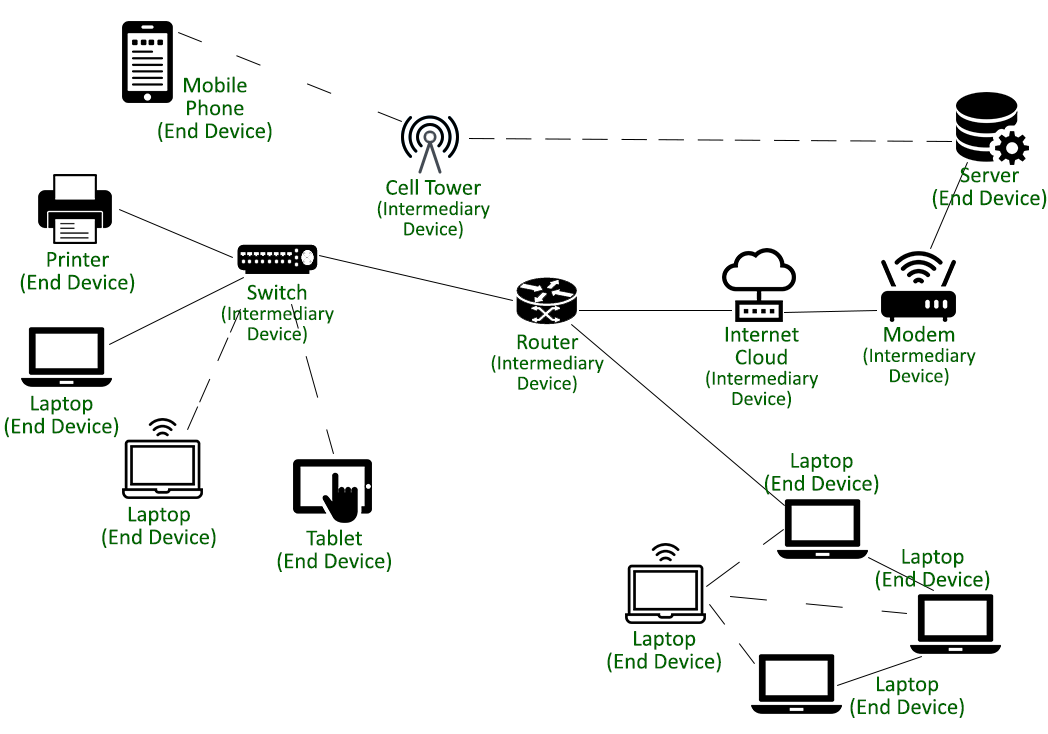
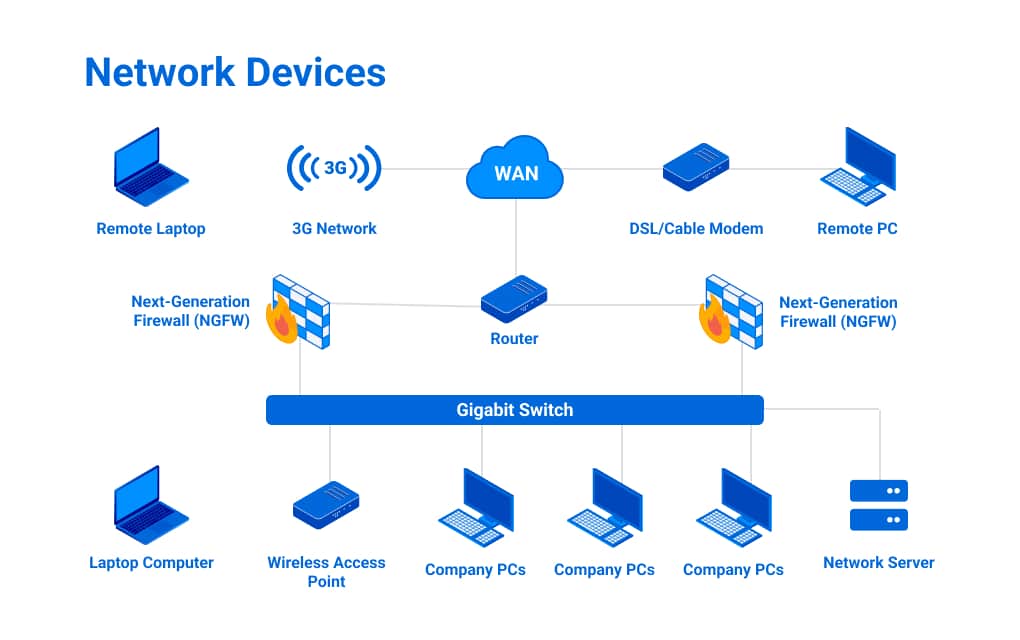
An end device, also known as a host, is any device that can send or receive data over a network. Unlike intermediary devices such (such as routers, switches, and access points) which facilitate the movement of data between end devices, end devices are the ultimate sources or destinations of data. They represent the “ends” of the network, where communication originates and terminates.
Common examples of end devices include:
-
Computers: Desktops, laptops, workstations.
-
Mobile Devices: Smartphones, tablets, smartwatches.
-
Printers: Networked printers that can receive print jobs.
-
Servers: Web servers, file servers, email servers – while performing network services, they are the “end” destination for client requests.
-
Internet of Things (IoT) Devices: Smart home appliances, sensors, cameras, industrial control systems.
-
Voice over IP (VoIP) Phones: Devices specifically designed for network-based voice communication.
Each of these devices possesses unique capabilities but shares the fundamental characteristic of being able to generate, consume, or process information that travels across a network.
Bridging the User-Network Gap
Perhaps the most intuitive role of end devices is their function as the primary interface between users and the network. They translate human commands and desires into digital signals that can traverse the network, and conversely, they convert digital information received from the network into a usable format for humans.
Consider the act of browsing the internet: A user inputs a website address into a browser on their laptop (an end device). The laptop then translates this request into a series of network packets, sends them through the network infrastructure, and eventually receives the requested web page data. The laptop then renders this data visually on its screen, making it comprehensible to the user. This bidirectional translation and presentation is a core aspect of how end devices make networks functional and accessible for human interaction, thereby bridging the often-complex technical intricacies of network protocols with the simplicity of user experience.
Function 1: Originating Data and Information Flow
The first principal function of end devices is to initiate and generate data that flows into the network. Networks are not self-sustaining information factories; they require input to function, and this input almost exclusively comes from end devices.
Data Generation and Input
Every action a user takes on an end device that involves sharing or creating information contributes to this function. When you compose and send an email, create a document on a shared drive, upload a photo to cloud storage, or even record a video call, your end device is the point of origin for that data. Applications running on these devices are designed specifically to facilitate this data generation. A word processor creates text files, a camera application captures images, and a sensor collects environmental readings.
This original data is then packaged by the end device, often broken into smaller segments, and encapsulated with network headers (like IP addresses and port numbers) before being transmitted onto the network. Without end devices actively generating new data, the network would quickly become a static, unengaging repository of old information.
Requesting Network Services
Beyond creating new content, end devices are also responsible for initiating requests for existing information or services available on the network. This is the client side of the ubiquitous client-server model. When you click a link to view a webpage, stream a video, download a file, or access a database, your end device sends a request to a server (which is also an end device) somewhere on the network.
These requests are specific queries or commands that instruct another end device (the server) to perform an action or provide data. For instance, a web browser on your laptop sends an HTTP GET request to a web server for a specific web page. Your smartphone sends a request to a streaming service server to begin playing a movie. The ability of end devices to articulate and transmit these requests is what drives most network traffic and allows users to consume the vast resources available online and within local networks.
Sensing and Data Collection (IoT Context)
In the rapidly expanding realm of the Internet of Things (IoT), many end devices have a primary function dedicated entirely to originating data through sensing and collection. These devices – smart sensors, security cameras, industrial monitors, wearable fitness trackers – are specifically designed to gather information about their environment or user activity.
For example, a smart thermostat collects temperature and humidity data; a security camera captures video footage; a wearable device monitors heart rate and steps taken. This raw data is then processed, often locally at the edge device itself, and subsequently transmitted over the network to central servers or cloud platforms for storage, analysis, and further action. This specialized form of data origination is becoming increasingly vital for automation, data-driven decision-making, and the smart environments of the future.
Function 2: Receiving and Consuming Networked Resources
The second indispensable function of end devices is their capacity to receive, process, and ultimately consume the data and resources that flow across the network. If end devices only generated data, networks would be mere black holes of information; their utility comes from the ability to deliver information back to the users and applications that need it.
Displaying and Processing Received Data
Once data has traversed the network from its origin (another end device, typically a server), it arrives at the destination end device. It is here that the raw network packets are reassembled, decompressed, and presented in a usable format. This involves a complex interplay of hardware and software.
For example, when you receive an email, your email client on your computer (the end device) receives the email data, processes it, and displays it on your screen in a readable format. When you stream a video, your device receives continuous packets of video and audio data, buffers them, decodes them, and plays them back in real-time. Similarly, downloaded files are stored on the device’s local storage and made accessible to appropriate applications. This function transforms abstract digital signals into tangible information, entertainment, or functional tools for the user.
Responding to Network Requests (Server-Side End Devices)
While many end devices primarily act as clients, some end devices operate as servers, whose core function involves receiving requests from other end devices and responding by providing requested data or services. A web server, for instance, is an end device specifically designed to listen for incoming HTTP requests, process them, retrieve the requested web page files from its storage, and then send those files back over the network to the requesting client end device.
Similarly, a file server receives requests to store or retrieve files, and an email server receives emails destined for local mailboxes and sends emails originating from its users. In these scenarios, the server’s “receiving” function is paramount – it’s the readiness to accept and act upon requests that defines its role. Without end devices capable of acting as servers, the client-server architecture that underpins the internet would simply not exist, and the vast majority of shared network resources would be inaccessible.
Storing and Utilizing Retrieved Information
Beyond simply displaying or presenting information, receiving data often necessitates its storage and subsequent utilization by the end device. When you download a software update, a document, or a media file, the end device stores this information locally on its hard drive or memory. This local storage allows for offline access, quicker retrieval, and persistent use of the data.
Furthermore, received information is often not just for passive viewing but for active utilization by applications running on the device. An operating system update, once received, is installed and integrated into the device’s core functionality. A downloaded spreadsheet can be opened, edited, and manipulated by a spreadsheet application. This aspect of the receiving function highlights that end devices are not just passive recipients but active agents that integrate and leverage networked resources into their ongoing operation.
Beyond the Core Two: Essential Auxiliary Functions
While originating and receiving data are the two overarching functions, several other critical roles contribute to the comprehensive utility and security of end devices on a network.
Network Access and Authentication
End devices are the primary entities responsible for establishing and maintaining their connection to the network. This includes configuring network interfaces (Wi-Fi, Ethernet), obtaining IP addresses, and crucially, authenticating themselves and their users to the network. Whether it’s entering Wi-Fi credentials, logging into a corporate VPN, or using two-factor authentication for cloud services, the end device acts as the client for this security handshake. Proper authentication at the end device level is fundamental to network security, ensuring that only authorized users and devices can access network resources.
Security Implementation
End devices serve as the frontline for implementing network security measures. They host antivirus software, personal firewalls, intrusion detection systems, and encryption utilities. They are responsible for protecting themselves and the data they handle from malware, unauthorized access, and cyber threats. When data is received, the end device’s security software scans it for malicious content. When data is sent, encryption ensures its confidentiality. The overall security posture of a network is heavily reliant on the robust security practices and software implemented at the endpoint level.
Device Management and Configuration
Users or IT administrators interact directly with end devices to manage their settings, update their operating systems and applications, and configure their network parameters. This includes setting static IP addresses, configuring proxy settings, updating firmware for IoT devices, or managing application permissions. The ability to manage and configure end devices directly impacts their performance, security, and their overall interaction with the network.
Application Hosting
Ultimately, end devices host the applications that make network communication meaningful. A web browser on a laptop, an email client on a smartphone, a specialized medical application on a workstation, or a smart home app controlling IoT devices – these applications run on end devices and provide the user interface and logic for leveraging network services. Without these applications, the raw data transmitted across the network would be largely unintelligible and unusable to the end-user.
Conclusion
The functionality of end devices is absolutely foundational to the existence and utility of any network, from a small home network to the global internet. Their two primary functions – originating data and information flow and receiving and consuming networked resources – define their indispensable role. Whether creating new content, requesting services from a distant server, or rendering complex data for human consumption, end devices are the active participants that bring networks to life. As technology continues to evolve, encompassing more intelligent and diverse devices, their centrality as the human-network interface and data endpoints will only continue to grow, solidifying their position as the silent workhorses of the digital age.
aViewFromTheCave is a participant in the Amazon Services LLC Associates Program, an affiliate advertising program designed to provide a means for sites to earn advertising fees by advertising and linking to Amazon.com. Amazon, the Amazon logo, AmazonSupply, and the AmazonSupply logo are trademarks of Amazon.com, Inc. or its affiliates. As an Amazon Associate we earn affiliate commissions from qualifying purchases.