
Patrick Bateman, the infamous protagonist of Bret Easton Ellis’s “American Psycho,” is a figure synonymous with the excesses and moral bankruptcy of 1980s Wall Street. While his narrative is often dissected through the lenses of psychology, sociology, or literary criticism, a unique and profoundly insightful perspective emerges when we analyze “what is wrong with Patrick Bateman” through the prism of brand strategy and personal identity. From this vantage point, Bateman serves not merely as a fictional villain but as a chilling, albeit extreme, case study in the perils of inauthentic branding, the illusion of corporate identity, and the existential void created when personal worth is entirely outsourced to material possessions and societal approval.

His “wrongness” extends far beyond his heinous crimes; it lies in the catastrophic failure of his personal brand to align with any semblance of genuine self, creating a chasm of disconnect that ultimately devours him. This exploration will dissect Bateman’s meticulously constructed persona, highlighting the profound lessons it offers for understanding authenticity, purpose, and the sustainable development of any brand, personal or corporate, in an increasingly image-driven world.
The Façade of Perfection: Bateman’s Meticulously Crafted Personal Brand
Patrick Bateman’s existence is a masterclass in aggressive, surface-level personal branding. Every detail of his life is not merely chosen but curated to project an image of impeccable success, sophisticated taste, and unassailable belonging within his elite New York financial circle. His personal brand is his armor, his weapon, and ultimately, his prison.
The Anatomy of a Perfect Image
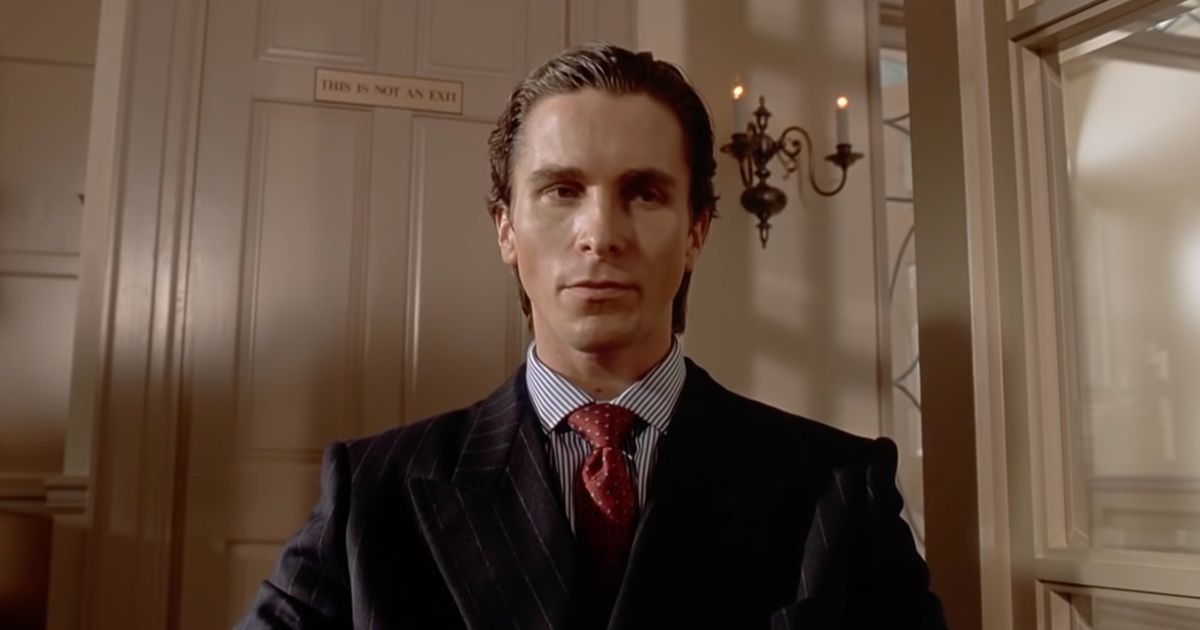
Bateman’s personal brand is a mosaic of hyper-specific, high-status signifiers. His physical appearance is an obsession, beginning with an exhaustive, multi-step skincare regimen detailed with the precision of a corporate whitepaper. His wardrobe is an ensemble of designer suits from Giorgio Armani, Ralph Lauren, and Valentino, each chosen not just for quality but for its precise signaling of status and conformity to the unspoken dress code of his tribe. He meticulously describes the fabrics, the cuts, the subtle differences that only an insider would appreciate. This isn’t just dressing well; it’s an active, daily act of brand reinforcement.
His apartment, with its minimalist decor and high-end electronics, is an extension of this brand—a perfectly staged environment devoid of personal warmth but rich in aesthetic appeal. Even his dining choices are brand statements: reservations at exclusive restaurants like Dorsia, where the difficulty of securing a table itself confers status. His business card, famously critiqued with furious jealousy by his peers, is the ultimate physical manifestation of his brand—a pristine artifact meant to convey superiority through its font, weight, and subtle off-white coloring.
Each of these elements, from his perfectly toned physique to his choice of mineral water, serves a singular purpose: to construct an impenetrable brand that screams “successful, discerning, and utterly conventional” to those around him. This is branding taken to its logical, terrifying extreme: a self entirely constructed from external signifiers, with no room for genuine imperfection or individual deviation.
Adherence to Corporate Identity (of the 80s Yuppie)
Bateman’s personal brand is not just self-created; it is a direct and exaggerated reflection of the prevailing “corporate identity” of 1980s Wall Street. He is the archetypal Yuppie, a product of an era defined by unchecked consumerism, aggressive ambition, and a chilling superficiality. The “corporate identity” in this context refers to the collective brand ethos of his socio-economic milieu: what it meant to be “successful” and “acceptable” in that world.
He internalizes and embodies this cultural brand identity with terrifying zeal. His conversations are riddled with brand names and status comparisons; his friendships are transactional, based on shared consumption rather than genuine connection. He is, in essence, a walking, talking embodiment of his era’s most shallow values. His identity is so deeply intertwined with this “corporate identity” that any deviation would be perceived as a catastrophic brand failure. His internal monologue reveals a constant comparison of himself to his peers, desperately seeking validation and fearing any perceived inadequacy. This intense pressure to conform, to be the “perfect” iteration of the Wall Street brand, ironically fuels his internal fragmentation. He is merely an actor playing a prescribed role, albeit with deadly consequences for those who pierce his carefully maintained facade.
Brand Authenticity vs. Brand Artifice: The Chasm Within
The most fundamental flaw in Patrick Bateman’s brand, and arguably the root of “what is wrong with him,” is the colossal disconnect between his meticulously crafted external persona and his true internal reality. This chasm represents the ultimate failure of brand authenticity, offering a stark warning to any individual or organization tempted to prioritize superficial image over genuine substance.
The Disconnect: Brand Promise vs. Brand Reality
Bateman’s brand promises success, sophistication, charm, and normalcy. He is perceived by most as a diligent, if somewhat bland, investment banker – a fitting, if unremarkable, piece of the Wall Street tapestry. This is his brand promise: a polished, high-functioning member of society. However, his brand reality is one of extreme psychopathy, depravity, and profound internal emptiness. Beneath the expensive suits and the designer watches lies a vacuum filled with nihilism, sadism, and a terrifying detachment from humanity.
This is the ultimate brand betrayal. Where a legitimate brand aims for alignment between its outward presentation and its core values, Bateman’s brand is a deliberate, pathological deception. His carefully constructed image is not just a mask; it is a complete fabrication designed to conceal a monstrous truth. The brand promise is a lie, and the brand reality is a nightmare. This extreme divergence illustrates the inherent fragility and danger of building a brand solely on artifice, especially when the internal core is rotten.
The Dangers of Inauthentic Branding
The profound disconnect within Bateman’s brand underscores the inherent dangers of inauthentic branding. For individuals, such a chasm can lead to unbearable internal conflict, psychological fragmentation, and a loss of genuine self. Bateman’s constant performance, the sheer effort required to maintain his normal-guy facade while his inner world rages with unspeakable urges, contributes directly to his psychological unraveling. The brand consumes the person.
For corporate entities, this lesson is equally critical. A brand that promises one thing but delivers another—or worse, conceals a harmful truth—ultimately faces a crisis of trust, reputational damage, and existential threat. Imagine a company branding itself as ethical and sustainable while engaging in exploitative practices; the inevitable revelation of this inauthenticity can be catastrophic. Bateman’s story, therefore, becomes a hyperbolized case study of how a brand built on a foundation of lies cannot sustain itself, inevitably leading to self-destruction and harm to others. It highlights that true brand resilience comes from transparency, integrity, and a genuine commitment to the values it professes, not from the perfection of its outward shell.
The Consumerist Identity: Branding Through Material Possession
A significant aspect of “what is wrong with Patrick Bateman” stems from his complete immersion in a consumerist identity. For Bateman, identity is not formed through introspection, relationships, or values, but through the accumulation and display of high-end material goods. His brand is literally composed of other brands.

Status Symbols as Brand Pillars
Bateman’s entire self-concept is built upon the brands he consumes. He defines himself by his designer clothes (Versace, Cerruti, Valentino), his meticulously described accessories (Oliver Peoples glasses, Rolex watches), his apartment’s furnishings (B&O stereo, state-of-the-art kitchen appliances), and his choice of exclusive services and experiences. These aren’t just possessions; they are the literal building blocks of his personal brand. He doesn’t just own these brands; he is them. His monologues often devolve into obsessive descriptions of these items, revealing an almost religious reverence for their status-conferring power.
In his world, the value of a person is directly correlated with the perceived value of their possessions and their access to exclusive experiences. A business card is not merely contact information; it’s a competitive statement of one’s position within the hierarchy of corporate aesthetics. His constant comparisons to his peers regarding the “niceness” of their acquisitions illustrate this point vividly. His personal brand is, therefore, a composite brand, an assemblage of other established luxury brands that signal his belonging, his taste, and his financial prowess. This dependency on external validation through consumption is a crucial aspect of his pathology.
The Empty Core of Material Branding
The fundamental flaw in this consumerist approach to branding is its inherent emptiness. When identity is solely derived from external possessions, it lacks substance, resilience, and true meaning. These material goods cannot fill the existential void within Bateman; in fact, they highlight it. The more he accumulates, the more hollow he becomes. His expensive suits and perfect physique mask an internal landscape of utter desolation.
This phenomenon offers a critical lesson for both personal and corporate branding. A brand built exclusively on superficial trends, celebrity endorsements, or lavish imagery without a strong, authentic core purpose is destined for fragility. Such a brand may attract initial attention, but it will fail to build lasting loyalty or genuine connection. Bateman’s “wrongness” here is not just his excessive spending, but the tragic belief that these possessions could somehow constitute a “self” or provide meaning. His inability to form genuine connections, to feel true empathy, or to derive joy from anything beyond superficial validation is a direct consequence of his brand being built on an empty foundation of materialism. It’s a stark warning: money and luxury goods can buy a brand, but they cannot buy a soul or a sustainable, meaningful identity.
Crisis of Identity: When the Brand Consumes the Self
Patrick Bateman’s narrative is a tragic illustration of what happens when the relentless pursuit of a brand persona completely eclipses and ultimately devours the individual behind it. He doesn’t merely have a personal brand; he becomes it, losing all sense of a genuine self in the process.
Losing the Self in the Persona
Bateman’s dedication to maintaining his meticulously constructed brand is so absolute that it leaves no room for genuine self-discovery or authentic experience. The mask becomes the face, but the face is hollow. He performs his life rather than living it. Every interaction is calculated, every word chosen to fit the persona of the successful, charming investment banker. He meticulously rehearses his lines, particularly his lengthy and often unprompted critiques of pop music, as if demonstrating his “taste” is essential to his brand image.
This constant performance is exhausting and isolating. His inability to form genuine emotional connections, to empathize, or to feel true joy or sorrow is a direct symptom of this self-erasure. The “self” has been sacrificed at the altar of the brand. He is a perfectly polished automaton, capable of mimicking human interaction but devoid of its essence. His monologues reveal a constant mental struggle to maintain the facade, to ensure no crack appears in his carefully curated brand. This state of perpetual performance not only prevents personal growth but actively fosters the monstrous pathology that lies beneath.
The Unraveling: Cracks in the Facade
Despite his best efforts, Bateman’s carefully constructed brand periodically cracks under the immense pressure of its own artifice. Moments of extreme violence, emotional outbursts, or delusional thoughts are the manifestations of a brand in crisis—moments where the internal chaos breaches the external perfection. His inability to be perceived as an individual, often being mistaken for others even by those closest to him, suggests the ultimate failure of his distinct personal brand. He is so perfectly generic within his tribe that he becomes interchangeable, highlighting the anonymity that comes with extreme conformity.
The effort required to uphold such a false brand is ultimately unsustainable. The mental and emotional toll of living a lie is immense, driving Bateman deeper into his madness. His brand, designed to protect him and project an image of control, ultimately becomes the engine of his destruction. This internal unraveling serves as a powerful cautionary tale about the psychological cost of inauthenticity and the inherent instability of a brand built on a foundation of denial and deception.
Lessons for Modern Branding: Authenticity and Purpose
Patrick Bateman’s extreme narrative, when viewed through the lens of brand strategy, offers profound and disturbing lessons for both personal and corporate branding in the contemporary world. His “wrongness” provides a clear illustration of what happens when brand building becomes a superficial exercise detached from genuine purpose and authenticity.
Beyond Surface-Level Branding
Bateman’s brand is a testament to the dangers of focusing solely on superficial aesthetics, trending narratives, or external validation without grounding them in genuine values or a clear, ethical purpose. In today’s highly connected and transparent world, a brand built purely on outward appearance is vulnerable to exposure. Consumers (and audiences) are increasingly savvy; they seek authenticity and can quickly discern between genuine commitment and performative marketing. The constant pressure on social media to present a “perfect” personal brand, often leading to mental health struggles and a sense of inadequacy, echoes Bateman’s plight on a less violent but similarly destructive scale. For businesses, this means that slick advertising and attractive packaging mean little if the product, service, or corporate culture is fundamentally flawed or inauthentic.
The Power of Vulnerability and True Identity
In stark contrast to Bateman’s fortress of artifice, modern branding increasingly values transparency, vulnerability, and genuine connection. A strong personal brand today often embraces imperfections, shares authentic struggles, and reveals the human behind the professional facade. This fosters trust and resonance in a way that Bateman’s impenetrable perfection never could. Similarly, successful corporate brands are those that demonstrate genuine social responsibility, articulate clear values, and engage in open communication with their stakeholders, even when facing challenges. This commitment to a true identity, rather than a fabricated one, builds resilience and enduring loyalty.
Crafting a Sustainable Brand Narrative
Ultimately, Patrick Bateman serves as a powerful, albeit dark, guidepost for what not to do in branding. A truly successful brand, one that endures, connects, and contributes positively, must be built on a foundation of genuine self-awareness, clear ethical values, and a steadfast commitment to its stated purpose. It requires introspection, integrity, and a willingness to be transparent, rather than a relentless pursuit of external status symbols or the maintenance of a perfect, but ultimately empty, image.
His story reminds us that while perception is powerful, it is authenticity that sustains. The “wrongness” of Patrick Bateman is the ultimate brand failure—a catastrophic implosion resulting from a fundamental lack of self, disguised by a meticulously crafted, yet utterly fraudulent, external presentation. It’s a stark reminder that true brand success, whether personal or corporate, originates from within, grounded in truth, and expressed with genuine purpose.
aViewFromTheCave is a participant in the Amazon Services LLC Associates Program, an affiliate advertising program designed to provide a means for sites to earn advertising fees by advertising and linking to Amazon.com. Amazon, the Amazon logo, AmazonSupply, and the AmazonSupply logo are trademarks of Amazon.com, Inc. or its affiliates. As an Amazon Associate we earn affiliate commissions from qualifying purchases.