
In the vast and often tumultuous world of finance, the term “trader” frequently surfaces, sometimes with an air of mystique, at other times with connotations of high risk and quick fortune. Yet, beyond the sensational headlines and dramatic portrayals, a trader is fundamentally an individual or entity engaged in the buying and selling of financial assets in various markets with the primary objective of profiting from price fluctuations. This intricate dance of supply and demand, informed by analysis, strategy, and often a keen sense of market psychology, forms the backbone of global commerce and personal wealth creation.

This article delves into the multifaceted identity of a trader, dissecting their roles, strategies, and the critical skills required to navigate the complex financial landscape. From the bustling floors of institutional exchanges to the quiet solitude of a home office, traders employ diverse approaches to capitalize on market movements, contributing significantly to market liquidity and price discovery. Understanding what a trader is, therefore, is not merely about defining a profession but comprehending a vital component of the economic engine that drives our world, offering pathways for significant online income and a unique approach to personal finance and investing.
The Core Role and Function of a Trader
At its heart, trading is about making informed decisions to buy or sell financial instruments. These instruments can range from traditional stocks and bonds to commodities, currencies (forex), derivatives, and increasingly, cryptocurrencies. The essence of a trader’s role lies in identifying discrepancies between perceived value and market price, anticipating future price movements, and executing transactions to profit from these expectations. This requires a unique blend of analytical prowess, disciplined execution, and an unwavering commitment to risk management.
Defining the Modern Trader
The modern trader operates in a highly dynamic and technologically advanced environment. Gone are the days when trading was exclusively confined to the trading pit; today, electronic trading platforms dominate, allowing individuals from virtually anywhere to access global markets. A trader is not merely a speculator but often a sophisticated market participant who contributes to market efficiency by providing liquidity, absorbing risk, and facilitating the flow of capital. Whether an individual managing their own investment portfolio or a professional within a financial institution, the core objective remains consistent: to generate returns by predicting and reacting to market forces. Their activities are a direct form of online income generation, turning market insights into tangible financial gains, thus making it a crucial aspect of the money management landscape.
Key Characteristics and Mindset
Success in trading is not solely dependent on intellectual capacity; it also heavily relies on a specific set of psychological characteristics. Discipline is paramount, enabling traders to stick to their strategies even during periods of loss or uncertainty. Emotional control is equally vital, preventing impulsive decisions driven by fear or greed. Patience allows traders to wait for optimal entry and exit points, while resilience helps them recover from inevitable setbacks. Beyond these, critical thinking, adaptability, and an insatiable curiosity about economic and geopolitical events are essential. A successful trader views the market as a continuous learning environment, constantly refining their approach and adapting to new information and changing conditions. This mental fortitude is a cornerstone of effective personal finance and investing strategies in trading.
The Ecosystem of Trading
Traders do not operate in a vacuum. They are part of a vast ecosystem that includes exchanges, brokers, regulatory bodies, data providers, and fellow market participants. Exchanges provide the marketplace for buying and selling assets, while brokers act as intermediaries, granting traders access to these exchanges. Regulatory bodies ensure fair practices and protect investors, maintaining the integrity of the financial system. Data providers supply the critical information—such as price feeds, news, and economic indicators—that traders use for analysis. Understanding this ecosystem is crucial for any aspiring trader, as it dictates the tools available, the rules of engagement, and the competitive landscape. For anyone looking at trading as a form of online income or a business venture, comprehending these interconnected components is non-negotiable.
Diverse Types of Traders and Their Strategies
The trading world is far from monolithic; it encompasses a wide spectrum of participants, each with distinct objectives, time horizons, and methodologies. Categorizing traders helps to understand the diverse ways in which individuals and institutions engage with financial markets, whether for short-term profit or long-term capital appreciation. These varied approaches highlight the flexibility of trading as a path to financial growth.
Institutional vs. Retail Traders
One of the primary distinctions in the trading world is between institutional and retail traders. Institutional traders work for large financial entities such as hedge funds, investment banks, pension funds, and mutual funds. They manage vast sums of capital on behalf of clients or the institution itself, often executing large-volume trades that can significantly impact market prices. Their access to sophisticated technology, vast research departments, and direct market access gives them a distinct advantage.
Retail traders, on the other hand, are individual investors who trade with their own capital, typically through online brokerage accounts. While they usually operate with smaller capital bases, advancements in technology have democratized access to financial markets, empowering retail traders with tools and information previously exclusive to institutions. Many retail traders view this as a primary source of online income or a significant component of their personal finance strategy, managing their own investments directly.
Day Traders, Swing Traders, and Position Traders
Traders can also be classified by their typical holding period for assets:
-
Day Traders: These traders open and close positions within the same trading day, never holding positions overnight. Their goal is to profit from small, intraday price movements, often using high leverage. Day trading requires intense focus, quick decision-making, and robust risk management. It’s a high-stress, high-reward approach to generating online income.
-
Swing Traders: Swing traders hold positions for a few days to several weeks, aiming to capture “swings” in price within an overarching trend. They often use technical analysis to identify potential reversals or continuations of short-to-medium-term trends. This approach allows for more flexibility than day trading but still requires active management.
-
Position Traders: These traders take a long-term view, holding assets for weeks, months, or even years. Their strategies are typically based on fundamental analysis, focusing on the underlying value and long-term growth prospects of a company or asset. Position trading aligns more closely with traditional investing, emphasizing capital appreciation over short-term gains, and is often a cornerstone of long-term personal finance and investment planning.
Fundamental vs. Technical Analysis Approaches
Traders employ different analytical frameworks to make decisions:
-
Fundamental Analysis: This approach involves evaluating the intrinsic value of an asset by examining economic, financial, and qualitative factors. For stocks, this includes analyzing a company’s financial statements, management, industry outlook, and macroeconomic conditions. For currencies, it involves looking at interest rates, GDP growth, inflation, and geopolitical events. Fundamental analysts believe that market prices will eventually reflect the true value of an asset.
-
Technical Analysis: Technical analysts study past market data, primarily price charts and volume, to identify patterns and predict future price movements. They believe that all relevant information is already reflected in the price and that history tends to repeat itself. Indicators such as moving averages, relative strength index (RSI), and MACD are commonly used to generate trading signals. This method is particularly popular among short-term traders looking for immediate online income opportunities.
Essential Tools and Knowledge for Aspiring Traders
Embarking on a trading journey requires more than just capital; it demands a solid foundation of knowledge, access to the right tools, and a systematic approach to managing risk. For anyone considering trading as a form of personal finance management or online income, these elements are non-negotiable.
Understanding Financial Instruments (Stocks, Forex, Commodities, Crypto)
Before placing a single trade, it’s crucial to understand the characteristics and nuances of different financial instruments:
-
Stocks: Represent ownership in a company. Traders profit from stock price appreciation or dividends.
-
Forex (Foreign Exchange): Involves trading currency pairs (e.g., EUR/USD). It’s the largest and most liquid financial market globally, offering constant online income opportunities due to 24/5 trading.
-
Commodities: Raw materials like gold, oil, natural gas, or agricultural products. Traders speculate on their price movements influenced by supply and demand factors.
-
Cryptocurrencies: Digital or virtual currencies secured by cryptography. Highly volatile, they offer immense profit potential but also significant risk, appealing to those seeking high-growth online income.
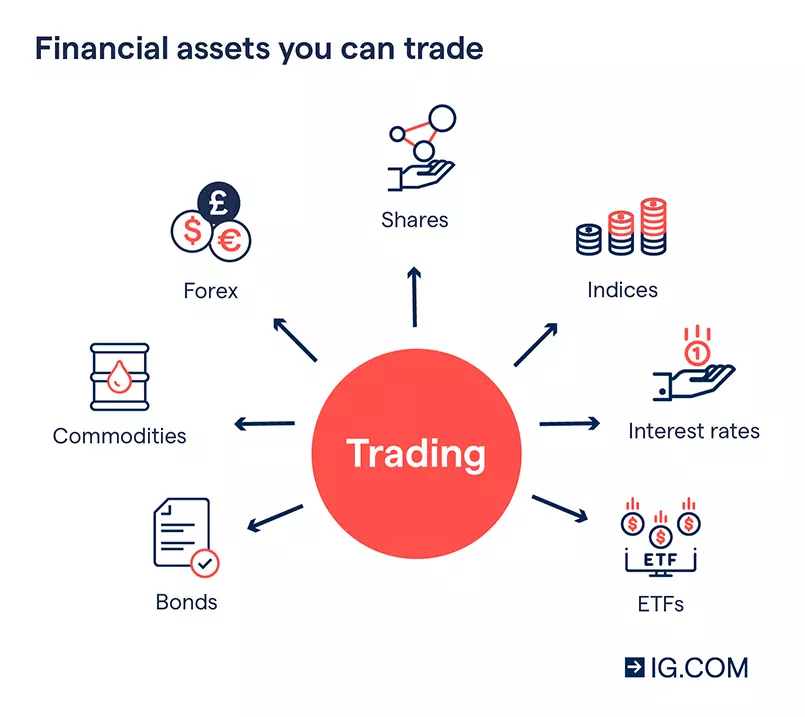
Each instrument has its unique market dynamics, volatility, and regulatory framework. A wise trader specializes in one or a few instruments, building deep expertise rather than spreading themselves too thin.
The Importance of Risk Management
Perhaps the most critical aspect of trading is risk management. Without it, even the most brilliant trading strategy is doomed to failure. Risk management involves:
-
Position Sizing: Determining how much capital to allocate to a single trade to limit potential losses to a small percentage of the total trading capital (e.g., 1-2%).
-
Stop-Loss Orders: Predetermined price levels at which a losing trade is automatically closed to prevent further losses.
-
Take-Profit Orders: Predetermined price levels at which a profitable trade is closed to lock in gains.
-
Diversification: Spreading investments across different assets to reduce overall portfolio risk, though less common in short-term trading.
Effective risk management is not about avoiding losses entirely, which is impossible, but about controlling them to ensure long-term survival and profitability. It’s the bedrock of sustainable business finance in trading.
Educational Pathways and Continuous Learning
The financial markets are constantly evolving, making continuous learning an absolute necessity. Aspiring traders should pursue various educational pathways:
-
Books and Online Courses: Numerous resources explain market fundamentals, trading strategies, and risk management principles.
-
Mentorship: Learning from experienced traders can provide invaluable insights and accelerate the learning curve.
-
Demo Trading: Practicing with virtual money allows traders to test strategies and get comfortable with platforms without financial risk.
-
Market News and Analysis: Staying updated on economic news, company earnings, and geopolitical events is crucial for informed decision-making.
A trader’s education never truly ends; the most successful traders are perpetual students of the market. This commitment to self-improvement directly impacts their ability to generate consistent online income.
The Potential and Perils of Trading as an Income Stream
Trading presents an alluring prospect: the ability to generate significant income, achieve financial independence, and even operate a business from anywhere with an internet connection. However, it is also fraught with challenges and risks that require careful consideration.
Trading as a Business: Profit Potential and Capital Requirements
Approaching trading as a business is essential for long-term success. This means having a detailed business plan, setting realistic financial goals, and managing capital effectively. The profit potential can be substantial, as traders have the opportunity to leverage their capital and generate returns far exceeding traditional savings accounts or even some long-term investments. However, starting capital is critical. While some forms of trading, like forex or crypto, can be initiated with relatively small amounts, significant capital is often required to generate a substantial full-time income, especially for institutional-level returns. Furthermore, profit is never guaranteed, and capital can be lost entirely. Understanding capital requirements is a key aspect of business finance for a trader.
Psychological Challenges and Discipline
Beyond the technical skills, the psychological demands of trading are immense. Traders routinely face stress, anxiety, fear, and greed. The emotional rollercoaster of winning and losing trades can be taxing, leading to impulsive decisions if discipline falters. Maintaining objectivity, adhering to a predefined trading plan, and managing emotions effectively are critical for consistent performance. This requires a high degree of self-awareness and mental fortitude, often honed through extensive experience and psychological training. Without strong emotional discipline, trading as an online income source can quickly become a destructive force for personal finance.
Regulatory Landscape and Ethical Considerations
The trading environment is heavily regulated to protect investors and maintain market integrity. Traders must be aware of and comply with regulations set by bodies like the SEC (in the US), FCA (in the UK), or similar authorities globally. These regulations cover everything from anti-money laundering (AML) to fair trading practices and disclosure requirements. Ethical considerations also play a role, ensuring transparency and avoiding practices such as insider trading or market manipulation, which can lead to severe legal penalties and reputational damage. Adherence to these guidelines is not just legal compliance but a fundamental aspect of building a sustainable and credible business within the financial markets.
Building a Successful Trading Career
To truly thrive as a trader and establish it as a viable source of ongoing income, one must adopt a systematic, strategic, and resilient approach. It’s a journey that combines continuous learning with practical application and strong personal development.
Developing a Trading Plan
A well-defined trading plan is the blueprint for a trader’s actions. It outlines:
-
Trading Strategy: The specific methods for identifying entry and exit points.
-
Risk Management Rules: How much capital to risk per trade, stop-loss and take-profit levels.
-
Asset Focus: Which markets and instruments the trader will specialize in.
-
Trading Journal: A record of all trades, including reasons for entry/exit, emotions, and lessons learned, essential for performance review and refinement.
-
Daily Routine: A structured approach to market analysis, trade execution, and post-market review.
A robust trading plan provides clarity, reduces emotional decision-making, and serves as a tool for evaluating performance and making necessary adjustments. It’s the core of professionalizing trading as a business.
The Role of Technology in Modern Trading
While this article focuses on the “Money” aspect, it’s impossible to discuss modern trading without acknowledging the pivotal role of technology. Automated trading systems, high-speed data feeds, sophisticated charting software, and AI-driven analytical tools have transformed the landscape. Technology enables faster execution, more precise analysis, and the ability to manage multiple positions simultaneously. Retail traders now have access to institutional-grade platforms and data, leveling the playing field to some extent. Leveraging these tools effectively is crucial for maximizing efficiency and competitive advantage, enabling more effective online income generation. However, it’s important to remember that technology is a tool; the underlying trading strategy and risk management remain paramount.

Cultivating Resilience and Adaptability
The financial markets are inherently unpredictable. Economic crises, geopolitical events, and unforeseen market shifts can rapidly alter conditions, creating both challenges and opportunities. Successful traders cultivate resilience—the ability to bounce back from losses and setbacks—and adaptability—the willingness to modify their strategies in response to changing market dynamics. This continuous process of learning, adjusting, and persevering defines a long-term trading career. It’s about understanding that trading is not a sprint but a marathon, demanding consistent effort, intellectual humility, and an unshakeable belief in one’s ability to navigate complexity for sustained personal finance growth.
In conclusion, a trader is far more than just someone who buys and sells. They are skilled strategists, disciplined risk managers, astute market observers, and perpetual learners who navigate the complex financial ecosystem to generate income and build wealth. Whether pursuing trading as a full-time profession, a significant source of online income, or a sophisticated approach to personal investing, understanding the multifaceted role and demands of a trader is the first crucial step towards success in the dynamic world of financial markets.
aViewFromTheCave is a participant in the Amazon Services LLC Associates Program, an affiliate advertising program designed to provide a means for sites to earn advertising fees by advertising and linking to Amazon.com. Amazon, the Amazon logo, AmazonSupply, and the AmazonSupply logo are trademarks of Amazon.com, Inc. or its affiliates. As an Amazon Associate we earn affiliate commissions from qualifying purchases.