
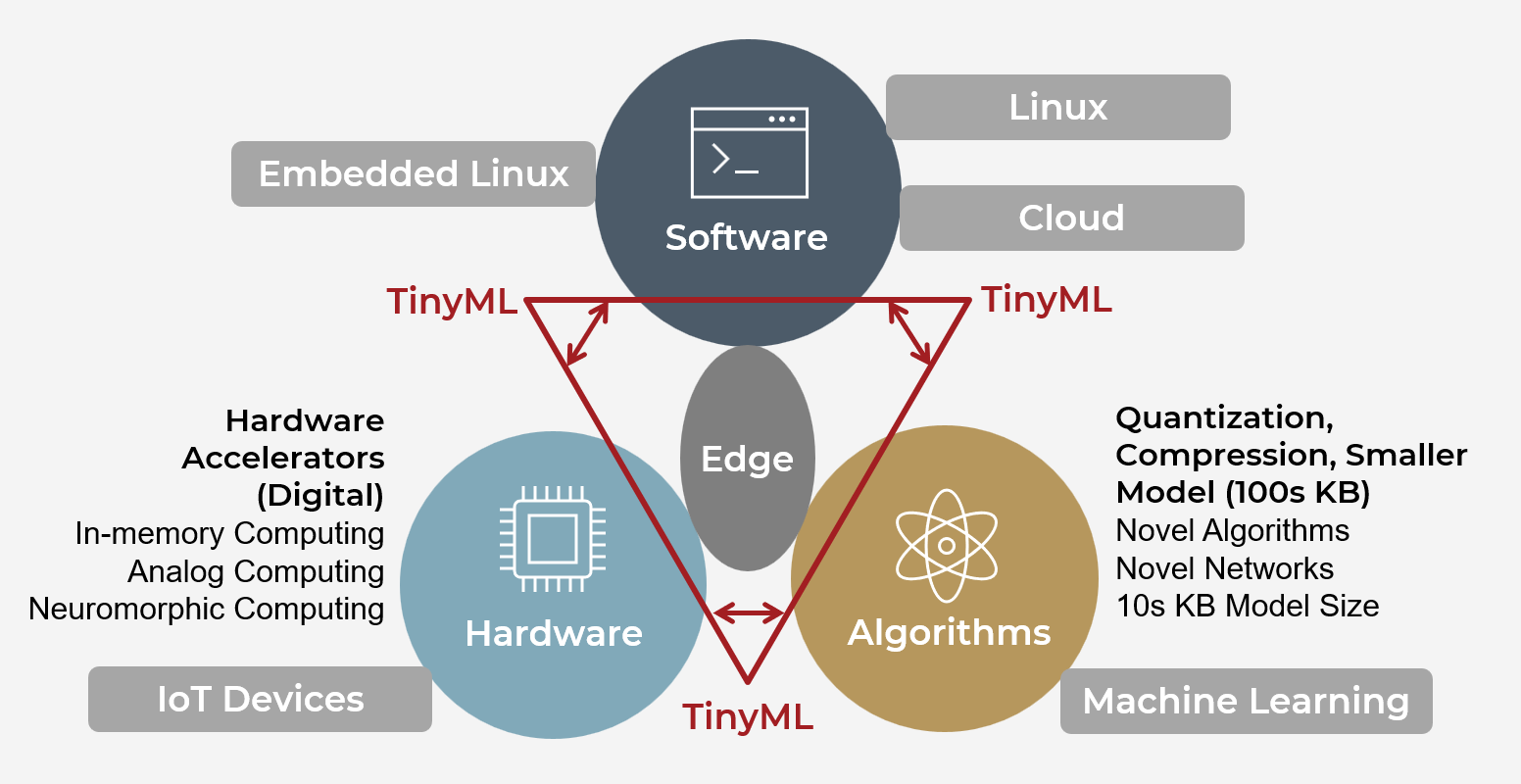
In an increasingly connected world, where intelligence is no longer confined to powerful cloud servers but is rapidly migrating to the very edge of our networks, a revolutionary field known as TinyML is taking center stage. TinyML, short for Tiny Machine Learning, represents the convergence of machine learning and embedded systems, enabling sophisticated AI capabilities to run on ultra-low-power, resource-constrained devices such as microcontrollers. This paradigm shift is not merely about miniaturization; it’s about democratizing AI, making it ubiquitous, pervasive, and capable of operating autonomously in environments previously deemed unsuitable for complex computations.
Imagine a world where your thermostat intelligently anticipates your needs without internet connectivity, where a battery-powered sensor can detect a leak in your home and alert you immediately, or where a wearable device can monitor vital signs with unparalleled accuracy for days on a single charge. This is the promise of TinyML. It’s about bringing AI closer to the data source, reducing latency, enhancing privacy, and dramatically cutting down on energy consumption and bandwidth requirements that traditional cloud-based AI solutions demand. As we delve deeper, we will explore the fundamental principles that underpin TinyML, its operational mechanics, the vast array of applications it enables, and the challenges and exciting future that lie ahead for this transformative technology.
The Essence of TinyML: Bridging AI and Embedded Systems
TinyML is fundamentally about squeezing advanced machine learning models onto hardware with extremely limited processing power, memory, and energy budgets. This isn’t just a minor tweak to existing AI frameworks; it requires a complete rethinking of how models are designed, trained, and deployed. The goal is to perform inference – the act of using a trained model to make predictions or decisions – directly on the device, rather than sending data to the cloud for processing.
What Makes “Tiny” Possible? Resource Constraints
The “tiny” in TinyML refers primarily to the hardware constraints it operates within. Unlike cloud servers with gigabytes of RAM and multi-core processors, TinyML devices typically boast:
-
Processor Power: Measured in tens or hundreds of MHz, often single-core microcontrollers (MCUs) or very low-power embedded CPUs. This contrasts sharply with the GHz multi-core CPUs and powerful GPUs used for training large AI models.
-
Memory Footprint: RAM is usually in kilobytes (KB), ranging from 10s to 100s of KB, rather than gigabytes. Flash memory for program storage might be in megabytes (MB). This limited memory necessitates extremely compact model architectures and efficient data handling.
-
Energy Consumption: Crucially, TinyML devices are designed for ultra-low power operation, often running on small batteries for months or even years. This means operations must be energy-efficient, often relying on wake-on-event triggers and deep sleep modes.
-
Cost-Effectiveness: These devices are typically inexpensive, enabling widespread deployment in consumer products, industrial sensors, and remote monitoring applications without significant financial burden.
These severe constraints mean that traditional deep learning models, which can have millions or even billions of parameters, are simply too large and power-hungry to run natively. TinyML thrives on highly optimized, minimalistic models that can still deliver robust performance for specific tasks.
Key Components of a TinyML System
A typical TinyML system comprises several integrated components working in concert:
-
Sensors: These are the “eyes and ears” of the TinyML device, collecting real-world data such as audio (microphones), visual (cameras), motion (accelerometers, gyroscopes), temperature, pressure, and more. The quality and relevance of sensor data are paramount for accurate ML inference.
-
Microcontrollers (MCUs): The brain of the operation, MCUs are integrated circuits designed to control specific functions in an embedded system. They house the processor, memory, and input/output peripherals. Popular choices include ARM Cortex-M series processors due to their balance of performance and power efficiency.
-
Machine Learning Models: These are highly optimized algorithms (e.g., neural networks) trained to perform specific tasks like keyword spotting, anomaly detection, gesture recognition, or image classification. These models are typically much smaller and simpler than their cloud-based counterparts.
-
Firmware and Runtime: This includes the operating system (often a real-time operating system or bare-metal code) and a TinyML inference engine (e.g., TensorFlow Lite Micro, Pytorch Mobile) that enables the trained model to run efficiently on the MCU.
The synergistic operation of these components allows TinyML devices to autonomously perceive, process, and react to their environment, pushing the frontier of intelligent edge computing.
How TinyML Works: From Data to Deployment
The journey of a TinyML application from concept to deployment involves a specialized workflow that prioritizes efficiency at every stage. It’s a multi-faceted process that spans data acquisition, model development, optimization, and finally, deployment onto the target embedded device.
Data Collection and Pre-processing for Constrained Devices
The foundation of any machine learning model is data, and TinyML is no exception. However, due to the limited resources of target devices, the data collection and pre-processing steps have unique considerations:
-
Targeted Data Acquisition: Instead of vast, generic datasets, TinyML often benefits from highly specific datasets collected under conditions mirroring the device’s operational environment. For instance, if developing a keyword spotter, the audio data should be collected with the specific microphone and in the typical noise conditions the device will encounter.
-
On-Device Pre-processing: To minimize the amount of data that needs to be processed by the ML model itself, initial pre-processing is often performed directly on the MCU. This can include filtering noise, normalizing values, or extracting relevant features (e.g., Mel-frequency cepstral coefficients (MFCCs) for audio, or resizing images). The goal is to present the model with the most concise and informative data possible.
-
Data Augmentation: To compensate for potentially smaller real-world datasets, data augmentation techniques are crucial. This involves creating new training examples by applying transformations (e.g., adding noise, changing pitch, rotating images) to existing data, thereby increasing the model’s robustness and generalization capabilities without needing to collect more raw data.
Model Training and Optimization
Once suitable data is prepared, the next phase involves training the machine learning model and rigorously optimizing it for the target hardware. This is where TinyML diverges significantly from traditional ML workflows.
-
Model Architecture Selection: Rather than complex, deep networks, TinyML often employs simpler architectures like shallow convolutional neural networks (CNNs), recurrent neural networks (RNNs), or even traditional machine learning algorithms like support vector machines (SVMs) or decision trees, when appropriate. The choice depends heavily on the task and available resources.
-
Quantization: This is a cornerstone of TinyML optimization. It involves reducing the precision of the numerical representations of model parameters (weights and biases) and activations. Instead of using 32-bit floating-point numbers, quantization converts them to lower-precision integers (e.g., 8-bit integers). This dramatically reduces memory footprint, speeds up computation (as integer operations are faster than float operations on MCUs), and lowers power consumption, often with minimal impact on accuracy.
-
Pruning: This technique involves removing redundant connections or neurons from a neural network without significantly affecting its performance. It’s like trimming unnecessary branches from a tree to make it more efficient. Pruning can significantly reduce model size and computational complexity.
-
Knowledge Distillation: A “teacher-student” approach where a smaller, simpler “student” model is trained to mimic the behavior of a larger, more complex “teacher” model. The student model learns to approximate the teacher’s outputs, achieving comparable performance with a much smaller footprint.
-
Hardware-Aware Training: In some advanced scenarios, models can be trained with specific hardware constraints in mind, or even co-designed with the hardware, to maximize efficiency.
Deployment and Inference on Edge Devices
The final stage involves deploying the optimized model onto the microcontroller and enabling it to perform inference in real-time.
-
TinyML Frameworks: Specialized frameworks like TensorFlow Lite Micro (TFLu) or PyTorch Mobile are instrumental here. These are ultra-lightweight versions of popular ML frameworks, designed specifically to run on resource-constrained devices. They provide the necessary runtime environment to execute the quantized and optimized models.
-
Model Conversion: The trained and optimized model is converted into a highly compact format that the TinyML runtime can interpret. For instance, TensorFlow models are converted to the
.tfliteformat, which can then be further optimized for microcontrollers. -
Integration with Firmware: The converted model, along with the TinyML runtime library, is integrated directly into the device’s firmware. This often involves cross-compilation for the target MCU architecture.
-
On-Device Inference: Once deployed, the device continuously collects sensor data, performs light pre-processing, feeds it to the integrated ML model, and generates predictions or decisions locally. This entire process happens without reliance on cloud connectivity, ensuring low latency, enhanced privacy, and minimal power usage.
Transformative Applications Across Industries
TinyML is not just a theoretical concept; it’s a rapidly expanding field already making tangible impacts across a multitude of sectors. Its ability to bring intelligence to the farthest reaches of our physical environment unlocks unprecedented opportunities for innovation, efficiency, and safety.
Smart Homes and IoT
In the realm of smart homes and the broader Internet of Things (IoT), TinyML is a game-changer for enhancing device autonomy and privacy:
-
Voice Control and Keyword Spotting: Devices can wake up and respond to specific voice commands (“Hey Google,” “Alexa”) without continuously streaming audio to the cloud. This improves privacy and reduces bandwidth.
-
Occupancy Detection: Low-power sensors can intelligently detect if a room is occupied, optimizing lighting, heating, or cooling without relying on cloud processing or needing complex camera systems.
-
Predictive Maintenance for Appliances: Washing machines, refrigerators, or HVAC systems can learn normal operating patterns and detect anomalies (e.g., unusual vibrations, motor sounds) that may indicate an impending failure, prompting preventative action.
-
Security and Anomaly Detection: Tiny cameras or vibration sensors can locally detect unusual activity or motion, triggering alerts or recordings only when necessary, minimizing false alarms and preserving privacy by not constantly streaming video.
Healthcare and Wearables
TinyML holds immense potential for revolutionizing personal health monitoring and preventative care:
-
Remote Patient Monitoring: Wearable devices can monitor vital signs (heart rate, respiration, activity levels) and detect anomalies indicative of health issues, providing immediate alerts to patients or caregivers. This can be crucial for chronic disease management or elderly care.
-
Activity Recognition: Smartwatches and fitness trackers can accurately classify various physical activities (walking, running, cycling, swimming) directly on the device, providing real-time feedback without draining battery life through constant cloud communication.
-
Fall Detection: TinyML models embedded in wearables can detect falls and automatically alert emergency contacts, offering critical support for vulnerable populations.
-
Early Disease Detection: Miniaturized sensors with embedded AI could potentially analyze biomarkers or physiological signals to identify early warning signs of diseases, leading to proactive medical intervention.
Industrial IoT (IIoT)
In industrial settings, TinyML is driving efficiency, reducing downtime, and enhancing worker safety:
-
Asset Monitoring and Predictive Maintenance: Sensors attached to industrial machinery can monitor vibrations, temperature, or acoustic signatures. TinyML models can analyze this data on-site to predict equipment failures before they occur, scheduling maintenance proactively and preventing costly downtime.
-
Quality Control: TinyML-powered cameras or sensors on production lines can perform real-time visual inspection or material analysis to identify defects, ensuring consistent product quality.
-
Worker Safety: Wearable devices for industrial workers can monitor environmental hazards (gas leaks, extreme temperatures) or detect unusual movements (falls, fatigue), triggering alerts to prevent accidents.
-
Energy Optimization: TinyML can analyze energy consumption patterns of individual components in a factory, identifying inefficiencies and suggesting optimizations for energy savings.
Environmental Monitoring
TinyML offers powerful solutions for ecological preservation and climate action:
-
Wildlife Monitoring: Low-power acoustic sensors can identify specific animal calls or activities in remote areas, aiding conservation efforts without constant human presence.
-
Wildfire Detection: Smoke or temperature sensors with TinyML capabilities can detect early signs of wildfires in remote forests, enabling faster response times.
-
Water Quality Monitoring: Sensors can analyze water parameters (pH, turbidity, chemical presence) on-site to detect pollution or changes in water quality, providing real-time data for environmental protection.
-
Agricultural Intelligence: Smart sensors can monitor soil conditions, crop health, or pest presence, enabling precision agriculture practices to optimize yields and resource usage.
Challenges and the Road Ahead for TinyML
While the potential of TinyML is immense, its widespread adoption and continued evolution face several inherent challenges. Addressing these will be crucial for the technology to reach its full transformative potential.
Overcoming Resource Limitations
The very essence of TinyML – its resource-constrained nature – is also its primary challenge. Constantly pushing the boundaries of what’s possible with limited power, memory, and computational cycles requires continuous innovation in several areas:
-
Even More Efficient Algorithms: The search for ultra-compact, low-power neural network architectures and more efficient machine learning algorithms is ongoing. This includes developing novel quantization schemes, sparse models, and event-driven architectures that only activate processing when necessary.
-
Hardware-Software Co-design: Future advancements will likely see tighter integration between ML algorithms and specialized hardware. Custom ASICs (Application-Specific Integrated Circuits) or highly optimized co-processors designed specifically for TinyML inference will offer significant performance and power efficiency gains over general-purpose MCUs.
-
Edge AI Accelerators: Dedicated hardware accelerators are emerging to offload ML computations from the main MCU, providing a significant boost in inference speed and power efficiency for specific tasks.
Development Complexity and Tooling
Developing TinyML applications often requires a specialized skillset that bridges machine learning, embedded systems programming, and hardware knowledge. This can be a barrier to entry:
-
Streamlined Toolchains: The industry needs more integrated and user-friendly development toolchains that abstract away some of the low-level complexities. Platforms that allow seamless transition from model training to optimization and deployment with minimal manual intervention are critical.
-
Debugging and Profiling: Debugging and profiling ML models on resource-constrained embedded devices can be challenging due to limited debugging interfaces and the real-time nature of operations. Improved tools for performance monitoring, power consumption analysis, and error detection are vital.
-
Standardization: As TinyML matures, the establishment of industry standards for model formats, APIs, and communication protocols will simplify development and foster interoperability.
Data Privacy and Security at the Edge
While performing inference on the edge inherently enhances privacy by reducing data transmission to the cloud, it also introduces new security considerations:
-
Model Tampering: Protecting the deployed ML model from unauthorized access or modification is paramount. A compromised model could lead to incorrect decisions or malicious actions.
-
Data Integrity: Ensuring the integrity of sensor data before it’s fed to the model is crucial to prevent adversarial attacks that could trick the model into making wrong predictions.
-
Secure Over-the-Air (OTA) Updates: Providing secure mechanisms for updating models and firmware on deployed devices is essential to patch vulnerabilities and improve performance without physical access.

The Future: Federated Learning, Explainable AI, and Hardware Innovation
The horizon for TinyML is incredibly exciting, with several key trends poised to shape its future:
-
Federated Learning: This distributed machine learning approach allows models to be trained collaboratively on decentralized edge devices without exchanging raw data, further enhancing privacy and enabling continuous on-device learning.
-
Explainable AI (XAI) for TinyML: As AI becomes more pervasive, understanding why a model makes a certain decision is increasingly important. Developing XAI techniques that can run on resource-constrained devices will build trust and facilitate debugging.
-
Neuromorphic Computing: Inspired by the human brain, neuromorphic chips are designed to process information in a fundamentally different, event-driven, and highly energy-efficient manner. This could be a game-changer for TinyML, allowing even more complex AI to run with minimal power.
-
Energy Harvesting: Combining TinyML with energy harvesting technologies (solar, vibrational, thermal) could create truly autonomous, self-sustaining intelligent devices that never require battery replacement, opening up possibilities for deployments in extremely remote or inaccessible locations.
In conclusion, TinyML is more than just a technological trend; it is a foundational shift towards truly ubiquitous intelligence. By bringing the power of machine learning to the world’s smallest and most constrained devices, it is paving the way for a future where AI is not just smart, but also omnipresent, efficient, and deeply integrated into the fabric of our physical world, enhancing everything from our homes and health to our industries and environment. The journey is complex, but the destination promises a smarter, more responsive, and more sustainable technological landscape.
aViewFromTheCave is a participant in the Amazon Services LLC Associates Program, an affiliate advertising program designed to provide a means for sites to earn advertising fees by advertising and linking to Amazon.com. Amazon, the Amazon logo, AmazonSupply, and the AmazonSupply logo are trademarks of Amazon.com, Inc. or its affiliates. As an Amazon Associate we earn affiliate commissions from qualifying purchases.