
In the intricate tapestry of brand communication, every word, every phrase, and every grammatical construction plays a pivotal role in shaping perception, conveying message, and forging connection. Among the many stylistic choices available to marketers, strategists, and content creators, the distinction between active and passive voice stands out as particularly impactful. It’s not merely a rule for English students; it’s a strategic lever that can influence a brand’s perceived clarity, authority, transparency, and even its very personality.
This article delves into the mechanics of passive voice, contrasting it with its active counterpart, and explores its profound implications within the realm of branding. We will uncover when and why to strategically employ active voice for maximum impact, and conversely, identify specific scenarios where the passive voice, often maligned, can serve a legitimate and beneficial purpose in a brand’s communication toolkit. Understanding this nuance is not just about grammatical correctness; it’s about mastering the art of linguistic precision to sculpt a powerful and consistent brand identity.

Deconstructing Passive Voice: The Mechanics and Misconceptions
Before we can wield the power of voice strategically for our brands, we must first understand what passive voice truly is and how it differs fundamentally from active voice. Many have heard the admonition to “avoid passive voice,” but few truly grasp its structure and the specific effects it has on meaning and emphasis.
The Anatomy of a Passive Sentence
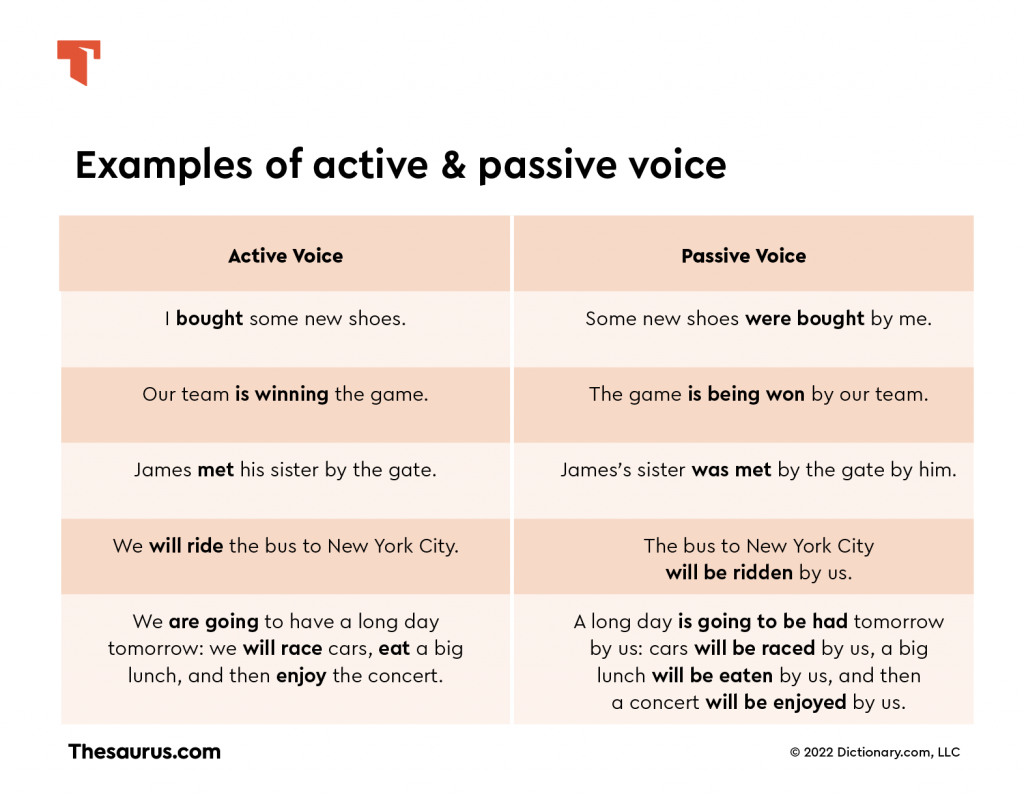
At its core, a passive sentence inverts the typical subject-verb-object structure, placing the object of the action at the beginning of the sentence and often obscuring or de-emphasizing the agent (the one performing the action). The hallmark of passive voice is the use of a form of the verb “to be” (is, am, are, was, were, been, being) followed by a past participle (e.g., “written,” “developed,” “launched”).
Consider these examples:
-
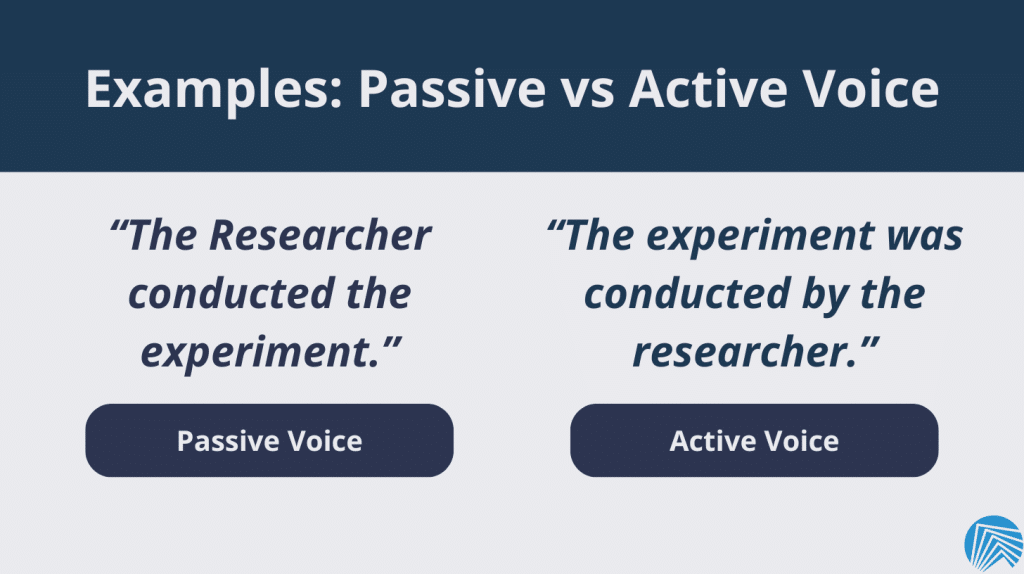
Active: Our team developed the innovative software. (Subject: team, Verb: developed, Object: software)
-
Passive: The innovative software was developed by our team. (Subject: software, Verb: was developed, Agent: by our team)
In the passive construction, “the innovative software” becomes the grammatical subject, even though it is receiving the action. The doer, “our team,” is relegated to an optional “by” phrase, or sometimes omitted entirely. This shift in emphasis is key to understanding its brand implications.
Active vs. Passive: A Quick Brand Communication Contrast
Let’s illustrate the difference with scenarios directly relevant to brand communication:
Scenario 1: Product Launch
-
Active: “We launched the new smartphone last Tuesday.” (Highlights the company’s action and agency)
-
Passive: “The new smartphone was launched last Tuesday.” (Emphasizes the product itself, de-emphasizes who launched it)
Scenario 2: Customer Service Feedback
-
Active: “A customer service representative resolved your issue promptly.” (Highlights proactive action by the brand’s staff)
-
Passive: “Your issue was resolved promptly.” (Focuses on the resolution, less on the individual who resolved it)
The active voice is generally more direct, concise, and dynamic. It clearly states who is doing what, fostering a sense of accountability and agency, which are often desirable traits for a brand.
The Myth of Always Avoiding Passive Voice
Despite the frequent advice to avoid it, passive voice is not inherently “bad.” It serves specific purposes and can be a valuable tool when used intentionally. The misconception that it must always be avoided stems from its frequent misuse, which can lead to vague, wordy, or evasive writing. However, there are strategic situations, even in brand communication, where passive voice can be the more effective choice, as we will explore. The key is mindful application, not blanket prohibition.
The Brand Impact: How Voice Choices Shape Perception
The choice between active and passive voice extends far beyond mere grammar; it profoundly influences how a brand is perceived. It’s a subtle yet powerful lever that can shape everything from a brand’s perceived trustworthiness and authority to its overall tone and personality.
Clarity and Directness: Enhancing Brand Messaging with Active Voice
For most brand communications, clarity and directness are paramount. Marketing messages, product descriptions, website copy, and sales materials all benefit immensely from the crispness and immediacy of active voice.
-
Marketing Copy: “Our new software transforms your workflow.” (Active, strong, clear benefit) vs. “Your workflow is transformed by our new software.” (Passive, slightly less impactful)
-
Product Features: “The camera captures stunning 4K video.” (Directly links the camera to its capability) vs. “Stunning 4K video is captured by the camera.” (Less direct)
-
Calls to Action: “You can download the whitepaper here.” (Empowers the user) vs. “The whitepaper can be downloaded here.” (Less personal and direct)
Using active voice helps brands articulate their value propositions with precision, engaging audiences more effectively and leaving less room for misinterpretation. It ensures that the message’s core meaning is immediately clear, an absolute necessity in a fast-paced, attention-scarce communication landscape.
Authority and Accountability: Active Voice for Leadership and Transparency
Brands that aim to position themselves as leaders, innovators, or trusted authorities benefit significantly from consistently using active voice. It conveys a sense of responsibility, confidence, and transparency.
-
Press Releases: “Our CEO announced record-breaking earnings.” (Highlights the leadership’s action and transparency) vs. “Record-breaking earnings were announced by our CEO.” (Still clear, but slightly less direct attribution of the action)
-
Corporate Statements: “We take full responsibility for the error.” (Directly owns the action) vs. “Full responsibility is taken for the error.” (Sounds more evasive, less personal)
-
Brand Mission/Vision: “We innovate to create a sustainable future.” (Proactive, clear intent) vs. “A sustainable future is created through our innovation.” (Less powerful statement of purpose)
Active voice reinforces a brand’s commitment to its promises, fostering trust and demonstrating a willingness to stand behind its actions. It paints a picture of a brand that is in control, decisive, and accountable.
Brand Persona and Tone: Crafting a Distinct Voice
A brand’s voice is a cornerstone of its identity, distinguishing it from competitors and resonating with its target audience. The intentional use (or avoidance) of passive voice plays a crucial role in shaping this persona.
-
Bold and Confident Brands: Brands aiming for a bold, confident, or even assertive persona will lean heavily on active voice. Think of tech disruptors, luxury brands emphasizing their craftsmanship, or advocacy groups. Their messaging is typically direct, declarative, and action-oriented.
- Example: “We defy conventions. We build the future.”
-
Conservative or Formal Brands: Brands that need to project a more cautious, objective, or formal tone (e.g., financial institutions, legal services, some B2B tech companies) might occasionally find passive voice useful to maintain a certain gravitas or distance, but even here, clarity often trumps formality.
-
Empathetic and Relatable Brands: Brands that prioritize empathy and approachability will often use active voice when referring to their own actions to show connection and agency, but might use passive voice to subtly shift focus when discussing customer issues (e.g., “Your query has been noted,” rather than “We noted your query,” which can sound too accusatory in some contexts, though the active is often still preferred).
The consistent application of voice helps to reinforce the overall brand narrative, ensuring that every piece of communication aligns with the desired brand personality.
Strategic Applications of Passive Voice in Brand Communication
While active voice is generally preferred for its clarity and directness, there are specific, strategic instances where passive voice can be the more effective and appropriate choice for a brand. These situations often involve shifting emphasis, maintaining diplomacy, or adhering to specific stylistic conventions.
Emphasizing the Product/Service: When the “What” Trumps the “Who”
Sometimes, the object of the action—the product, service, or outcome—is far more important to highlight than the agent performing the action. In such cases, passive voice brings that crucial element to the forefront.
-
Feature-centric Messaging: “The car is equipped with advanced safety features.” (Focuses on the features themselves, which is the selling point, rather than “We equipped the car…”)
-
Award Recognition: “Our new software was awarded ‘Product of the Year’ by Tech Innovate Magazine.” (Emphasizes the award and the product’s achievement, the magazine is the agent but the recognition is primary.)
-
Process Description: “Orders are processed within 24 hours.” (Focuses on the efficiency of the process, not who is processing them, which is less relevant to the customer.)
Here, the passive construction naturally draws the reader’s attention to the core offering or achievement, making it stand out in brand collateral.
Navigating Sensitive Topics: Diplomacy and De-emphasizing Agency
In situations requiring extreme diplomacy, objectivity, or when attributing blame or responsibility could be counterproductive, passive voice can provide a valuable layer of distance.
-
Crisis Communication: “A security breach was discovered yesterday evening.” (Focuses on the event, rather than “We discovered a security breach,” which might imply internal oversight or fault too directly at the outset of a crisis communication.) This allows the brand to address the issue factually before detailing solutions.
-
Policy Statements: “New privacy regulations are being implemented across the platform.” (Emphasizes the change in policy, often driven by external factors, rather than “We are implementing new privacy regulations,” which might imply a brand-initiated imposition.)
-
Addressing Mistakes (Carefully): While typically active voice is preferred for accountability (“We made a mistake”), sometimes a very careful passive construction can be used initially to state an event before fully detailing responsibility. This is a nuanced area where active voice for “taking responsibility” usually prevails.
Using passive voice here can help a brand convey information without appearing overly accusatory or by managing the focus on potentially negative events in a controlled manner. It allows for a more objective, less confrontational tone.
Achieving Objectivity and Formality: Technical Documentation and Legal Language
Certain contexts demand a highly objective, formal, or depersonalized tone. Technical manuals, terms of service, scientific reports, and some internal policy documents often utilize passive voice to achieve this.
-
Technical Specifications: “The device is powered by a lithium-ion battery.” (States a fact objectively, rather than “A lithium-ion battery powers the device,” which, while active, can feel less formal in a spec sheet.)
-
Terms & Conditions: “Data is collected to improve user experience.” (Focuses on the data collection process itself, which is a fact, rather than who collects it.)
-
Standard Operating Procedures (SOPs): “All components must be inspected before assembly.” (Emphasizes the mandatory action, de-emphasizing the individual who performs it, as the instruction applies to anyone.)
In these scenarios, the goal is often to present information in a universally applicable, unambiguous, and authoritative manner, where the agent of the action is irrelevant or implied. Passive voice helps maintain this detached, instructional, or legalistic tone, ensuring consistency and adherence to established communication norms within these fields.
Integrating Voice Awareness into Your Brand Strategy
Understanding active and passive voice is not just an academic exercise; it’s a strategic imperative for any brand committed to clear, impactful, and consistent communication. By proactively integrating voice awareness into your brand strategy, you can ensure that every message reinforces your brand’s desired perception.
Developing a Brand Style Guide: Prescribing Voice Guidelines
A comprehensive brand style guide should include explicit guidelines on the use of active and passive voice. This ensures consistency across all communication channels and content types.
-
General Preference: Clearly state a general preference (e.g., “Always prioritize active voice for marketing copy and public-facing statements”).
-
Exceptions and Rationale: Outline specific scenarios where passive voice is acceptable or even preferred, along with the strategic reasons (e.g., “Passive voice may be used in technical documentation to maintain objectivity, or in crisis communications to emphasize the event rather than initial attribution”).
-
Examples: Provide clear examples of both preferred and undesirable uses to illustrate the guidelines.
This section of your style guide serves as a central reference point, empowering content creators to make informed grammatical choices that align with the brand’s strategic objectives.
Training Content Creators: Empowering Consistent Brand Voice
Even with a style guide, consistent application requires ongoing education and training. Brands should invest in workshops or training sessions for all employees involved in content creation, from marketing and PR to customer service and technical writing.
-
Interactive Sessions: Conduct interactive workshops that break down active vs. passive voice with practical examples relevant to the brand’s industry and communication needs.
-
Feedback and Coaching: Implement a system for constructive feedback on written content, specifically highlighting instances where voice choices could be improved to better reflect the brand’s desired tone and clarity.
-
Resource Access: Ensure easy access to the brand style guide and other writing resources.
Empowering content creators with this knowledge ensures that the brand’s voice is not just a concept but a lived reality in every piece of communication.
Auditing Brand Communications: Ensuring Alignment and Impact
Regularly auditing your brand’s communications is crucial to verify that voice guidelines are being followed and that your messaging is achieving its intended impact.
-
Periodic Reviews: Schedule periodic reviews of website content, social media posts, press releases, customer emails, and other brand assets.
-
Key Performance Indicators (KPIs): Consider how voice might indirectly impact KPIs such as engagement rates, click-through rates, or customer satisfaction scores. Clear, active messaging often correlates with better performance.
-
External Perception Surveys: Conduct surveys or focus groups to gauge how your brand’s message is being received. Is it perceived as authoritative, clear, transparent, or conversely, vague or evasive? The strategic use of voice can heavily influence these perceptions.
A continuous loop of creation, review, and refinement based on voice awareness ensures that your brand’s linguistic choices consistently support its overarching strategy and resonate effectively with its audience.
Mastering the use of active and passive voice is a sophisticated skill, transforming a basic grammatical choice into a powerful strategic tool for brand builders. By understanding the mechanics, appreciating the nuances, and applying them judiciously within your brand strategy, you can elevate your communication from merely informative to truly influential, shaping perception, building trust, and solidifying your brand’s unique identity in the marketplace.
aViewFromTheCave is a participant in the Amazon Services LLC Associates Program, an affiliate advertising program designed to provide a means for sites to earn advertising fees by advertising and linking to Amazon.com. Amazon, the Amazon logo, AmazonSupply, and the AmazonSupply logo are trademarks of Amazon.com, Inc. or its affiliates. As an Amazon Associate we earn affiliate commissions from qualifying purchases.