
The fuel that powers billions of vehicles worldwide is a complex chemical cocktail, and among its most critical characteristics is its octane rating. Far from being a simple indicator of quality or power, octane is a fundamental measure of a gasoline’s resistance to premature ignition, a property essential for the smooth and efficient operation of internal combustion engines. Understanding what octane is, how it functions, and its interplay with engine technology is crucial for anyone keen on the mechanics of automotive performance and fuel science. This exploration delves into the technical underpinnings of octane, dissecting its chemical nature, its impact on engine design, and its pivotal role in the ongoing evolution of automotive technology.

Unpacking the Octane Rating: A Measure of Fuel Stability
At its core, octane is a measure of a fuel’s ability to resist “knocking” or “pinging” – abnormal combustion events within an engine. This resistance, often misunderstood as a measure of energy content or purity, is in fact a critical parameter for engine longevity and performance.
Defining Octane: The Resistance to Pre-Ignition
In an internal combustion engine, a mixture of fuel and air is compressed within a cylinder and then ignited by a spark plug. This controlled explosion pushes a piston, generating power. However, if the fuel-air mixture ignites spontaneously before the spark plug fires, or ignites too rapidly and unevenly after ignition, it creates a phenomenon known as engine knock or pre-ignition. This uncontrolled combustion generates shockwaves that can damage engine components, reduce efficiency, and lead to poor performance. The octane rating quantifies a gasoline’s stability and its capacity to withstand compression without auto-igniting prematurely. A higher octane number signifies greater resistance to this destructive pre-ignition.
The Chemical Basis: Isooctane and Heptane
To establish a standardized scale for octane ratings, chemists utilize two primary reference hydrocarbons: isooctane (specifically 2,2,4-trimethylpentane) and n-heptane. Isooctane is highly resistant to knocking and is assigned an octane rating of 100. Conversely, n-heptane is very prone to knocking and is given an octane rating of 0. Commercial gasoline is then tested in a specialized single-cylinder engine under controlled conditions, and its knocking characteristics are compared to various mixtures of isooctane and n-heptane. If a gasoline performs identically to a blend of 90% isooctane and 10% n-heptane, it receives an octane rating of 90. It’s important to note that actual gasoline is a blend of hundreds of different hydrocarbons and additives, not just these two, but their performance provides the benchmark.
How Octane Ratings Are Determined: RON, MON, and AKI
Globally, there are several methods for determining and expressing octane ratings, leading to potential confusion. The two primary laboratory tests are:
-
Research Octane Number (RON): This test measures a fuel’s knock resistance under relatively mild operating conditions, such as low engine speed and moderate temperature. It typically yields a higher octane number.
-
Motor Octane Number (MON): The MON test is conducted under more severe operating conditions, involving higher engine speeds and temperatures, which are more representative of demanding driving situations. The MON rating is generally lower than the RON for the same fuel.
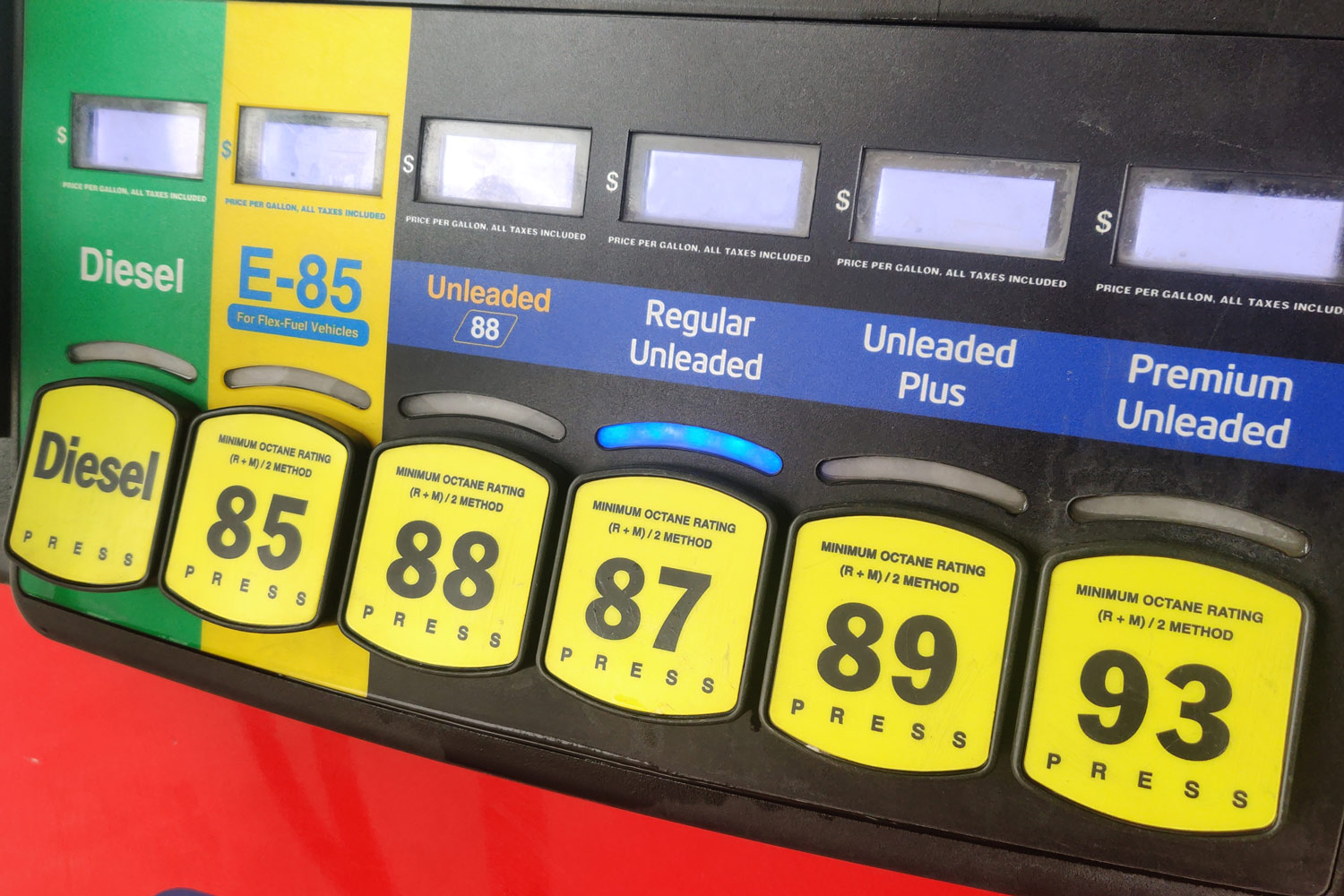
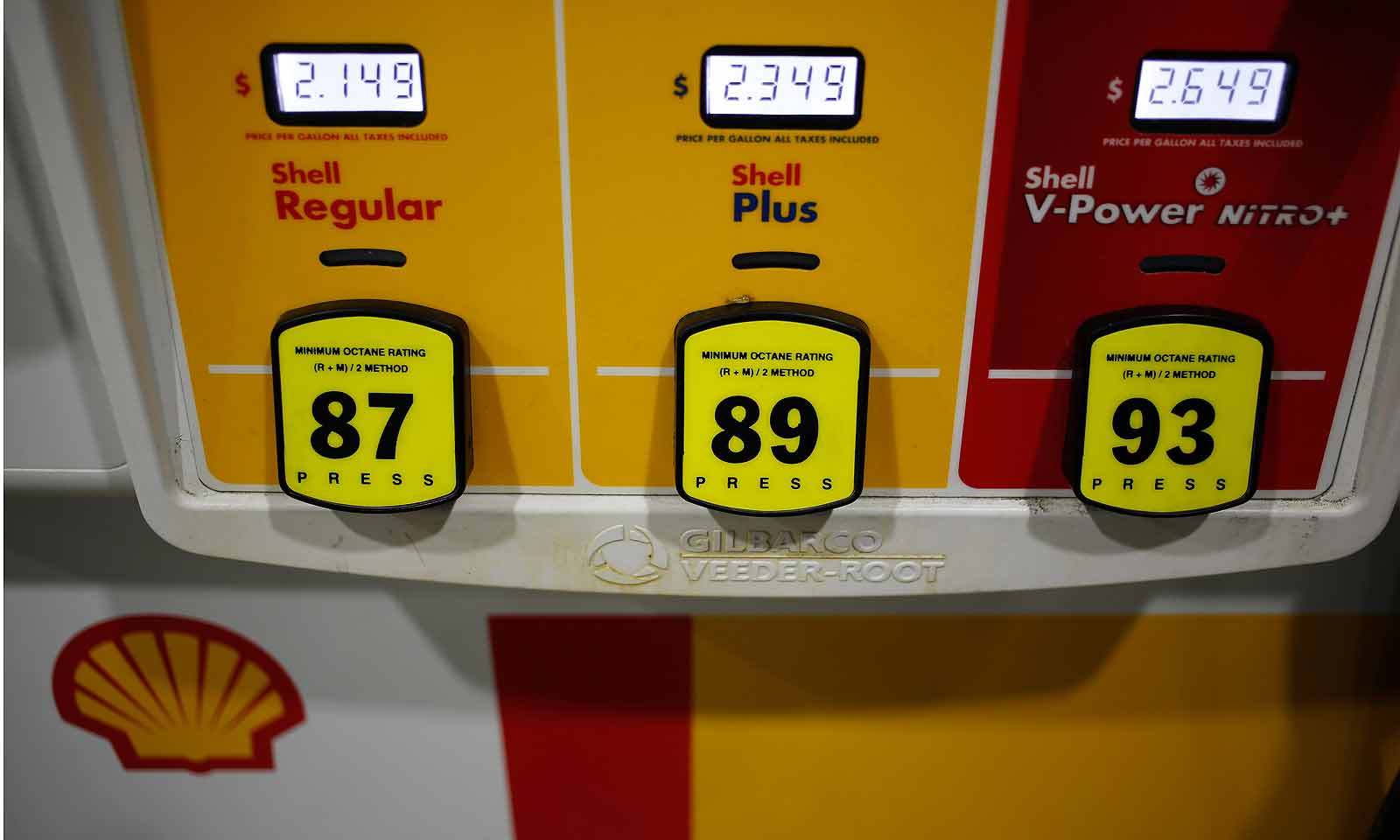
In Europe and most parts of the world, gasoline is often labeled with its RON. In the United States and Canada, however, the octane rating displayed at the pump is typically the Anti-Knock Index (AKI), also known as (R+M)/2. This is the average of the RON and MON values. This averaging accounts for both mild and severe engine conditions, providing a more comprehensive measure of knock resistance relevant to real-world driving. For example, a fuel with a RON of 95 and a MON of 85 would have an AKI of 90, which is what would appear on the pump.
The Mechanics of Combustion: Octane’s Role in Engine Performance
Octane doesn’t directly contribute to the power output of an engine, but it enables the engine to operate at its designed parameters, which in turn maximizes its efficiency and power potential. Its influence is most evident in how it manages the combustion process.
Understanding Engine Knock: A Destructive Phenomenon
Engine knock, or detonation, occurs when portions of the unburnt fuel-air mixture spontaneously ignite after the initial flame front has been initiated by the spark plug. This secondary, uncontrolled explosion creates a rapid pressure wave that collides with the rising piston and the cylinder walls. The result is a metallic “pinging” or “knocking” sound, a reduction in engine power, and significantly increased thermal and mechanical stress on engine components like pistons, connecting rods, and crankshafts. Prolonged or severe knocking can lead to catastrophic engine damage, including melted pistons, broken rings, and scored cylinder walls. Octane’s primary technological purpose is to mitigate this detrimental phenomenon.
Compression Ratios and Engine Efficiency
The compression ratio is a critical design parameter in internal combustion engines. It represents the ratio of the volume of the cylinder and combustion chamber when the piston is at its lowest point (Bottom Dead Center – BDC) to the volume when the piston is at its highest point (Top Dead Center – TDC). Higher compression ratios generally lead to greater thermal efficiency, meaning more of the fuel’s energy is converted into mechanical work rather than wasted as heat. This translates to better fuel economy and increased power output.
However, increasing the compression ratio also significantly increases the temperature and pressure of the fuel-air mixture before ignition. This makes the mixture more susceptible to auto-ignition and thus, engine knock. Therefore, engines designed with higher compression ratios require higher octane fuels to prevent premature detonation. Without adequate octane, the benefits of a high compression ratio cannot be realized, or worse, the engine will suffer damage.
How Octane Prevents Knock: Controlled Ignition
High-octane fuels contain molecules that are more stable and less prone to spontaneous combustion under pressure and heat. These molecules have stronger molecular bonds or specific structures that require more energy to break down and ignite. When a spark plug fires in an engine running on appropriate octane fuel, the flame front propagates smoothly and predictably across the combustion chamber. The higher octane allows the engine to be designed with a higher compression ratio, or more aggressive ignition timing, knowing that the fuel will resist auto-ignition until the precisely timed spark. This controlled and efficient burn optimizes the expansion of gases, maximizing the force on the piston and ensuring the engine operates as intended by its designers.
Modern Engine Technology and Octane Requirements
The evolution of engine technology has deeply intertwined with advancements in fuel chemistry. Modern engines are not just more powerful and efficient but also incredibly sophisticated in how they manage combustion, often leveraging technology to adapt to varying fuel qualities.
Sensor Technology: Knock Sensors and Engine Management Systems
Modern engines incorporate advanced sensor technology to monitor and respond to combustion events. Knock sensors are acoustic microphones strategically placed on the engine block. They listen for the characteristic frequencies associated with engine knock. When a knock sensor detects detonation, it sends a signal to the Engine Control Unit (ECU) or Engine Management System (EMS).
The ECU is the brain of the engine. Upon receiving a knock signal, the ECU can instantly adjust various engine parameters, most notably retarding the ignition timing (delaying the spark) or enriching the fuel-air mixture. By delaying the spark, the peak pressure from combustion occurs later in the power stroke, reducing the likelihood of pre-ignition. While this protects the engine from damage, it also slightly reduces power and efficiency. This adaptive capability means that many modern engines can safely run on lower octane fuel than recommended, though with a potential performance penalty. However, repeated and severe knock events, even when mitigated by the ECU, can still put undue stress on components over time.
Turbocharging, Supercharging, and High-Performance Engines
Forced induction systems, such as turbochargers and superchargers, significantly increase engine power by compressing more air into the cylinders. This boost in air density also leads to higher pressures and temperatures within the combustion chamber, making the engine much more susceptible to knock. Consequently, engines equipped with forced induction inherently require higher octane fuels.
High-performance engines, whether naturally aspirated or forced induction, are often designed with aggressive ignition timing, higher compression ratios, and more sophisticated fuel injection strategies to extract maximum power and efficiency. These design choices directly mandate the use of higher octane fuel to prevent knock and ensure the engine operates at its peak performance without self-destructing. The precision engineering in these engines relies on the fuel’s stability to maintain their operational integrity.
Fuel Injectors and Advanced Combustion Strategies
Modern engines employ highly sophisticated direct injection systems, where fuel is precisely sprayed directly into the combustion chamber rather than the intake manifold. This allows for more accurate fuel metering and better control over the fuel-air mixture. Coupled with variable valve timing and lift technologies, these systems enable engineers to optimize combustion for various driving conditions.
Advanced combustion strategies, such as lean burn (using less fuel relative to air) and stratified charge injection (creating rich and lean zones within the cylinder), also push the boundaries of engine efficiency. While these technologies aim to maximize energy extraction, they often operate closer to the edge of the knock threshold, making the consistent knock resistance offered by appropriate octane fuel all the more critical for their successful implementation and reliable operation.
The Right Fuel for Your Engine: Dispelling Octane Myths
Despite its technical importance, octane is often shrouded in misconceptions. Understanding these distinctions is key to making informed decisions about fueling your vehicle and ensuring its optimal technical performance.
Does Higher Octane Mean More Power?
This is perhaps the most prevalent myth surrounding octane. Many believe that simply putting higher-octane fuel into any car will automatically result in increased horsepower, better acceleration, or improved fuel economy. This is generally false. Octane does not add more energy to the fuel, nor does it make an engine inherently more powerful. Its sole purpose is to resist knock.
If an engine is designed to run optimally on regular 87 AKI gasoline, supplying it with premium 93 AKI fuel will yield no tangible performance benefits. The engine’s ECU is programmed for the lower octane, and it will not advance timing or increase boost beyond its factory settings simply because higher octane fuel is present. You are essentially paying more for a characteristic your engine doesn’t need and cannot utilize. The only scenario where higher octane directly relates to power is if your engine requires it (due to high compression or forced induction) to prevent knock, allowing the engine to deliver its designed power output without being retarded by the ECU.
The Manufacturer’s Recommendation: Why It Matters
The single most reliable indicator of the correct octane level for your vehicle is the manufacturer’s recommendation, typically found in your owner’s manual or on the inside of your fuel filler door. Engineers design engines to operate with a specific octane rating based on their compression ratio, ignition timing, and other technical specifications.
-
If your manufacturer recommends “Regular” (e.g., 87 AKI): Your engine is designed to run optimally on this fuel. Using higher octane is unnecessary and a waste of money.
-
If your manufacturer recommends “Premium” (e.g., 91 AKI or higher): Your engine requires this fuel. It’s likely a high-compression, turbocharged, or supercharged engine that needs the extra knock resistance. While the ECU might compensate if you occasionally use lower octane, doing so consistently can lead to reduced performance, decreased efficiency, and potential long-term engine wear due to the ECU constantly retarding timing to prevent knock.
-
If your manufacturer states “Recommended” or “Required”: “Required” means you absolutely should use that octane. “Recommended” often implies that while the engine can run on lower octane, it will perform best with the higher grade.
Adhering to the manufacturer’s recommendation ensures that your engine operates as intended, balancing performance, efficiency, and longevity.
The Impact of Low-Octane Fuel on High-Octane Engines
Running an engine that requires premium fuel on a lower octane grade can have several technical consequences. Initially, the knock sensors will detect the onset of detonation, and the ECU will intervene by retarding ignition timing. While this prevents immediate catastrophic damage, it compromises the engine’s intended operation.
-
Reduced Power Output: With retarded timing, the engine cannot achieve its peak combustion efficiency, leading to a noticeable drop in horsepower and torque.
-
Decreased Fuel Efficiency: The engine has to work harder to produce the same amount of power, often resulting in poorer fuel economy as it becomes less thermally efficient.
-
Increased Emissions: Suboptimal combustion can lead to an increase in harmful exhaust emissions.
-
Accelerated Wear (Long-term): Although the ECU protects the engine, continuously operating in a “knock-mitigation” state places additional stress on components. The engine is always borderline knocking, and the compensatory adjustments might not be as efficient or protective as running on the correct fuel in the first place, potentially contributing to premature wear of engine parts over a longer period.
Beyond Octane: The Evolving Landscape of Fuel Technology
While octane is a critical characteristic, the field of fuel technology is constantly evolving, encompassing a broader range of factors that influence engine performance and environmental impact.
Additives and Fuel Quality Enhancers
Beyond their base octane rating, modern gasolines contain a carefully formulated blend of additives designed to enhance various aspects of fuel quality and engine health. These can include:
-
Detergents: To keep fuel injectors, intake valves, and combustion chambers clean, preventing carbon buildup that can impede efficiency and lead to knocking.
-
Corrosion Inhibitors: To protect metal components in the fuel system from rust and corrosion.
-
Stabilizers: To prevent fuel degradation during storage.
-
Antioxidants: To prevent the formation of gum and varnish in the fuel system.
-
Friction Modifiers: In some premium fuels, these can reduce friction within the engine.
These additives play a vital role in maintaining engine cleanliness and operational efficiency, working in conjunction with the base fuel’s octane to ensure reliable performance.
Biofuels and Renewable Components
The integration of biofuels, particularly ethanol, into gasoline blends is a significant trend in fuel technology, driven by environmental and energy security concerns. Ethanol, derived from plant matter, has a high octane rating (typically 113 RON for pure ethanol). When blended with gasoline, it can boost the overall octane number of the mixture. Common blends like E10 (10% ethanol, 90% gasoline) are designed to be compatible with most modern vehicles.
However, ethanol also has different combustion characteristics, including lower energy content by volume compared to pure gasoline, and can be more corrosive to certain engine components. Engines designed to run on higher ethanol blends (e.g., E85) are specifically engineered with compatible materials and optimized fuel systems to handle these differences. The blend ratio of ethanol, therefore, becomes another technical consideration alongside the octane rating.
The Future of Internal Combustion Engines in an Electric Era
As the automotive industry pivots towards electrification, the role and future of traditional gasoline and its octane rating are also evolving. While electric vehicles are gaining traction, internal combustion engines (ICEs) will continue to power a significant portion of the global fleet for decades to come, especially in hybrid configurations.
Future ICE development will likely focus on even higher efficiency through technologies like advanced turbocharging, extreme lean burn, and innovative combustion cycles. These advancements will continue to place demands on fuel stability, potentially requiring fuels with even higher inherent knock resistance or specially formulated characteristics. Furthermore, the development of synthetic fuels (e-fuels) produced using renewable energy, designed to be carbon-neutral, will also involve careful consideration of their octane characteristics to ensure compatibility with existing engine technology and infrastructure. The science of octane, therefore, remains a critical area of research and development, even as the automotive world embraces a greener future.
aViewFromTheCave is a participant in the Amazon Services LLC Associates Program, an affiliate advertising program designed to provide a means for sites to earn advertising fees by advertising and linking to Amazon.com. Amazon, the Amazon logo, AmazonSupply, and the AmazonSupply logo are trademarks of Amazon.com, Inc. or its affiliates. As an Amazon Associate we earn affiliate commissions from qualifying purchases.