
For decades, the question “What is my hair color?” was answered by a simple glance in a mirror or a subjective consultation with a stylist. However, as we move deeper into the era of high-tech integration, this question has transitioned from a matter of personal opinion to a complex data point processed by sophisticated algorithms. In the modern landscape of BeautyTech, determining your hair color—and its potential variations—is a feat of computer vision, augmented reality (AR), and artificial intelligence (AI).
The intersection of technology and personal grooming has created a new frontier where software does more than just apply a filter; it analyzes biological data to provide precision-based styling and maintenance recommendations. This article explores the technological frameworks that answer the fundamental question of hair identification and the innovations driving the future of the beauty industry.

The Science of Color: How AI Decodes Your Natural Pigmentation
The identification of hair color through a digital lens begins with the fundamentals of computer vision. Unlike the human eye, which can be easily deceived by “warm” or “cool” lighting, AI tools are designed to neutralize environmental variables to find the true objective shade of a user’s hair.
Computer Vision and Pixel-Level Analysis
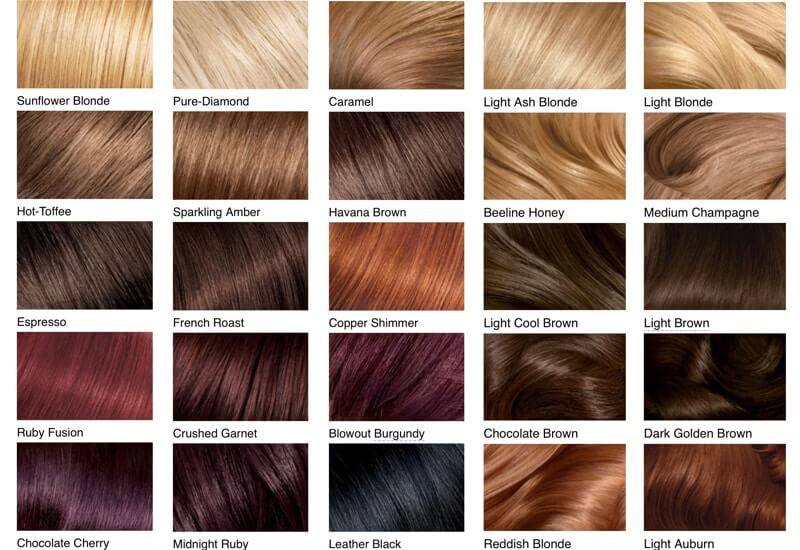
At the heart of any “What is my hair color?” application is a neural network trained on millions of images. When a user uploads a photo or uses a live camera feed, the software performs pixel-level analysis. It breaks down the image into RGB (Red, Green, Blue) and CMYK (Cyan, Magenta, Yellow, Black) values. By calculating the density and distribution of these colors across the hair’s surface, the AI can determine the level (from 1 to 10) and the underlying tone (ash, gold, red, or neutral). This process involves “segmentation,” where the AI distinguishes the hair from the forehead, ears, and background, ensuring the color data is isolated and accurate.
Lighting Calibration and Environmental Compensation
One of the greatest hurdles in digital color identification is “white balance.” A blonde user in a room with warm incandescent lighting might appear ginger to a basic camera. Advanced BeautyTech tools employ “Auto-White Balance” (AWB) algorithms and “Global Illumination” models. These tools detect the surrounding light sources and apply a corrective layer to the image, effectively “stripping away” the yellow or blue tints of the room. This allows the software to reveal the “base shade”—the true hair color that would be visible under neutral, 5000K daylight.
Melanin Simulation and Predictive Modeling
Advanced software is now moving beyond just identifying the surface color. Some high-end tech firms are using predictive modeling to estimate the concentration of eumelanin and pheomelanin within the hair shaft based on visual data. By understanding the chemical composition through visual proxies, AI can predict how hair will react to chemical lighteners or dyes, providing a “digital twin” of the user’s hair for experimentation.
Virtual Try-On Tools: AR’s Role in Predictive Styling
Once the software identifies “What is my hair color?”, the next logical step for the user is often, “What should my hair color be?” This is where Augmented Reality (AR) becomes the primary interface. Virtual try-on (VTO) technology has evolved from static overlays to dynamic, real-time transformations.
Real-Time Rendering and Scalp Mapping
The complexity of hair lies in its movement and texture. Traditional filters often look like a solid block of color placed over the head. Modern AR tools use “scalp mapping” and “strand-level physics” to ensure that as a user moves their head, the digital color moves with individual clusters of hair. This requires immense processing power, often utilizing the GPU (Graphics Processing Unit) of a smartphone to render shadows and highlights in real-time, making the digital hair color indistinguishable from reality.
The Integration of Machine Learning in Consumer Apps
Major industry players have acquired or developed proprietary AI—such as L’Oréal’s acquisition of ModiFace—to power these experiences. These apps use machine learning to learn from “successful” try-ons. If thousands of users with “Level 6 Light Brown” hair consistently choose a “Honey Blonde” overlay, the algorithm begins to suggest that specific shade as a “top match” for similar users. This creates a feedback loop where the tech is not just identifying color, but actively participating in the decision-making process through predictive analytics.
Overcoming the “Depth” Challenge in Digital Imaging
Hair is three-dimensional, and its color changes based on how light hits the layers. Tech developers are currently focusing on “depth-sensing” technology (like LiDAR found in newer iPhones). By using depth data, the software can differentiate between the top layer of hair and the under-layers, allowing for complex color techniques like balayage or ombré to be rendered accurately in a digital environment.
Personalization and Big Data: Tailoring the User Experience
The data gathered from answering “What is my hair color?” is incredibly valuable for the “You” economy. In this niche, personalization isn’t just a feature; it’s the product.
Algorithm-Driven Product Recommendations
When a user interacts with a hair-color identification tool, they are providing a wealth of data to a brand’s CRM (Customer Relationship Management) system. If the AI identifies high levels of “brassiness” in a user’s blonde hair, it can instantly trigger a recommendation for a violet-pigmented toning shampoo. This is a seamless integration of diagnostic tech and e-commerce, where the solution is presented at the exact moment the problem is identified.
Data Privacy in Biometric BeautyTech
Because these tools require access to the user’s camera and face, they touch upon the sensitive area of biometric data. Professional tech companies are now implementing “Edge Computing,” where the facial analysis happens locally on the user’s device rather than being uploaded to a central server. This ensures that while the user gets an answer to “What is my hair color?”, their biometric “face map” remains private, adhering to global standards like GDPR (General Data Protection Regulation).
The Rise of Hyper-Personalized Formulations
Beyond just identifying color, some startups are using AI to create custom-blended hair dyes. By analyzing the user’s current color (the starting point) and their desired color (the endpoint), the software calculates the exact ratio of pigments needed to bridge the gap. This “automated chemist” approach eliminates the guesswork of off-the-shelf products, using data science to ensure professional-grade results at home.
The Future of BeautyTech: Beyond Simple Identification
As we look toward the next decade, the technology surrounding hair color will move from the smartphone screen to even more integrated solutions.
Genomic Integration and DNA-Based Styling
While current tech relies on visual input, the future of the “What is my hair color?” query may lie in genomics. By integrating DNA data from services like 23andMe with styling apps, AI could predict how your hair color will change as you age. It could identify the specific genetic markers for premature greying or thinning, allowing for “preventative styling” and the early application of tech-driven scalp treatments.
The Impact on E-Commerce and Retail Strategy
In the retail sector, smart mirrors are already being deployed in flagship stores. These mirrors use the tech discussed above to allow customers to “try on” a hundred different hair colors in seconds without a single drop of dye. For the business, this reduces the “return rate” and increases customer satisfaction. For the consumer, it provides a “fail-safe” environment to explore their identity.
Sustainability and Tech-Driven Waste Reduction
One overlooked benefit of precise hair color identification tech is its impact on sustainability. By using AI to accurately identify the user’s base shade and recommending the exact product needed, the industry can significantly reduce the “trial and error” waste of discarded hair products. Data-driven precision leads to a more efficient supply chain and a smaller environmental footprint for the beauty industry.

Conclusion: The New Identity Paradigm
The question “What is my hair color?” has been fundamentally redefined by technology. It is no longer a static attribute, but a fluid data point that can be analyzed, simulated, and optimized through a sophisticated tech stack. From computer vision that sees beyond human error to AR that predicts our future aesthetic, technology has turned the mirror into a diagnostic tool.
As AI and machine learning continue to evolve, the line between our physical selves and our digital twins will continue to blur. Whether you are a consumer looking for the perfect shade or a developer building the next generation of BeautyTech, understanding the software behind the shimmer is essential. In the digital age, your hair color isn’t just something you grow—it’s something you calibrate.
aViewFromTheCave is a participant in the Amazon Services LLC Associates Program, an affiliate advertising program designed to provide a means for sites to earn advertising fees by advertising and linking to Amazon.com. Amazon, the Amazon logo, AmazonSupply, and the AmazonSupply logo are trademarks of Amazon.com, Inc. or its affiliates. As an Amazon Associate we earn affiliate commissions from qualifying purchases.