
In the modern landscape of research, technical documentation, and professional communication, the “paper” has evolved far beyond its traditional print form. Today, a “paper” often refers to a digital artifact – a whitepaper, a technical report, a research publication, a software manual, or even an elaborate web-based knowledge base. Within this digital ecosystem, the appendix, once a simple addendum, has transformed into a dynamic and crucial component, serving as a repository for supplementary information that underpins and enhances the main narrative. Understanding “what is in an appendix of a paper” in the 21st century means appreciating its digital content, its technological management, and its evolving role in an increasingly data-driven world.
The Foundational Purpose of an Appendix in Modern Documentation
The appendix serves a critical function: to house material that is too detailed, lengthy, or extraneous to be included in the main body of a document without disrupting the flow of the argument or explanation. In the context of technology, where reports often deal with intricate systems, vast datasets, or complex algorithms, the appendix becomes indispensable. It allows authors to maintain clarity and conciseness in the core text while providing rigorous support and transparency through supplementary details.
Beyond the Page: Understanding Digital Appendices
Traditionally, an appendix might contain photocopies of survey instruments or statistical tables. Today, a “digital appendix” extends this concept dramatically. It’s a structured collection of diverse digital assets that support the primary document. This could include anything from raw code snippets for a software project, extensive raw data files from an AI model’s training, detailed network diagrams, or even links to interactive simulations. Its core function remains to provide additional, non-essential-for-main-flow content, but its format and potential have expanded exponentially with digital platforms. For tech reports, whitepapers, and academic papers in computing sciences, the appendix is a vital space for technical depth and verifiable evidence.
Enhancing Clarity and Credibility
The strategic use of an appendix significantly enhances the clarity and credibility of any paper, particularly in technical fields. Imagine a research paper discussing a new machine learning algorithm. Including every line of code, every hyperparameter tuning experiment, or every error log in the main body would make the paper unreadable. By offloading these intricate details to an appendix, the main text can focus on the problem, the proposed solution, the methodology, and the key findings. This structured approach allows readers to grasp the core concepts quickly, while those who wish to scrutinize the technical implementation, replicate the results, or delve into the minutiae of the data can refer to the appendix. This transparency is crucial for scientific rigor and reproducibility, cornerstones of technological advancement.
Common Digital Content Found in Tech-Oriented Appendices
The nature of modern technology means that the content of appendices is often rich with digital files and data structures. Unlike a humanities paper, a tech paper’s appendix frequently contains elements that are executable, interactive, or require specific software to interpret.
Code Snippets, Algorithms, and Technical Specifications
For papers detailing software development, algorithm design, or system architectures, the appendix is an ideal place for raw code. This might include:
-
Full source code repositories: Often linked via GitHub or GitLab.
-
Key algorithm implementations: Pseudo-code or actual code for novel algorithms.
-
Configuration files: For software environments, cloud deployments, or network settings.
-
API documentation: Detailed specifications for custom APIs developed.
-
Hardware schematics or circuit diagrams: For embedded systems or hardware design papers.
Providing these details allows peer reviewers and interested readers to directly inspect the implementation, verify claims, and build upon the work.
Datasets, Figures, and Multimedia Files
Technological research is often data-intensive. Appendices are perfect for hosting:
-
Raw datasets: Whether for machine learning, sensor readings, or user interaction logs, often provided in CSV, JSON, or proprietary formats.
-
Extensive tables: Large tables of experimental results, benchmarks, or system parameters that would overwhelm the main text.
-
High-resolution figures and graphs: More detailed versions of figures summarized in the main text, or supplementary visualizations.
-
Multimedia assets: Links to video demonstrations of software in action, simulations, or audio recordings relevant to the research.
-
Interactive dashboards: Links to Power BI, Tableau, or custom web-based dashboards presenting data dynamically.
These digital assets provide a rich, verifiable foundation for the paper’s claims and results.
User Manuals, Guides, and Supplementary Documentation
When a paper introduces a new tool, a software application, or a complex system, the appendix can serve as a repository for extended documentation:
-
Detailed user manuals or quick-start guides: For newly developed software or hardware.
-
Troubleshooting guides: Comprehensive lists of potential issues and their resolutions.
-
Extended FAQs: Addressing common questions beyond what’s covered in the main document.
-
Installation instructions: Step-by-step guides for setting up complex software or hardware.
This kind of content is crucial for practical applications, ensuring users can replicate the environment or utilize the discussed technology effectively.
Survey Instruments, Interview Transcripts, and Raw Research Data
In fields like human-computer interaction (HCI), user experience (UX) research, or data science that involve human subjects, appendices often contain:
-
Full survey questionnaires: Used to gather user feedback or preferences.
-
Interview protocols and raw transcripts: Anonymized data from qualitative research.
-
Consent forms and ethical review board approvals: Demonstrating adherence to research ethics.
-
Participant demographic data (anonymized): Providing context for user studies.
These materials are essential for demonstrating the rigor of research methodologies and ensuring ethical conduct.
Leveraging Technology for Effective Appendix Management and Presentation
The sheer volume and diversity of digital content in modern appendices necessitate robust technological solutions for their creation, organization, and presentation. Simply attaching a PDF of supplementary material is often insufficient for dynamic, complex data.
Software Tools for Seamless Integration and Formatting

The creation of sophisticated digital appendices relies heavily on specialized software.
-
Word Processors and Desktop Publishing Software: Tools like Microsoft Word, Google Docs, or LaTeX are fundamental for structuring text-based appendices, enabling cross-referencing, automatic numbering, and consistent formatting. LaTeX, in particular, is favored in technical fields for its robust capabilities in handling complex equations, figures, and bibliographies.
-
Version Control Systems: For code-heavy appendices, platforms like Git (and services like GitHub, GitLab, Bitbucket) are indispensable. They allow authors to manage code versions, track changes, and provide direct links to specific commits or branches.
-
Data Visualization and Analysis Tools: Software such as R, Python (with libraries like Matplotlib, Seaborn, Plotly), Tableau, or Power BI are used to generate detailed figures and interactive dashboards that can be embedded or linked within appendices.
-
Cloud Storage and Collaboration Platforms: Services like Google Drive, Dropbox, or institutional cloud storage facilitate sharing large datasets, multimedia files, and collaborative editing of appendix content.
Digital Accessibility and Archiving
In the digital age, ensuring appendices are accessible and properly archived is as important as the main paper itself.
-
Accessibility: Appendices should be readable on various devices (desktops, tablets, mobile) and compliant with accessibility standards (e.g., WCAG for web-based content). This means providing alternative text for images, ensuring proper contrast, and using semantic HTML for online appendices.
-
Archiving: Long-term preservation of digital appendices is crucial for reproducibility and future reference. This involves using stable file formats (e.g., PDF/A for documents, widely supported image formats, open data formats), assigning Digital Object Identifiers (DOIs) to datasets, and depositing materials in institutional repositories or public data archives (e.g., Zenodo, Figshare). Broken links to supplementary material severely degrade a paper’s value over time.
Hyperlinking, Cross-Referencing, and Interactive Elements
Modern digital appendices offer opportunities for enhanced user experience:
-
Hyperlinking: Embedding direct links from the main document to specific sections, figures, or files within the appendix, or to external resources.
-
Cross-Referencing: Ensuring that all references to appendix items in the main text are clear and automatically updated.
-
Interactive Elements: For web-based or rich PDF documents, appendices can include interactive charts, embedded simulations, or executable code examples, allowing readers to experiment with the data or code directly. This dynamism significantly enriches the reader’s engagement and understanding.
The Evolving Role of Appendices: AI, Security, and Future Trends
The technological evolution continues to reshape the purpose and implementation of appendices, particularly with the rise of artificial intelligence and an increased focus on digital security.
AI-Assisted Appendix Generation and Organization
AI tools are beginning to play a transformative role in managing the vast amounts of data often relegated to appendices.
-
Automated Summarization: AI can process large datasets or verbose interview transcripts and generate concise summaries or key insights for inclusion in the main text, while the raw data remains in the appendix.
-
Data Organization and Categorization: Machine learning algorithms can help categorize and organize raw research data, making it easier to structure and present in an appendix.
-
Code Generation and Analysis: AI tools can assist in generating boilerplate code, analyzing existing code for inefficiencies, or even suggesting relevant code snippets to include as examples in an appendix.
-
Smart Indexing and Search: Future appendices might be equipped with AI-powered search capabilities, allowing readers to quickly find specific data points or code segments within complex supplementary materials.
Digital Security and Data Privacy in Appendices
With the inclusion of sensitive data – be it proprietary algorithms, personal identifying information (PII) from user studies, or confidential business figures – digital security and data privacy become paramount.
-
Anonymization and Pseudonymization: Researchers must employ robust techniques to anonymize or pseudonymize sensitive data before inclusion in public appendices.
-
Access Control and Encryption: For highly sensitive supplementary material, access might be restricted to authenticated users or require specific permissions. Encryption methods can protect data at rest and in transit.
-
Compliance with Regulations: Adherence to data protection regulations like GDPR, CCPA, and HIPAA is crucial when dealing with personal or health-related data in appendices.
-
Intellectual Property Protection: Code or proprietary algorithms might be shared under specific licenses or only in compiled forms to protect intellectual property.
Dynamic Appendices and Version Control
The concept of a “living document” extends to its appendices.
-
Living Appendices: For ongoing research or software projects, appendices can be designed to be dynamically updated with new data, refined code, or expanded documentation. This is particularly relevant for open-source projects or evolving datasets.
-
Integration with Version Control: Just as software is version-controlled, complex digital appendices (especially those containing code or datasets) can be integrated with version control systems, allowing readers to access specific versions corresponding to published papers, track changes, and contribute to improvements. This fosters a more collaborative and current research environment.
Best Practices for Crafting a Robust Digital Appendix
Creating an effective digital appendix is an art that balances thoroughness with usability, particularly in the tech domain where precision and clarity are paramount.
Strategic Selection of Content
Not everything belongs in an appendix. Authors must critically evaluate what truly needs to be there versus what can be referenced externally or omitted entirely. The key is to include supplementary material that directly supports or extends the main argument but would impede its flow if placed in the primary text. Avoid redundancy, and ensure each item adds value. For instance, detailed setup instructions for standard software might be better linked to external documentation than included directly.
Clear Referencing and Indexing
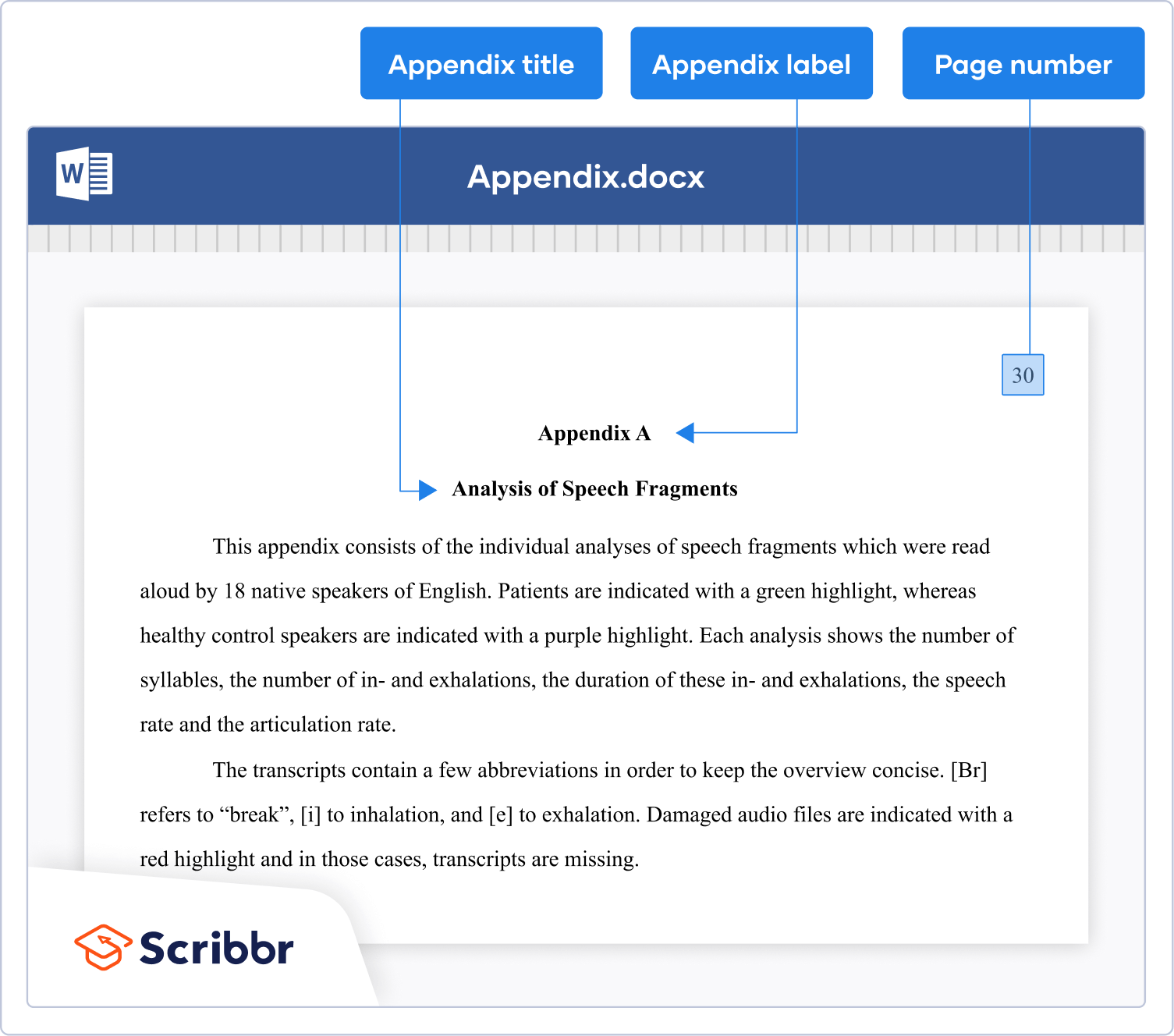
A well-organized appendix is useless if readers cannot navigate it. Every item in the appendix should be clearly referenced from the main body of the paper. This means explicit call-outs like “See Appendix A for full dataset” or “Algorithm details are provided in Appendix B, Section 3.” Within the appendix itself, a clear table of contents, logical numbering (e.g., Appendix A.1, A.2), and descriptive titles for each section or file are essential for easy lookup.

Consistent Formatting and Structure
Maintaining a professional and readable appearance across the main document and its appendices is vital. This includes consistent use of fonts, headings, numbering styles, and citation formats. For digital content like code, ensure consistent indentation and syntax highlighting. For datasets, standardize formats and provide clear metadata or README files explaining the data structure. A chaotic appendix can undermine the credibility of an otherwise excellent paper.
In conclusion, the appendix of a paper, particularly in the technology domain, has evolved into a sophisticated digital repository. It’s no longer just a collection of extra pages but a dynamic space for code, data, multimedia, and detailed documentation. Leveraging appropriate technologies for its creation, management, and presentation, while adhering to best practices for accessibility, security, and clarity, is paramount. As technology continues to advance, the appendix will undoubtedly continue to adapt, becoming an even more integral and interactive component of scholarly and technical communication.
aViewFromTheCave is a participant in the Amazon Services LLC Associates Program, an affiliate advertising program designed to provide a means for sites to earn advertising fees by advertising and linking to Amazon.com. Amazon, the Amazon logo, AmazonSupply, and the AmazonSupply logo are trademarks of Amazon.com, Inc. or its affiliates. As an Amazon Associate we earn affiliate commissions from qualifying purchases.