
In the intricate world of finance and investment, understanding different asset classes is crucial for both seasoned investors and curious newcomers. Among these, sovereign bonds stand out as a cornerstone of national financial stability and a vital instrument for government funding. In the United Kingdom, these instruments are famously known as “gilts.” More than just a financial term, gilts represent the bedrock of the UK’s financial system, influencing everything from interest rates to pension fund stability. This comprehensive guide will demystify gilts, exploring their fundamental nature, diverse types, key characteristics, and their significant role in both investor portfolios and the broader economy.

The Basics: Defining Gilts and Their Role
At its heart, a gilt is a simple yet powerful financial concept: a promise from the UK government to pay back a borrowed sum, along with interest, over a specified period. These securities are a direct and fundamental mechanism by which the government raises money to fund public services, infrastructure projects, and manage its national debt.
What Exactly is a Gilt?
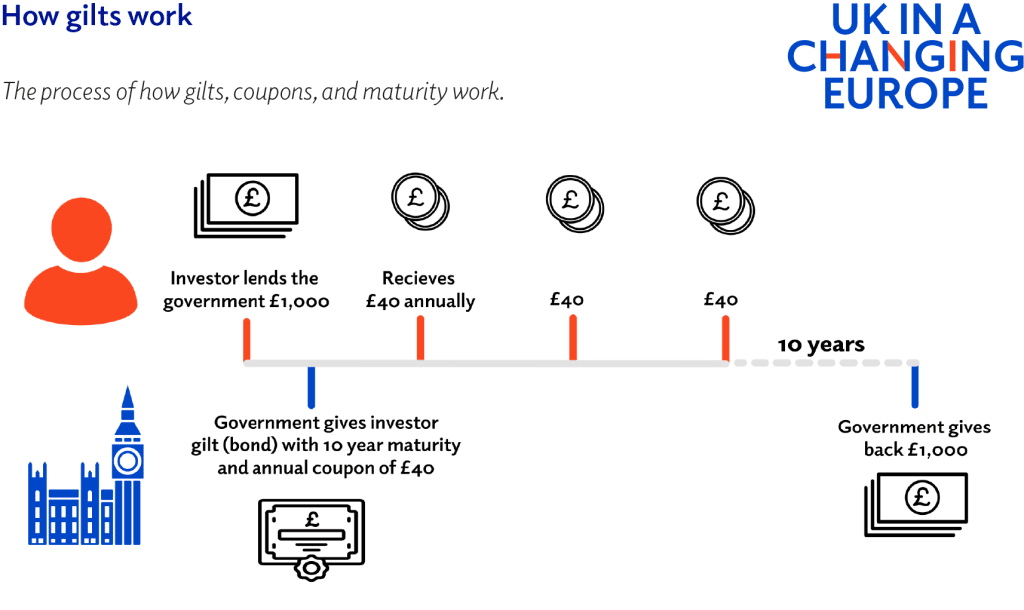
Derived from the “gilt-edged” paper certificates on which they were historically printed, signifying their high quality and low risk, a gilt is essentially a UK government bond. When you purchase a gilt, you are lending money to the British government. In return, the government commits to making regular interest payments (known as coupon payments) over the bond’s life and repays the original loan amount (the principal or face value) on a predetermined maturity date. Gilts are considered among the safest investments globally due to the extremely low probability of the UK government defaulting on its debt obligations.
Why Governments Issue Gilts
The primary reason governments, including the UK, issue gilts is to finance their expenditure when tax revenues are insufficient to cover costs. This allows the government to run a budget deficit without immediately increasing taxes or cutting essential public services. The funds raised through gilt issuance are critical for various purposes:
-
Funding Public Services: Covering the costs of healthcare (NHS), education, defence, and social welfare programs.
-
Infrastructure Development: Financing major projects like new roads, railways, renewable energy initiatives, and broadband expansion.
-
Managing National Debt: Refinancing existing debt as older gilts mature, ensuring a smooth rollover of government borrowings.
-
Economic Stabilization: Using fiscal policy to stimulate or cool down the economy through government spending.
By issuing gilts, the government diversifies its funding sources and taps into a broad base of investors, both domestic and international.
The Gilt Market: Who Buys and Sells?
The market for gilts is enormous and highly liquid, making it easy for large institutional investors to buy and sell them without significantly impacting prices. Key players in the gilt market include:
-
Institutional Investors: Pension funds, insurance companies, and asset managers are typically the largest buyers. They value gilts for their safety, liquidity, and ability to match long-term liabilities.
-
Banks: Commercial and investment banks participate for liquidity management, trading, and as primary dealers facilitating the issuance process.
-
Central Banks: The Bank of England often buys and sells gilts as part of its monetary policy operations, such as quantitative easing (QE) or quantitative tightening (QT), to influence interest rates and money supply.
-
Retail Investors: Individual investors can also access gilts, albeit usually indirectly through funds or exchange-traded funds (ETFs) that hold gilts, or directly through platforms offering UK Treasury bills and bonds.
-
International Investors: Foreign governments, central banks, and large investment firms hold a significant portion of UK gilts, attracted by the stability of the UK economy and the liquidity of its bond market.
This diverse participation ensures a robust and efficient market where gilts are continuously traded.
Types of Gilts: Exploring the Range of Offerings
While all gilts represent a debt obligation of the UK government, they come in different forms, each designed to meet specific investor needs and government financing objectives. Understanding these distinctions is key to appreciating their varied roles in a portfolio.
Conventional Gilts: The Standard Offering
Conventional gilts are the most common type and what most people envision when they think of a government bond. They pay a fixed rate of interest (coupon) semi-annually until maturity, at which point the principal is repaid.
-
Fixed Coupon: The interest payment remains constant throughout the life of the bond, regardless of changes in market interest rates.
-
Predictable Income: Investors know exactly how much income they will receive and when, making them attractive for those seeking stable cash flow.
-
Maturity Range: Conventional gilts come with a wide range of maturities, from short-dated (less than 7 years) to medium-dated (7-15 years) and long-dated (over 15 years, sometimes up to 50 years).
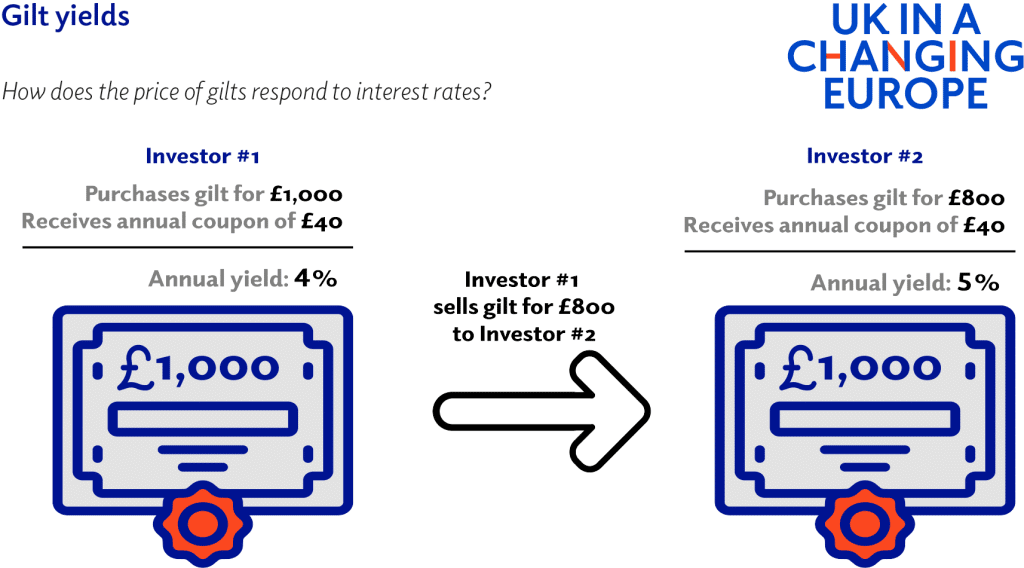
The price of conventional gilts in the secondary market moves inversely to interest rates. If interest rates rise, the price of existing gilts (with their lower, fixed coupon) will fall to offer a competitive yield. Conversely, if interest rates fall, existing gilt prices will rise.
Index-Linked Gilts: Protecting Against Inflation
Index-linked gilts are designed to protect investors from the erosive effects of inflation. Both the semi-annual coupon payments and the principal amount repaid at maturity are adjusted in line with a specific retail price index, typically the UK Retail Prices Index (RPI) or Consumer Price Index (CPI).
-
Inflation Protection: This feature is particularly appealing during periods of high or uncertain inflation, as it preserves the real value of an investment.
-
Variable Payments: Unlike conventional gilts, the nominal value of coupon payments and the principal repayment for index-linked gilts will vary, although their real value (purchasing power) remains constant or increases.
-
Lower Initial Yield: Because of their inflation-protection feature, index-linked gilts typically offer a lower nominal yield than conventional gilts when inflation expectations are low. However, their total return can be superior if inflation turns out to be higher than anticipated.
These gilts are highly valued by pension funds and insurance companies that have long-term liabilities linked to inflation.
Treasury Bills vs. Gilts: Short-Term vs. Long-Term
While both are debt instruments issued by the UK Treasury, Treasury Bills (T-Bills) and gilts serve different purposes due to their differing maturities.
-
Treasury Bills: These are short-term debt instruments, typically issued with maturities of 1, 3, 6, or 12 months. They are “discount instruments,” meaning they are sold at a discount to their face value and pay no coupon. The return comes from the difference between the purchase price and the face value received at maturity. T-Bills are used for very short-term government funding and as a highly liquid cash management tool by financial institutions.
-
Gilts: As discussed, gilts are long-term instruments with maturities ranging from a few years to several decades, offering regular coupon payments. They are designed for longer-term funding and investment horizons.
The distinction highlights the government’s need for both immediate, flexible funding (T-Bills) and stable, long-term capital (gilts).
Key Characteristics and Investment Considerations
Investing in gilts involves understanding their unique characteristics, which dictate their behavior and appeal to different types of investors. These features are fundamental to assessing their role within a diversified portfolio.
Maturity Dates and Yields Explained
-
Maturity Date: This is the date on which the government repays the principal amount of the bond. Gilts are categorized by their maturity: short (up to 7 years), medium (7-15 years), and long (over 15 years). Longer maturities generally carry higher interest rate risk but can offer higher yields to compensate investors for locking up their money for a longer period.
-
Yield: There are several ways to express a gilt’s yield:
-
Coupon Rate: The fixed annual interest payment expressed as a percentage of the bond’s face value.
-
Current Yield: The annual coupon payment divided by the bond’s current market price. This reflects the yield an investor would receive if they bought the bond at its current price and held it for one year.
-
Yield to Maturity (YTM): The most comprehensive measure, representing the total return an investor can expect if they hold the bond until it matures, taking into account coupon payments, the bond’s current market price, and the face value. YTM is what market participants typically refer to when discussing bond yields.
-
Credit Risk: The “Risk-Free” Asset
Gilts are often referred to as “risk-free” assets, particularly in the UK context. This doesn’t mean they are entirely without risk, but rather that their credit risk (the risk that the issuer will default on its payments) is considered extremely low. The UK government, with its stable political system, robust economy, and ability to raise taxes and print its own currency, is highly unlikely to default. This low credit risk makes gilts a benchmark for pricing other, riskier assets in the market. However, “risk-free” does not imply “return-free” or “volatility-free.” Gilts are still subject to interest rate risk, inflation risk (especially for conventional gilts), and liquidity risk (though minimal for benchmark gilts).
Liquidity and Market Accessibility
The gilt market is one of the most liquid bond markets in the world. This means that investors can easily buy or sell large quantities of gilts without significantly impacting their price. This high liquidity is a major advantage, as it allows investors to adjust their portfolios efficiently and reduces the risk of being unable to exit a position when needed. The Bank of England, through its “gilt-edged market makers” (GEMMs), ensures an orderly and liquid market. For retail investors, accessibility often comes via investment platforms, wealth managers, or funds specializing in UK bonds.
Interest Rate Sensitivity: Understanding Price Volatility
Gilts are highly sensitive to changes in interest rates. This is a crucial concept for bond investors:
-
Inverse Relationship: When market interest rates rise, the price of existing gilts (which offer a fixed, lower coupon) falls to make their yield competitive with new, higher-yielding issues. Conversely, when market interest rates fall, existing gilt prices rise.
-
Duration: This is a measure of a bond’s price sensitivity to interest rate changes. Gilts with longer maturities and lower coupon rates generally have higher durations, meaning their prices will fluctuate more significantly with interest rate movements. This “interest rate risk” is a primary concern for gilt investors, especially those holding long-dated bonds.
Understanding this inverse relationship and the concept of duration is essential for managing risk and making informed decisions about gilt investments.
Investing in Gilts: Opportunities and Risks
For many investors, gilts form a cornerstone of a well-diversified portfolio. They offer distinct advantages, but also come with considerations that need to be carefully weighed.
Benefits of Including Gilts in a Portfolio
-
Capital Preservation and Safety: Due to their low credit risk, gilts are considered a safe haven, particularly during periods of economic uncertainty or market volatility. They help preserve capital and act as a ballast against riskier assets like equities.
-
Diversification: Gilts often have a low or negative correlation with equities, meaning their prices tend to move in opposite directions. This provides valuable diversification, reducing overall portfolio risk. When stocks fall, gilts may rise, offsetting some losses.
-
Stable Income Stream: Conventional gilts provide predictable, semi-annual coupon payments, making them attractive for investors seeking regular income.
-
Liquidity: The high liquidity of the gilt market ensures that investors can buy or sell their holdings relatively easily without significant price impact.
-
Inflation Protection (Index-Linked Gilts): Index-linked gilts offer a direct hedge against inflation, safeguarding the real value of an investment.
Potential Drawbacks and Considerations
-
Lower Returns: Historically, gilts have offered lower returns compared to equities over the long term, reflecting their lower risk profile. In periods of very low interest rates, real returns (after inflation) can even be negative.
-
Interest Rate Risk: As discussed, rising interest rates can lead to a decrease in the market value of existing gilts. If an investor needs to sell before maturity, they could incur a capital loss.
-
Inflation Risk (Conventional Gilts): While index-linked gilts mitigate this, conventional gilts are susceptible to inflation risk. If inflation rises unexpectedly, the purchasing power of their fixed coupon payments and principal repayment diminishes.
-
Opportunity Cost: Investing in gilts means foregoing potentially higher returns that could be achieved in other asset classes, though usually at a higher risk.
How Retail Investors Can Access Gilts
Direct ownership of individual gilts might seem complex for individual investors, but several accessible avenues exist:
-
Gilt Funds and ETFs: This is the most common and easiest way for retail investors to gain exposure. Funds and ETFs that hold a basket of gilts offer diversification, professional management, and liquidity. Examples include actively managed bond funds and passive gilt ETFs.
-
Investment Platforms: Some online brokerage platforms allow direct purchase of gilts, similar to buying stocks. However, this is more common for larger denominations and may require a certain level of investment knowledge.
-
National Savings and Investments (NS&I): While not direct gilts, NS&I offers government-backed savings products (like Premium Bonds, Income Bonds, and Guaranteed Growth Bonds) which are an alternative way for individuals to lend money to the government, though their structure and returns differ from market-traded gilts.
The Role of Gilts in Economic Policy
Gilts are not just investment vehicles; they are also integral to the UK’s economic policy. The yields on gilts serve as a benchmark for borrowing costs across the economy, influencing mortgage rates, corporate bond yields, and other lending rates. The Bank of England uses gilt purchases and sales (QE and QT) as a key monetary policy tool to manage liquidity, control inflation, and support economic growth. Changes in gilt yields are closely watched by economists and policymakers as an indicator of market expectations regarding inflation and economic prospects.
The Future of Gilts in a Changing Financial Landscape
The role and performance of gilts are not static. They are continually shaped by global economic forces, domestic policy decisions, and evolving investor sentiment. Understanding these dynamics is crucial for anticipating future trends.
Impact of Quantitative Easing and Tightening
The last two decades have seen unprecedented monetary policy interventions, notably Quantitative Easing (QE), where central banks bought large quantities of government bonds (including gilts) to inject liquidity into the financial system and lower long-term interest rates. This drove gilt prices up and yields down. More recently, central banks have begun Quantitative Tightening (QT), allowing bonds to mature without reinvestment or actively selling them, which can put upward pressure on gilt yields and downward pressure on prices. The ongoing balance between these policies will significantly influence gilt market dynamics.
Global Economic Factors and Gilt Performance
Gilts do not operate in a vacuum. Their performance is influenced by a myriad of global factors:
-
Global Interest Rates: Changes in interest rates in major economies (e.g., US Federal Reserve, European Central Bank) can affect capital flows and the attractiveness of gilts relative to other sovereign debt.
-
Geopolitical Events: Wars, trade disputes, and political instability can drive investors towards safe-haven assets like gilts, increasing demand and lowering yields.
-
Inflation Expectations: Global commodity prices, supply chain disruptions, and wage growth can all influence inflation expectations, which in turn impact the demand for conventional vs. index-linked gilts.
-
Exchange Rates: The strength or weakness of the pound sterling can affect the returns for international investors.
Innovation in Sovereign Debt Markets
While gilts remain a traditional asset, innovation is slowly making its way into sovereign debt. Discussions around “green gilts” to finance environmentally friendly projects, or bonds linked to social outcomes, reflect a growing demand for sustainable and impact investments. Digitalization and blockchain technology could also eventually streamline issuance and trading processes, though the highly regulated nature of government debt means changes are typically slow and carefully considered.
In conclusion, gilts are far more than just financial instruments; they are the backbone of the UK’s public finances and a vital component of the global financial system. For investors, they offer a powerful combination of safety, liquidity, and income, serving as a critical tool for diversification and capital preservation. Understanding “what is a gilt” is not just about comprehending a technical term; it’s about grasping a fundamental aspect of how modern economies function and how investors can navigate the complexities of financial markets with greater confidence.
aViewFromTheCave is a participant in the Amazon Services LLC Associates Program, an affiliate advertising program designed to provide a means for sites to earn advertising fees by advertising and linking to Amazon.com. Amazon, the Amazon logo, AmazonSupply, and the AmazonSupply logo are trademarks of Amazon.com, Inc. or its affiliates. As an Amazon Associate we earn affiliate commissions from qualifying purchases.