
For decades, an eye prescription was a simple piece of paper handed to a patient by an optometrist, eventually handed over to a lab technician to grind a piece of glass or plastic. However, in the modern era, your eye prescription has evolved into a sophisticated data set. It is the fundamental blueprint for a wide array of high-tech applications, from digitally surfaced lenses to integrated augmented reality (AR) displays.
Understanding what your eye prescription means is no longer just about knowing how “bad” your eyes are; it is about understanding the technical specifications that allow modern hardware and software to interface with your biology. As we move deeper into a world of wearable tech and personalized digital solutions, your prescription serves as the essential calibration tool for your digital life.

The Digital Translation of Optical Data: Understanding the Numbers
When you look at your prescription, you are looking at a series of abbreviations and numbers that describe the refractive errors of your eyes. In tech terms, these are the “calibration settings” required to resolve a blurry input signal into a sharp, high-definition output.
Spheres, Cylinders, and Axes: The Geometry of Light
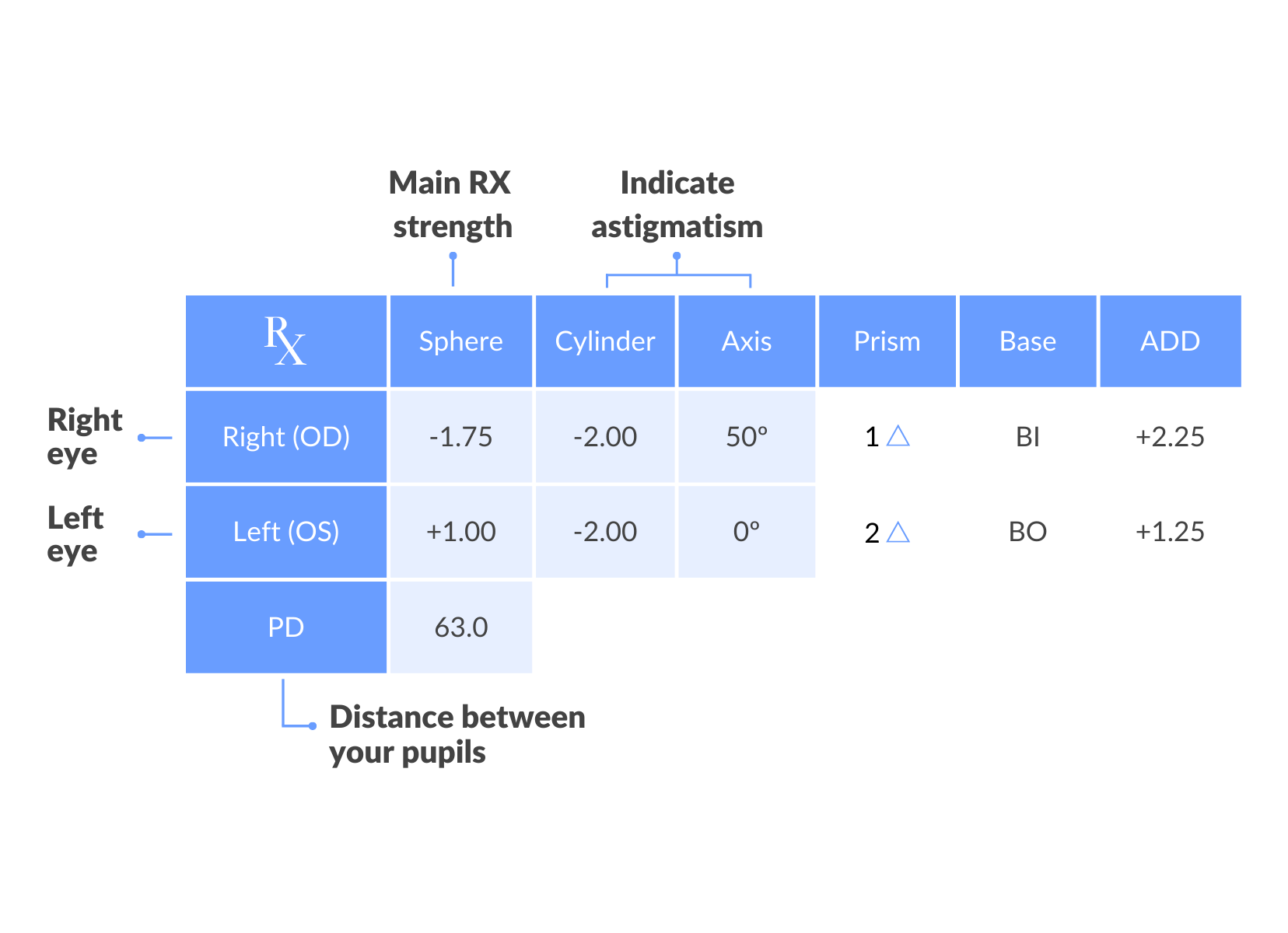
The primary components of your prescription—Sphere (SPH), Cylinder (CYL), and Axis—are geometric coordinates.
-
Sphere (SPH): This indicates the amount of lens power, measured in diopters, prescribed to correct nearsightedness (myopia) or farsightedness (hyperopia). In the tech world, this is akin to the focal length adjustment on a camera lens. A negative number means your “internal sensor” (the retina) is receiving an image that is focused too far forward; a positive number means it is focused too far back.
-
Cylinder (CYL) and Axis: These numbers represent astigmatism, a condition where the cornea is shaped more like a football than a basketball. From a technical perspective, this is a “mapping” issue. The CYL tells the lens manufacturer how much “offset” is needed to correct the distortion, and the Axis (measured in degrees from 1 to 180) tells the hardware exactly where that correction needs to be oriented.
The Software Behind the Lens: How Algorithms Optimize Clarity
The translation of these numbers into a physical lens is now handled by sophisticated “Digital Surfacing” technology. Traditionally, lenses were ground using mechanical tools that followed a physical template. Today, computer-controlled lathes use “Freeform Technology” to cut lenses with a precision of 0.01 diopters.
Software algorithms take your prescription data and calculate the optimal curvature for every single point on the lens surface. This “point-of-wear” technology accounts for how the frame sits on your face, the distance between your pupils (Pupillary Distance, or PD), and even the tilt of the glasses. By treating the prescription as a digital map, tech companies can virtually eliminate the peripheral distortion that plagued older lens designs.
Smart Lenses and Wearable Tech: Beyond Traditional Correction
As we move toward the “spatial computing” era, your eye prescription is becoming a critical component of the hardware stack. Tech giants are no longer just making screens; they are making screens that must interact perfectly with the user’s specific refractive needs.
Blue Light Filtration and Digital Eye Strain Solutions
One of the most significant tech-driven shifts in vision care is the focus on “Digital Eye Strain” (Computer Vision Syndrome). Modern prescriptions often include “add-ons” that are purely technological in nature. High-energy visible (HEV) blue light filters are engineered at a molecular level within the lens material to absorb specific wavelengths emitted by LED screens and smartphones.
Beyond simple coatings, “Computer Lenses” are now designed using specific algorithms that shift the focal point slightly to reduce the strain on the ciliary muscles during prolonged screen use. These lenses act as a “buffer” between the human eye and the digital interface, optimizing the user’s biological hardware for the demands of the modern workspace.
Augmented Reality (AR) and Integrated Prescription Optics
The rise of AR headsets, such as the Apple Vision Pro or Meta’s smart glasses, has forced a convergence between optometry and hardware engineering. Because these devices use “pancake lenses” or waveguides to project images into the eye, a standard pair of glasses often cannot fit inside the housing.
To solve this, manufacturers use magnetic prescription “inserts.” These are not merely pieces of glass; they are precision-engineered optical components that must align perfectly with the device’s internal tracking sensors. For the tech to work—for the “eye-tracking” to be accurate—the prescription must be perfectly translated into the device’s software. If the prescription data is slightly off, the AR elements will not align with the real world, leading to “latency” in the user’s visual perception and potential motion sickness.

The AI Revolution in Optometry: From Manual Exams to Automated Precision
The process of generating your eye prescription has undergone a digital transformation. The traditional “Subjective Refraction” (the “Which is better, 1 or 2?” test) is being supplemented, and in some cases replaced, by AI-driven diagnostics.
Digital Retinal Mapping and AI-Driven Diagnostics
Newer diagnostic tools, such as the Digital Phoropter and Autorefractors, use infrared light to measure how light changes as it enters the eye. This data is fed into an AI model that generates a baseline prescription in seconds. Furthermore, technologies like Optical Coherence Tomography (OCT) allow for a high-resolution, 3D cross-section of the retina.
AI algorithms can now analyze these 3D maps to detect minute changes in eye health that might affect a prescription, such as early-stage macular degeneration or glaucoma. In this context, your prescription is the “output” of a massive data-mining operation that looks at the structural integrity of your eye.
Telehealth and App-Based Vision Assessments
The “Uberization” of vision care has led to the development of smartphone apps that can perform basic refractive tests. Using the high-resolution cameras and advanced processing power of modern smartphones, these apps guide users through vision tests and use computer vision algorithms to estimate a prescription.
While these tools are currently used primarily for renewing existing prescriptions rather than diagnosing new issues, they represent a shift toward “decentralized” vision tech. Your prescription is moving from a locked cabinet in a doctor’s office to a portable digital asset that you can use to order custom-calibrated hardware from anywhere in the world.
Future-Proofing Your Sight: Bio-Tech and Next-Gen Corrective Hardware
The future of eye prescriptions lies in “Adaptive Tech”—hardware that can change in real-time based on the user’s needs, effectively making the static paper prescription obsolete.
Adaptive Focus and Liquid Lens Technology
One of the most exciting trends in optical tech is the development of “Liquid Lenses.” Unlike traditional plastic or glass, these lenses use a cell containing an optical-grade liquid that changes shape when an electrical current is applied.
Imagine a pair of glasses that doesn’t have a single “static” prescription. Instead, sensors in the frame detect where your eyes are focusing. If you look at a distant mountain, the “Smart Prescription” adjusts the liquid to a distance setting. If you look down at a smartphone, the lenses instantly reconfigure for near vision. This “dynamic prescription” represents the ultimate synergy between biology and technology, providing perfect focus across all focal planes.
Data Privacy in the Era of Digital Vision Care
As our prescriptions and retinal maps become digitized, they also become part of our broader “Biometric Data” profile. This raises new questions about digital security. If your eye prescription is stored in the cloud to be accessed by your AR headset or your online lens provider, how is that data protected?
In the tech industry, there is an increasing push for “Optical Privacy.” Your eye movements (gaze tracking) can reveal a lot about your interests, health, and even cognitive state. Future vision tech will need to balance the necessity of using your prescription data to provide a clear image with the need to protect that data from being exploited by advertisers or third parties.
Conclusion: Your Prescription as a Digital Interface
In conclusion, “what your eye prescription means” has shifted from a medical diagnosis to a technical specification. It is the bridge between your natural biological vision and the increasingly complex digital world you inhabit. Whether it is used to calibrate the lenses in a pair of high-fashion frames, adjust the optics in a VR headset, or inform an AI-driven health assessment, your prescription is one of the most important data points you own.
As technology continues to advance, we can expect the line between “correcting vision” and “enhancing vision” to blur. Your prescription will not just be about seeing the world as it is, but about interfacing with a world that is increasingly digital, augmented, and data-driven. Understanding this data is the first step in optimizing your most important sensor: your eyes.
aViewFromTheCave is a participant in the Amazon Services LLC Associates Program, an affiliate advertising program designed to provide a means for sites to earn advertising fees by advertising and linking to Amazon.com. Amazon, the Amazon logo, AmazonSupply, and the AmazonSupply logo are trademarks of Amazon.com, Inc. or its affiliates. As an Amazon Associate we earn affiliate commissions from qualifying purchases.