
When we ask the question, “What does a heart stent look like?” the immediate visual answer is often a tiny, metallic mesh tube, no larger than the spring found inside a ballpoint pen. However, in the realm of modern medical technology, a heart stent is far more than a simple mechanical scaffold. It represents one of the most sophisticated intersections of metallurgy, polymer science, and digital data integration in the 21st century.
As medical technology (MedTech) continues to evolve at an exponential rate, the appearance and functionality of heart stents have shifted from passive industrial components to active, “smart” devices. To understand what a heart stent looks like today, one must look past the naked eye and into the microscopic and digital innovations that define contemporary cardiology.
The Physicality of Precision: Structural Engineering at a Microscopic Scale
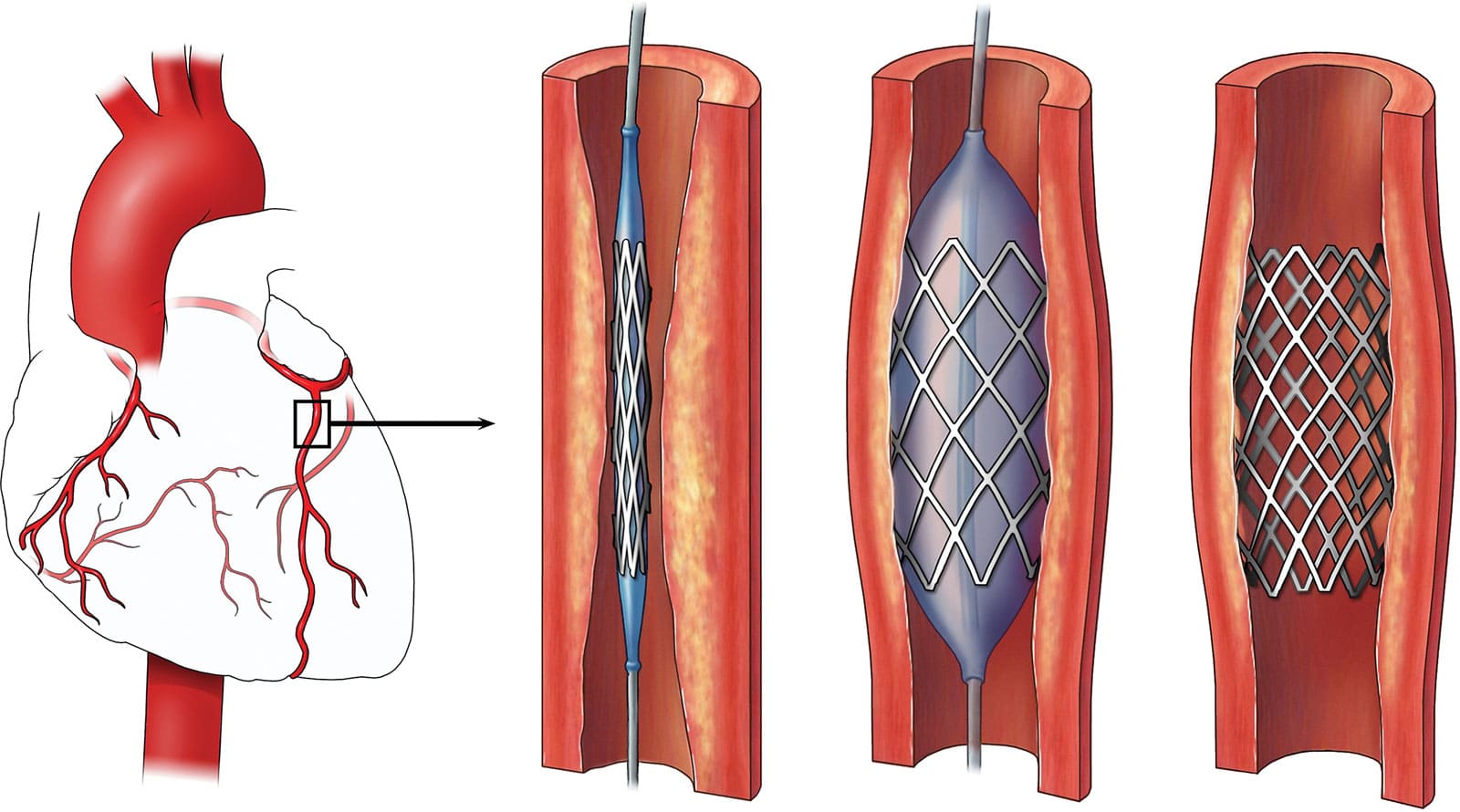
At its most basic level, a heart stent is a masterpiece of micro-engineering. To the human eye, it looks like a delicate silver or chrome cylinder. However, under high-powered magnification, the complexity of its architecture becomes apparent. This is not a static piece of wire; it is a precisely etched lattice designed to balance extreme flexibility with immense radial strength.
Material Science: Cobalt-Chromium and Shape-Memory Alloys
The visual aesthetic of a stent—its metallic sheen—is a direct result of the high-performance alloys used in its construction. Early stents were often made of stainless steel, which was durable but relatively bulky. Modern Tech has pivoted toward Cobalt-Chromium (CoCr) and Platinum-Chromium (PtCr).
These materials allow the “struts” (the individual wires of the mesh) to be thinner than a human hair, significantly improving the device’s profile. This thinness is crucial for “deliverability”—the ability of the tech to navigate the winding, narrow “pipes” of the human vascular system without causing trauma. Furthermore, some stents utilize Nitinol, a nickel-titanium shape-memory alloy that can be compressed to a fraction of its size and “remember” to expand to its programmed diameter when exposed to body temperature.
The Lattice Design: Geometry for Vessel Integrity
If you look closely at the “pattern” of a stent, you will notice it isn’t a simple weave. Tech engineers use Computer-Aided Design (CAD) to create specific geometries—often referred to as open-cell or closed-cell designs.
An open-cell design looks like a series of interconnected “S” or “Z” shapes with gaps between them. This geometry provides maximum flexibility, allowing the stent to bend around the natural curves of the coronary arteries. A closed-cell design looks more like a rigid honeycomb, providing more uniform support to the vessel wall. The choice of what a stent looks like structurally depends entirely on the mechanical requirements of the specific patient’s anatomy, showcasing the shift toward personalized engineering.
The Digital Evolution: “Smart Stents” and the IoMT Revolution
As we move deeper into the era of the Internet of Medical Things (IoMT), the visual and functional definition of a heart stent is moving from the purely mechanical to the electro-mechanical. Researchers are currently developing “Smart Stents” that integrate sensors into the mesh itself.
Integrated Micro-Sensors for Real-Time Hemodynamics
What does a “Smart Stent” look like? While it maintains the classic mesh exterior, it incorporates microscopic pressure sensors and flow meters. These sensors are often etched directly into the metallic struts using Micro-Electro-Mechanical Systems (MEMS) technology.
From a tech perspective, this turns the stent into a data node. Instead of a doctor having to perform a secondary invasive procedure to check if a vessel is re-narrowing (restenosis), the stent itself can monitor blood flow and pressure gradients in real-time. This is the hardware component of a larger digital ecosystem designed to provide “living data” from within the human body.
Wireless Data Transmission and Patient Monitoring
The technology inside a smart stent is designed to communicate wirelessly. Using inductive coupling or low-power radio frequencies, these devices can transmit diagnostic data to an external wearable or a smartphone app. In this context, the “look” of the stent is secondary to its “digital footprint.” It acts as a permanent, internal biometric monitor, allowing AI-driven software to predict potential heart failures or blockages before the patient even experiences symptoms.

Bioresorbable Scaffolds: The Engineering of Temporary Tech
One of the most fascinating trends in MedTech is the development of the “disappearing” stent, known as a Bioresorbable Scaffold (BRS). For decades, the industry standard was a permanent metal implant. However, modern engineering has introduced the concept of temporary mechanical support.
Polymer Science and Controlled Degradation
A bioresorbable scaffold often looks different from its metallic counterparts. It usually has a thicker, more “plastic” appearance because it is made from poly-L-lactide (PLLA), a biocompatible polymer.
The tech behind this is focused on controlled degradation. The scaffold is designed to maintain its structural integrity for approximately six to nine months—the period required for the artery to heal and “remodel” itself. After this period, the material undergoes a chemical breakdown, eventually being metabolized by the body into water and carbon dioxide.
Reducing Long-Term Tech Footprints in Human Biology
The goal of this technology is to leave nothing behind. This “leave-nothing-behind” philosophy is a major trend in medical gadgets and implants. By removing the permanent metallic cage, the vessel regains its natural vasomotion (the ability to expand and contract). From a technical standpoint, this solves the “caged artery” problem, representing a move toward more harmonious integration between hardware and human biology.
Advanced Manufacturing: How Laser Etching and 3D Printing Shape the Future
The production of a heart stent is as high-tech as the device itself. When we observe the smooth, burr-free edges of a stent, we are looking at the results of extreme precision manufacturing.
Femtosecond Laser Cutting for Micron-Level Accuracy
To create the intricate patterns found in a stent, manufacturers use femtosecond lasers. These lasers fire pulses at one-quadrillionth of a second. This “cold” laser cutting technology allows the metal to be shaped without generating heat, which prevents the material from warping or losing its structural properties at the microscopic level. The result is a device that looks flawlessly smooth, which is essential for preventing blood clots (thrombosis) that could be triggered by jagged edges.
The Rise of Patient-Specific 3D Printed Stents
The next frontier in stent tech is Additive Manufacturing, or 3D printing. Traditional stents come in a range of “off-the-shelf” sizes. However, 3D printing allows for the creation of custom-shaped stents based on a patient’s CT scan. These stents look exactly like the patient’s unique arterial bifurcations. By using 3D printing, engineers can vary the thickness of the struts in different parts of the stent to match the specific pressure points of a single individual’s heart.
Navigating the Future: Robotics and AI in Stent Deployment
Finally, what a stent “looks like” is increasingly defined by the technology used to place it. We cannot separate the device from the digital tools required for its installation.
AI-Assisted Imaging and Virtual Stent Sizing
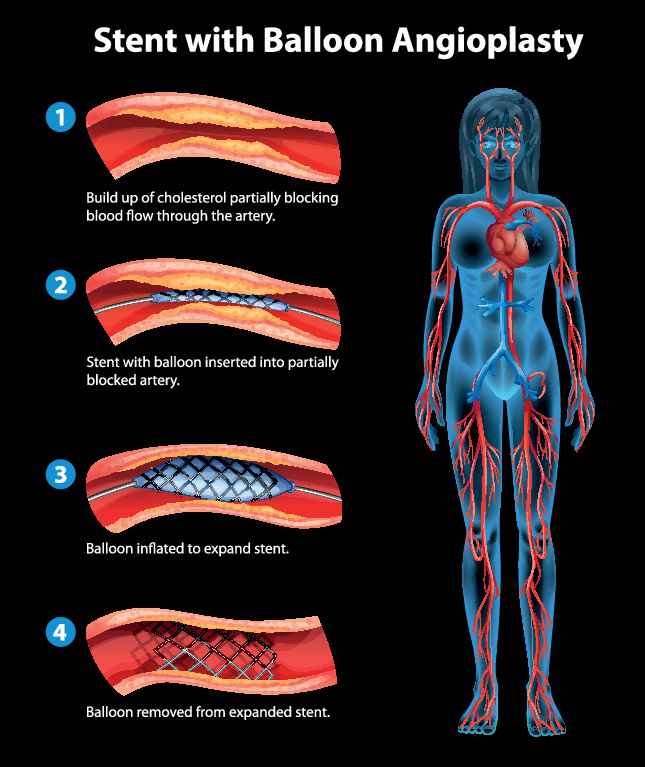
Before a stent is even unwrapped, it exists as a digital twin. Advanced imaging software using Artificial Intelligence (AI) analyzes Intravascular Ultrasound (IVUS) or Optical Coherence Tomography (OCT) images to create a 3D map of the artery. The AI then suggests the perfect “look” for the stent—predicting the exact length, diameter, and expansion pressure required. This eliminates human error and ensures that the hardware fits the biological interface perfectly.
Robotic-Percutaneous Coronary Intervention (R-PCI)
The “hands” that hold the stent during the procedure are increasingly robotic. Robotic-assisted systems allow surgeons to navigate the stent through the coronary anatomy using a joystick and high-definition screens. This technology provides sub-millimeter precision that manual manipulation cannot match. The stent, in this ecosystem, is just one component of a high-tech robotic surgery suite designed to maximize safety and efficiency.
In conclusion, when we ask what a heart stent looks like, we are looking at the pinnacle of modern technology. It is a device that has evolved from a simple piece of industrial mesh into a sophisticated, data-capable, and bio-integrated tool. Whether it is the shape-memory alloys, the drug-eluting polymer coatings, or the embedded micro-sensors, the heart stent is a testament to how Tech is quite literally sustaining the pulse of humanity.
aViewFromTheCave is a participant in the Amazon Services LLC Associates Program, an affiliate advertising program designed to provide a means for sites to earn advertising fees by advertising and linking to Amazon.com. Amazon, the Amazon logo, AmazonSupply, and the AmazonSupply logo are trademarks of Amazon.com, Inc. or its affiliates. As an Amazon Associate we earn affiliate commissions from qualifying purchases.