
In the dynamic world of fitness and athletic performance, understanding your heart rate during a run has transitioned from an esoteric metric for elite athletes to a fundamental data point accessible to every runner, thanks to the explosion of wearable technology. The question of “what should your heart rate be?” is no longer a simple one-size-fits-all answer, but rather a personalized journey illuminated by smartwatches, chest straps, and sophisticated algorithms. This article delves into the technological advancements that empower runners to monitor, analyze, and optimize their heart rate for everything from weight loss to marathon training, ensuring every stride is efficient and effective.
The Rise of Wearable Technology in Heart Rate Monitoring
The evolution of heart rate monitoring for runners has been nothing short of revolutionary. Gone are the days of manually counting pulses or relying solely on perceived exertion. Modern technology has brought precision and convenience to the forefront, transforming how we understand our bodies during physical activity. This section explores the primary devices and their underlying technologies that make heart rate-guided running possible.
Smartwatches vs. Chest Straps: A Technological Showdown
At the heart of modern heart rate tracking are two dominant categories of devices: optical wrist-based sensors found in smartwatches and fitness trackers, and electrical chest strap monitors. Each boasts distinct technological advantages and trade-offs.
Smartwatches and Wrist-Based Trackers: These devices have become ubiquitous, offering a convenient all-in-one solution for daily tracking and exercise. Most modern smartwatches, like the Apple Watch, Garmin Forerunner series, and Fitbit devices, employ optical heart rate (OHR) sensors. This technology works by emitting green LED lights that penetrate the skin and illuminate the capillaries. As blood flows through these vessels, it absorbs green light. The sensor then measures the amount of light reflected back, detecting subtle changes in blood volume with each heartbeat. This method, known as photoplethysmography (PPG), is highly convenient as it requires no additional accessories beyond the watch itself. Its integration with other smartwatch features like GPS, music playback, and smart notifications makes it an attractive option for the casual and serious runner alike.
However, OHR sensors have their limitations, particularly during high-intensity activities or in specific environmental conditions. Motion artifacts (when the watch moves against the skin), skin tone, and tattoos can interfere with accuracy. For steady-state runs or during recovery periods, OHR is generally reliable, but for interval training or races where precise, real-time data is critical, a different solution often takes precedence.
Chest Strap Monitors: For decades, chest straps have been the gold standard for accurate heart rate measurement in sports. Devices like the Garmin HRM-Pro, Polar H10, or Wahoo TICKR utilize electrical heart rate monitoring. These straps contain electrodes that detect the electrical impulses generated by your heart with each beat, similar to an electrocardiogram (ECG). This method provides highly accurate, real-time data that is largely unaffected by motion, sweat, or environmental factors. The signal is then transmitted wirelessly (via ANT+ or Bluetooth Low Energy) to a compatible watch, bike computer, or smartphone app.
While chest straps are less convenient than wrist-based monitors (requiring an extra piece of equipment and sometimes feeling constrictive), their superior accuracy makes them indispensable for runners who prioritize precise heart rate zone training, advanced performance metrics (like running dynamics), or those looking for reliable heart rate variability (HRV) data. Many serious runners opt for a hybrid approach, using their smartwatch for daily tracking and a chest strap for dedicated training sessions or races.
The Evolution of Accuracy and Convenience
The journey from bulky, unreliable early heart rate monitors to today’s sleek, sophisticated devices highlights a relentless pursuit of both accuracy and convenience. Early optical sensors, often plagued by dropped readings and significant lag, have given way to multi-LED, multi-sensor arrays that utilize advanced algorithms to filter out noise and improve signal quality. These improvements mean that even wrist-based OHR is now “good enough” for a large segment of the running population, especially for those who stick to consistent paces.
Concurrently, chest straps have also evolved. They are lighter, more comfortable, and offer extended battery life. Many now include onboard memory to store data if you run without a paired device, and some even provide advanced running dynamics (vertical oscillation, ground contact time) directly from the strap itself, offloading processing from the watch. This continuous innovation ensures that no matter a runner’s preference or specific needs, there’s a technological solution designed to provide insightful heart rate data, making the “what should your heart rate be” question far more answerable.
Understanding Your Heart Rate Zones with Digital Tools
Once you have the technology to measure your heart rate, the next crucial step is to interpret that data meaningfully. This involves understanding and utilizing heart rate zones, a framework that helps tailor your effort to specific training goals. Digital tools play a vital role in calculating, displaying, and guiding you through these zones.
Max Heart Rate Calculation: Formulas and Fitness Tech
The foundation of heart rate zone training is your Maximum Heart Rate (MHR) – the highest number of beats per minute your heart can achieve during intense physical exertion. While a true MHR can only be determined by a laboratory stress test, fitness technology offers several practical, albeit estimated, methods.
The most common, and simplest, is the “220 minus age” formula (e.g., for a 30-year-old, MHR ≈ 190 bpm). However, this formula is widely criticized for its oversimplification and significant error margin. Many modern smartwatches and running apps employ more refined formulas, such as the Karvonen formula (which also incorporates Resting Heart Rate, RHR) or the Tanaka, Monahan, & Seals formula (208 – (0.7 x age)), which are generally considered more accurate for a broader population.
Beyond generic formulas, advanced fitness trackers and running platforms (like Garmin Connect, Strava, or TrainingPeaks) can often automatically detect your MHR during high-intensity efforts or races. By analyzing your performance data over time, these algorithms can identify your peak heart rate from actual workouts, providing a more personalized and accurate MHR than any age-based formula. Some platforms even allow you to manually adjust your MHR based on lab tests or truly maximal efforts, ensuring your zones are precisely tuned.
Defining Training Zones: From Recovery to Anaerobic
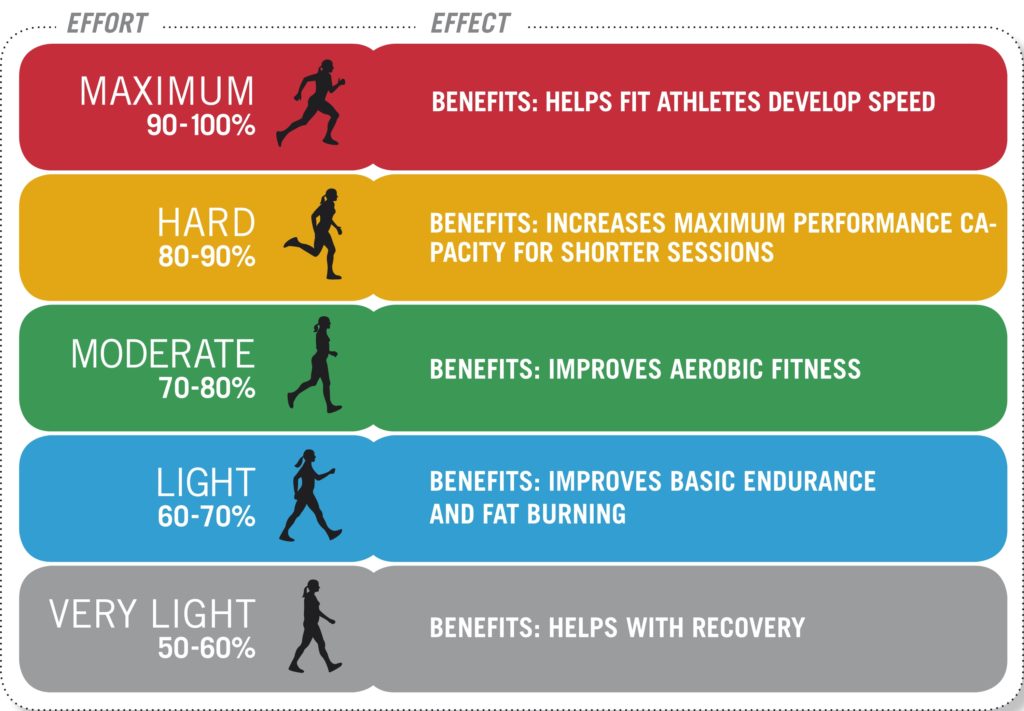
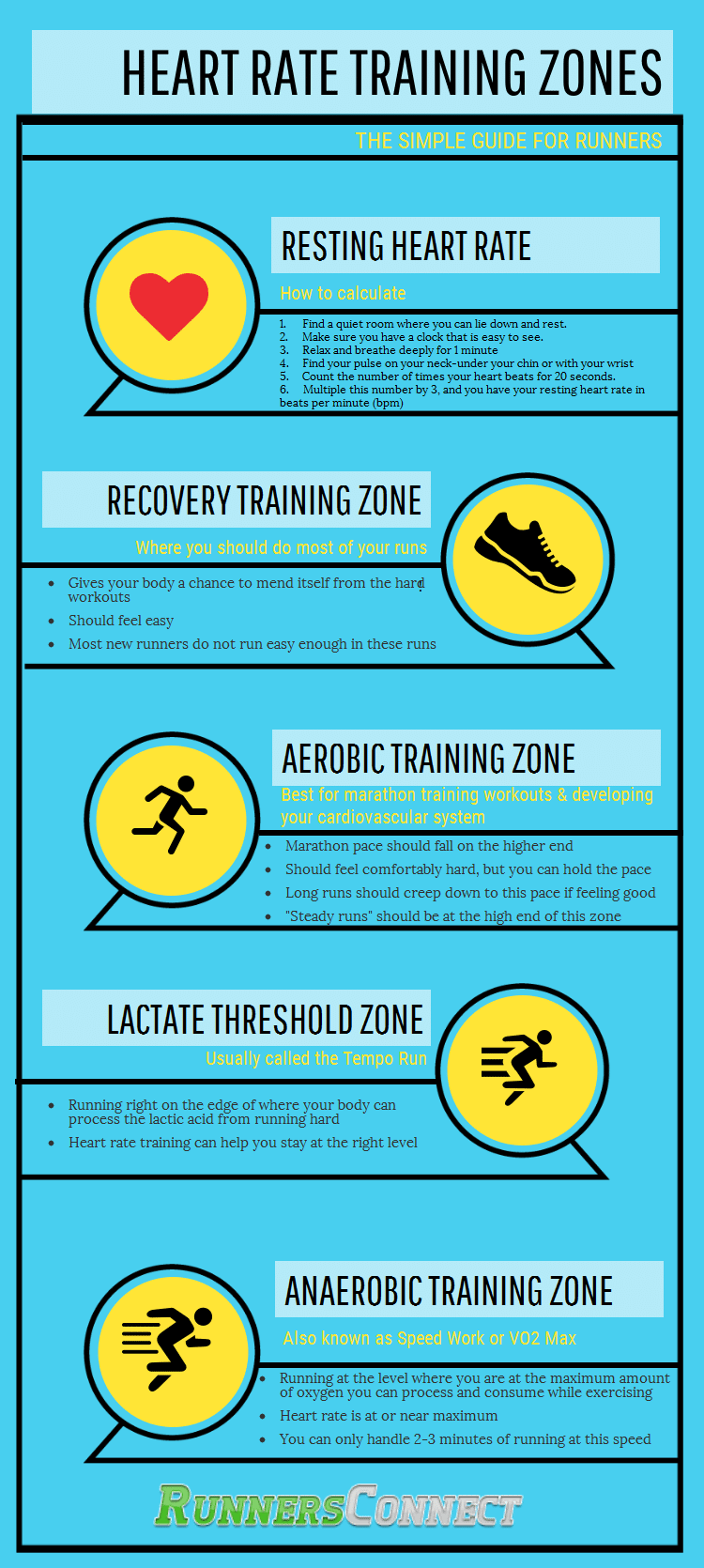
With an MHR established, digital tools then segment your heart rate into distinct training zones, each corresponding to a percentage of your MHR and designed to elicit specific physiological adaptations. Most systems use 5-7 zones, commonly categorized as:
-
Zone 1: Very Light (50-60% MHR): Often called the “recovery zone,” this is for warming up, cooling down, and active recovery. Your fitness tracker will likely show this as a very comfortable pace.
-
Zone 2: Light (60-70% MHR): The “aerobic zone” or “fat-burning zone.” Ideal for long, easy runs, building endurance, and improving your body’s ability to use fat for fuel. Your watch will confirm you can maintain a conversation easily here.
-
Zone 3: Moderate (70-80% MHR): The “tempo zone.” This is where you start to improve your aerobic fitness and lactate threshold. It feels comfortably hard, and conversation becomes more challenging.
-
Zone 4: Hard (80-90% MHR): The “threshold zone.” This high-intensity zone is for improving speed, power, and racing performance. You can only speak in short sentences here.
-
Zone 5: Maximum (90-100% MHR): The “anaerobic zone.” Short bursts of maximal effort, ideal for improving speed and VO2 max. This is an all-out effort, sustainable only for very brief periods.
Running apps and devices will display your current heart rate and often indicate which zone you are in, providing real-time feedback to help you adjust your effort. Many also offer visual cues, such as color-coded displays or vibrations, to alert you when you enter or exit a target zone.
Apps That Guide Your Zone Training
The true power of digital tools lies in their ability to not just display data, but to actively guide your training. Modern running apps like Strava, Garmin Connect, Zwift (for virtual running), Nike Run Club, and Runkeeper go beyond simple tracking.
These applications allow you to:
-
Set custom heart rate zones: You can often input your MHR and RHR, and the app will calculate personalized zones.
-
Create structured workouts: Design runs with specific duration targets within different heart rate zones (e.g., “30 minutes in Zone 2, followed by 10 minutes in Zone 3”).
-
Receive real-time coaching: During a workout, your device or app can provide audio or visual prompts to “speed up” or “slow down” to stay within your target zone.
-
Analyze post-run data: After your run, detailed charts show how much time you spent in each zone, allowing you to assess if you met your training goals.
By leveraging these digital aids, runners can move beyond simply running faster or further, and instead train smarter, ensuring each workout contributes effectively to their overarching fitness objectives. The answer to “what should your heart rate be” during a run becomes a dynamic target, intelligently managed by the technology on your wrist or phone.
Leveraging AI and Apps for Personalized Training
The era of one-size-fits-all training plans is rapidly fading, replaced by highly individualized approaches powered by Artificial Intelligence (AI) and sophisticated mobile applications. These technologies take your heart rate data, combined with other biometric and performance metrics, to create adaptive and truly personalized running experiences.
Adaptive Training Plans: AI’s Role in Personalization
AI algorithms are revolutionizing how training plans are generated and executed. Instead of static, pre-set schedules, AI-driven platforms can craft dynamic plans that adjust in real-time based on your progress, recovery, and even your daily readiness.
Platforms like Garmin Coach, Coros EvoLab, and some premium features within apps like TrainingPeaks employ AI to analyze vast amounts of data:
-
Heart Rate Data: Not just your average heart rate during a run, but also your heart rate response to different intensities, your heart rate variability (HRV), and your recovery heart rate.
-
Performance Metrics: Pace, distance, elevation, running dynamics (cadence, stride length), and previous race results.
-
Biometric Data: Sleep quality, stress levels, and even daily activity outside of running.
With this holistic view, AI can:
-
Adjust workout intensity: If your heart rate is unusually high for a given pace, or your HRV indicates fatigue, the AI might recommend an easier session or an extra rest day. Conversely, if you’re consistently hitting targets with ease, it might suggest increasing the intensity or volume.
-
Predict performance: AI can forecast your race times based on your current fitness and training trajectory, giving you realistic goals.
-
Optimize periodization: It can structure your training cycles to ensure you peak at the right time for your target race, preventing overtraining and maximizing adaptation.
This adaptive capability is crucial for answering “what should your heart rate be” for your specific body, on this specific day, moving beyond generic zone percentages to hyper-personalized targets.
Real-time Coaching and Feedback from Your Device
Beyond planning, AI and apps provide invaluable real-time coaching during your runs. Your smartwatch or a connected app can become your virtual running coach, offering immediate feedback to keep you in your optimal heart rate zone.
-
Audio Prompts: Many apps and devices offer audio cues that tell you to “speed up” or “slow down” to maintain your target heart rate. This frees you from constantly checking your wrist.
-
Visual Cues: Color-coded zones, vibrating alerts, or dynamic displays on your watch face provide instant visual feedback on your heart rate status.
-
Pacing Guidance: Some advanced systems can even predict your optimal pace for a target heart rate zone, or vice-versa, helping you avoid going out too fast or too slow.
-
Form Analysis: While not strictly heart rate, some devices use advanced sensors and AI to provide feedback on running form, which can indirectly impact heart rate efficiency.
This continuous, intelligent feedback loop ensures that every minute you spend running is productive and aligned with your training goals, making “what should your heart rate be” a dynamic instruction rather than a retrospective analysis.

Predictive Analytics for Performance and Recovery
The analytical capabilities of AI extend beyond current training, offering predictive insights into future performance and critical recovery needs. This foresight is invaluable for sustained improvement and injury prevention.
-
Training Load Management: Apps can calculate your accumulated training load (e.g., using metrics like Training Stress Score or Load Focus) and compare it against your fitness and recovery trends. AI can then warn you of potential overtraining or under-recovery, suggesting adjustments before issues arise.
-
Recovery Advisor: Based on your heart rate data (especially HRV), sleep patterns, and recent workouts, devices can provide a “recovery time” estimate, advising how long you should rest before your next hard session. This helps optimize the timing of your next effort.
-
Race Predictors: As mentioned, AI can analyze your long-term training data to provide increasingly accurate race time predictions for various distances, helping you set realistic goals and adjust your final training blocks accordingly.
-
Fatigue Monitoring: Changes in your resting heart rate, sleep heart rate, or morning HRV (all trackable by wearables) can be early indicators of impending illness or excessive fatigue, prompting you to scale back before you get sick or injured.
By integrating these predictive analytics, runners can take a more strategic approach to their training. The initial question of “what should your heart rate be” transforms into a comprehensive system of understanding, acting, and forecasting, all powered by the intelligent application of technology, leading to more consistent progress and a healthier, more sustainable running journey.
aViewFromTheCave is a participant in the Amazon Services LLC Associates Program, an affiliate advertising program designed to provide a means for sites to earn advertising fees by advertising and linking to Amazon.com. Amazon, the Amazon logo, AmazonSupply, and the AmazonSupply logo are trademarks of Amazon.com, Inc. or its affiliates. As an Amazon Associate we earn affiliate commissions from qualifying purchases.