
The moment you realize your driving licence is missing, a wave of anxiety usually follows. Historically, this meant a physical search followed by a tedious trip to a government office to fill out paper forms. However, in our increasingly digitized society, the loss of a physical licence is less of a logistical nightmare and more of a technical workflow management issue. From cloud-based government databases to the rise of Mobile Driver’s Licenses (mDLs), the process of recovering your credentials has shifted into the realm of digital asset management and cybersecurity.

If you have lost your licence, the recovery process is now a test of your ability to navigate digital ecosystems. This guide explores the technical steps required to report the loss, the security implications of identity data theft, and how emerging technologies are changing the way we perceive and protect our driving credentials.
Immediate Digital Actions and Identity Protection
In a world where data is the new currency, a lost driving licence is more than just a piece of plastic; it is a repository of PII (Personally Identifiable Information). The first steps you take must be focused on securing your digital identity and utilizing online reporting tools to invalidate the lost physical token.
Leveraging Official Government Portals for Reporting
The first line of defense is the immediate invalidation of the lost document within the national or regional transport database. Most modern jurisdictions provide a centralized web portal—often integrated with a national identity provider—where users can report a lost or stolen card. By logging into these secure portals using multi-factor authentication (MFA), you trigger an API call that updates your status in the central registry. This ensures that if the physical card is scanned by law enforcement or used for identity verification elsewhere, it will return a “revoked” or “invalid” status.
Understanding Digital ID Wallets as a Temporary Backup
While waiting for a physical replacement, many users can now turn to digital ID wallets. Tech giants like Apple and Google have integrated ISO 18013-5 standards into their mobile operating systems, allowing users in supported regions to store a digital version of their licence. If you had previously provisioned a Mobile Driver’s License (mDL) on your smartphone, you may still possess a valid form of identification for many scenarios, such as airport security or age verification. This highlights the importance of “digital redundancy”—having a synchronized digital copy of your physical credentials before an incident occurs.
Mitigating the Risks of Digital Identity Theft
A lost licence is a goldmine for “social engineering” and “synthetic identity fraud.” Your licence contains your full name, address, and often your signature. If this falls into the wrong hands, it can be used to bypass “Knowledge-Based Authentication” (KBA) checks used by many financial institutions. From a technical security perspective, losing your licence should be treated like a data breach. You should consider placing a “security freeze” on your credit reports via online dashboards and monitoring your digital footprint for any unauthorized attempts to open accounts using your credentials.
Navigating the Online Replacement Ecosystem
The replacement process has been transformed by advancements in User Experience (UX) design and backend automation. Governments are moving away from “legacy systems” toward agile, cloud-hosted platforms that streamline the re-issuance of lost documents.
Requirements for Digital Documentation Uploads
When applying for a replacement online, the system will require you to prove your identity through a series of digital “proofs.” This often involves the use of Optical Character Recognition (OCR) technology. You may be asked to upload scans of other identity documents, such as a passport or utility bill. High-end government portals use AI-driven verification engines to cross-reference the data on these uploads against existing databases in real-time, ensuring that the person requesting the replacement is the legitimate owner of the record.
The Role of Biometric Authentication in Modern Licensing
Many regions now incorporate biometric data into the replacement workflow to prevent “account takeover” scenarios. If your smartphone has a front-facing camera, the replacement portal may require a “liveness check”—a technical process where you perform specific facial movements to prove you are a physical human and not a high-resolution photo or a “deepfake.” This biometric hash is then compared against the photograph stored in the government’s encrypted image database to authorize the re-printing of your licence.
Tracking Your Application via Mobile Notifications
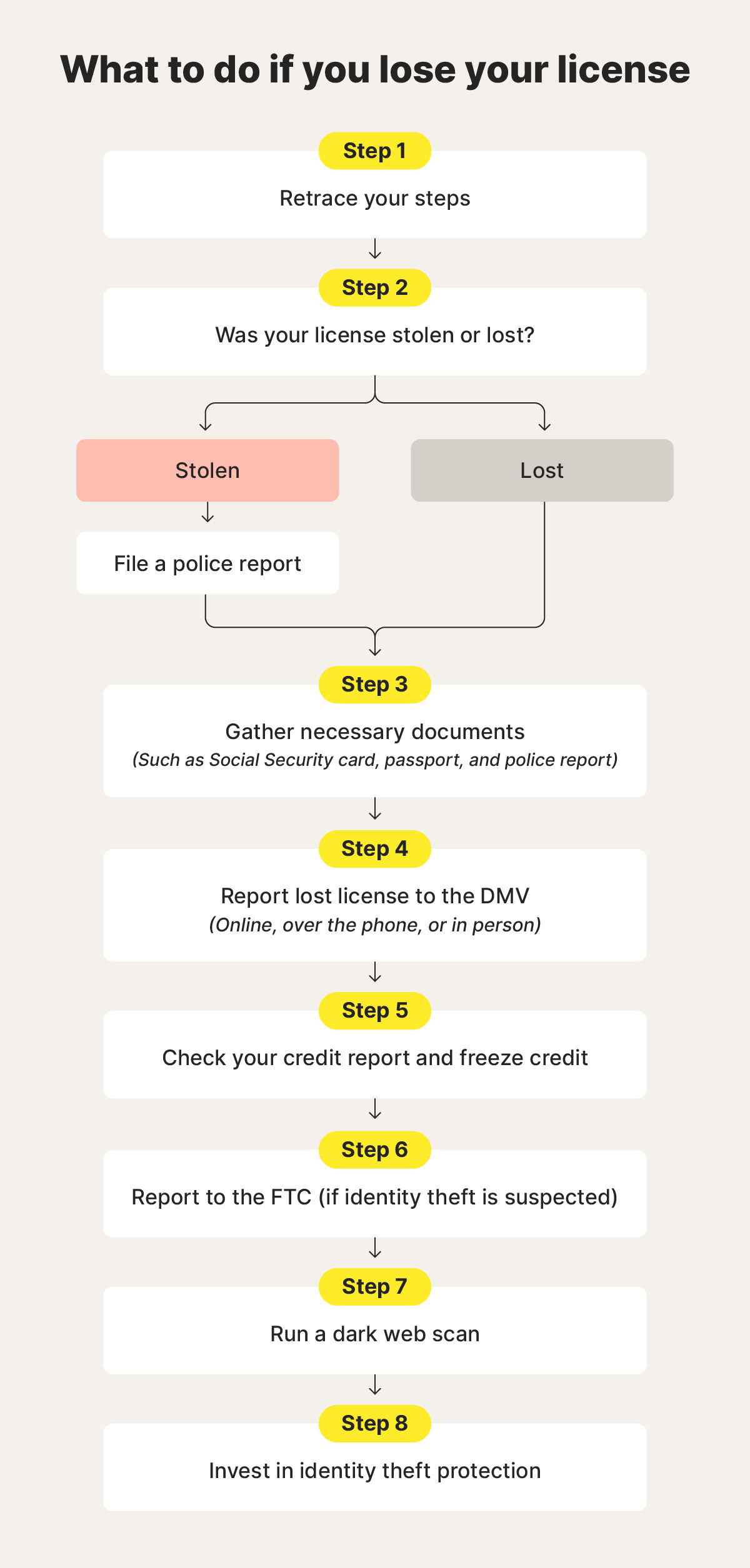
Once the technical verification is complete, the “fulfillment” stage begins. Modern government tech stacks often include automated notification systems via SMS or push notifications. By utilizing RESTful APIs, the printing facility can update the status of your new card—from “In Production” to “Dispatched.” This level of transparency reduces the burden on customer support centers and provides the user with a “digital paper trail” of their replacement journey.
The Future of Licensing: Digital Drivers’ Licenses (DDLs)
The ultimate solution to the problem of a lost driving licence is the complete decoupling of the credential from a physical card. As we move toward a “Mobile-First” world, the Digital Driver’s License (DDL) is becoming the global standard.
How DDLs Eliminate the Risk of Physical Loss
A DDL is not merely a photo of a licence; it is a cryptographically signed data packet stored on a secure element within a smartphone. Unlike a physical card, which can be dropped or stolen, a DDL is protected by the device’s hardware-level security (such as the Secure Enclave in iPhones). If you lose your phone, your “licence” is not lost; it is simply inaccessible to the finder due to biometric locks, and it can be instantly “re-provisioned” onto a new device via a secure cloud backup.
Blockchain and Decentralized Identity in Future Licensing
Technologists are currently exploring the use of blockchain and Self-Sovereign Identity (SSI) for driving licences. In this model, the government issues a “Verifiable Credential” to your digital wallet. When you need to prove your right to drive, you share a “Zero-Knowledge Proof”—a cryptographic method that proves you have a valid licence without actually revealing any of your other personal data (like your home address or exact birth date). This “privacy-by-design” approach ensures that even if a data leak occurs at a third-party verifier (like a car rental agency), your core identity remains secure.
Security Protocols: ISO 18013-5 Standards
The technology behind digital licences is governed by international standards, specifically ISO 18013-5. This protocol ensures “interoperability”—the ability for a digital licence issued in one country to be read and verified by a scanner in another. It utilizes public-key cryptography to ensure that the data being presented is authentic and has not been tampered with. This move toward standardized technical protocols means that “losing a licence” will soon be a relic of the past, replaced by the management of digital keys and permissions.
Cybersecurity Best Practices for Protecting Personal Data
Even after you have initiated the replacement of your licence, your digital hygiene remains paramount. The loss of a physical ID is often the catalyst for more sophisticated cyber-attacks.
Two-Factor Authentication for Government Accounts
If you use a government gateway or portal to manage your vehicle and licensing data, it is imperative to enable robust Two-Factor Authentication (2FA). Avoid SMS-based 2FA if possible, as it is vulnerable to “SIM swapping.” Instead, use authenticator apps or hardware security keys (like YubiKeys). This ensures that even if a malicious actor finds your lost licence and tries to use the information to gain access to your online government profile, they will be blocked by the second layer of security.
Recognizing Phishing Scams Targeting License Seekers
Cybercriminals often monitor search trends and public records to identify individuals who may be vulnerable. If you have recently reported a lost licence, be wary of “phishing” emails or texts that claim to be from the DMV or DVLA. These messages often contain links to fraudulent websites designed to steal your credit card information under the guise of paying a “replacement fee.” Always navigate directly to the official .gov or official regional domain rather than clicking links in unsolicited messages.

Encrypting Your Digital Copies
Many people keep a photo of their driving licence on their phone or in their email for convenience. From a tech-security standpoint, this is a major vulnerability. If your cloud account is compromised, the attacker has a high-quality scan of your ID. If you must keep a digital copy, ensure it is stored within an “encrypted vault” or a password-protected note. Advanced password managers now offer “Secure Notes” features specifically designed to hold encrypted images of sensitive documents, ensuring that your data remains unreadable even if your primary device is accessed.
In conclusion, losing a driving licence in the modern era is a significant event that triggers a complex series of digital interactions. By understanding the underlying technology—from the databases that manage your records to the cryptographic standards that secure your future digital ID—you can navigate the recovery process with confidence. The transition from physical plastic to secure, verifiable digital credentials is well underway, promising a future where “losing” your identity is a technical impossibility.
aViewFromTheCave is a participant in the Amazon Services LLC Associates Program, an affiliate advertising program designed to provide a means for sites to earn advertising fees by advertising and linking to Amazon.com. Amazon, the Amazon logo, AmazonSupply, and the AmazonSupply logo are trademarks of Amazon.com, Inc. or its affiliates. As an Amazon Associate we earn affiliate commissions from qualifying purchases.