
In the intricate world of technology, understanding how components, systems, and even entire industries interact is paramount to design, development, and strategic planning. While the terms “food web” and “food chain” originate from ecological sciences, their underlying principles of dependency, energy flow, and interconnectedness offer a powerful metaphor for dissecting the architecture and dynamics of modern tech ecosystems. Far from simple biological analogies, these concepts help illuminate the structural differences between linear processes and complex, multi-faceted networks that characterize much of today’s digital landscape.
Just as a biological food chain illustrates a singular path of energy transfer from producer to apex consumer, a technological “food chain” represents a direct, often sequential, dependency or flow of information/value. In contrast, a “food web” in tech mirrors its ecological counterpart, depicting a much richer, interwoven network where multiple systems, applications, or services depend on and feed into each other in non-linear ways. Grasping this distinction is not merely an academic exercise; it’s critical for architects, developers, product managers, and business strategists to build resilient, scalable, and innovative solutions.
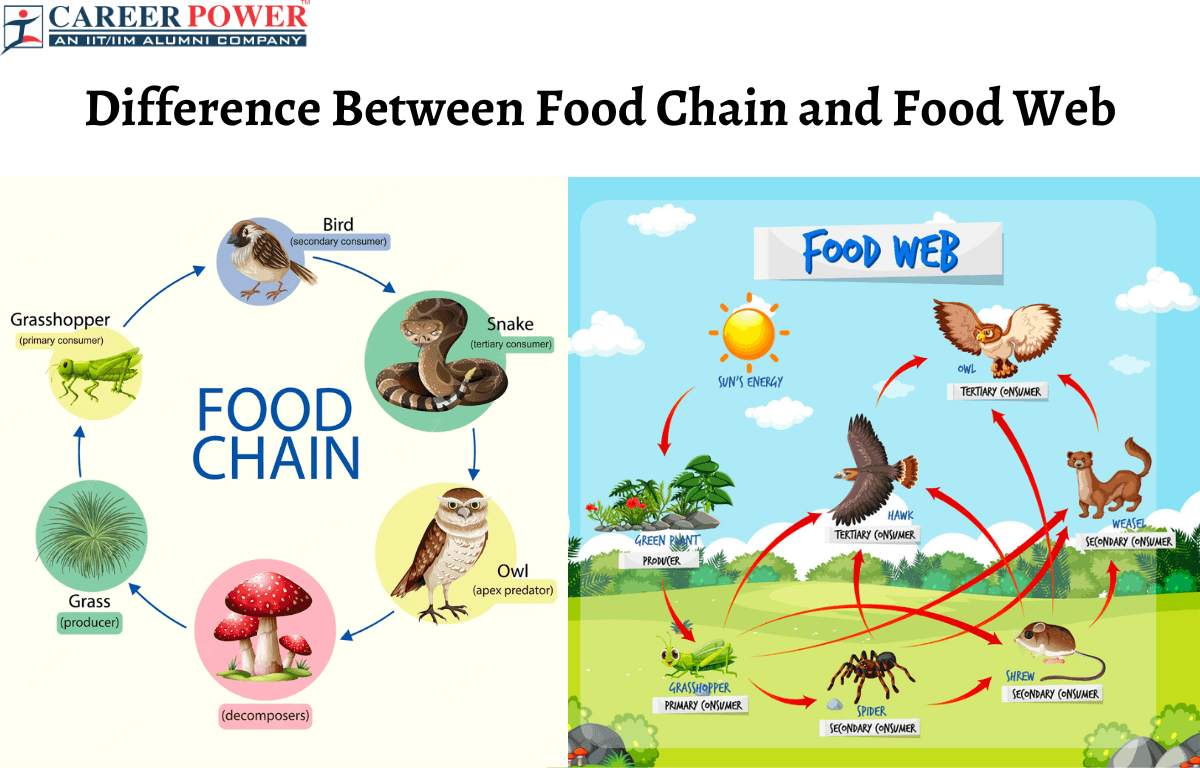
This article will delve into these metaphors, exploring how the principles of food chains and food webs manifest in technology, examining their implications for system design, operational resilience, and strategic foresight.
Understanding Linear Dependencies: The “Food Chain” of Technology
A “food chain” in technology signifies a direct, often singular, progression of operations, data, or value transfer from one component or stage to the next. It’s characterized by a clear producer-consumer relationship, where the output of one step directly serves as the input for the subsequent one. While seemingly simplistic, these linear dependencies form the backbone of many foundational processes and are crucial for efficiency in specific contexts.
Sequential Operations and Workflows
Consider a classic software deployment pipeline: code is written (producer), committed to a version control system, then built by a continuous integration (CI) server, tested automatically, and finally deployed to a server (consumer). This is a quintessential tech food chain. Each step feeds directly into the next, and failure at any point can halt the entire process. Similarly, in a simple API call sequence, an authentication service might validate credentials, then pass the request to a data retrieval service, which then sends data to a presentation layer. This linear flow ensures clarity and makes troubleshooting straightforward when problems occur.
These sequential operations are foundational to predictable outcomes and are often seen in batch processing, ETL (Extract, Transform, Load) pipelines for data warehousing, or specific business workflows where tasks must be completed in a strict order. The strength of such chains lies in their simplicity and ease of understanding, making them efficient for well-defined, repetitive tasks.
Simple Component Interaction
In a microservices architecture, even though the overall system might resemble a web, individual interactions can still form chains. A user request might hit a gateway service, which then calls a user profile service, which in turn calls a database. If the user profile service is only ever called by the gateway service in this particular flow, and its sole purpose is to serve that gateway, it represents a simple food chain within a larger ecosystem. The database serves the user profile service, which serves the gateway, which serves the user.
These simple chains are beneficial for encapsulating specific functionalities and maintaining clear boundaries between components. They reduce cognitive load for developers working on isolated parts of a system and can accelerate development when the dependencies are strictly linear and well-understood.
The Fragility of Linear Chains
The primary vulnerability of a tech food chain is its single point of failure. If any link in the chain breaks—be it a database server going down, an API failing to respond, or a build step encountering an error—the entire chain is disrupted. The “downstream” consumers are starved of their necessary input, leading to system outages or data corruption.
For instance, if the payment processing service in an e-commerce platform relies solely on a single tax calculation service, and that service fails, all transactions requiring tax calculation will halt. This fragility necessitates robust error handling, monitoring, and often, the introduction of redundancy at each step, pushing towards more web-like structures to mitigate risks. Understanding this inherent fragility is crucial for designing critical systems, prompting engineers to strategically evolve simple chains into more resilient webs over time.
Embracing Complexity: The “Food Web” of Modern Tech Ecosystems
In contrast to linear chains, a “food web” in technology describes a complex, interconnected network where multiple components, services, or platforms interact in non-linear, interdependent ways. Just as an ecological food web provides stability through diverse relationships, a tech food web fosters resilience and innovation by distributing dependencies and creating multiple pathways for data and value flow.
Interconnected Microservices and APIs
The rise of microservices architecture is a prime example of a tech food web. Instead of a monolithic application where all functionalities are tightly coupled, microservices decompose an application into smaller, independent services that communicate with each other via APIs. A single user action might trigger interactions across dozens of services, with data flowing in multiple directions, fan-out requests, and asynchronous communication patterns. For example, placing an order on an e-commerce platform might involve:
-
A product catalog service
-
An inventory service
-
A user authentication service
-
A payment gateway service
-
A shipping service
-
A notification service
-
A recommendation engine
-
A logging and monitoring service
These services don’t form a single line; rather, they form a dynamic web where one service might consume data from several others, and its output might be consumed by yet more services. This distributed nature is a hallmark of a tech food web.
Distributed Systems and Cloud Architectures
Modern cloud-native applications are inherently web-like. They often leverage serverless functions, container orchestration (like Kubernetes), message queues, event streams, and geographically distributed databases. Data can flow through Kafka topics, trigger Lambda functions, update DynamoDB tables, and notify users via SNS. There are often multiple paths for data processing, redundancy built into every layer, and services designed to be loosely coupled but highly interactive.
Consider a content delivery network (CDN) that fetches content from various origins, caches it at edge locations, and serves it to users worldwide. This involves a web of interconnected servers, load balancers, caching mechanisms, and routing logic, all working in concert to deliver content efficiently and reliably. The failure of one node doesn’t bring down the entire system; traffic is rerouted, and content is fetched from alternative sources, demonstrating the resilience inherent in web-like structures.
User Journeys and Product Ecosystems

Beyond pure technical architecture, the concept of a food web extends to the user experience and the broader product ecosystem. A user’s journey with a product might involve interacting with a mobile app, a web portal, receiving email notifications, engaging with chatbots, and using third-party integrations. Each of these touchpoints and systems feeds into the user’s overall experience, influencing their engagement and loyalty.
Furthermore, a company’s product ecosystem can be seen as a food web. A core product might be the central “producer,” generating data or value that feeds various complementary products, third-party integrations, or APIs offered to developers. These secondary consumers then process this data, creating new value that can in turn feed back into the core product or other parts of the ecosystem, forming a virtuous cycle. Think of Apple’s ecosystem: iOS, macOS, iCloud, the App Store, Apple Music, and a plethora of hardware devices—all interconnected, feeding into and strengthening each other.
Key Distinctions: Structure, Resilience, and Evolution
The core differences between tech food chains and food webs lie in their structural properties, their inherent resilience, and their capacity for evolution and adaptability. Recognizing these distinctions is crucial for making informed architectural decisions.
Structural Differences: From A to B to A to Z
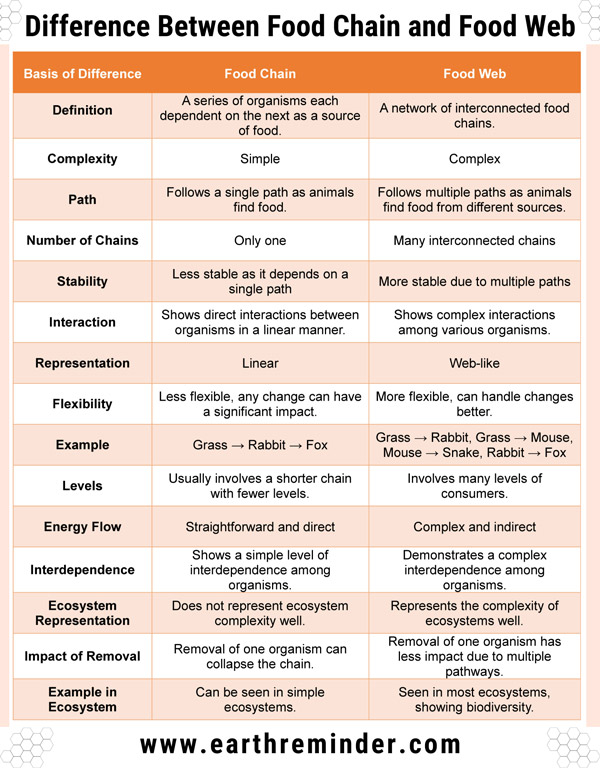
Structurally, a food chain is linear and hierarchical. It implies a direct, often singular, flow of dependency: A -> B -> C. If B is removed, C fails. In contrast, a food web is non-linear, decentralized, and characterized by multiple interconnections and feedback loops. A component might receive input from B, C, and D, and its output might be consumed by E, F, and G. If B fails, C and D might still be able to supply the necessary input, or E and F might find alternative sources.
This structural difference has profound implications for understanding data flow, system boundaries, and the impact of changes. Chains are easier to map and reason about for simple processes, while webs require more sophisticated tools and understanding of distributed systems to visualize and manage.
Resilience and Redundancy
Resilience is perhaps the most significant differentiator. Food chains are inherently fragile; they suffer from single points of failure. The robustness of a chain depends entirely on the strength of its weakest link. To introduce resilience into a chain, one must add redundancy to each link (e.g., redundant servers for each service), which essentially starts to form mini-webs within the chain.
Food webs, by their very nature, are more resilient. The multiple pathways and distributed dependencies mean that the failure of a single component is less likely to bring down the entire system. If one service becomes unavailable, others might still function, or alternative data sources/processing paths might exist. This inherent fault tolerance is a major advantage of web-like architectures, especially in mission-critical applications where uptime and continuous availability are paramount. This resilience often comes at the cost of increased complexity in design and debugging.
Adaptability and Growth
Food chains are rigid. Adding a new step or changing an existing one can have cascading effects that require modifying every subsequent link. This makes them less adaptable to rapidly changing requirements or evolving market needs. Introducing new functionalities often means extending the chain, which can become cumbersome.
Food webs, however, are highly adaptable. Their loosely coupled nature allows for individual components to be developed, deployed, and scaled independently. New services can be added to the web without disrupting existing connections, provided the APIs and interfaces are consistent. This modularity fosters innovation and agility, enabling organizations to experiment with new features, scale specific parts of their system based on demand, and evolve their technological capabilities without rebuilding everything from scratch. This adaptability is critical in fast-paced industries where innovation is key to survival.
Navigating the Tech Ecosystem: When to Build Chains, When to Foster Webs
The choice between a food chain and a food web approach in technology is not an either/or dilemma, but rather a strategic decision based on specific requirements, trade-offs, and future considerations. Both have their place, and understanding their strengths and weaknesses allows for more effective system design.
Optimizing for Efficiency vs. Robustness
Food chains excel in scenarios where efficiency and predictability are paramount, and the process is well-defined and stable. For instance, a simple data transformation script or a direct database query is best treated as a chain. They are straightforward to build, understand, and debug. However, they sacrifice robustness for simplicity.
Food webs are essential when robustness, scalability, and flexibility are critical. For complex, large-scale applications with high availability requirements, a web-like architecture provides the necessary resilience and adaptability. This comes with increased overhead in terms of design complexity, operational management, and monitoring. The decision hinges on balancing the need for speed and simplicity against the demand for fault tolerance and long-term scalability.
Design Principles for Web-like Architectures
Building effective tech food webs requires adherence to specific design principles:
-
Loose Coupling: Services should be independent and communicate via well-defined interfaces (APIs) rather than tight, direct dependencies. This allows for individual evolution and failure isolation.
-
Asynchronous Communication: Using message queues or event streams can decouple producers from consumers, allowing services to operate independently and process events at their own pace. This enhances resilience and scalability.
-
Fault Tolerance and Circuit Breakers: Services within a web should be designed to handle failures gracefully. Circuit breakers can prevent cascading failures by preventing repeated calls to a failing service.
-
Observability: Comprehensive logging, monitoring, and tracing are vital for understanding the complex interactions within a web. Without visibility, diagnosing issues in a distributed system becomes incredibly challenging.
-
Decentralized Governance: While overarching architectural guidance is needed, individual teams should have autonomy over their services within the broader web.
The Role of Governance and Orchestration
As tech food webs grow in complexity, effective governance and orchestration become indispensable. Governance involves establishing standards, best practices, and security policies that all services within the web must adhere to. This ensures consistency, interoperability, and maintainability. Orchestration, on the other hand, refers to the coordinated management of multiple interconnected services, often using tools like Kubernetes for container orchestration or dedicated workflow engines for complex business processes.
Without proper governance, a web can quickly become a chaotic mess of incompatible services. Without orchestration, managing the lifecycle, scaling, and deployment of a multitude of interdependent components becomes an unmanageable burden. The goal is to manage the complexity of the web without stifling its inherent flexibility and resilience.
In conclusion, understanding the distinction between a “food chain” and a “food web” in technology provides a powerful framework for analyzing system architecture, predicting behavior, and making strategic design choices. While linear chains offer efficiency for specific tasks, it is the intricate, interconnected nature of the tech food web that underpins the resilience, scalability, and innovation of modern digital ecosystems. As technology continues to evolve, the ability to build, manage, and navigate these increasingly complex webs will remain a critical skill for success.
aViewFromTheCave is a participant in the Amazon Services LLC Associates Program, an affiliate advertising program designed to provide a means for sites to earn advertising fees by advertising and linking to Amazon.com. Amazon, the Amazon logo, AmazonSupply, and the AmazonSupply logo are trademarks of Amazon.com, Inc. or its affiliates. As an Amazon Associate we earn affiliate commissions from qualifying purchases.