
Canada, renowned for its high quality of life and progressive social policies, maintains a complex yet vital system of minimum wage regulations designed to ensure fair compensation for workers. Far from being a single, unified figure, the minimum wage in Canada is a dynamic and multifaceted concept, varying significantly across its ten provinces and three territories. For individuals navigating the job market, employers managing their workforce, or anyone interested in the socio-economic fabric of the nation, understanding the intricacies of Canada’s minimum wage is crucial. This exploration delves into the structure of minimum wage legislation, its current rates, economic implications, and its impact on personal finance, providing a comprehensive overview of this fundamental aspect of Canadian labour law.
Understanding Canada’s Minimum Wage Landscape
The framework for minimum wage in Canada is primarily decentralized, reflecting the country’s federal system of governance. While there is a federal minimum wage, it applies to a relatively small segment of the workforce, with the vast majority falling under provincial and territorial jurisdiction. This dual system necessitates a detailed understanding of where specific employment situations fit within the regulatory landscape.
Federal vs. Provincial/Territorial Jurisdictions
The federal minimum wage applies to federally regulated private sector industries and Crown corporations. These include sectors such as interprovincial transportation (e.g., airlines, railways, trucking), banking, telecommunications, and uranium mining. As of December 29, 2021, the federal minimum wage was set at $15.00 per hour, and it is subject to annual adjustments based on inflation as measured by the Consumer Price Index (CPI). For employees working in a province or territory where the general minimum wage rate is higher than the federal rate, the higher provincial or territorial rate applies. This ensures that no federally regulated employee is paid less than their provincial counterparts.
In contrast, the provincial and territorial governments are responsible for setting the minimum wage for the vast majority of workers within their respective borders. This includes employees in retail, hospitality, manufacturing, services, and many other industries. Each province and territory has the autonomy to determine its own minimum wage rates, the frequency of adjustments, and any specific rules or exemptions that may apply. This decentralized approach allows for rates to be tailored, to some extent, to local economic conditions and costs of living, although it also creates a patchwork of different wage standards across the country.
The Role of Cost of Living
A significant factor influencing provincial and territorial minimum wage decisions is the cost of living. Urban centres like Vancouver, Toronto, and Calgary have significantly higher housing, transportation, and daily expenses compared to smaller towns or rural areas. While minimum wage policies aim to provide a baseline standard of living, achieving this goal uniformly across diverse economic regions is challenging. Policy discussions often revolve around whether the minimum wage should reflect a “living wage” – the hourly rate at which a household can meet its basic needs, factoring in local expenses. The gap between the minimum wage and a true living wage is a persistent point of debate and a key driver behind calls for minimum wage increases in many jurisdictions.
Current Minimum Wage Rates Across Provinces and Territories
The minimum wage landscape in Canada is constantly evolving, with most jurisdictions implementing annual or semi-annual adjustments. These changes are typically announced well in advance, providing businesses and employees time to prepare.
A Provincial and Territorial Breakdown
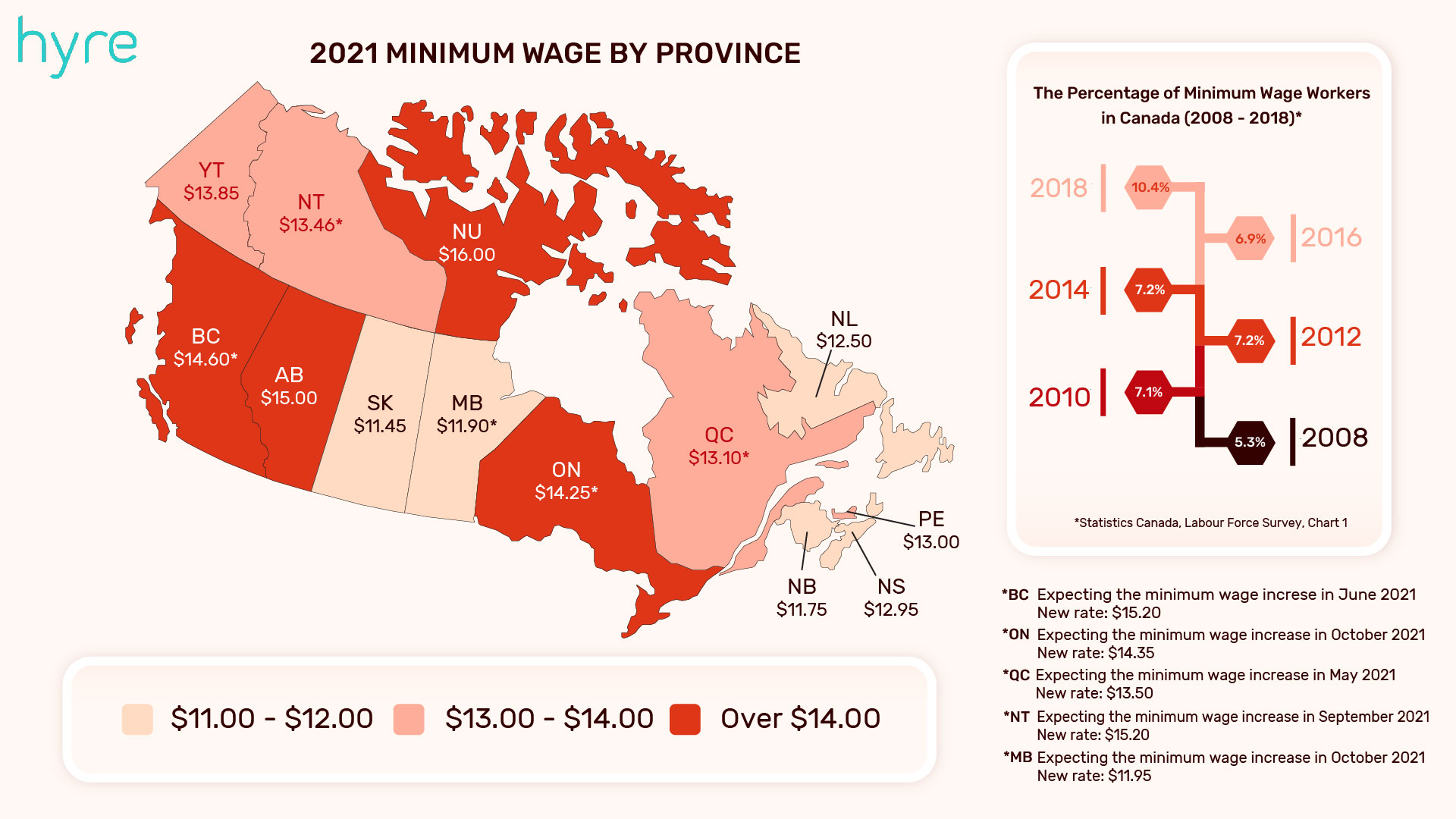
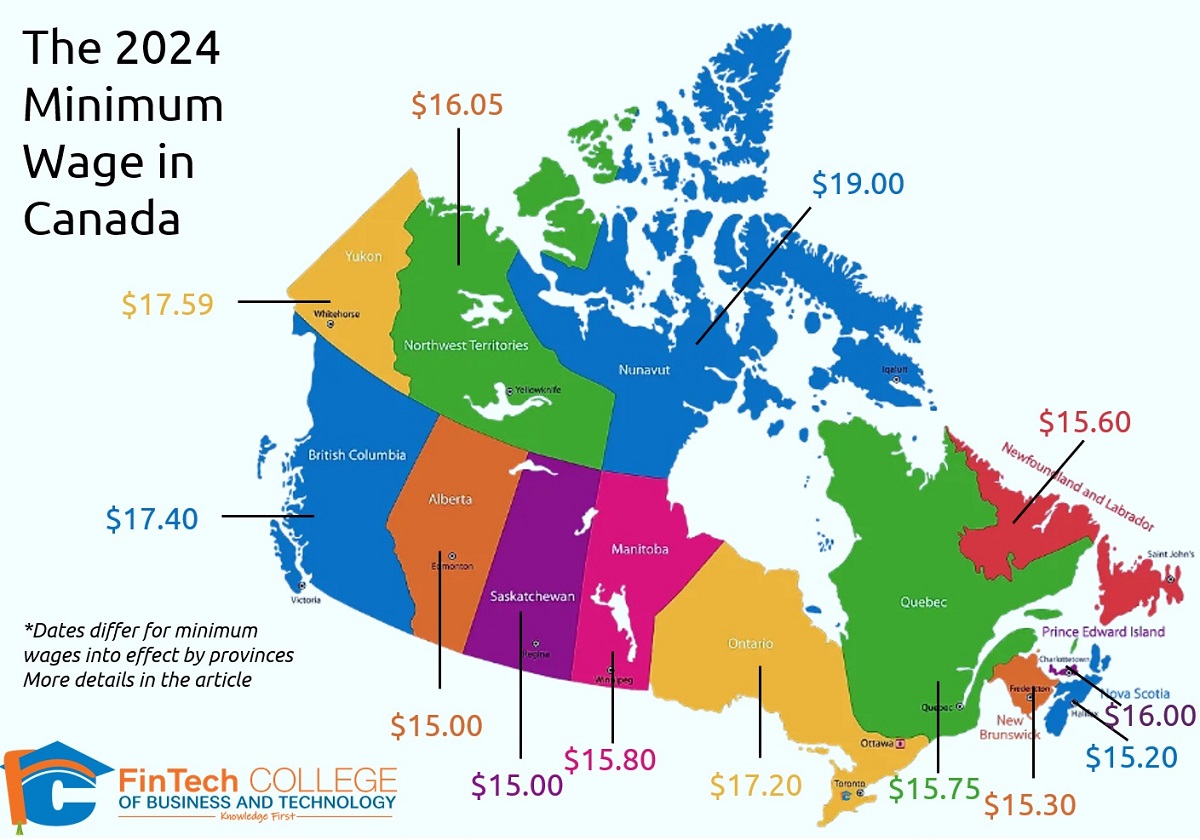
As of late 2023 and early 2024, the minimum wage rates vary considerably across Canada. Here’s a snapshot, noting that these figures are subject to change and are best verified with the respective provincial/territorial labour authorities for the most up-to-date information:
-
British Columbia: Often among the highest, with recent increases aimed at reaching a more competitive wage.
-
Alberta: Has maintained a relatively high minimum wage for several years, though future increases are often debated.
-
Saskatchewan: Traditionally on the lower end, but has seen progressive increases to catch up with other provinces.
-
Manitoba: Follows a similar trend to Saskatchewan, with planned increases.
-
Ontario: Typically one of the higher rates, with a history of significant adjustments based on policy decisions.
-
Quebec: Known for having a distinct labour market, its minimum wage is also subject to regular review.
-
New Brunswick: Progressive increases have been a feature of its recent policy.
-
Nova Scotia: Committing to a predictable schedule of increases.
-
Prince Edward Island: Smallest province, but has also been active in raising its minimum wage.
-
Newfoundland and Labrador: Regular adjustments to keep pace with economic changes.
-
Yukon: Often aligns with the higher provincial rates.
-
Northwest Territories: Consistently one of the highest minimum wages, reflecting its higher cost of living.
-
Nunavut: Similarly, boasts one of the highest minimum wages in the country due to extreme living costs.
It’s also important to note that some provinces may have specific exemptions or different rates for certain categories of workers, such as students, liquor servers, or those in training programs. These exceptions are becoming less common as jurisdictions move towards a single, universal minimum wage for most adult workers.
Annual Adjustments and Future Outlook
Most provinces and territories have adopted a policy of indexing their minimum wage to inflation or a pre-determined schedule of increases. This provides predictability for both workers and businesses, ensuring that the minimum wage retains its purchasing power over time and allowing businesses to plan for wage costs. Future outlooks suggest a continued trend towards gradual increases across the board, driven by advocacy for a living wage, inflationary pressures, and a competitive labour market. While the pace of increases may vary, the general trajectory points towards higher minimum wage rates nationwide, challenging businesses to adapt and offering workers greater financial stability.
The Economic Impact of Minimum Wage
The debate surrounding minimum wage is a complex economic one, with proponents and opponents presenting compelling arguments regarding its effects on employment, poverty, and economic growth. Understanding these impacts is crucial for appreciating the broader implications of minimum wage policies.
Benefits for Workers and Poverty Reduction
For workers, especially those at the lower end of the income spectrum, a robust minimum wage can significantly improve their quality of life. It provides a crucial safety net, ensuring that even entry-level or less-skilled positions offer a wage sufficient to cover basic necessities. Poverty reduction is a primary goal of minimum wage policies; by increasing the income of low-wage earners, it can lift individuals and families out of poverty and reduce income inequality. Higher wages can also lead to improved health outcomes, increased educational attainment, and greater overall social cohesion. Furthermore, increased purchasing power among low-wage workers can stimulate local economies, as these individuals are likely to spend their additional income on goods and services within their communities.
Challenges for Businesses and Employment
While beneficial for workers, minimum wage increases can pose challenges for businesses, particularly small and medium-sized enterprises (SMEs) operating on thin margins. Higher labour costs can lead to several responses from employers:
-
Price Increases: Businesses may pass increased costs on to consumers through higher prices, potentially contributing to inflation.
-
Reduced Hiring/Automation: Some businesses might slow down hiring, reduce staff hours, or invest in automation to minimize their labour force, potentially leading to job losses or fewer entry-level opportunities.
-
Reduced Profit Margins: For businesses unable to raise prices or automate, profit margins may shrink, affecting their ability to invest, expand, or even remain viable.
-
Competitiveness: In highly competitive sectors, businesses might struggle to absorb wage increases without losing market share.
The actual impact on employment is a heavily debated topic among economists. Some studies suggest minimal negative effects, while others point to measurable job losses, particularly for younger or less-skilled workers. The outcome often depends on the magnitude of the wage increase, the elasticity of demand for labour, and the overall health of the economy.
The Debate: Economic Stimulus vs. Inflationary Pressures
The central economic debate often pits the idea of minimum wage as an economic stimulus against its potential to create inflationary pressures.
-
Economic Stimulus: Proponents argue that putting more money into the hands of low-income individuals leads to increased consumer spending, boosting demand for goods and services, and ultimately stimulating economic growth. This “demand-side” effect can outweigh potential job losses.
-
Inflationary Pressures: Critics contend that businesses passing on higher labour costs through increased prices leads to widespread inflation, eroding the purchasing power of the wage increase itself and potentially harming consumers across all income brackets. They also argue that higher wages can contribute to a “wage-price spiral” where rising wages lead to rising prices, which then demand further wage increases.
The reality likely lies somewhere in the middle, with the net impact depending on a multitude of economic variables, including the overall economic climate, the specific industries affected, and the degree of competitiveness in the market.
Minimum Wage and Personal Finance
For individuals earning the minimum wage, strategic financial planning is not just advisable—it’s essential. Navigating daily expenses, saving for the future, and aspiring for financial growth requires discipline and access to appropriate resources.
Budgeting on Minimum Wage
Effective budgeting is the cornerstone of managing personal finances on a minimum wage income. This involves meticulously tracking income and expenses to ensure that essential needs (housing, food, transportation, utilities) are met, with any surplus directed towards savings or debt reduction. Tools like budgeting apps, spreadsheets, or even simple pen and paper can help individuals visualize their financial flow. Prioritizing needs over wants, seeking affordable alternatives, and minimizing discretionary spending are crucial strategies. Furthermore, understanding tax obligations and available tax credits (such as the Canada Workers Benefit) can maximize net income.
Strategies for Financial Growth and Advancement
While starting at minimum wage, there are pathways to financial advancement. These strategies often involve:
-
Skill Development and Education: Investing in courses, certifications, or apprenticeships can lead to higher-paying jobs. Many government programs offer support for education and training.
-
Career Progression: Actively seeking opportunities for promotion within current employment or looking for roles with higher earning potential.
-
Side Hustles/Online Income: Exploring avenues for supplementary income, such as freelancing, gig economy jobs, or starting a small online business, can significantly boost overall earnings.
-
Saving and Investing: Even small, regular contributions to a savings account or a Tax-Free Savings Account (TFSA) can accumulate over time. Learning about basic investment principles can also set the stage for future wealth building.
-
Debt Management: Prioritizing the repayment of high-interest debt can free up significant funds and improve financial health.
Government Support Programs
Canada offers a range of government support programs designed to assist low-income individuals and families. These can include:
-
Canada Child Benefit (CCB): Provides tax-free monthly payments to eligible families to help with the cost of raising children.
-
GST/HST Credit: A tax-free quarterly payment that helps individuals and families with low and modest incomes offset the goods and services tax/harmonized sales tax.
-
Provincial Housing Subsidies/Rental Assistance: Programs designed to make housing more affordable.
-
Employment Insurance (EI): While not direct income support for minimum wage earners, EI provides temporary financial assistance to unemployed Canadians.
-
Canada Workers Benefit (CWB): A refundable tax credit that provides income support for low-income individuals and families who are working.
Leveraging these programs can significantly augment income and improve the financial stability of those earning minimum wage.
Looking Ahead: The Future of Minimum Wage in Canada
The discourse around minimum wage is dynamic, continually adapting to economic shifts, social values, and political priorities. The future of minimum wage in Canada will likely be shaped by ongoing policy considerations and a growing emphasis on broader concepts of fair compensation.
Policy Considerations and Advocacy
Future policy discussions will continue to grapple with striking a balance between adequate worker compensation and business sustainability. Key considerations include:
-
Indexation Mechanisms: Refining how minimum wages are indexed to inflation or average wage growth to ensure predictability and sustained purchasing power.
-
Sector-Specific Wages: Whether to maintain or abolish specific minimum wages for certain sectors (e.g., hospitality) or move towards a universal rate.
-
Regional Disparities: Addressing the varying costs of living across vast geographical regions within provinces and territories.
-
Impact Assessments: More robust analysis of the economic impacts on employment, inflation, and poverty reduction.
Advocacy groups will continue to push for higher minimum wages, often aligning with the “living wage” movement, while business associations will highlight the need for policies that support economic growth and job creation.

The Living Wage Concept
Increasingly, the conversation is shifting from merely a “minimum wage” to a “living wage.” A living wage is defined as the hourly wage a worker needs to earn to cover their basic expenses and participate in community life. It typically accounts for housing, food, transportation, childcare, and other necessities within a specific geographical area. Unlike the minimum wage, which is a legal floor set by governments, a living wage is often calculated by community organizations and is voluntary for employers to adopt. The growing prominence of the living wage concept reflects a broader societal desire to ensure that work provides a pathway to genuine financial security, moving beyond just poverty avoidance to a standard of healthy and dignified living. As this concept gains traction, it will undoubtedly influence future minimum wage policies and societal expectations for fair compensation in Canada.
In conclusion, understanding what constitutes the minimum wage in Canada requires appreciating its multi-layered structure, its varying rates across jurisdictions, and its profound economic and personal finance implications. As Canada strives for an equitable and prosperous society, the debate and evolution of its minimum wage policies will remain a critical element of its social and economic landscape.
aViewFromTheCave is a participant in the Amazon Services LLC Associates Program, an affiliate advertising program designed to provide a means for sites to earn advertising fees by advertising and linking to Amazon.com. Amazon, the Amazon logo, AmazonSupply, and the AmazonSupply logo are trademarks of Amazon.com, Inc. or its affiliates. As an Amazon Associate we earn affiliate commissions from qualifying purchases.