
The question of what constitutes India’s official language is one of both constitutional significance and immense technical complexity. Unlike many nations with a single national language, India operates under a framework defined by Article 343 of the Constitution, which designates Hindi in the Devanagari script as the official language of the Union, with English continuing as an associate official language for administrative and judicial purposes. However, in a country with over 1.4 billion people and hundreds of dialects, the “official” designation is just the starting point.
For the technology sector, this linguistic diversity represents one of the most significant challenges and opportunities of the 21st century. As India strives to become a $5 trillion economy, the “Next Billion Users” are not coming online in English; they are accessing the internet in Hindi, Tamil, Telugu, Bengali, and Marathi. Bridging the gap between the official language mandates and the digital reality of a multilingual populace requires a sophisticated integration of Artificial Intelligence (AI), Natural Language Processing (NLP), and localized software engineering.

The Linguistic Complexity of the Indian Digital Landscape
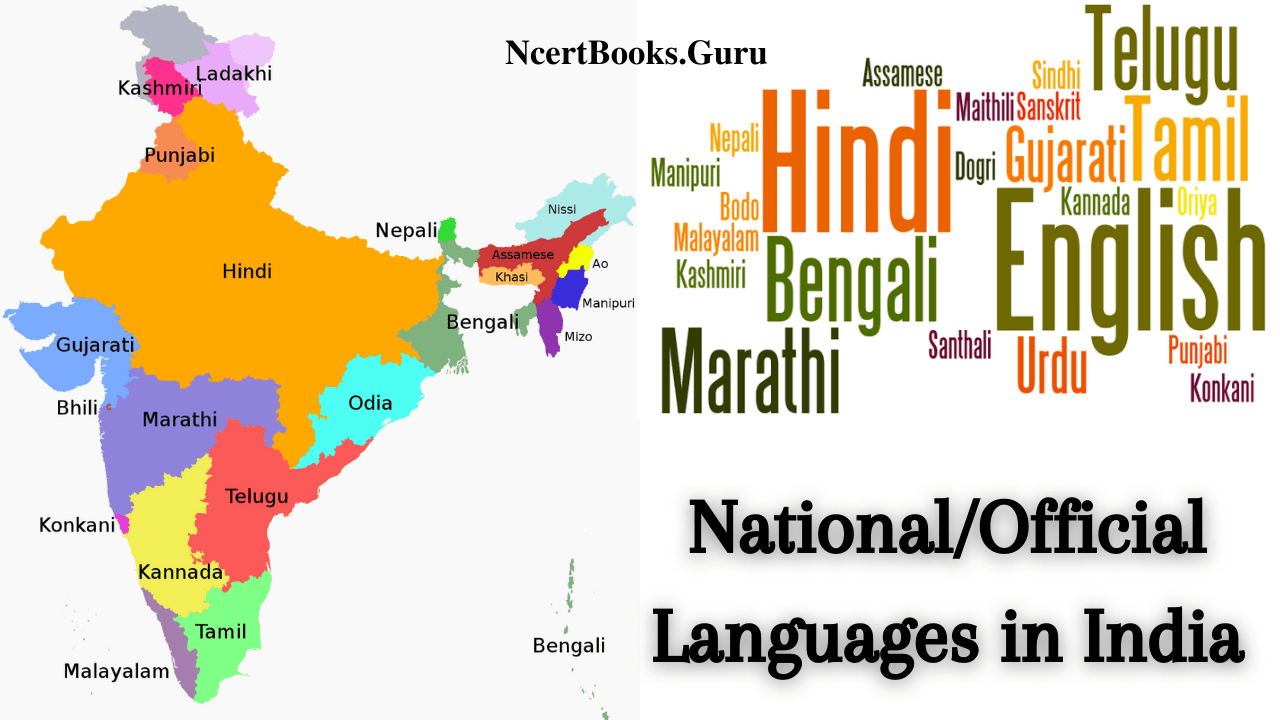
To understand the technical requirements of the Indian market, one must first distinguish between “Official Languages” and “Scheduled Languages.” While Hindi and English serve the Union’s administrative needs, the Eighth Schedule of the Constitution recognizes 22 major languages. From a software development perspective, this means that any “national” application must potentially support nearly two dozen distinct scripts and grammatical structures.
Hindi and English: The Dual Pillars of Official Communication
In the digital realm, Hindi and English dominate official government portals and corporate documentation. However, the technical implementation of Hindi has evolved significantly. Early internet architecture was built on ASCII standards, which were inherently biased toward the Latin alphabet. The transition to Unicode was the first major technological hurdle, allowing Devanagari characters to be rendered consistently across different operating systems and browsers. Today, tech stacks must ensure that “Official Hindi” is not just readable but searchable, requiring complex indexing algorithms that account for various diacritics and ligatures.
The Eighth Schedule and Regional Language Integration
Beyond the central official languages, technology must account for the 22 scheduled languages to ensure true digital inclusion. This involves more than simple translation. Each language has its own unique syntax and nuances. For instance, Dravidian languages in the south have entirely different linguistic roots than the Indo-Aryan languages of the north. Technology firms are now moving toward a “Language First” approach, where apps are architected to be language-agnostic, allowing regional official languages to be toggled seamlessly without breaking the User Interface (UI).
Artificial Intelligence and Natural Language Processing (NLP) in India
The true breakthrough in managing India’s official languages has come through the advancement of Artificial Intelligence. Traditional rule-based translation systems often failed to capture the context-heavy nature of Indian communication. Modern NLP, powered by Neural Machine Translation (NMT), has changed the landscape.
Bhashini: India’s AI-Led Language Translation Platform
A landmark initiative in this space is “Bhashini,” the National Language Translation Mission launched by the Indian government. This is a massive tech ecosystem designed to provide open-source datasets and AI models to startups and developers. The goal is to break the language barrier by providing real-time translation services for all official Indian languages. By leveraging crowdsourced data (Bhasha Daan), the platform trains AI models to understand colloquialisms, accents, and local contexts, making official government services accessible to a non-English speaking farmer in rural Punjab or a small business owner in Kerala.
Overcoming the Data Scarcity in Indic Languages
One of the primary technical bottlenecks in AI development is the lack of “high-quality” digital text for many Indian languages. While English has billions of pages of web content to train models like GPT-4, many Indian official languages are “low-resource.” Tech innovators are currently utilizing “Zero-Shot Learning” and “Transfer Learning” techniques. These allow an AI model trained in a high-resource language (like Hindi) to apply its understanding to a related low-resource language (like Bhojpuri or Maithili) with minimal additional data. This cross-pollination of data is essential for creating robust digital tools for the Indian market.
Localization Strategies for Global Tech Giants

For global brands like Google, Microsoft, and Meta, the “official language” of India is a multifaceted target. They have realized that “Global” software must be “Hyper-Local” to survive in the Indian ecosystem. This goes beyond the backend and into the very core of how software is designed.
User Interface (UI) and Experience (UX) Design for Multilingual Users
Designing a UI that works for both English (left-to-right) and languages that may have taller characters or different spacing requirements is a significant engineering feat. Modern “Internationalization” (i18n) and “Localization” (l10n) frameworks allow developers to separate the code from the content. In the Indian context, this often involves “Transliteration” rather than just translation. Many Indian users prefer a “Hinglish” interface—where the script is Latin, but the words are Hindi. Tech companies are now deploying AI-powered keyboards that predict words in multiple languages simultaneously, recognizing that the modern Indian user is fluid in their linguistic choices.
Voice Technology and the Rise of Vernacular Search
Perhaps the most significant tech trend in India is the pivot from “Type” to “Voice.” For millions of new internet users, the keyboard remains a barrier. Voice-activated AI assistants, such as Alexa and Google Assistant, have been heavily optimized for Indian official languages. These systems must process “Code-Switching”—the habit of mixing English and regional languages in a single sentence. Developing “Automatic Speech Recognition” (ASR) that can handle the heavy accents and phonetic variations of 22 different official languages is currently the cutting edge of Indian tech innovation.
Digital Inclusion and the “Next Billion Users”
The digital transformation of India’s official language policy is not just about convenience; it is about democratic access. When technology makes the official language of the state accessible to the common citizen, it empowers them to participate in the digital economy.
Bridging the Digital Divide via Localized E-Governance
The “India Stack”—the collection of digital public goods like Aadhaar (identity), UPI (payments), and DigiLocker—relies heavily on multilingual accessibility. For e-governance to be effective, a citizen must be able to apply for a ration card or a business license in their native official language. Technical protocols have been established to ensure that data entered in a regional script can be processed by central databases that might operate primarily in English or Hindi. This interoperability is the backbone of India’s digital administrative success.
The Role of Unicode and Standardized Keyboard Layouts
Standardization is the unsung hero of the Indian tech revolution. Before the widespread adoption of Unicode 15.0 and the InScript keyboard layout, typing in regional languages was a fragmented mess of proprietary fonts. The Bureau of Indian Standards (BIS) has worked closely with tech bodies to ensure that every smartphone sold in India supports a specific set of official languages out of the box. This hardware-level integration ensures that the “Official Language” isn’t just a legal concept but a functional reality for every device user.
Future Trends: The Convergence of Language and Innovation
As we look toward the future, the intersection of Indian languages and technology will move toward even more immersive and real-time experiences. The goal is a “barrier-less” digital India where language is no longer a constraint to information or commerce.
Real-time Translation and Wearable Tech
The next frontier is real-time, low-latency translation during live interactions. Imagine a doctor in Delhi speaking Hindi and a patient in Chennai hearing it in Tamil through a wearable device or a smartphone app. This requires massive computational power at the “edge” (on the device itself) rather than in the cloud, to ensure there is no lag. Developments in “On-device AI” by chipmakers like Qualcomm and MediaTek are making this a reality, specifically optimized for the phonetic structures of Indian languages.
The Blockchain and Decentralized Content Distribution
Finally, the rise of Web3 and blockchain offers a new way to preserve and promote India’s linguistic heritage. Decentralized platforms are being used to archive literature and official documents in regional languages, ensuring they are permanent and tamper-proof. Furthermore, smart contracts are being developed that can be executed in multiple languages, ensuring that legal and official agreements are understood by all parties in their preferred official tongue, reducing the reliance on English as the sole language of “the law.”
In conclusion, while the Indian Constitution provides the legal definition of the official languages, it is technology that provides the practical application. Through AI, localization, and standardized digital infrastructure, India is proving that linguistic diversity is not a hurdle to be overcome, but a feature of a vibrant, technologically advanced society. The future of the Indian internet is multilingual, and the tech industry is the primary architect of this inclusive digital reality.
aViewFromTheCave is a participant in the Amazon Services LLC Associates Program, an affiliate advertising program designed to provide a means for sites to earn advertising fees by advertising and linking to Amazon.com. Amazon, the Amazon logo, AmazonSupply, and the AmazonSupply logo are trademarks of Amazon.com, Inc. or its affiliates. As an Amazon Associate we earn affiliate commissions from qualifying purchases.