
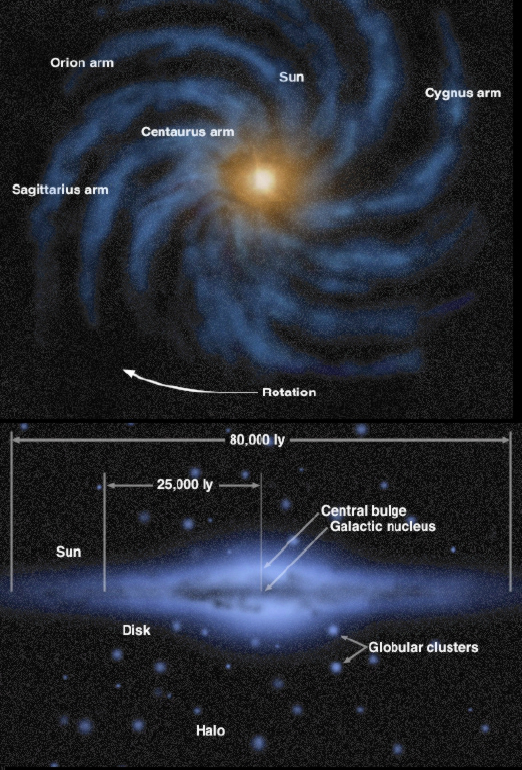
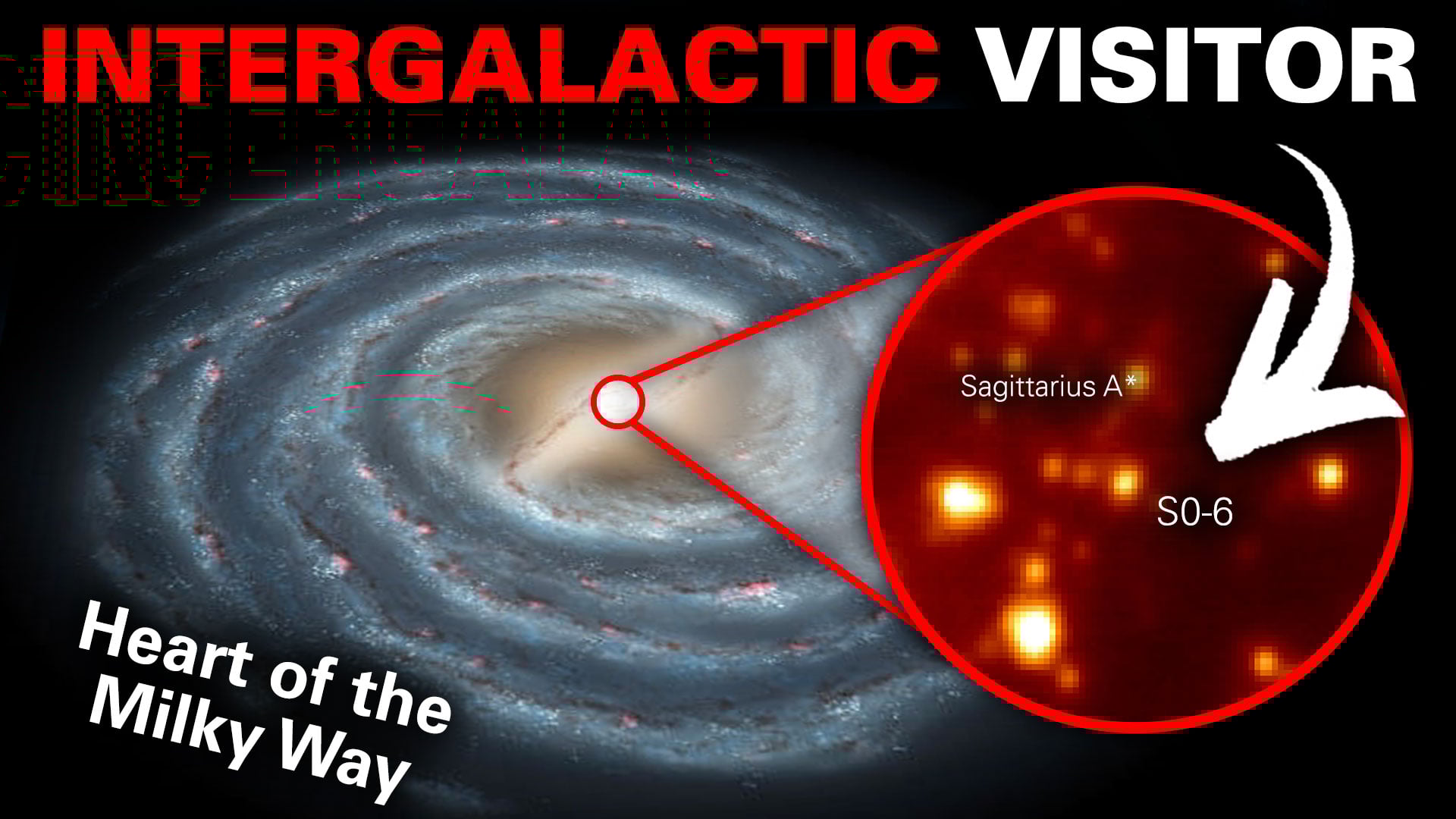
For decades, the center of the Milky Way was a region of profound mystery, shrouded behind impenetrable clouds of interstellar dust and gas. To the naked eye and even traditional optical telescopes, the galactic core remains invisible. However, humanity’s quest to answer the question of what lies at the center of our galaxy has catalyzed some of the most significant technological breakthroughs in modern history. Today, we know that a supermassive black hole—Sagittarius A* (Sgr A*)—resides there, but discovering this required more than just curiosity; it required a global digital infrastructure, revolutionary software algorithms, and the most sophisticated hardware ever engineered.

This article explores the cutting-edge technology, from high-performance computing to advanced interferometry, that has allowed us to peer through 26,000 light-years of cosmic debris to witness the engine of our galaxy.
1. The Event Horizon Telescope: A Global Network of Digital Synchronization
The most significant achievement in visualizing the center of the Milky Way came via the Event Horizon Telescope (EHT). The EHT is not a single piece of hardware but a prime example of a “virtual” technology trend: Distributed Sensing. By linking eight pre-existing radio observatories across the globe, engineers created a computational telescope with an effective aperture the size of the Earth.
Very Long Baseline Interferometry (VLBI)
The core technology driving the EHT is Very Long Baseline Interferometry (VLBI). This technique allows multiple radio telescopes to work in unison to observe a single source. To make this work, each station must record data with extreme precision. The EHT uses hydrogen maser atomic clocks to time-stamp the data collected from Sgr A* at each site. This synchronization is so precise that it loses only one second every 100 million years. Without this level of hardware-driven timing, the phase of the radio waves could not be aligned, and the resulting image would be nothing more than digital noise.
The Challenge of Data Volume and “Sneakernet” Logistics
The sheer volume of data generated by these observations is a testament to the “Big Data” era of tech. During a single observation campaign, the EHT stations record data at a rate of 64 gigabits per second. This results in several petabytes of data—far too much to be transmitted over standard internet protocols or even dedicated fiber optics. In a fascinating intersection of high-tech and old-school logistics, the data is stored on specialized, helium-filled hard drives and physically flown to central processing facilities. This method, often jokingly called “Sneakernet,” remains the most efficient high-bandwidth “transfer protocol” for petabyte-scale datasets.
2. Piercing the Veil: Infrared Hardware and Adaptive Optics
While radio waves provide the image of the black hole itself, understanding the environment around the galactic center requires observing the stars that orbit it. This is where infrared technology and sophisticated “gadgetry” on the ground play a pivotal role.
The Power of Near-Infrared Sensors
Visible light is scattered by the dust between Earth and the center of the galaxy. To overcome this, astronomers utilize Near-Infrared (NIR) sensors. These sensors are built using advanced materials like Indium Antimonide or Mercury Cadmium Telluride, which are sensitive to longer wavelengths of light that can pass through dust clouds. These sensors are the high-end “digital cameras” of the astrophysical world, operating at temperatures near absolute zero to minimize thermal noise, ensuring that the faint signals from the galactic core are not drowned out by the heat of the telescope itself.
Laser Guide Stars and Adaptive Optics
One of the greatest technological hurdles in ground-based observation is atmospheric turbulence—the same phenomenon that makes stars “twinkle.” For precise imaging of the Milky Way’s center, this blurring is unacceptable. Enter Adaptive Optics (AO), a real-time hardware-software feedback loop. A high-powered sodium laser is projected into the upper atmosphere, creating an “artificial star.”
A wavefront sensor monitors this laser guide star and detects atmospheric distortions hundreds of times per second. This data is fed into a computer that controls a “deformable mirror.” These mirrors are equipped with thousands of tiny actuators that change the mirror’s shape in real-time to cancel out the atmospheric blur. This technology, originally developed for military satellite tracking, now provides the resolution necessary to track individual stars orbiting the black hole at speeds exceeding several percent of the speed of light.
3. Computational Astrophysics: AI and Imaging Reconstruction Software
Capturing data is only half the battle. Because the EHT cannot cover every square inch of the Earth, the “image” of the galactic center is essentially a massive puzzle with most of the pieces missing. Filling in these gaps requires the most advanced software tools and machine learning algorithms available today.
Sparse Reconstruction and the CHIRP Algorithm
Traditional imaging software assumes a complete dataset, but with the EHT, researchers had to deal with “sparse” data. To solve this, computer scientists developed the Continuous High-resolution Image Reconstruction using Patch priors (CHIRP) algorithm. Using a technique called “Regularized Maximum Likelihood,” the software evaluates millions of potential images that could fit the data and ranks them based on their likelihood of being “natural.” This is where AI tools become essential; the software is trained on thousands of simulated images of black holes to recognize patterns and ensure that the final reconstruction isn’t a digital artifact but a physical reality.
The Role of Supercomputing and Simulations
To verify what we see at the center of the galaxy, researchers compare the captured images with General Relativistic Magnetohydrodynamic (GRMHD) simulations. These simulations are run on some of the world’s most powerful supercomputers, utilizing thousands of GPUs working in parallel. These software models simulate the complex physics of gravity, magnetism, and plasma dynamics around Sgr A*. By running millions of these “virtual universes,” scientists can match the observed data with a specific physical model, confirming that the “dark spot” at the center is indeed the shadow of a black hole as predicted by Einstein’s theories.
4. The Future Frontier: Space-Based Platforms and Quantum Sensors
As we look toward the next decade of technology trends, our methods for studying the galactic center are moving beyond Earth’s atmosphere and into the realm of quantum technology.
The James Webb Space Telescope (JWST) and Beyond
The JWST represents the current pinnacle of space-bound hardware. By operating in a stable orbit at the second Lagrange point (L2), it avoids the atmospheric interference that ground-based AO systems struggle with. Its mid-infrared instrument (MIRI) allows us to see the “cold” side of the galactic center—the gas and dust that are forming new stars even as the black hole consumes others. The tech stack on JWST includes cryocoolers that keep the instruments at 7 Kelvin, demonstrating the extreme engineering required for modern digital security and data integrity in deep space.
Quantum Interferometry
The next leap in “Space Tech” may involve quantum sensors. Researchers are currently exploring the use of quantum entanglement to link telescopes separated by vast distances—even between Earth and the Moon. By using quantum memory to store the state of photons, we could theoretically create an interferometer with a baseline the size of the inner solar system. This would provide a resolution so high that we could not only see the shadow of the black hole at our galaxy’s center but potentially watch the “weather” of the plasma orbiting it in real-time.
Conclusion: The Digital Eyes of Humanity
The question of “what is in the centre of the Milky Way galaxy” has evolved from a philosophical inquiry into a showcase of human technological prowess. We found a black hole, but in the process, we developed the world’s most synchronized hardware, the most sophisticated atmospheric correction software, and AI tools capable of reconstructing images from the void.
As technology continues to advance—through more powerful AI, larger distributed networks, and space-based hardware—the center of our galaxy will become less of a mystery and more of a laboratory. The tools we built to see the invisible heart of the Milky Way are the same tools that will eventually allow us to map the rest of the cosmos, proving that in the realm of technology, the sky is no longer the limit; it is merely the beginning.
aViewFromTheCave is a participant in the Amazon Services LLC Associates Program, an affiliate advertising program designed to provide a means for sites to earn advertising fees by advertising and linking to Amazon.com. Amazon, the Amazon logo, AmazonSupply, and the AmazonSupply logo are trademarks of Amazon.com, Inc. or its affiliates. As an Amazon Associate we earn affiliate commissions from qualifying purchases.