
In the realm of automotive engineering and software-driven performance, the internal combustion engine (ICE) remains a marvel of synchronized physics. However, even the most sophisticated modern drivetrains are susceptible to a phenomenon known as engine knocking. From a technical perspective, engine knocking—also referred to as detonation or “pinging”—is more than just an irritating sound; it is a critical failure of the combustion cycle that represents a battle between thermal efficiency and mechanical integrity. As we push the boundaries of engine technology through turbocharging, direct injection, and high-compression ratios, understanding and mitigating engine knock has become a primary focus for software engineers and hardware designers alike.

The Physics of Failure: Fluid Dynamics and Uncontrolled Combustion
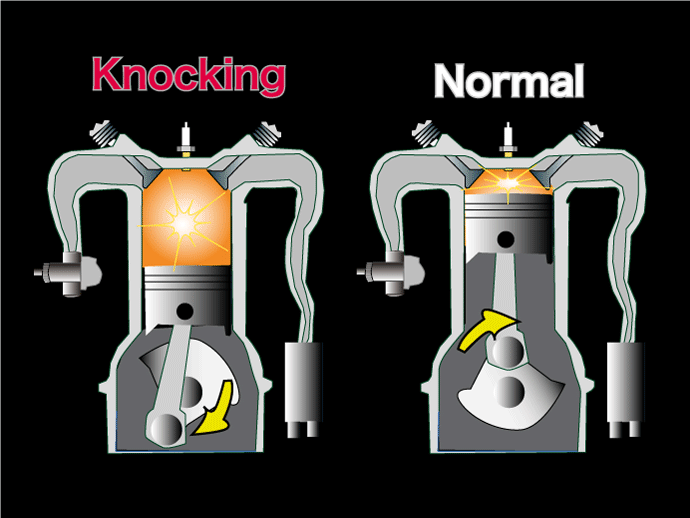
To understand engine knocking, one must first understand the “ideal” combustion event. In a digitally controlled four-stroke engine, the intake stroke draws in air and fuel, which the piston then compresses. At a precise millisecond determined by the Engine Control Unit (ECU), the spark plug ignites the mixture, creating a flame front that expands smoothly across the combustion chamber. This expansion pushes the piston down, generating torque.
Pre-ignition vs. Detonation
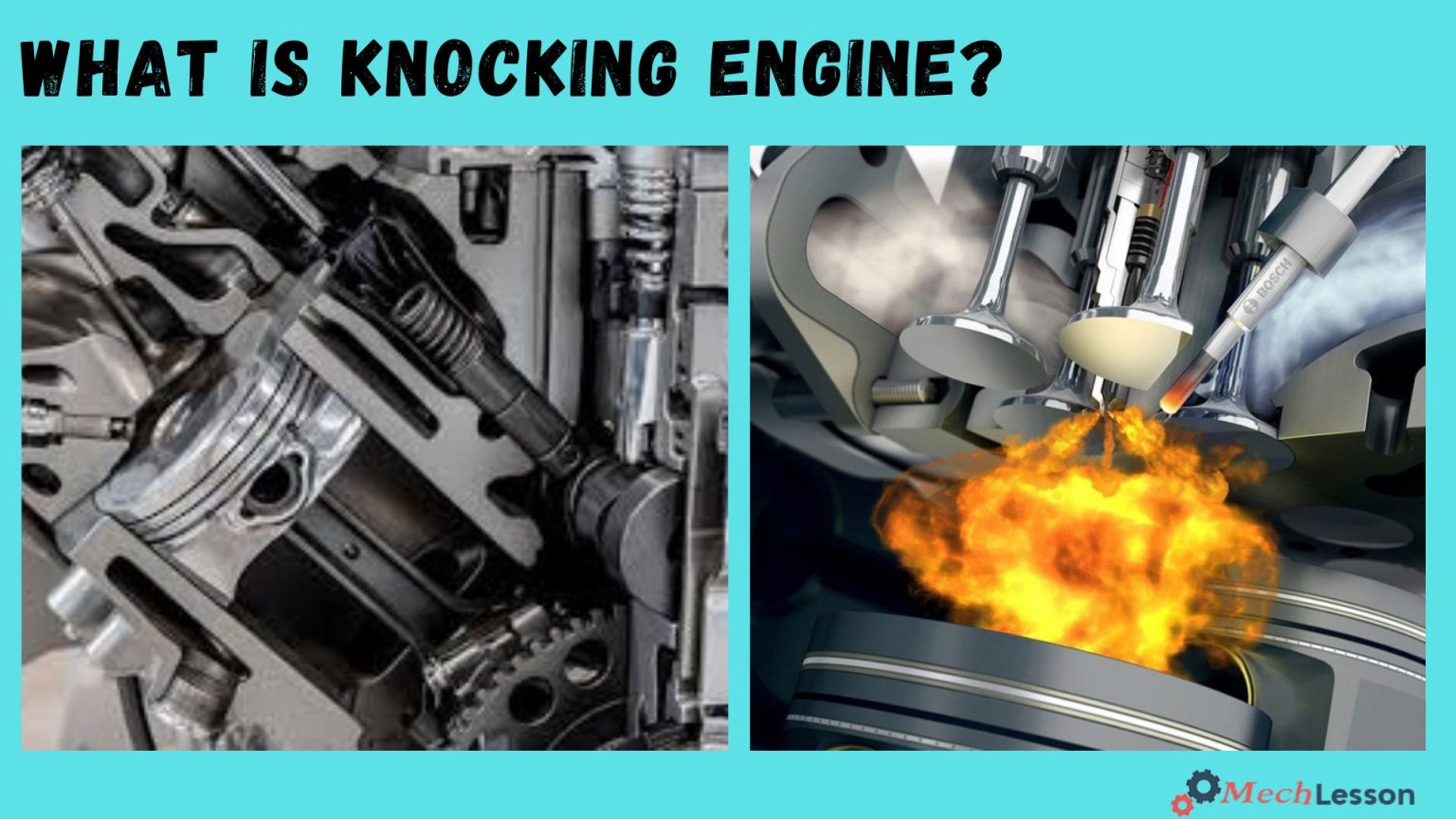
Engine knocking occurs when this process is disrupted by secondary, uncontrolled explosions. Tech enthusiasts often distinguish between two primary types of irregular combustion: pre-ignition and detonation. Pre-ignition happens when the fuel-air mixture ignites before the spark plug fires, often caused by “hot spots” in the chamber or glowing carbon deposits. Detonation, however, occurs after the spark plug fires. As the primary flame front moves through the chamber, the heat and pressure cause unburned pockets of gas (end-gas) to spontaneously combust. The resulting shockwaves collide, creating the characteristic “metallic” knocking sound.
The Role of Compression Ratios and Thermal Management
From a technical standpoint, the drive for efficiency is a drive for higher compression. The higher the compression ratio, the more energy can be extracted from the fuel. However, high compression also increases the temperature of the air-fuel mixture. If the temperature exceeds the auto-ignition point of the fuel before the flame front reaches it, knocking is inevitable. This creates a “thermal ceiling” for engine performance that engineers must navigate using advanced cooling tech and precision fuel chemistry.
Digital Guardians: The Evolution of Knock Sensors and Signal Processing
In the early decades of automotive tech, engine knocking was handled mechanically—often by retarding the ignition timing permanently, which sacrificed power. Today, the solution is rooted in high-speed digital signal processing (DSP) and sophisticated sensor hardware.
Acoustic Sensing and Piezoelectric Technology
The primary tool in a modern vehicle’s arsenal against knocking is the knock sensor. Most modern sensors utilize piezoelectric elements—materials that generate an electrical charge when subjected to mechanical stress or vibration. These sensors are bolted directly to the engine block, acting as “microphones” tuned to specific frequencies. When detonation occurs, it creates a unique high-frequency vibration (usually between 6 kHz and 15 kHz). The sensor converts these vibrations into an analog electrical signal sent directly to the ECU.
Real-Time Signal Analysis and Noise Filtering
An engine is a noisy environment; valves clatter, pistons move, and fuel injectors click. The technical challenge for the ECU is to distinguish between “mechanical noise” and “combustion knock.” Modern automotive software employs Fast Fourier Transform (FFT) algorithms to analyze the incoming sensor data in the frequency domain. By filtering out background noise, the ECU can identify the specific “signature” of a knock event within microseconds. This allows the system to determine not just that a knock is occurring, but exactly which cylinder is responsible.
Closed-Loop Feedback Systems
Once a knock is detected, the ECU enters a closed-loop correction cycle. It immediately retards the ignition timing for the offending cylinder—delaying the spark so that the peak pressure occurs later in the stroke, lowering the temperature and stopping the knock. Once the sensor reports that the knocking has ceased, the software gradually advances the timing again to recover fuel efficiency and power. This digital “tug-of-war” happens hundreds of times per second, ensuring the engine operates at the absolute edge of its performance envelope without self-destructing.
Software-Defined Performance: Algorithms and Predictive Maintenance
The current landscape of automotive technology is shifting from reactive systems to predictive, software-defined architectures. Engine knocking is no longer just something to be corrected; it is something to be modeled and prevented through advanced data science.
Mapping and Multidimensional Look-up Tables
Modern ECUs rely on massive multidimensional datasets known as “maps.” These maps contain optimal ignition timing, fuel delivery, and boost pressure for every conceivable combination of RPM, engine load, and ambient temperature. Developers spend thousands of hours on dynamometers to “tune” these maps. In high-performance tech, “adaptive learning” algorithms allow the ECU to modify these maps over time based on the quality of fuel used (octane rating) and the aging of engine components. If the system detects consistent knocking on a specific fuel grade, it “learns” to stay within a safer parameter set, effectively rewriting its own performance code to protect the hardware.
AI and Machine Learning in Diagnostics
As we move toward the “Software-Defined Vehicle” (SDV), manufacturers are integrating AI to predict engine health. By analyzing knock sensor data over months, machine learning models can identify patterns that precede mechanical failure. For example, a slight increase in “micro-knocking” in cylinder four might indicate a failing fuel injector or excessive carbon buildup before a “check engine” light ever appears. This transition from reactive repair to predictive maintenance is a hallmark of modern industrial IoT (Internet of Things) integration within the automotive sector.
Low-Speed Pre-Ignition (LSPI) in Downsized Turbo Engines
A specific technical challenge in modern “downsized” engines (small engines with high-pressure turbochargers) is LSPI. This is a violent form of knocking that occurs at low speeds and high loads. Technical research has shown that LSPI is often triggered by droplets of engine oil mixing with fuel. Addressing this has required a multidisciplinary tech approach: chemical engineers creating “LSPI-safe” synthetic oils, and software engineers developing complex “scavenging” algorithms that manipulate valve timing to clear the combustion chamber of potential triggers.
The Future of Combustion Tech: Sensors Beyond Acoustics
While piezoelectric sensors are the current standard, the next generation of engine technology is looking toward even more direct methods of monitoring the combustion event to eliminate knocking entirely.
Ion-Sense Technology
One of the most promising frontiers in engine tech is “Ion-Sensing.” Instead of using an external microphone to hear a knock, this technology uses the spark plug itself as a sensor. By applying a small voltage across the spark plug gap after the ignition, the system can measure the “ion current” in the plasma of the flame. Because the density of ions changes drastically during a knock event, this provides a direct, high-fidelity look inside the combustion chamber. This eliminates the “noise” issues of acoustic sensors and allows for even more aggressive optimization of engine cycles.
Integration with Hybrid and Alternative Fuel Systems
As the industry pivots toward carbon-neutral fuels and hydrogen combustion, the technical parameters of knocking are changing. Hydrogen, for instance, has a very high flame speed and low ignition energy, making it highly prone to backfiring and knocking. The tech stack required to manage hydrogen combustion involves ultra-fast actuators and optical sensors that can “see” the flame in the ultraviolet spectrum.
Furthermore, in hybrid powertrains, the transition between electric and internal combustion modes creates unique thermal stresses. The “Tech” behind the modern hybrid involves sophisticated power management software that pre-heats catalysts and manages engine loads to ensure that when the ICE kicks in, it does so in a thermal window that minimizes the risk of knock-induced wear.
Conclusion: The Digital Mastery of Fire
Engine knocking is a reminder that even in an era of digital dominance, we are still beholden to the laws of thermodynamics. However, the way we manage this phenomenon has undergone a digital revolution. What was once a mechanical “ping” that signaled the end of an engine’s life is now a data point in a sophisticated feedback loop.
Through the integration of high-speed piezoelectric sensors, FFT signal processing, and AI-driven predictive modeling, modern technology has turned the threat of engine knocking into a tool for efficiency. By monitoring the “heartbeat” of the engine at a microsecond level, software engineers can squeeze every ounce of energy out of a drop of fuel, ensuring that the internal combustion engine remains a viable, high-performance tech platform even as we transition into a new era of mobility. The mastery of engine knocking is, ultimately, the mastery of the combustion event itself—a perfect symphony of hardware and code.
aViewFromTheCave is a participant in the Amazon Services LLC Associates Program, an affiliate advertising program designed to provide a means for sites to earn advertising fees by advertising and linking to Amazon.com. Amazon, the Amazon logo, AmazonSupply, and the AmazonSupply logo are trademarks of Amazon.com, Inc. or its affiliates. As an Amazon Associate we earn affiliate commissions from qualifying purchases.