
In the early days of computing, a single “mainframe” served as the brain of an entire organization. If that machine failed or ran out of processing power, the entire operation ground to a halt. Today, our digital landscape is entirely different. Whether you are streaming a movie on Netflix, searching for a query on Google, or processing a transaction through a global banking app, you are interacting with a distributed system.
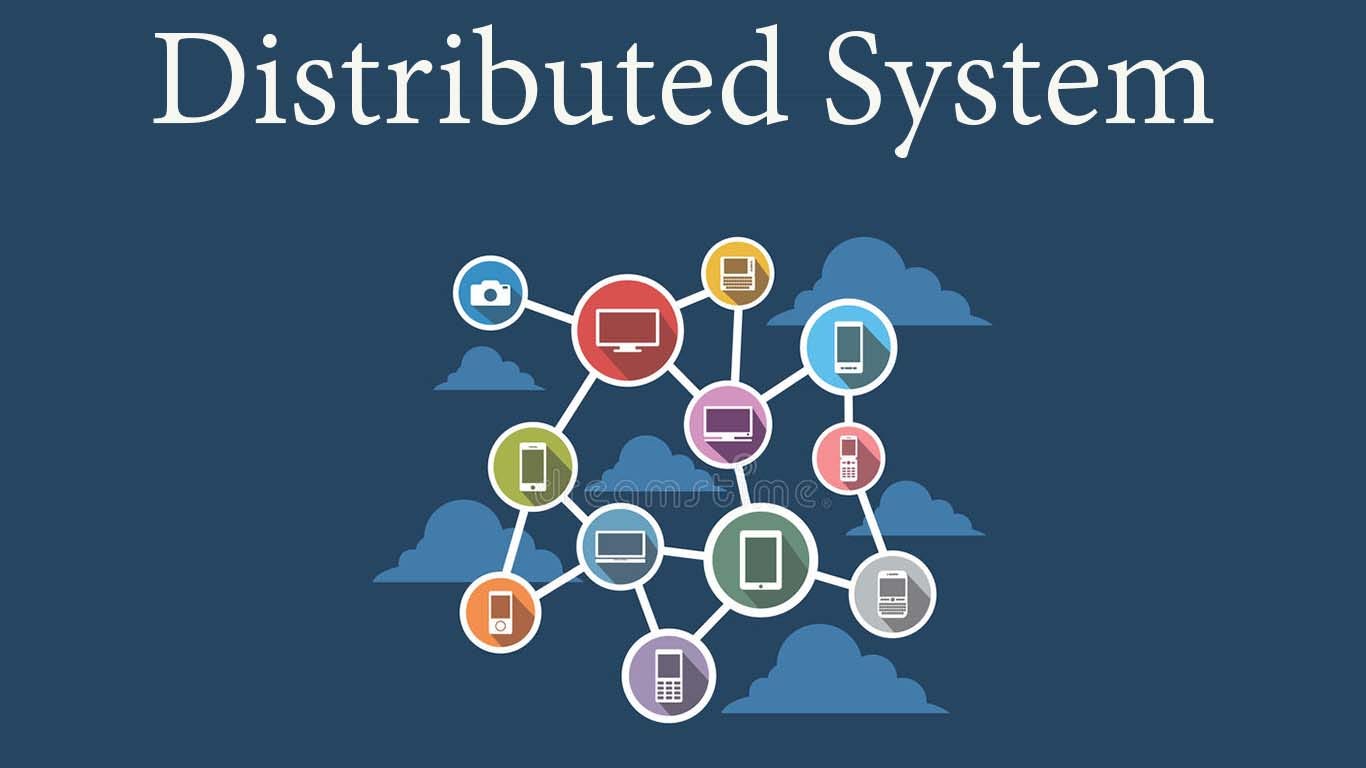
A distributed system is a collection of independent computers that appear to its users as a single coherent system. These individual computers, often referred to as “nodes,” communicate with one another through a network to achieve a common goal. This architectural shift from centralized to distributed computing has enabled the massive scalability and high availability that define the modern internet.

The Core Foundations of Distributed Architecture
To understand why distributed systems are the gold standard for high-performance technology, we must first examine the fundamental principles that govern their operation. Unlike a standalone PC, a distributed system is defined by its decentralized nature and the complex coordination required to keep its parts in sync.
Defining the Distributed Model
At its heart, a distributed system is built on the premise of shared labor. Instead of one massive supercomputer handling a billion requests, those requests are spread across thousands of smaller, more affordable commodity servers. These nodes do not share a memory or a physical clock; instead, they pass messages to one another to coordinate their actions. To the end-user, this complexity is invisible. When you type a URL into your browser, you don’t see the thousands of servers working in tandem; you see a single, seamless website.
Key Characteristics: Concurrency and Heterogeneity
There are three specific characteristics that differentiate a distributed system from other network configurations:
-
Concurrency: In a distributed system, multiple components perform tasks simultaneously. This allows for massive throughput, as different nodes can process different parts of a large dataset at the same time.
-
No Global Clock: Because nodes are physically separated, there is no single “master clock” to determine the exact order of events. Engineers use logical clocks and timestamps to ensure that data remains consistent across the network.
-
Independent Failures: This is perhaps the most critical trait. If one server in a data center crashes, the rest of the system should continue to function. Designing for “fault tolerance” is a primary goal of any distributed architect.
The Role of Middleware
Because these systems often involve different types of hardware and operating systems—a concept known as heterogeneity—they require a layer of software to bridge the gap. This is called “middleware.” Middleware sits between the operating system and the applications, providing services like identification, authentication, and data management, ensuring that a node running Linux can seamlessly communicate with one a node running Windows or a proprietary cloud OS.
Why We Use Distributed Systems: Benefits and Design Challenges
If distributed systems are so complex to build, why do we use them? The answer lies in the limitations of physical hardware. A single machine can only be “scaled up” (adding more RAM or a faster CPU) so far before it becomes prohibitively expensive or physically impossible to improve. Distributed systems allow us to “scale out.”
Scalability and High Availability
Scalability is the ability of a system to handle increased load by adding resources. In a distributed environment, if your traffic doubles, you can simply add more nodes to the cluster. This is the foundation of cloud elasticity.
Furthermore, distributed systems offer high availability. In a centralized system, a single hardware failure results in downtime. In a distributed system, redundancy is built-in. Data is replicated across multiple geographical regions, ensuring that even if an entire data center loses power, the service remains online for the user.
The CAP Theorem: The Architect’s Dilemma
One cannot discuss distributed systems without mentioning the CAP Theorem, proposed by Eric Brewer. It states that a distributed data store can only provide two out of the following three guarantees:
-
Consistency: Every read receives the most recent write or an error.
-
Availability: Every request receives a response, without the guarantee that it contains the most recent write.
-
Partition Tolerance: The system continues to operate despite an arbitrary number of messages being dropped or delayed by the network between nodes.
In the real world, “Partition Tolerance” is a requirement because network failures are inevitable. Therefore, developers must choose between Consistency and Availability. For a banking system, consistency is non-negotiable (you cannot have two different balances). For a social media feed, availability is often prioritized (it is okay if a post takes an extra second to show up for your friends).
Common Architectures and Communication Models
The way nodes are organized determines how efficient, secure, and resilient a system will be. Over the decades, several standard architectural patterns have emerged to solve different technological hurdles.
Client-Server and Peer-to-Peer Models
The Client-Server model is the most recognizable. Clients (like your phone) request resources, and servers (like a database) provide them. While this is simple, the server can become a bottleneck.
In contrast, the Peer-to-Peer (P2P) model distributes responsibilities equally among all nodes. There is no central authority. This is famously used in file-sharing protocols and blockchain technology. Because every “peer” is both a client and a server, P2P systems are incredibly difficult to shut down and can scale organically as more users join the network.
Microservices and Multi-tier Architecture
Modern software development has moved toward Microservices. In this model, a single application is broken down into dozens of smaller, independent services that communicate over a network. For example, an e-commerce site might have one service for the “shopping cart,” one for “payment processing,” and another for “inventory.”
This is a form of distributed system that allows different teams to work on different parts of an app simultaneously. It also prevents a bug in the “comments section” from crashing the “checkout” functionality. Multi-tier architectures (typically 3-tier: Presentation, Application, and Data) further separate these concerns to ensure security and manageability.
Consensus Algorithms: Reaching Agreement
How do thousands of independent nodes agree on a single piece of data? They use consensus algorithms. Protocols like Paxos and Raft are the mathematical engines that allow distributed systems to reach an agreement even when some nodes are failing or sending incorrect information. These algorithms are what make modern databases like Google’s Spanner or Amazon’s DynamoDB possible.
Real-World Applications and the Future of Distributed Tech
Distributed systems are no longer a niche academic topic; they are the invisible plumbing of the 21st century. As we move toward a world of ubiquitous computing, the scope of these systems is expanding from massive data centers to the very devices in our pockets.
Cloud Computing and Global CDNs
Cloud providers like AWS, Microsoft Azure, and Google Cloud are essentially offering “Distributed Systems as a Service.” They manage the complexities of sharding data, load balancing, and network latency so that developers can focus on building features.
Similarly, Content Delivery Networks (CDNs) like Cloudflare use distributed nodes located at the “edge” of the internet. By storing a copy of a website’s data on a server physically close to the user, CDNs reduce latency and ensure that a user in Tokyo doesn’t have to wait for a server in London to respond.
Edge Computing and the Internet of Things (IoT)
The next frontier for distributed systems is Edge Computing. As we deploy millions of IoT devices—from smart thermostats to autonomous vehicles—it becomes impractical to send all that data back to a central cloud server for processing.
Instead, the processing power is distributed to the “edge” of the network, closer to where the data is generated. An autonomous car, for instance, must process visual data and make millisecond decisions locally. This creates a hyper-distributed system where the “nodes” are moving vehicles, traffic lights, and local cell towers, all coordinating in real-time.
The Role of Distributed AI
As Artificial Intelligence models grow in size, they can no longer fit on a single GPU. The training of Large Language Models (LLMs) requires distributed training clusters where thousands of processors share the computational load. The future of AI is inextricably linked to our ability to build more efficient, lower-latency distributed systems that can handle the massive data throughput required for machine learning at scale.

Conclusion
Distributed systems represent the pinnacle of software engineering, transforming a collection of fragile, independent machines into a powerful, resilient, and unified force. While they introduce significant challenges—such as network latency, data consistency issues, and complex debugging—the benefits of near-infinite scalability and “always-on” availability make them indispensable. As we look toward the future of the Internet of Things, decentralized finance, and planetary-scale AI, the principles of distributed systems will continue to be the foundation upon which all modern technology is built.
aViewFromTheCave is a participant in the Amazon Services LLC Associates Program, an affiliate advertising program designed to provide a means for sites to earn advertising fees by advertising and linking to Amazon.com. Amazon, the Amazon logo, AmazonSupply, and the AmazonSupply logo are trademarks of Amazon.com, Inc. or its affiliates. As an Amazon Associate we earn affiliate commissions from qualifying purchases.